


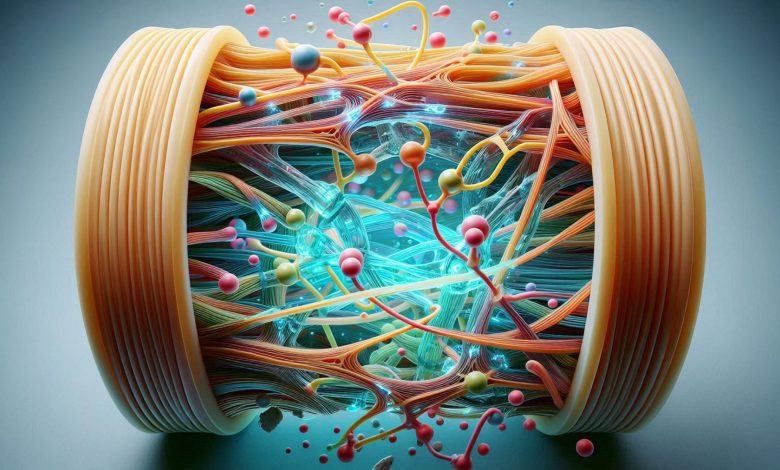
Pick up a rubber band, pull it from both ends, and let go. It stretches, tautens, and then snaps right back to its original shape. But did you know that behind this seemingly mundane movement lies a complex molecular dance? Let’s dive in and explore the science behind these tiny office staples that make our lives so much easier!
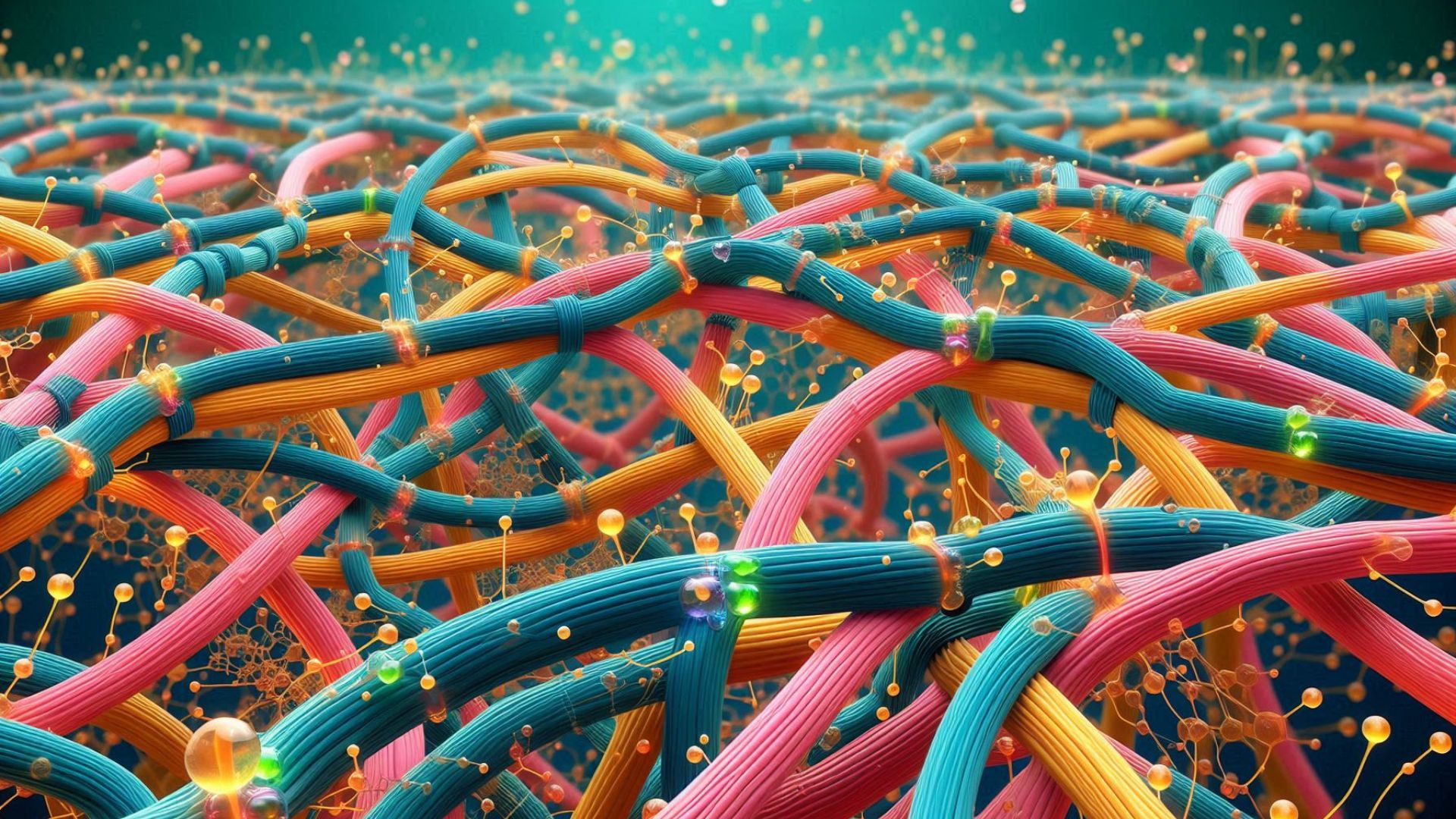
Molecular Spaghetti: The Chemical World of Rubber
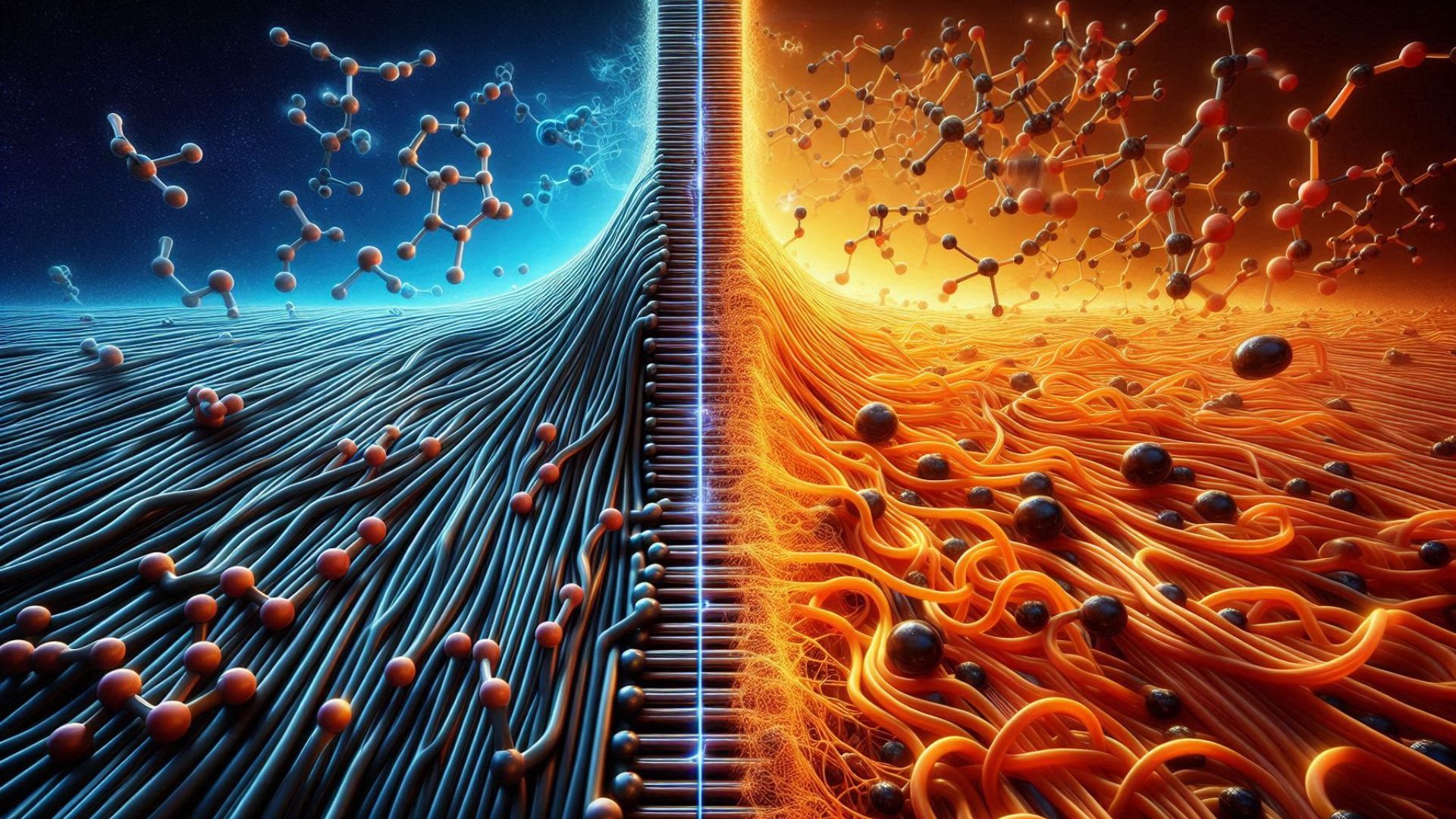
Almost every rubber band is made from a special material called, you guessed it, “rubber.” Rubber itself is composed of long polymer chains formed by small molecules called isoprene holding hands. These chains exist all tangled up, much like a ball of yarn. So, when you’re visualizing the internal structure of a rubber band, think of a giant plate of molecular spaghetti.
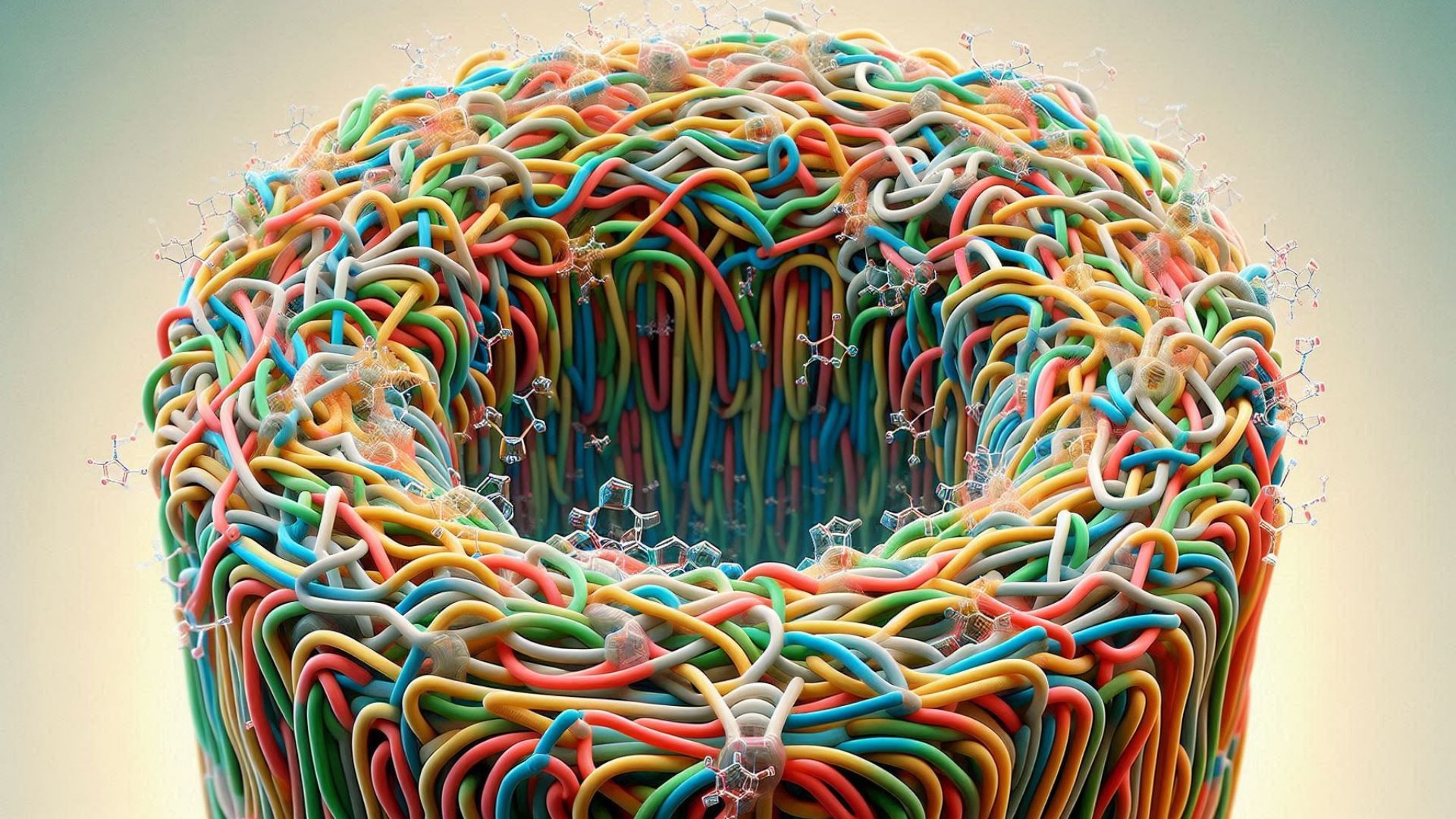
But these noodles aren’t just a messy pile; they are held together by tiny chemical bridges known as cross-links. These links keep the chains from sliding apart entirely while still allowing them to stretch. It’s thanks to this structure that rubber bands can both extend and snap back to their original form.
Stretching and Snapping Back: The Dance of Molecules
What actually happens when we pull a rubber band? Those tangled polymer chains start to straighten out. The coiled molecules align under the force we apply, and the band grows longer. The ability of these chains to recover their shape determines how much a rubber band can stretch before it decides to give up and snap.
So far, so good. But here is where the real fun begins: Why does it snap back?
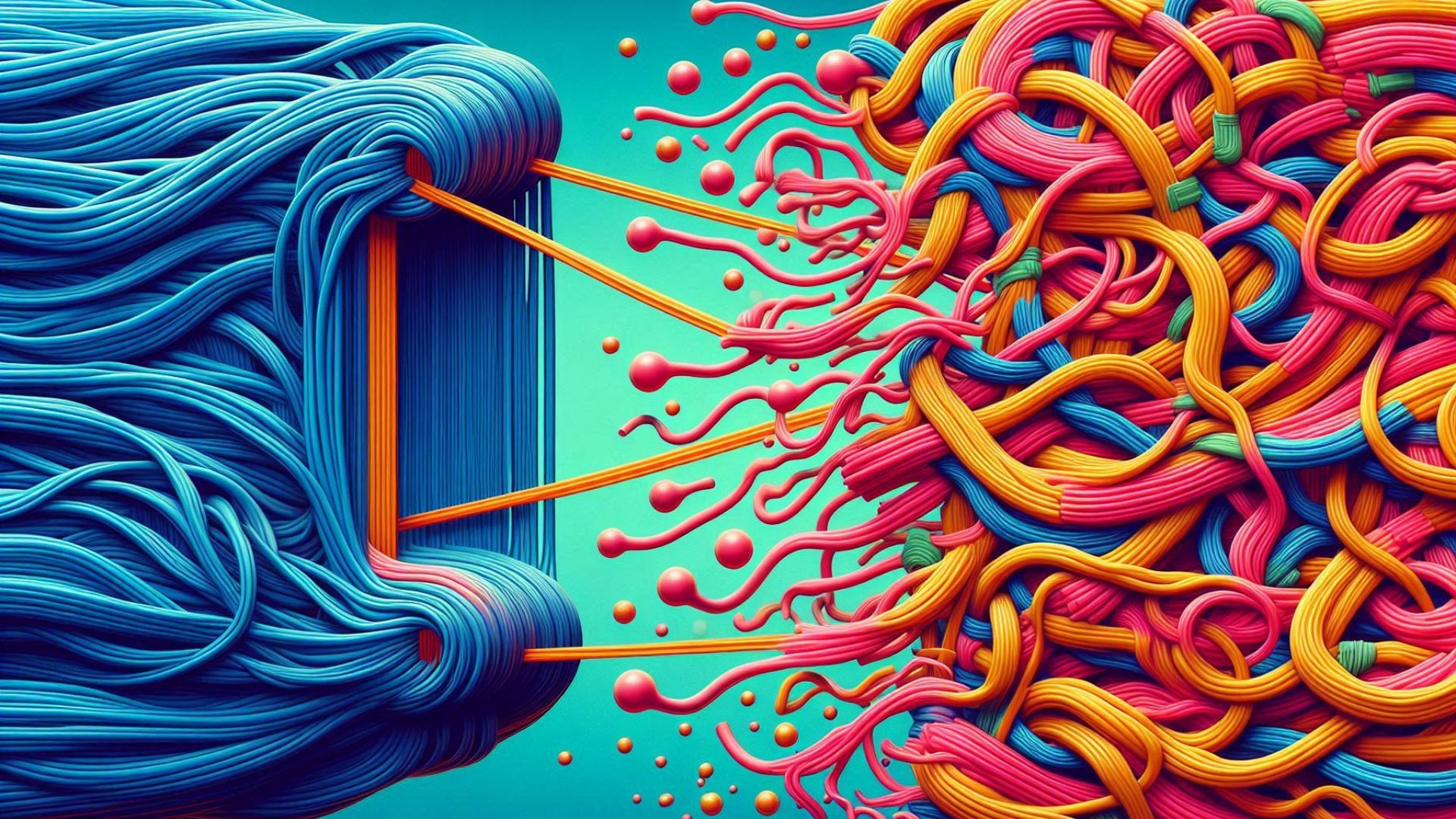
Because molecules simply can’t sit still! As long as the temperature is above absolute zero (-273°C), molecules are constantly vibrating, wiggling, and bumping into their neighbors. Thanks to this thermal motion, the straightened chains essentially cry out, “Enough with this order!” and long to coil back up again.
The moment we let go, the chains seize the opportunity to return to their original, messy state. And just like that, the rubber band bounces back to its original shape. This transformation occurring at the molecular level is the very definition of elasticity!
You can even test this thermal motion yourself: stretch and release a rubber band rapidly several times. You’ll feel it get warm (this is known as the Joule effect). That’s because stretching the molecules forces them to move more, which translates into an increase in temperature.
Entropy: The Inevitable Victory of Disorder
There is a fundamental law of physics at play here: Entropy. Put simply, entropy is a measure of the disorder in a system. And a core rule of nature is: Order tends to break down.
When a rubber band is stretched, the chains align, meaning the system has become more ordered. But nature doesn’t care for that kind of order. That is why, the moment you let go, the system says, “I miss my chaotic state!” and reverts to its messy self. This isn’t just about rubber bands; it’s a fundamental way the universe behaves.
Even Rubber Bands Get Tired!
Of course, everything has its limits. Rubber bands wear out with every stretch, slowly losing their elasticity over time. If they are pulled too much, some of those cross-links can snap permanently, and the rubber band enters its “just leave me alone” phase. That’s why a brand-new band snaps back with vigor, while an old, tired one stays limp.
The Big Science Behind a Tiny Daily Object
As we’ve seen, an ordinary rubber band reveals complex physical and chemical processes simply by stretching and returning to its original state. The next time you pull and release one, you can imagine all those molecules and bonds performing their silent, frantic dance…
References and Further Reading
Christopher Sykes. (2008, December 30). Feynman: Rubber Bands FUN TO IMAGINE 3 [Video]. YouTube. https://www.youtube.com/watch?v=XRxAn2DRzgI
Davuluri, S., & Ravipati, A. (2022). A study on the stretching behavior of rubber bands. Journal of Emerging Investigators. https://doi.org/10.59720/21-110
Fentress, S. (n.d.). The science of rubber bands. A Moment of Science – Indiana Public Media. https://indianapublicmedia.org/amomentofscience/rubberband.php
Jenkins, K. (2022, December 20). What makes rubber stretchy? Silicone Engineering. https://silicone.co.uk/news/makes-rubber-stretchy/
Originally published in Turkish at Doğa Filozofu.