

Space has always been a synonym for mystery, hasn’t it? Whether we were wide-eyed children or are simply looking up at the night sky today, we’ve all felt that pull—that sense of wonder at the stars. But that curiosity is a tough itch to scratch. Even our most powerful telescopes can’t quite illuminate those distant planets in every detail, and hopping on a rocket to go see for ourselves isn’t exactly a casual weekend trip. Still, there are massive worlds out there that we have actually managed to visit. These are the planets within our own Solar System. Reaching them isn’t quite as impossible as touching a distant star. It’s no walk in the park, but it’s an adventure worth taking, right?

The world’s leading physicists and NASA clearly thought so, too, which is why they began throwing their weight behind space exploration in earnest starting in the 1950s. Of course, before you can launch an expedition, you need a destination. You have to decide exactly where you’re headed. For that era, the most logical choice was Mars. You’re probably wondering, “Why Mars?” Let’s dive into the reasons together.
Why Was Mars Chosen?
Mars is one of the most Earth-like planets we’ve got. When you stack it up against the other planets in our Solar System, its day length, seasonal cycles, and surface structure feel surprisingly familiar. Because of this, it was seen as the “path of least resistance.” On top of that, there were strong suspicions that Mars might harbor life. Even though we hadn’t found liquid water there at the time, Mars was the closest candidate; it had traces of water vapor in its atmosphere and ice caps at its poles. These clues fueled the hope that water—and perhaps life—could exist there. Other planets didn’t offer the same promise, which made Mars the clear frontrunner.
Of course, it wasn’t just the idealistic goals; practical, logistical factors played a huge role. For instance, Mars is relatively close to Earth, and its orbit around the Sun is fairly stable. This makes missions to Mars technically feasible and economically manageable. Planets like Venus and Mercury are essentially “no-go” zones due to extreme temperatures and crushing atmospheric conditions, while gas giants like Jupiter are ruled out by their intense radiation and massive gravitational pull.

With all these factors in mind, the target was set: Mars. But even with the right destination, we weren’t ready to send humans just yet. We didn’t know enough about the environment, and the risks were simply too high. For that reason, the task couldn’t be handed to a human crew. And, obviously, sending a rock back and forth wouldn’t teach us anything.
We needed a solution that would allow us to “see” Mars without putting a living soul in harm’s way. NASA’s answer, developed fairly quickly, was the Mars Rover. Now, when we say “rover,” we don’t mean a spacecraft that just sits there; we’re talking about an autonomous robot that could land on the surface, roam around until its energy ran out, and beam data back to Earth. The race was on.
Building the Mars Rover
Over the years, we’ve built many rovers. Since they aren’t exactly coming back home, we’ve had to keep sending new ones. However, every Mars Rover in history has shared a few essential components:
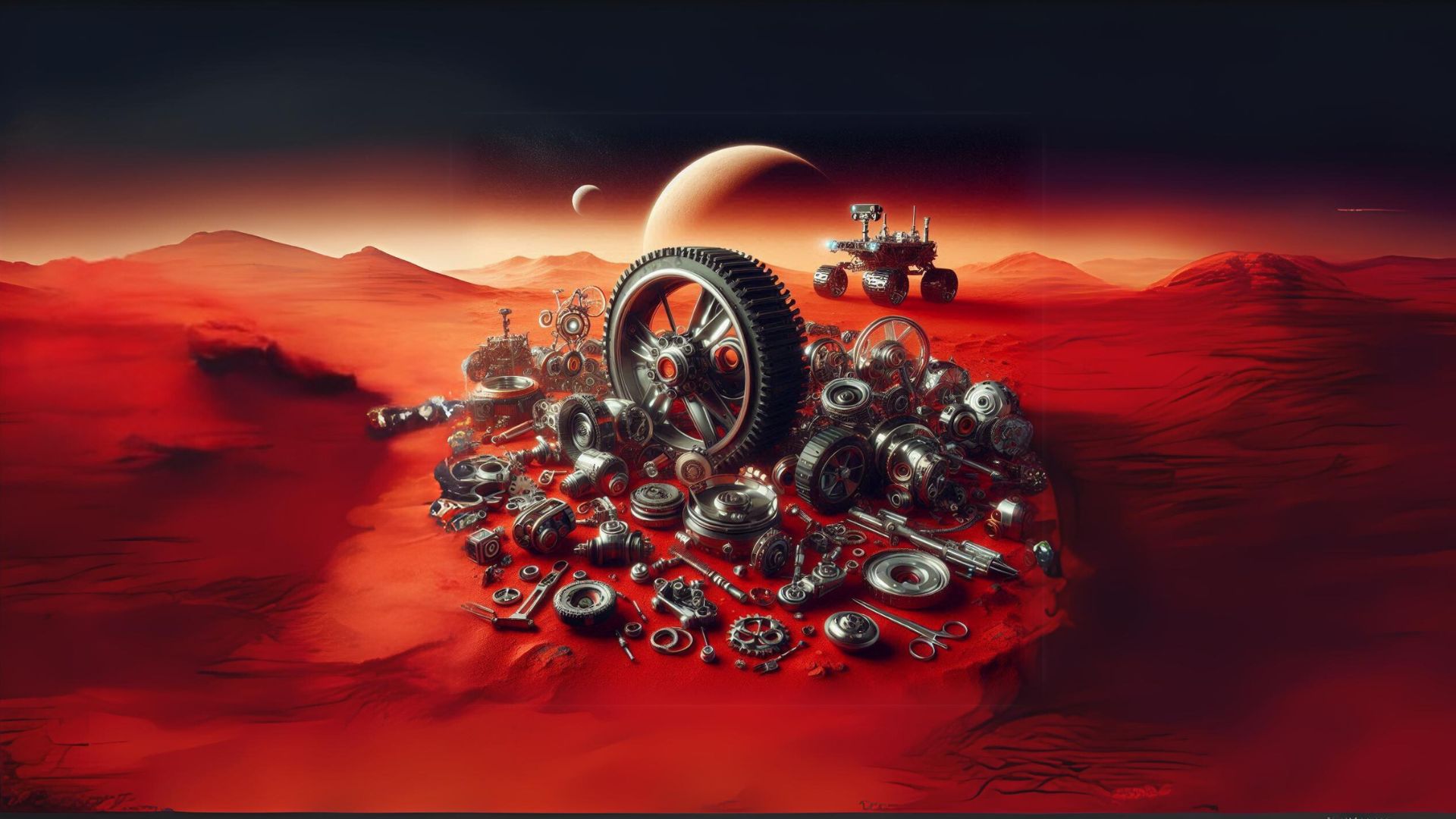
- Chassis: The main body, engineered to withstand the punishing conditions of the Martian surface.
- Wheels and Suspension: High-mobility systems designed to navigate jagged, unpredictable terrain.
- Power Source: Usually a mix of solar panels or nuclear power (like radioisotope thermoelectric generators).
- Scientific Instruments: A suite of cameras, spectrometers, radars, and drills to analyze the soil and atmosphere.
- Communication System: High-frequency radio antennas to keep the conversation going with Earth.
- Autonomous Navigation: Software that allows the rover to dodge obstacles and reach its targets without a joystick operator.
Building these machines was the technical side; the real excitement started when they launched. Let’s take a look at the missions that actually made it.
Mars Rover Missions
The adventure kicked off in 1971 with the Soviet Mars 2. It wasn’t a “rover” in the modern sense, but it was the ancestor of everything that followed. Sadly, that first attempt was a bit of a disaster; the lander crashed and shattered on impact. Undeterred, scientists launched Mars 3 that same December. It managed a successful landing, but its story ended abruptly—it went silent just 20 seconds later. It was a harsh lesson that we had a long way to go, but it paved the way for the breakthrough in 1997, when the first truly successful Mars Rover mission began.

Source: NASA
Before we look at the rovers themselves, let’s quickly recap what these missions are actually trying to achieve:
The core goals are:
- Geological Exploration: Mapping the surface and subsurface to understand the minerals and rocks that make up the planet.
- Astrobiology: Hunting for signs of past or present microbial life.
- Climate and Atmosphere: Studying the weather patterns and atmospheric changes.
- Water Research: Searching for current water or traces of where it flowed in the ancient past.
- Preparation for Future Missions: Gathering the data we need to eventually send humans to Mars.
Ready to meet our hard-working robotic friends? Let’s get to know them a bit better:
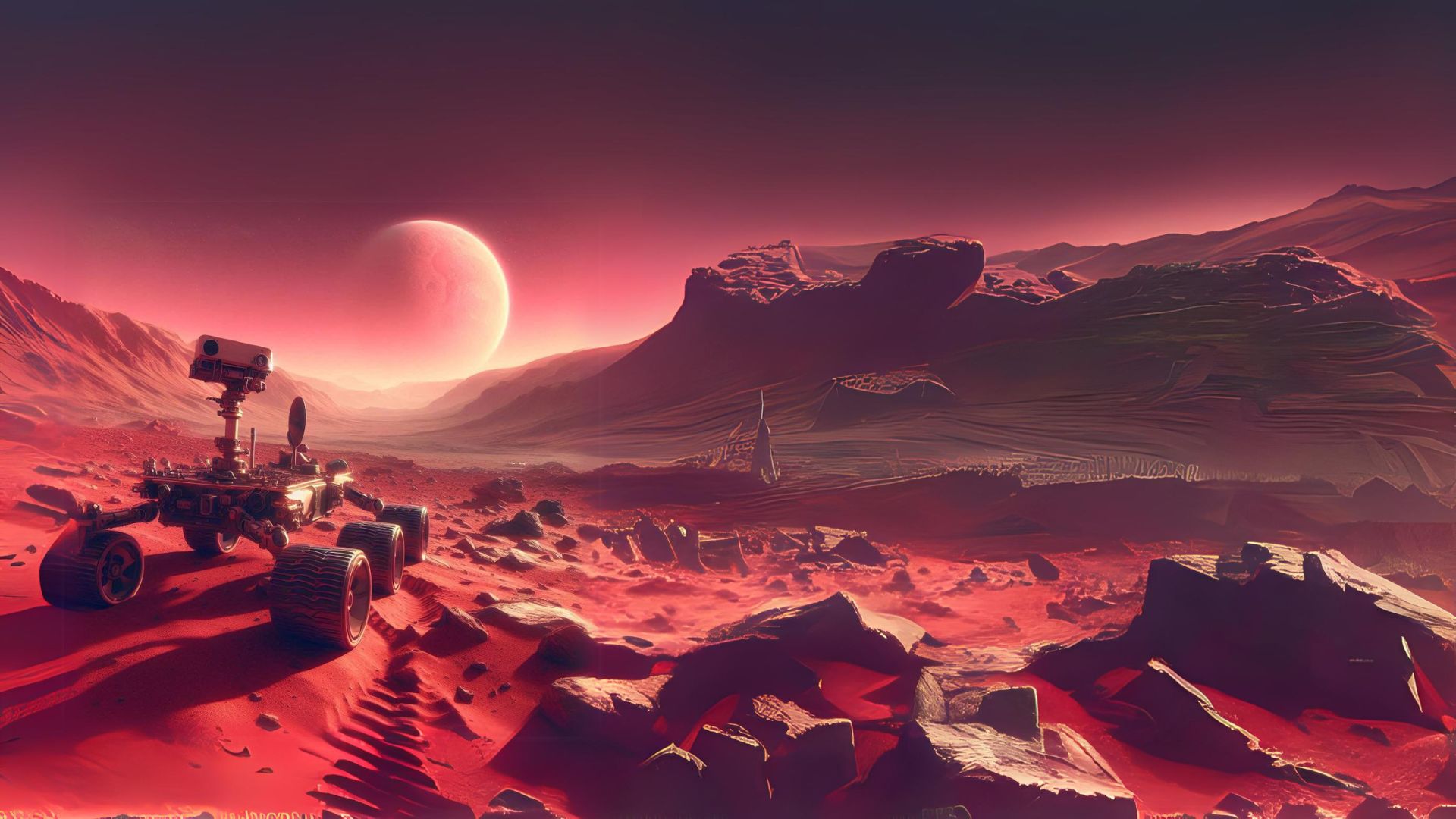
- Sojourner (1997)
Sojourner was a game-changer. It went beyond anything Mars 2 or 3 managed; it didn’t just land, it actually drove around on the surface. It was a short-lived mission, but it proved we could get a robot moving on another planet.
- Spirit and Opportunity (2004)
Seven years after Sojourner, we got a real success story. The twin rovers, Spirit and Opportunity, explored the Martian surface for years. Opportunity, in particular, was the overachiever of the century: designed for a 90-day mission, it ended up working for 14 years—that’s roughly 5,110 days!
Over those 14 years, they found minerals that proved liquid water once flowed on Mars. Opportunity even discovered hematite, a mineral that essentially confirms a water-rich past. It was a resounding triumph.
- Curiosity (2012)
Following the success of its predecessors, Curiosity landed in 2012 with a bigger mission: exploring the Gale Crater to see if Mars was ever truly habitable. It hit the jackpot, finding evidence of ancient lake beds and organic molecules, proving that Mars was once a place where life could have flourished.

Source: NASA
- Perseverance (2021)
And finally, the current star of the show. Launched three years ago as part of the Mars 2020 mission, Perseverance is busy collecting soil and rock samples to look for ancient life. It even brought along a companion: Ingenuity, the first-ever Mars helicopter. Perseverance is currently caching samples that future missions will bring back to Earth.
All these ongoing missions have massively expanded our knowledge. Because of these “cefakâr” (hard-working/devoted) machines, we’re learning more every day—and maybe, just maybe, we’ll be taking human steps on that red soil before long. What do you think? What else is waiting to be found on Mars?
References and Further Reading
All Mars resources – NASA Science. (n.d.). https://science.nasa.gov/mars/resources/?search=curiosity+rover&types=videos&content_list=true
Europe’s Mars exploration. (n.d.). https://www.esa.int/Science_Exploration/Human_and_Robotic_Exploration/Exploration/ExoMars/Europe_s_Mars_exploration
Mars Exploration – NASA Science. (n.d.). https://science.nasa.gov/planetary-science/programs/mars-exploration/
Mars Exploration Rovers: Spirit and Opportunity – NASA Science. (n.d.). https://science.nasa.gov/mission/mars-exploration-rovers-spirit-and-opportunity/
NASA’s Perseverance rover: everything you need to know. (n.d.). https://www.rmg.co.uk/stories/topics/mars-nasa-rover-perseverance-facts-dates
National Space Society. (2023, December 26). Inside the Mars Rover missions. NSS. https://nss.org/inside-the-mars-rover-missions/
Originally published in Turkish at Doğa Filozofu.