

Those who follow Doğa Filozofu closely know that we’ve published plenty of pieces on existentialist philosophers and existentialism itself. In those articles, we’ve mostly focused on atheistic figures like Sartre, Beauvoir, Camus, and Nietzsche. They generally held the view that God does not exist and that we are the sole architects of our own existence. Now, we’re going to spend some time with someone who came before those names and laid the very foundation of existentialism: Søren Kierkegaard.
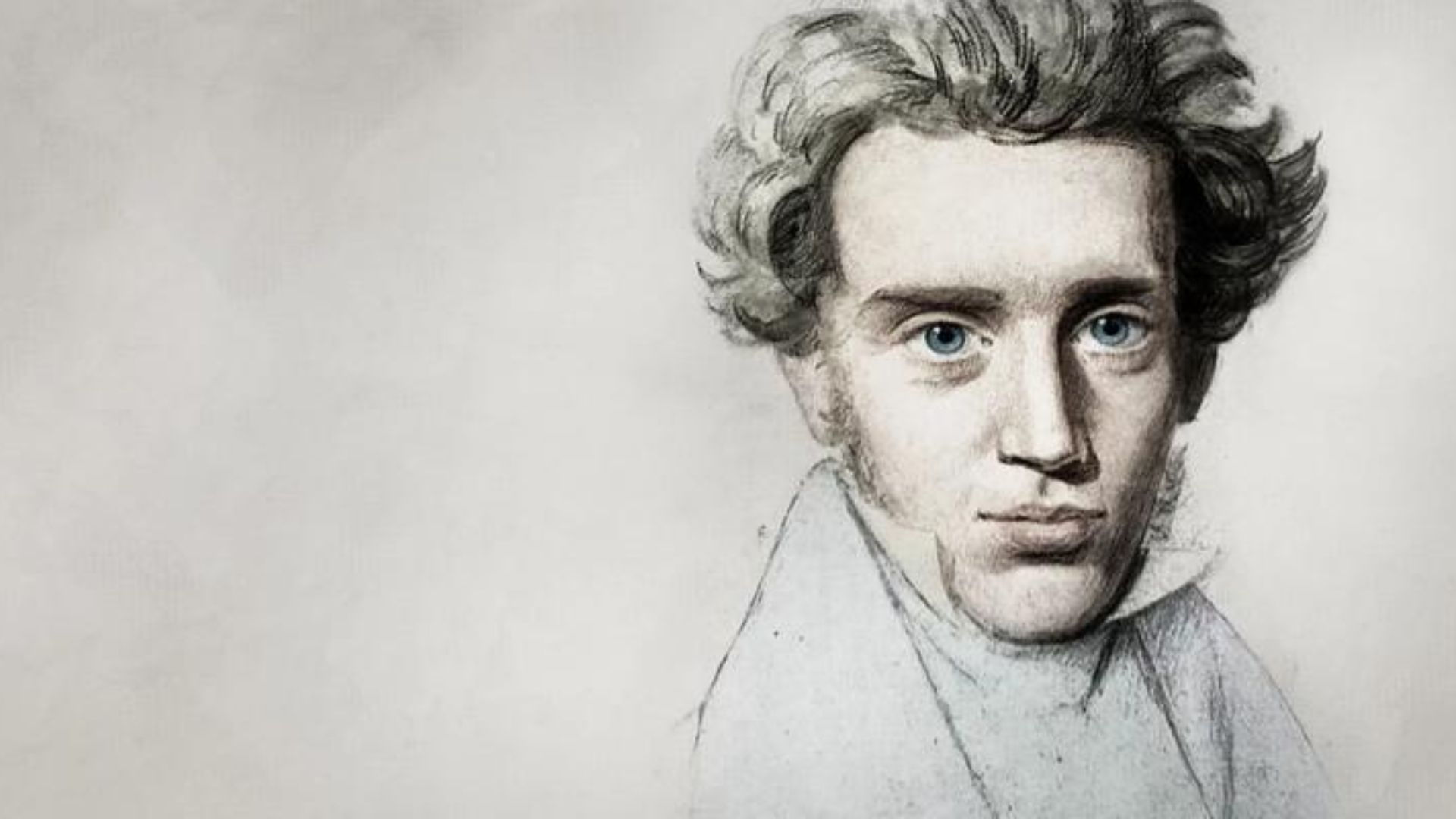
Kierkegaard was a Danish philosopher who lived in the first half of the 19th century. He focused on the individual’s existential responsibilities, internal conflicts, and relationship with God. His goal was to bridge the gap between religion and a philosophy that didn’t even have a name yet—existentialism. Kierkegaard didn’t set out with a master plan; he didn’t even know what he was doing was “existentialism,” because that term wouldn’t be coined until the 20th century. Kierkegaard was simply concerned with the individual finding their own identity and creating their own essence. In this piece, we’ll get to know him through two of his books: “Either/Or” and “Fear and Trembling.” He didn’t leave behind many major works, passing away at 42—arguably the age when a philosopher is at their most potent. Now, let’s dive in and start with his first major work:
Either/Or
Kierkegaard begins this work by arguing that there are two fundamental modes of existence in human life: the “aesthetic” and the “ethical.”

The conflict in this book is built on the individual’s oscillation between these two stages. It starts with what he calls the “aesthetic stage.” Here, Kierkegaard explains that the aesthetic way of life is rooted in pleasure, beauty, and sensory gratification. Meaning in life is sought in the outside world, and spiritual values are kept at arm’s length. However, Kierkegaard argues that this stage inevitably ends with a lingering sense of “emptiness” deep inside. Because these pleasures lack true meaning, they never lead to genuine satisfaction, eventually pulling the individual into “existential despair.” Kierkegaard uses many examples and fictional stories to illustrate this. In one, a character named Johannes goes to great lengths to seduce a woman he admires. Later, he realizes that by choosing this path, he has distanced himself from genuine emotion and deep connection, leading to deep regret.
Following this, the “ethical stage” enters the scene. According to Kierkegaard, this is a much deeper stage where spiritual values finally find their meaning.
Here, individuals engage in actions that might not look “fun” from the outside but are deeply satisfying. The pursuit of pleasure and happiness is no longer the sole focus of life, but merely one of its components. At this stage, the individual begins to organize their life according to their internal values and social responsibilities. In doing so, they embark on a search for a more meaningful life. In this section, Kierkegaard presents a dialogue between “A,” a character obsessed with aesthetics, and “Judge Vilhelm,” who represents the transition to the ethical stage. Through this, Vilhelm attempts to convey why a life based on morality and responsibility is more meaningful.

For Kierkegaard, making decisions is an indispensable part of our lives. Those who embrace the aesthetic life, however, try to avoid making decisions because they know that with every choice comes responsibility.
Of course, Kierkegaard wove this into the entire book with great subtlety. He wasn’t a “harsh” philosopher by nature. He wasn’t someone who roared like Kant, Nietzsche, or Sartre; he had a gentle soul, much like Camus. Even so, his purpose within the book was clear enough.
The primary goal of writing this book was to emphasize the importance of choosing and taking responsibility. He even went a step further, suggesting that one should eventually move beyond the ethical stage into the religious stage. Only then, he argued, could a person make their life truly meaningful—but that is a theme he would explore more deeply in *Fear and Trembling*. So, to avoid any more spoilers, let’s leave *Either/Or* here.
Fear and Trembling
Despite a title that sounds like it was plucked from a Stephen King novel, this isn’t a work of fiction. While it’s filled with stories, it’s a book where Kierkegaard focuses on his own narrative. Perhaps to avoid backlash, or perhaps due to his shy nature, he didn’t publish this under his own name. No, he published it under the name “Johannes de Silentio.” Ironically, this means “John of Silence,” and John happens to be the name of one of the 12 apostles. Some believe Kierkegaard chose this name for the “Knight of Faith” concept that appears frequently in the book. Hopefully, we haven’t gone too far off-track—let’s take a closer look at this work.
Kierkegaard published this in the same year as *Either/Or*. In this text, he turns his attention to faith and sacrifice. The story of Abraham sacrificing his son for God takes center stage. Kierkegaard defines this event as a “scandal for the non-believer, a miracle for the believer.” To him, there were unavoidable questions raised by this story:
- How did Abraham submit to God’s command to sacrifice his son?
- Can such an act be defended from a moral standpoint?
- Is Abraham’s act a “leap of faith” that transcends the understanding of the ordinary person?
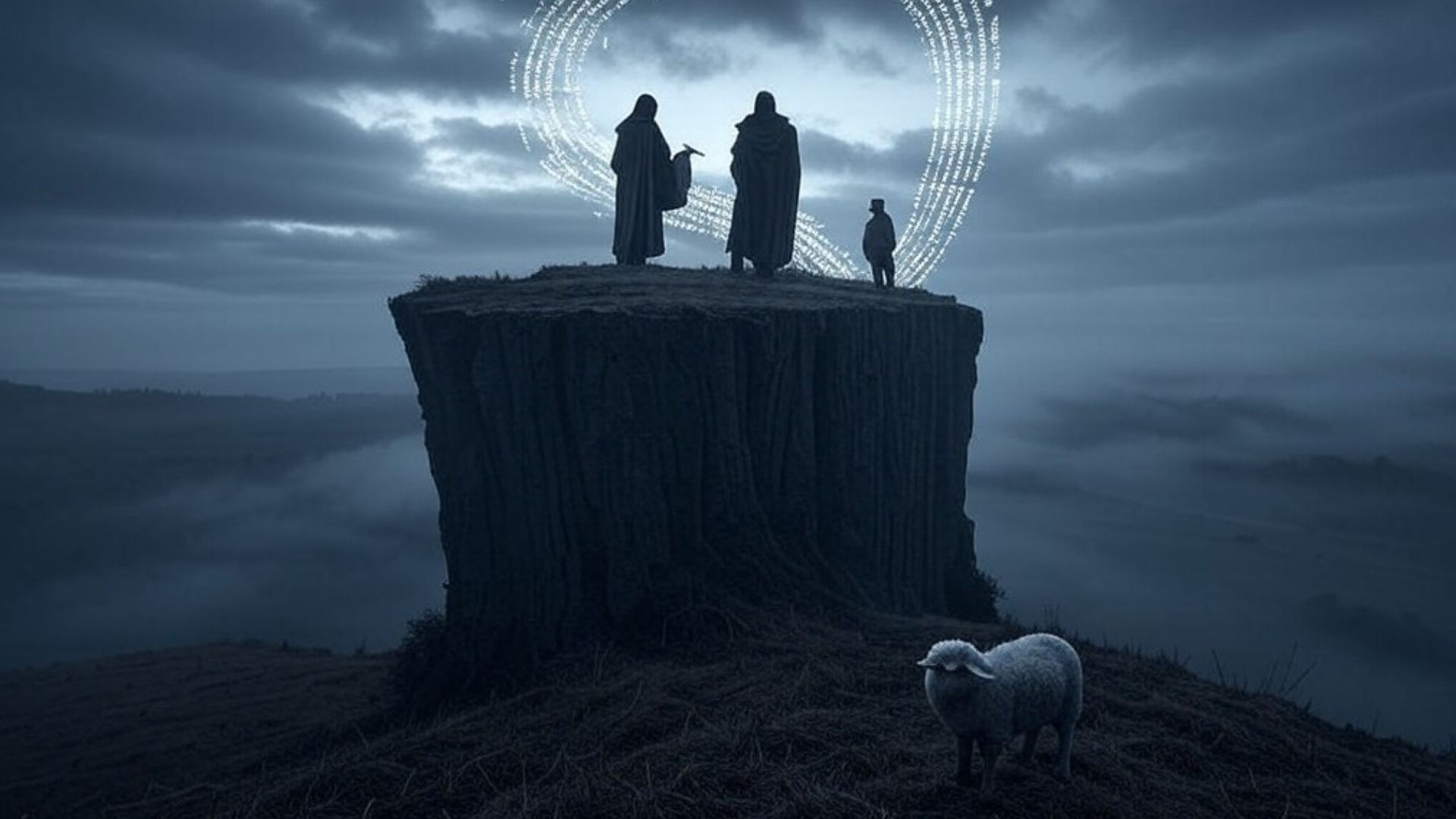
Kierkegaard concludes that Abraham is no longer a standard theist; he has become the “knight of faith” capable of carrying out even the most grueling commands. As we mentioned earlier, the ethical stage in *Either/Or* wasn’t enough for Kierkegaard, and this is where that becomes clear.
For Kierkegaard, what was asked of Abraham was incredibly heavy, and he was faced with two options: one moral, one religious.
- From a moral perspective, the command is unacceptable. A father cannot kill his son.
- However, from a religious perspective, God’s command is beyond question.
At this point, reason would likely choose the moral path, but Abraham performed an act that defied logic, making a move based entirely on faith—he took a “leap of faith.” Abraham chose to trust God, a trust that logic cannot explain. And there you have the essence of Kierkegaard’s system. He uses this event to explain the occasional conflicts between morality and faith. But what is the connection to existentialism?

For Kierkegaard, the answer is clear. He believes that even in such situations, we have the power of choice. The choice is in our hands. We are, in a sense, free—but this freedom comes with heavy consequences, just as it did for Abraham. We are also compelled to take responsibility for those consequences.
According to Kierkegaard, God has made us free. He has given us the chance to fulfill ourselves. Rather than giving us a fixed essence, He gave us freedom. That is why we all have the opportunity to realize our potential. Kierkegaard argues that the best way to manage this freedom and not be crushed under its weight is, again, through God. That is how his system is completed. Of course, there are details we couldn’t cover in this article, but it’s safe to say this is the core of his narrative.
Kierkegaard laid the foundations of existentialism in this way. Those who would discover this path later would go on to build new roads using his work as their starting point. We’d like to finish this piece with one of his beautiful quotes:
“Life can only be understood backwards; but it must be lived forwards.”
References and Further Reading
Kierkegaard, Søren | Internet Encyclopedia of Philosophy. (n.d.). https://iep.utm.edu/kierkega/
Søren Kierkegaard (Stanford Encyclopedia of Philosophy). (2023, May 22). https://plato.stanford.edu/entries/kierkegaard/
Westphal, M. (2024a, November 7). Søren Kierkegaard | Danish philosopher & existentialist. Encyclopedia Britannica. https://www.britannica.com/biography/Soren-Kierkegaard
Westphal, M. (2024b, November 7). Søren Kierkegaard | Danish philosopher & existentialist. Encyclopedia Britannica. https://www.britannica.com/biography/Soren-Kierkegaard/Three-dimensions-of-the-religious-life
Originally published in Turkish at Doğa Filozofu.