



We’ve explored existentialism in many of our previous articles. At its core, existentialism is a quest to understand human life and our place within it. It centers on themes like the significance of the individual and the necessity of personal choice. Yet, within this landscape, one figure stands out with a unique perspective: Simone de Beauvoir.When we look at the great existentialists who preceded her, the focus was always on the individual, regardless of gender or circumstance. Nietzsche, for instance, prioritized the “strong” on the path to existential realization. Beyond him, Sartre, Camus, and—as we’ll see in later pieces—Kierkegaard, all championed a philosophy centered on the individual. To them, individuals must break free from external authorities and take full control of their own lives. They must define right and wrong not by the standards of others, but by their own.

This image was generated by artificial intelligence (Grok 2).
Let’s look at this through a question a student once posed to Sartre:
During World War II, a student approached Sartre—who was a university professor at the time—seeking guidance. The student wanted to join the war effort to help his country, but his mother was firmly against it. He felt torn between staying to care for his mother and leaving to fight. He wanted Sartre to tell him what to do.
If he had asked Kant, or perhaps Hobbes, Locke, the utilitarians, or even Socrates, he might have received a clear-cut answer. They would have likely provided him with a path, even if it were a difficult one. But for Sartre—and existentialists in general—that wasn’t an option. Sartre told the boy that he couldn’t show him the way; he had to make the decision himself, knowing full well that he would suffer regardless of which path he chose. That, in a nutshell, is existentialism. They don’t claim life is free from pain or sorrow; they simply insist that the responsibility for the decision belongs solely to the individual.
“Okay, but what does this have to do with Beauvoir?” you might ask. Fair point. We just wanted to briefly refresh our understanding of existentialism. Now, let’s add one more piece to the puzzle before we dive into Beauvoir.
“Existence Precedes Essence”
Traditional philosophy held that “essence precedes existence.” The idea was that there is a pre-existing “essence” that defines us and brings us into being. In ancient times, it was believed that this essence determined who we were and who we would become. Sartre flatly rejected this, famously stating, “Existence precedes essence.” His point was that we exist first, and only afterwards do we define our own essence. Beauvoir was very close to Sartre—their intellectual partnership and personal bond are legendary—and they shared this fundamental belief. However, Beauvoir took these ideas and adapted them for a group she felt was being crushed by the weight of life: women. She argued that women were free and under no obligation to consult anyone else before making their own choices. For example, Sartre’s student was free to choose between going to war or staying home, but a woman in that era likely wouldn’t have been granted that same freedom. This became Beauvoir’s mission. She believed that throughout history, women had been treated as “in-itself” (en-soi)—defined and categorized by society—while men were seen as “for-itself” (pour-soi), capable of creating themselves through free choices. This “freedom” was often essentially forced upon men; it was reflected in the expectation that they take on roles of command, leadership, and power.
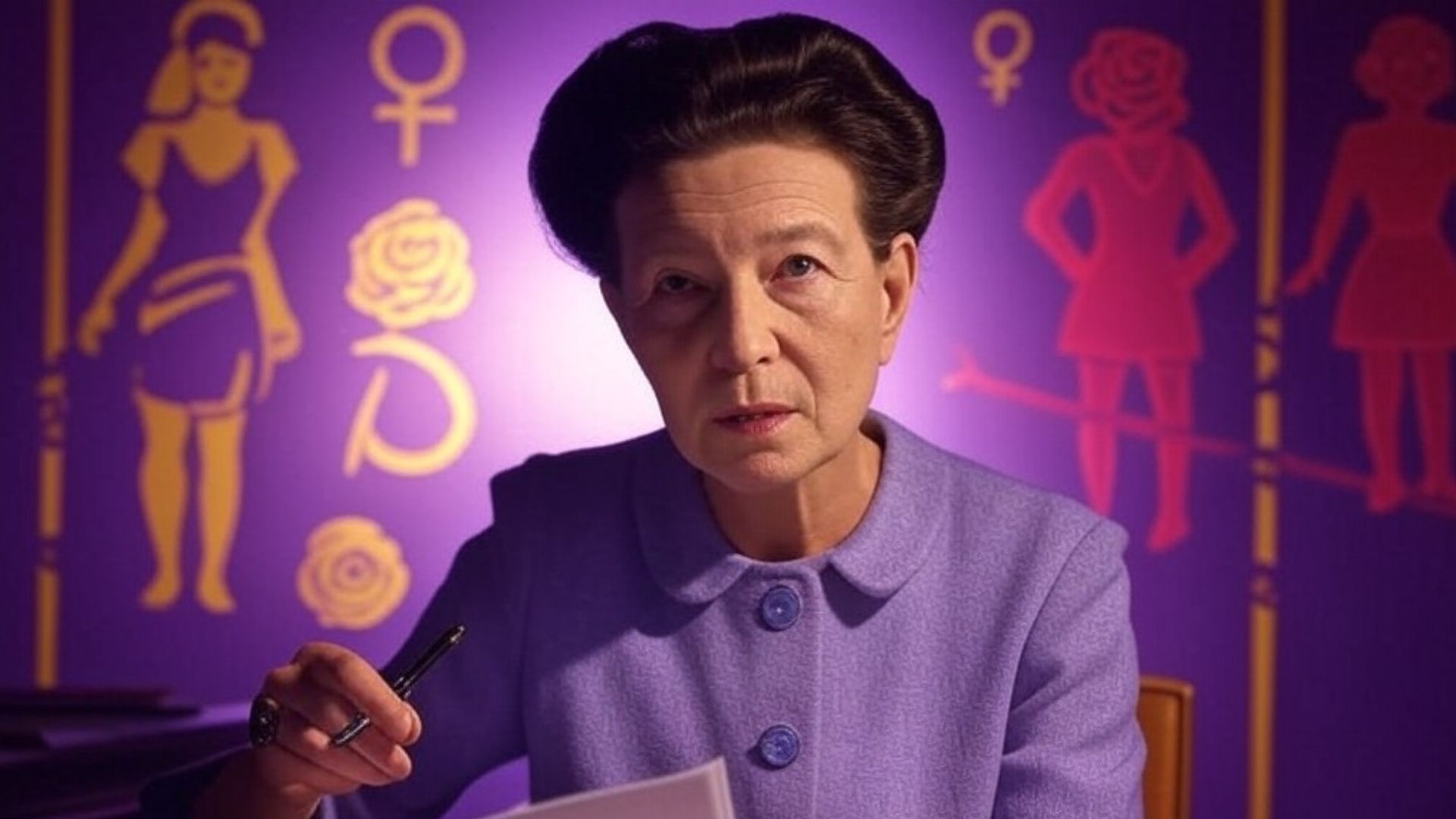
Beauvoir wanted to remind women of this inherent freedom. She saw that throughout the ages, women had been relegated to the background, cast as supporting characters in the grand film of life. This was the antithesis of the existentialist narrative we discussed earlier. It was time for women to achieve the status of “for-itself.”
A Being for Itself!
Beauvoir was well aware of how daunting this path would be. To achieve true freedom, women first had to challenge the authorities—the entrenched social perceptions—that had structured the system for their own benefit. Ironically, even the ability for women to enter parliament often required the approval of the men already there. Becoming a leader depended on the votes of the public, and securing a career depended on employers. Consequently, quietly asking for change wouldn’t be enough; it would require active, persistent effort. The road to freedom was going to be an uphill battle.
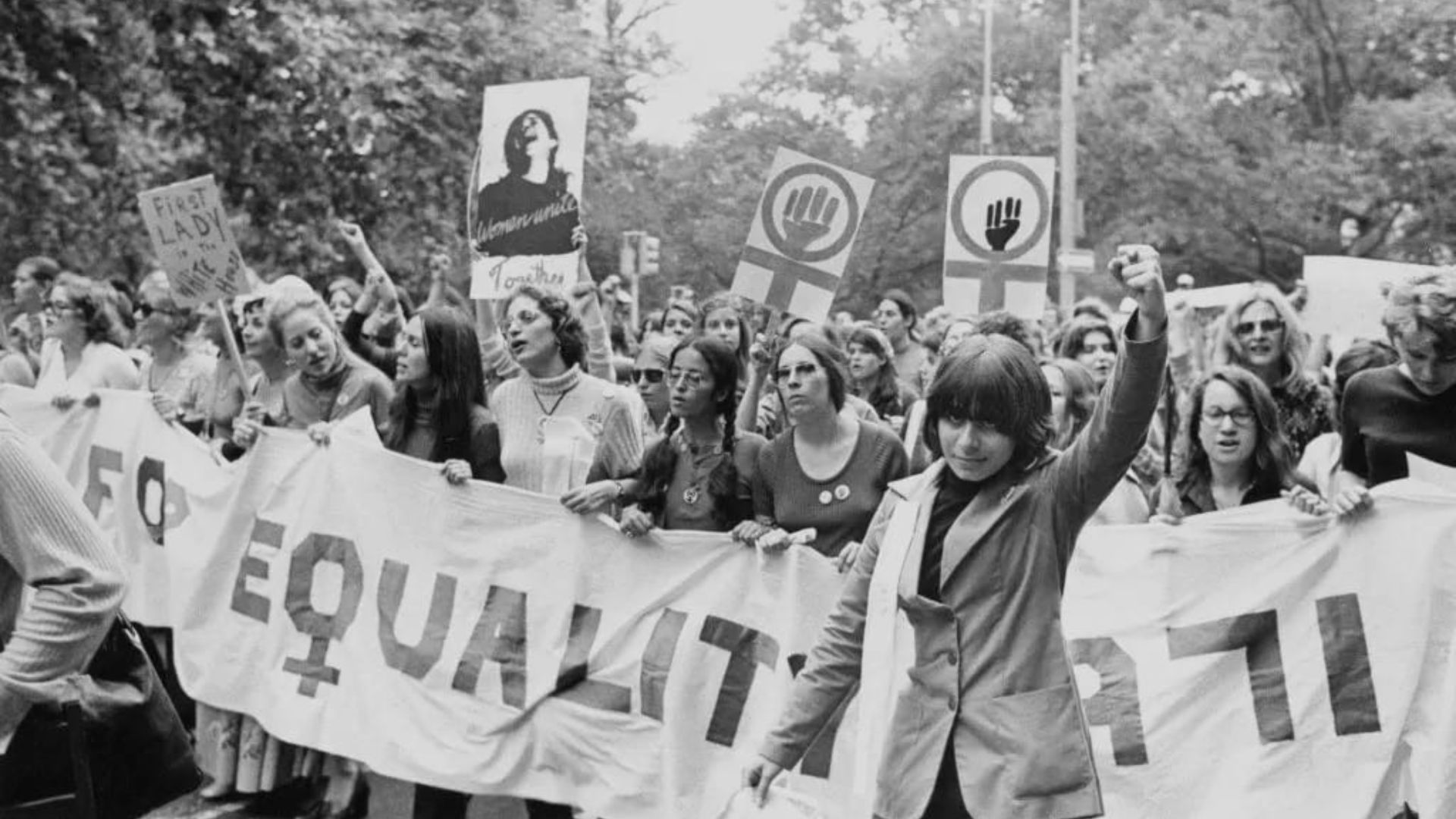
This was another point where she aligned with Sartre. Both saw an unbreakable link between freedom and responsibility. For both, humans were only as free as they were responsible for their choices. A slave, lacking freedom, has no obligation other than to perform the task at hand; they don’t need to decide or think. Free individuals, however, must make decisions and live with the consequences. Beauvoir argued that freedom isn’t just an individual right; it requires recognizing the freedom of others. The liberation of women isn’t just a personal endeavor—it requires a societal restructuring. This demands that the individual take an active role in crafting their own identity and creating the meaning of their own life. Beauvoir’s philosophy exposes how freedom is constrained by social conditions.
For women, yes, there are obstacles. Especially in her time, women’s social and economic freedoms were limited, but they weren’t non-existent. Responsibilities arise within the space of freedom one already possesses, and there is always an ongoing struggle to expand that space further.

In short, for Beauvoir, one truth was clear: all individuals should be equal, but unfortunately, they weren’t. People were marginalized for the color of their skin, others were “chemically castrated” for their sexual orientation, and women were expected to define their existence through the men they were with. In the face of these injustices, Beauvoir became one of the founders of feminism. Perhaps that is why, despite defending ideas that were largely identical to Sartre’s on a philosophical level, she was able to step out from under his shadow and propagate her own distinct vision.
Today, it is clear that there has been significant progress regarding women’s rights, both globally and in Turkey. Yet, it is equally clear that the struggle is far from over. We hope that the world will continue to evolve and that Beauvoir’s vision will one day be fully realized.
References and Further Reading
Bergoffen, D. and Burke, M. (2021). Simone de Beauvoir. The Stanford Encyclopedia of Philosophy. https://plato.stanford.edu/entries/beauvoir/
Crowell, S. (2020). Existentialism. The Stanford Encyclopedia of Philosophy. https://plato.stanford.edu/entries/existentialism/
Flynn, T. (2013). Jean-Paul Sartre. The Stanford Encyclopedia of Philosophy. https://plato.stanford.edu/entries/sartre/
Meyers, D. T. (2020). Feminist perspectives on the self. The Stanford Encyclopedia of Philosophy. https://plato.stanford.edu/entries/feminism-self/
The Editors of Encyclopaedia Britannica. (2024, October 18). Simone de Beauvoir. Encyclopædia Britannica. https://www.britannica.com/biography/Simone-de-Beauvoir
Originally published in Turkish at Doğa Filozofu.