

Imagine you’re a teacher, and the principal pulls you aside to whisper that a few students in your class are actually geniuses. With that information, you’d probably start paying them a little more attention, offering more detailed feedback, and celebrating their wins, right? But what if those students weren’t actually geniuses at all? In this piece, we’re going to dive into a famous experiment by psychologists Robert Rosenthal and Lenore Jacobson to see how our expectations can quite literally sculpt reality.
The Backdrop of the Experiment
Back in 1968, psychologists Robert Rosenthal and Lenore Jacobson set out to explore how our expectations of others can influence their performance. The goal wasn’t just to figure out whether success is driven by raw intelligence or pure motivation; they wanted to test the power of belief—even when that belief is built on a foundation of thin air.

According to the theory known as the Expectancy Effect or the Self-Fulfilling Prophecy, the expectations we hold about a person or an event end up shaping how that person behaves. As we go through this, we’re going to look at some truly fascinating, game-changing findings.
Rosenthal and Jacobson decided to take this experiment into the classroom. They wanted to see if a teacher’s expectations could actually move the needle on a student’s academic performance. The core question was simple: If a teacher sets a high bar for a student, will that student rise to meet it?
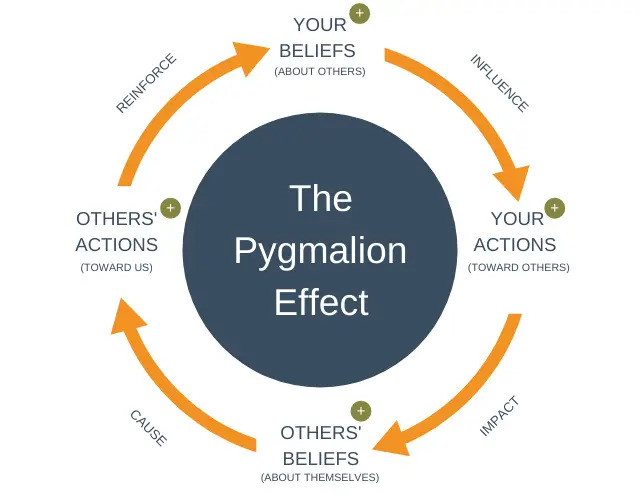
This might sound familiar, and that’s because it’s closely linked to the Pygmalion Effect, a term most people have heard at least once. The Pygmalion Effect suggests that when you hold high expectations for someone—or for yourself—it positively influences performance. In other words, if you truly believe in someone, they might just become more successful. The Rosenthal experiment was designed to put this theory to the test. So, what actually happened?
The Experiment Begins!
First things first: it wasn’t just the students who were being “tricked”—the teachers were the ones being manipulated. Rosenthal and Jacobson gave all the students in an elementary school a fake IQ test. While the test itself wasn’t “fake” in format, the results they shared with the teachers certainly were. They told the teachers that the test was designed to identify the “rising stars” of the future. Then, they randomly selected 20% of the students and labeled them as “geniuses,” telling their teachers that these specific kids were destined for great academic success.
As you can imagine, the teachers were influenced by this information. Believing these students had extraordinary potential, they started treating them differently. To ensure there were no other variables at play, Jacobson and Rosenthal made sure these “geniuses” weren’t given extra tutoring, nor were the teachers given different teaching methods to use. There were no special assignments for the “geniuses” and no extra burdens for the rest. Everything was kept as equal as possible. The only thing that changed was the teachers’ attitude toward those specific kids. So, when they checked back a year later, do you think there was a difference? Surprisingly, yes! The IQ levels of those perfectly normal children who were labeled as geniuses had actually risen.

The result was clear: the students from whom the teachers expected high achievement actually achieved more. Even though these kids didn’t study harder or have higher innate IQs, the extra attention and belief they received made them more successful, and their IQ scores climbed. What did the teachers do differently? Without even realizing it, they paid more attention to these students, asked them more questions, provided more feedback, and were more patient with their mistakes. In the end, just the boost in the students’ confidence was enough to spark that growth.
The Anatomy of Success!
The experiment is explained by the Self-Fulfilling Prophecy. People tend to behave in ways that align with the expectations placed upon them. Rosenthal identified four main mechanisms behind this effect:
- Climate: Teachers creating a warmer, more supportive environment for students they perceive as high-achievers.
- Input: Teachers providing more information and opportunities to those specific students.
- Response Opportunity: Allowing these students to speak up more often and listening to their answers with more care.
- Feedback: Giving these students more frequent and positive reinforcement.
With these four elements in play, the students weren’t just more motivated; their actual drive to learn increased.

So, what does this tell us? I’m sure you’ve already connected the dots. It turns out that by absorbing the expectations and support provided to them, students can raise even their seemingly fixed IQ levels. This shows us how important the approach of teachers and parents really is. It’s a phenomenon backed by both the Pygmalion Effect and this experiment. And let’s be clear: this isn’t just limited to students. We see this in every form of human connection, from the way a boss manages their team to our everyday social interactions.
In short, the expectations others have of us aren’t just guesses—they can act like a magic touch. If you tell someone, “You’re brilliant!” they might just start becoming brilliant. The inverse is also true: negative expectations can box us into limited potential. The lesson from the Rosenthal experiment is clear, isn’t it? Believing in people can literally change reality. And here’s the best part: why wait for someone else to do it for you? You can apply this to yourself! By believing in your own potential, you can start shaping who you become.
References and Further Reading
Brookover, W. B., Rosenthal, R., & Jacobson, L. (1969). Pygmalion in the classroom: teacher expectation and pupils’ intellectual development. American Sociological Review, 34(2), 283. https://doi.org/10.2307/2092211
Perera, A. (2024, February 13). The Pygmalion Effect: Definition Examples. Simply Psychology. https://www.simplypsychology.org/pygmalion-effect.html
Trevor Ragan. (2021, May 25). The Pygmalion Effect, Growth Mindset, & Learning ft. Robert Rosenthal [Video]. YouTube. https://www.youtube.com/watch?v=R1Yl9nvXIE0
Originally published in Turkish at Doğa Filozofu.