


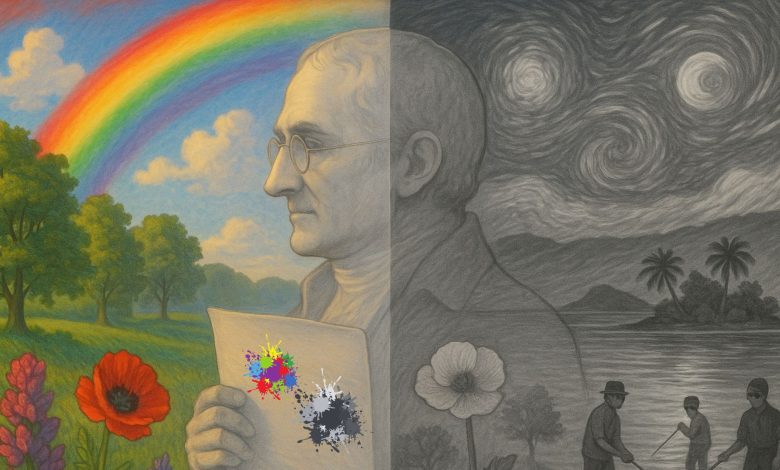
What comes to mind when you think of green? Or red, or purple? Are these colors truly what you perceive them to be, or do you just call them that because everyone else uses those names for the colors you see? Let’s dive in and get a better understanding of color blindness to find some answers.
The first scientist to conduct research on color blindness was John Dalton, who was color blind himself. This is why color blindness is often referred to as “daltonism.” In 1794, he published a paper titled Extraordinary Facts Relating to the Vision of Colours, where he described his experience: “That part of the image which others call red appears to me little more than a shade or defect of light; after that, the orange, yellow, and green seem one colour, which descends pretty uniformly from an intense to a rare yellow, making what I should call different shades of yellow.” Dalton actually suspected he had a blue fluid inside his eyes and requested an autopsy after his death, but the procedure revealed no such thing. The fact that his brother was also color blind led him to correctly theorize that the condition was hereditary.

The retina in your eye contains various photoreceptors that allow us to see. One of these, the cone cells, is responsible for color perception. This condition, passed down through recessive genes on the X chromosome, affects about 8% of men but only 0.5% of women. While this condition is usually congenital—caused by cone cells failing to function—it can also be acquired later in life due to various factors. Damage to different types of cone cells leads to different kinds of vision loss.
Color blindness is generally classified into three main types: Protanopia (red color blindness), deuteranopia (green color blindness), and tritanopia (blue color blindness). An individual cannot distinguish the specific color they have a deficiency in, often perceiving it as an entirely different shade. For instance, someone with red color blindness cannot distinguish red and its hues, perceiving red as a different color altogether. This happens because the specific photoreceptors meant to process that color are either damaged or entirely absent.
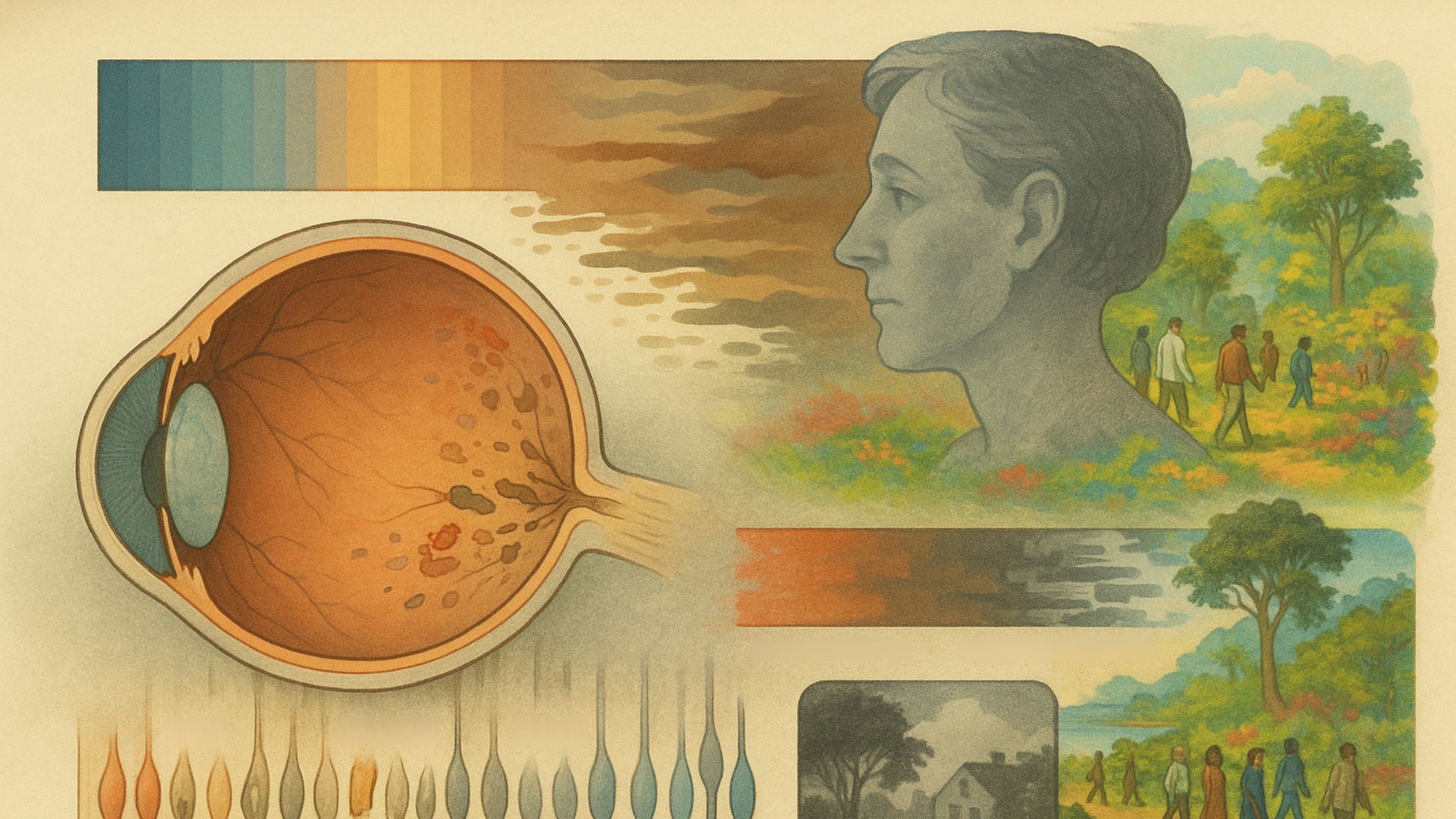
Not all color-related vision impairments are “true” color blindness. In total color blindness, an individual sees only in shades of black, white, and gray; this condition is called achromatopsia. While this is extremely rare globally, there is one place where 10% of the population lives with it.
The Island of Achromatopsia
Pingelap Atoll, located among the Micronesian islands in the South Pacific, has a population where 10% of the people suffer from achromatopsia. On the mainland, that ratio is closer to 1 in 3,000. In 1775, a devastating typhoon struck the island, killing the vast majority of the population. Only 20 people survived, and a significant number of them were color blind, including the island’s ruler, King Doahkaesa Mwanenihsed.
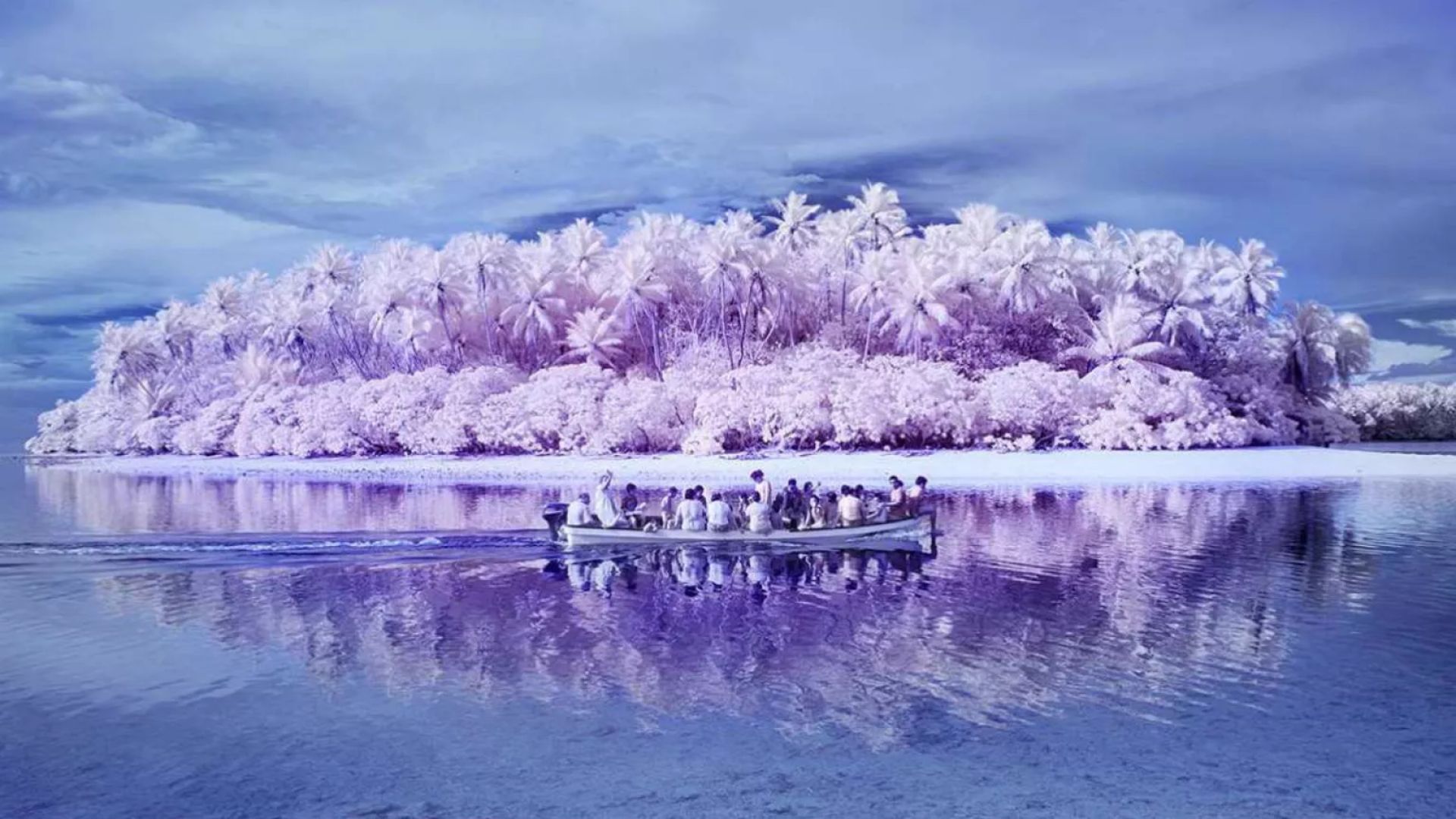
As the population grew, this recessive gene was passed down through the generations. Because achromatopsia makes it nearly impossible to perceive color, those affected rely on their rod cells—the photoreceptors that detect shape and brightness rather than color. Since these cells remain functional in achromatopsia patients, they can still see, just in a different way. In 2015, Belgian photographer Sanne De Wilde visited the island to document this, using various techniques to edit her photos to reflect how these individuals perceive their world.
Color blindness hasn’t just been a challenge; it has shaped the island’s culture. Because these individuals perceive the world through brightness, they are highly sensitive to harsh daylight. However, their night vision is remarkably sharp. As a result, nighttime fishing has become a local tradition.
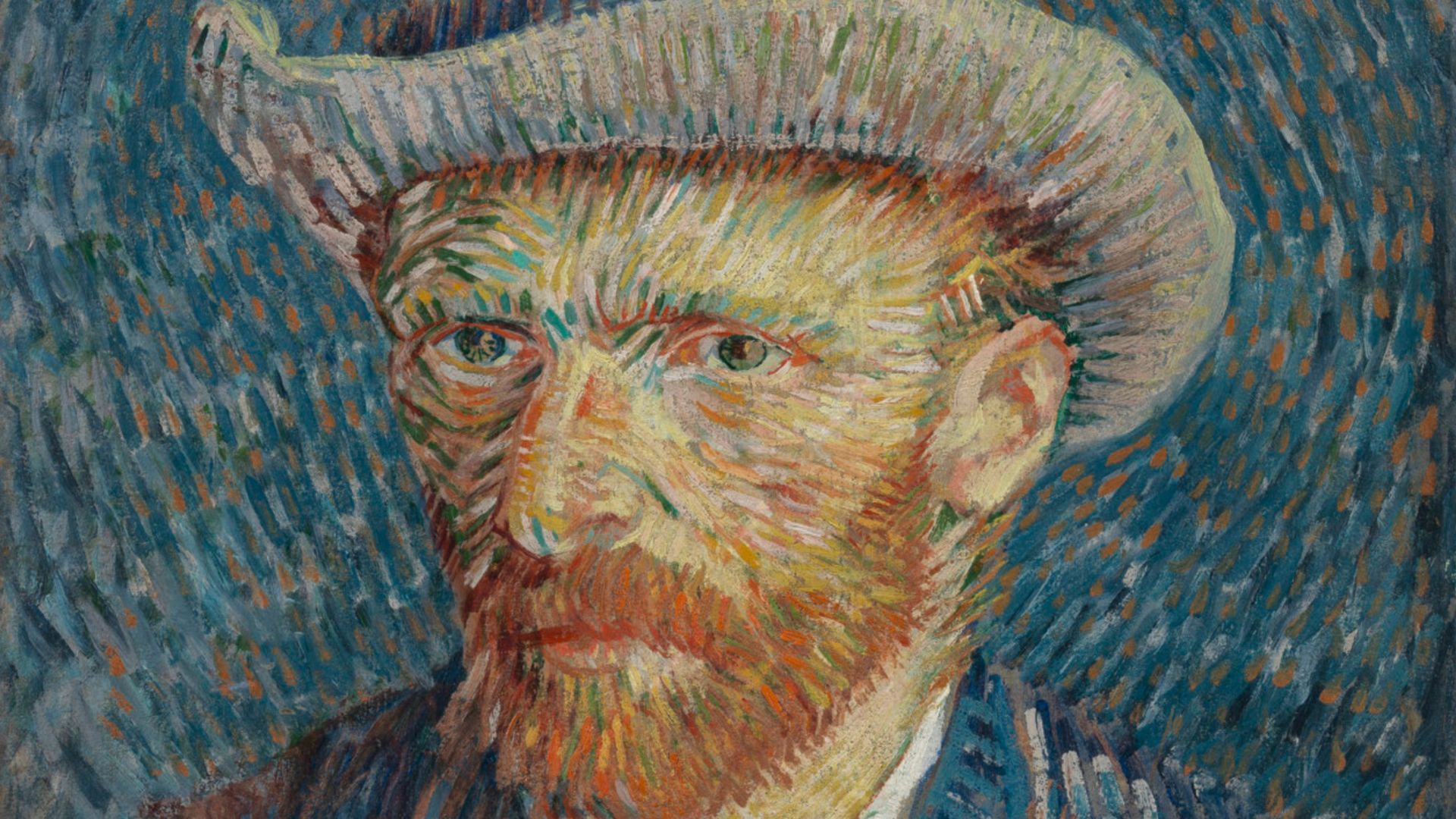
While color blindness can certainly impact daily life, it is by no means an insurmountable barrier to achievement. Vincent Van Gogh, for example, was color blind, yet he became one of the most celebrated painters in history. Some argue that his unique perception influenced the way he depicted natural elements, contributing to the distinct, expressive style we recognize today.
Today, diagnosing color blindness is simple. While we know it is often hereditary, conditions like MS or diabetes can also cause it. Diagnosis is usually done in moments using the “Ishihara test.” Depending on the cause, there are specialized lenses available that help patients distinguish colors more clearly, though these are tools for perception rather than a medical cure.
References and Further Reading
Hunt, D. M., Dulai, K. S., Bowmaker, J. K., & Mollon, J. D. (1995). The chemistry of John Dalton’s color blindness. Science, 267(5200), 984–988. https://doi.org/10.1126/science.7863342
Işık, M. (2017). Renk körlüğünün tanısına yönelik yeni bir arayüz (Doctoral dissertation, Sakarya Universitesi (Turkiye).
Mulligan, K. (2018, September 6). John Dalton: The Father of Color Blindness. EnChroma. https://enchroma.com/blogs/beyond-color/john-dalton-the-father-of-color-blindness
On Island of the Colorblind, Paradise has a Different Hue. (n.d.). https://education.nationalgeographic.org/resource/island-colorblind-paradise-has-different-hue/
Robertson, M. (2022, September 29). History and advancements for color blindness. Bond Eye Associates. https://bondeye.com/advancements-color-blindness/
Ross, & Sydney. (2025, May 12). John Dalton | Biography, Discoveries, Atomic Model, & Facts. Encyclopedia Britannica. https://www.britannica.com/biography/John-Dalton
Sarıgül, T. (2020, August 15). Renk körlüğünün sebebi nedir? Bilim Genc. https://bilimgenc.tubitak.gov.tr/makale/renk-korlugunun-sebebi-nedir
Originally published in Turkish at Doğa Filozofu.