

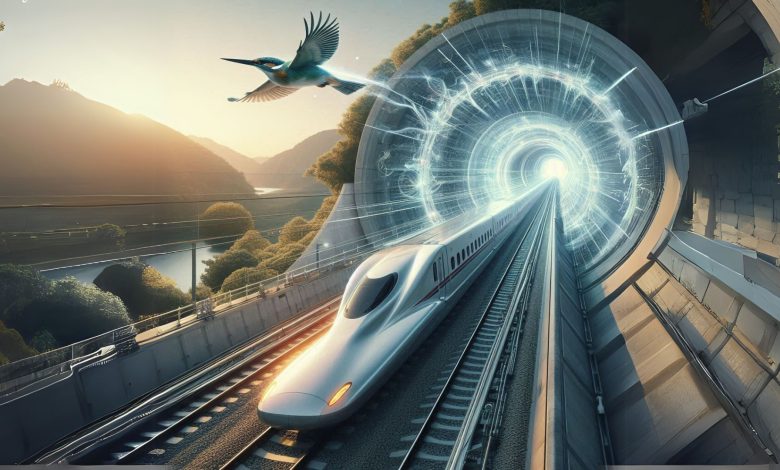
Back in the 1960s, one of the fastest trains in the world was born. Produced in Japan, the “Shinkansen” was so incredibly fast that it earned the nickname the bullet train. The engineers who designed it were thrilled with its speed, but once it hit the tracks for daily service, a major problem emerged: the sonic boom. As the train entered a tunnel at high speed, it compressed the air in front of it, creating a massive pressure wave. This wave resulted in a thunderous sonic boom, which was a nightmare for the wildlife and residents living near the tracks, not to mention the passengers on board. To make matters worse, it actually hindered the train’s efficiency. So, what could be done?
The Engineering Manager and the Birdwatcher: Dr. Eiji Nakatsu
Dr. Eiji Nakatsu, the company’s technical development manager, and his team rolled up their sleeves to tackle the issue. But this wasn’t a simple fix. Slowing the train down would solve the sonic boom problem, but it would defeat the purpose of a high-speed rail. Redesigning the tunnels along the entire route would be prohibitively expensive—as would displacing the communities living nearby.
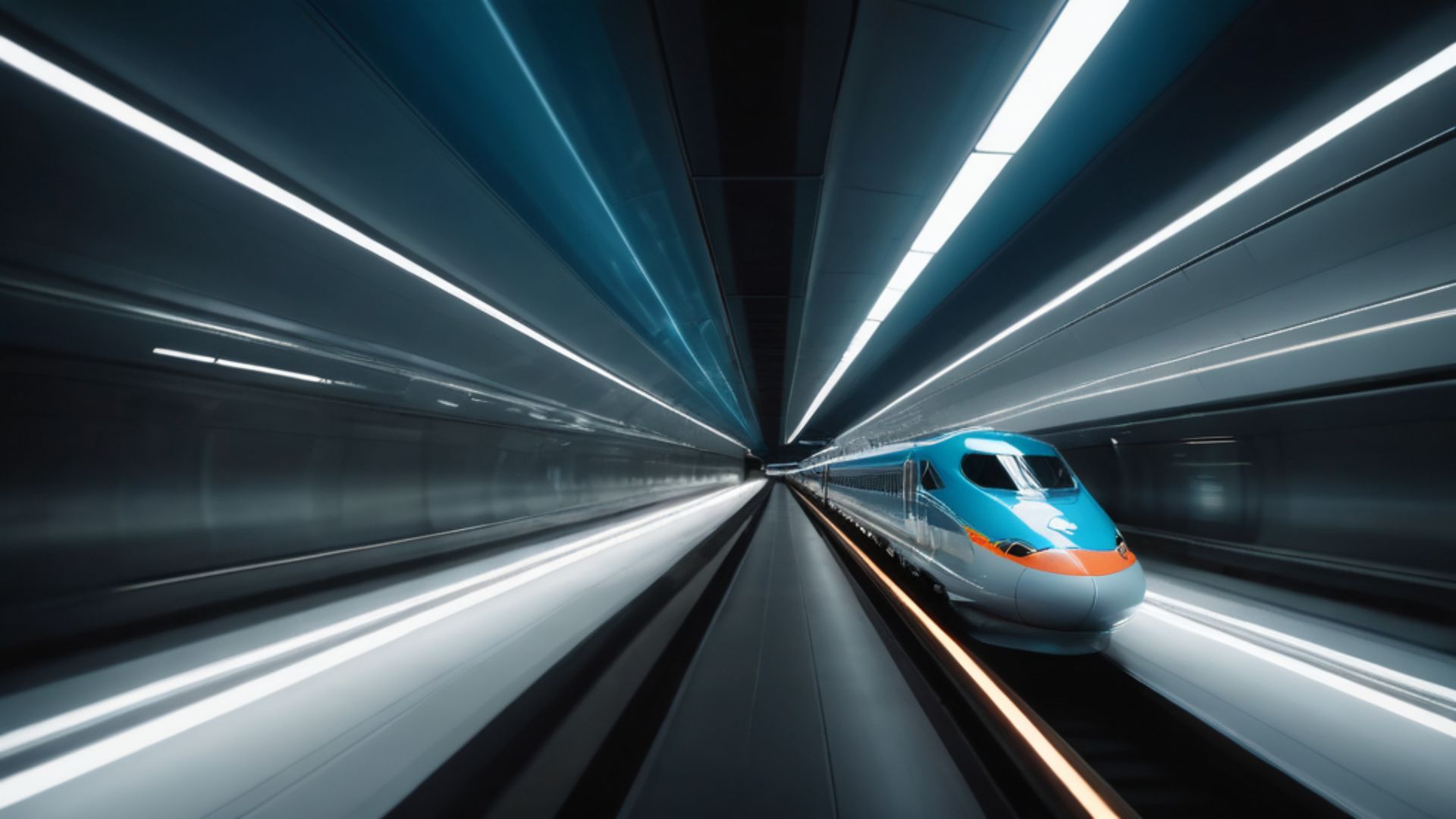
While brainstorming alternatives, Dr. Eiji Nakatsu remembered the kingfisher. A lifelong bird enthusiast, Nakatsu loved observing them. He knew that kingfishers dive into water with such precision that they barely make a splash, allowing them to catch fish without warning. Nakatsu realized that the secret behind this hunting prowess was the unique shape of their beaks. In that moment, he wondered: what if they redesigned the Shinkansen’s nose to mimic the shape of a kingfisher’s beak?
A Design Inspired by the Kingfisher
Dr. Eiji Nakatsu and his team went to work, reshaping the front of the Shinkansen to mirror the geometry of a kingfisher’s beak. Finally, the moment of truth arrived. The newly redesigned bullet train sliced through the tunnel—and the results were incredible! The sonic boom problem was solved. Even better, the kingfisher-inspired design made the train 10% faster and 15% more fuel-efficient than its predecessor.
Following this success, the Shinkansen became a point of immense national pride for Japan. It didn’t just revolutionize travel; it provided a massive boost to tourism and the economy. To this day, riding this nature-inspired marvel remains a quintessential experience. In fact, there are studies suggesting the Shinkansen has even influenced population distribution and birth rates in Japan. Furthermore, there is a Japanese concept known as the “Shinkansen Effect,” which encourages radical change and innovation. The idea is that you must be bold and take immediate action to achieve goals that seem impossible. Emerging from a period of profound transformation in mid-20th-century Japanese business, it has become a mindset applicable to all walks of life, pushing people to step out of their comfort zones and embrace change.
The Journey to Creativity and the “Eureka!” Moment
Was Dr. Eiji Nakatsu just lucky? Having him on the team was certainly a stroke of fortune, but he didn’t stumble upon this innovative solution by accident. He was a keen observer who looked at the world with curiosity. He might not have set out to find a solution to an engineering problem while birdwatching, but he was prepared for that moment nonetheless. As Louis Pasteur famously said, “Chance favors the prepared mind.”

Nakatsu’s deep knowledge of ornithology combined with his engineering expertise led him to his “eureka!” moment. Many experts agree that this is the very essence of creativity: the ability to draw connections across disciplines by cultivating a mind fed by diverse fields.
To generate creative and effective solutions, we need to look beyond the silos of our own careers and build a broader intellectual perspective. As the scholar Prof. Dr. İlber Ortaylı puts it, “An intellectual is someone who takes an interest in things that are not strictly their business. They are someone who engages with the world beyond their own.” Such a wide-angle lens provides a multidimensional perspective on problems and significantly increases our chances of finding a breakthrough.
The first step in this process is simply observing nature with a curious eye. Who knows? Nature might have already solved most of the problems we face today during its millions of years of evolution!
References and Further Reading
From the Director: The “Shinkansen effect” | Artemis Centre. (2022, August 5). Artemis Centre. https://artemis.mggs.vic.edu.au/news/from-the-director-the-shinkansen-effect#:~:text=The%20%E2%80%9CShinkansen%20effect%E2%80%9D%20derived%20its,the%20mid%2D20th%20century.
High speed train inspired by the Kingfisher — Innovation — AskNature. (n.d.). AskNature. https://asknature.org/innovation/high-speed-train-inspired-by-the-kingfisher/
Popova, M. (2013, November 18). Combinatorial creativity and the myth of originality. Smithsonian Magazine. https://www.smithsonianmag.com/innovation/combinatorial-creativity-and-the-myth-of-originality-114843098/
The beak that inspired a bullet train — Biological strategy — AskNature. (n.d.). AskNature. https://asknature.org/strategy/beak-provides-streamlining/
Wang, J., Terabe, S., Yaginuma, H., Uno, H., & Suzuki, Y. (2024). Do high-speed railways have an impact on population change? evidence from Japan. Transportation Research Part a Policy and Practice, 187, 104187. https://doi.org/10.1016/j.tra.2024.104187
Originally published in Turkish at Doğa Filozofu.