

Imagine you’re walking down a crowded street and someone clearly needs help. Yet, no one lifts a finger. You find yourself stopping and thinking: “Is someone else going to step in?” That right there is a very real psychological phenomenon we’ve all encountered at some point: The Bystander Effect.
The bystander effect is the tendency we have to freeze up, convinced that someone else will surely step up to do the hard thing. But that’s not the only glitch in our mental software. What else are we dealing with?
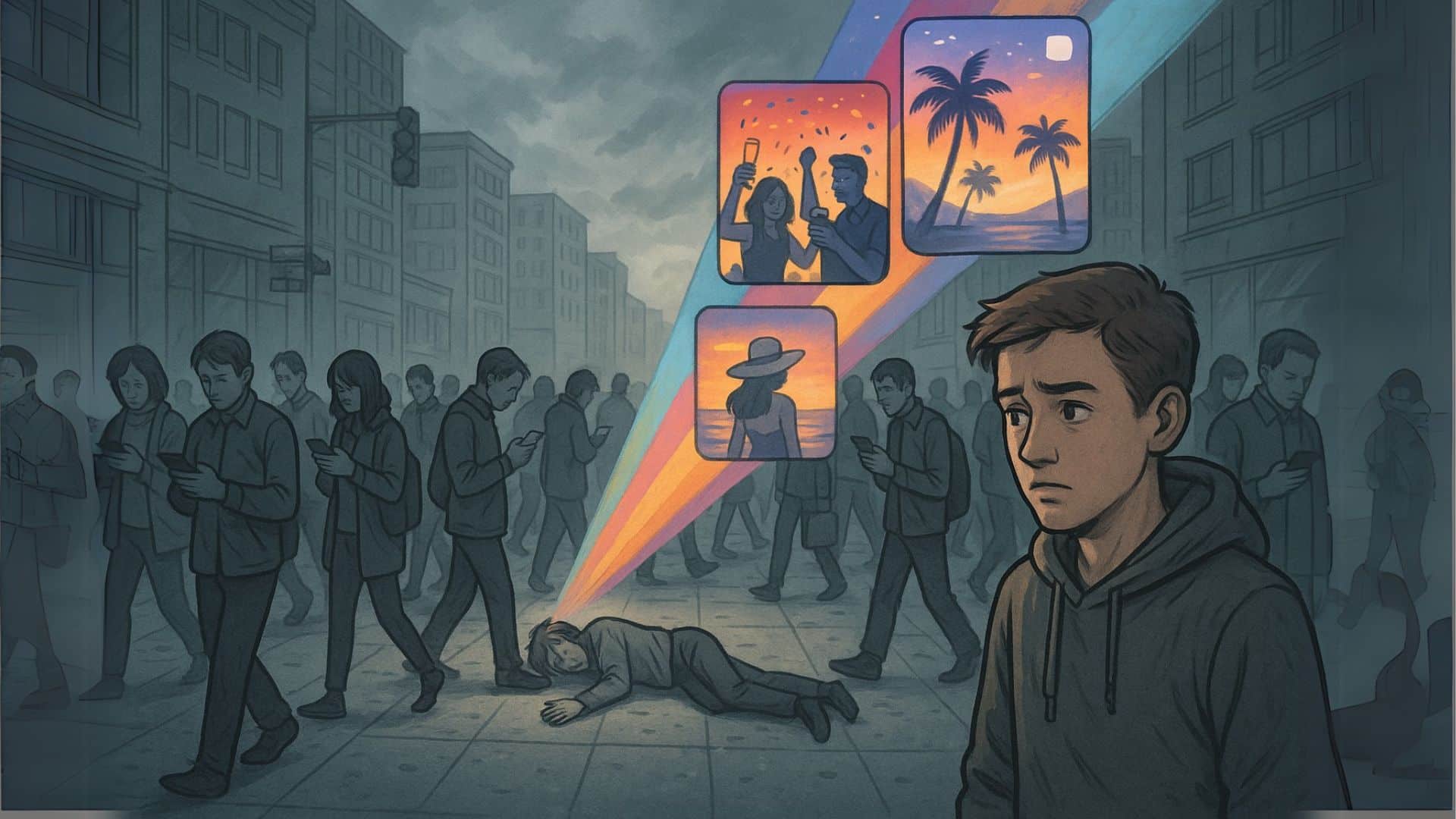
For instance, have you ever scrolled through Instagram, seen your friends off on an amazing vacation, and felt a pang of envy? Have you ever felt lousy at home, aimlessly swiping through Reels, while watching others share their highlight reels? If so, you’ve likely fallen into the trap of FOMO (Fear of Missing Out). How is it possible that in today’s world, we’re simultaneously paralyzed when it comes to helping others and terrified that we’re missing out on everything else? Let’s dive in and get to know these two intriguing games our brains play on us.
The Bystander Effect
The bystander effect is the phenomenon where individuals are less likely to offer help to a victim when others are present. It was first identified in the 1960s by psychologists John Darley and Bibb Latané. The concept gained widespread attention following the 1964 murder of Kitty Genovese in New York—a truly harrowing case. Kitty was attacked right outside her own home. As you know, New York is a bustling, vibrant city, right? You’d think that in a lively, populated neighborhood, the odds of someone being attacked in plain sight without anyone intervening would be slim. But tragically, that’s exactly what happened.

As Kitty returned home, she realized she was being followed. She screamed for help and ran toward her apartment. When her attacker caught up to her, a neighbor saw the situation and shouted, “Leave that girl alone!” The attacker fled, but because no one actually came to help, he returned to finish his assault. Throughout this entire ordeal, no one called the police or an ambulance.
Despite the number of people who witnessed the event, no one intervened in any meaningful way. Kitty had screamed, and the attack lasted quite a while. Everyone had time to act. They could have at least bothered to dial 911. Eventually, a neighbor did call, but it was too late. I’m sure you’re feeling almost as frustrated with those witnesses as you are with the killer, but these people weren’t inherently “evil.” Each of them simply assumed that someone else had already called the authorities. This realization was staggering. Darley and Latané recognized the significance of this and dedicated their research to it. It turns out that humans have a deep-seated need for social validation. We are terrified of taking responsibility and making a mistake, and we tend to look at how others are reacting before we act ourselves. This leads to a collective paralysis. But are we really happy with that inaction?
FOMO
It seems we are also deeply afraid of missing out on the experiences others are having—so much so that we’ve named it FOMO. A person can feel immense stress and anxiety simply by believing that others are having more fun or living more meaningful lives. This feeling has always existed, of course, but it’s undeniably amplified in the age of social media. Being constantly exposed to concert clips, vacation photos, or dinner posts can make us feel insignificant. People often compare their “behind-the-scenes” with everyone else’s “highlight reel,” leading to feelings of inadequacy. We start to devalue our own experiences while pedestalizing those of others. To hide these feelings, some resort to posting exaggerated, curated versions of their own lives on social media—which, in turn, fuels FOMO in someone else.
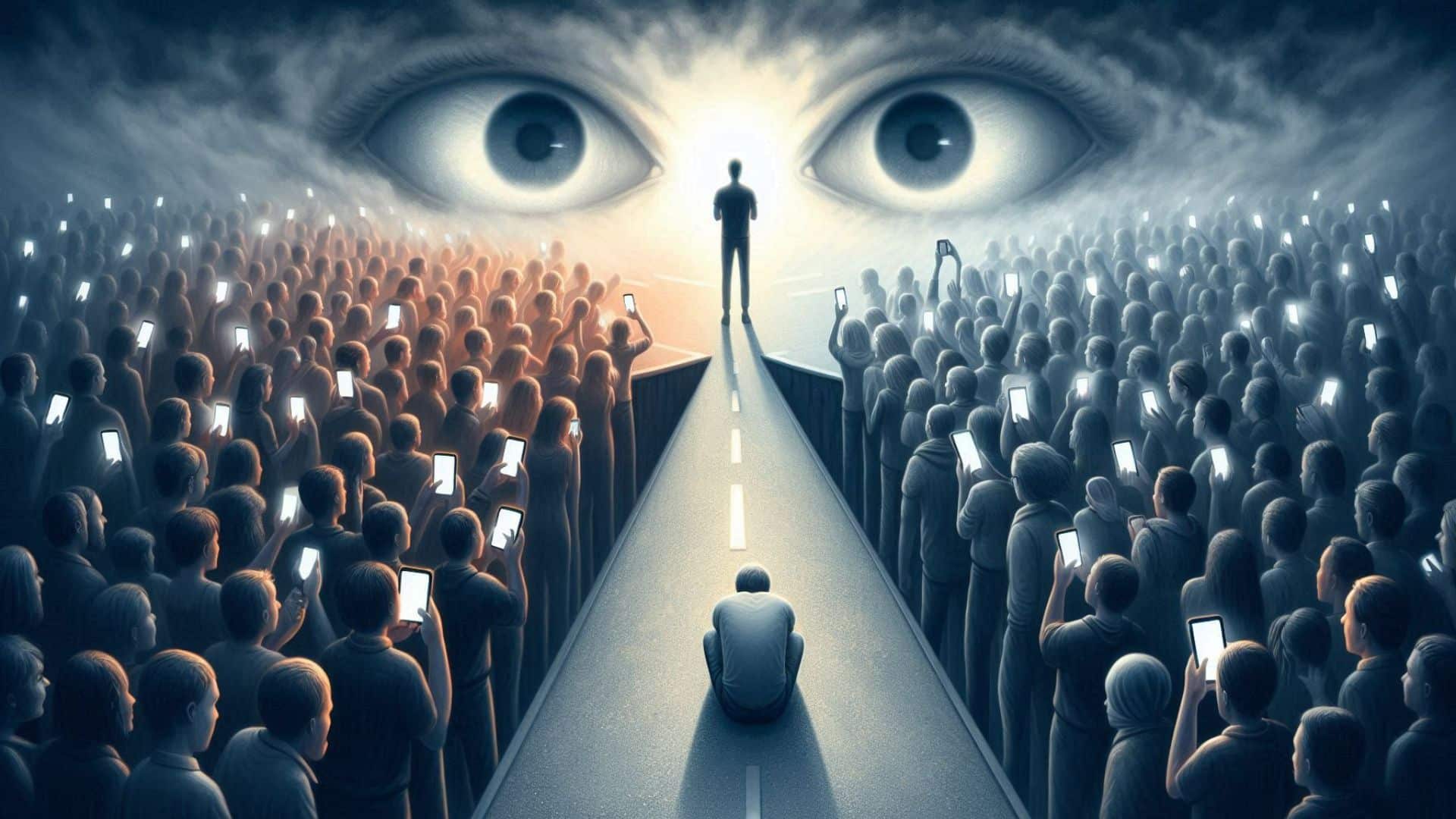
As we can see, these are two major psychological traps we fall into all too easily. They keep us stuck in inaction and internal conflict. So, what do we do now? Are we going to wear ourselves out trying to attend every event because of FOMO, or will we succumb to the Bystander Effect and leave the responsibility of living—and helping—to someone else?
Perhaps the solution is simple. Maybe if we just started listening to our own instincts and stopped worrying so much about what everyone else is doing, we could finally find some real freedom. What do you think? Are you up for the challenge?
References and Further Reading
Blagg, & D, R. (2016, July 13). Bystander effect | Causes & Consequences. Encyclopedia Britannica. https://www.britannica.com/topic/bystander-effect
Collins, S. (2024, July 12). How do you deal with FOMO? WebMD. https://www.webmd.com/mental-health/fomo
HISTORY.com Editors. (2025, February 27). Kitty Genovese – Case, murder & Bystander | HISTORY. HISTORY. https://www.history.com/topics/crime/kitty-genovese
Wikipedia contributors. (2025, July 15). Fear of missing out. Wikipedia. https://en.wikipedia.org/wiki/Fear_of_missing_out
Originally published in Turkish at Doğa Filozofu.