


As we all know, the Greek landscape is the birthplace of democracy and free thought. But this region wasn’t just a cradle for philosophy; it was also the stage for epic wars, powerful rulers, and world-shaping events. In this piece, we’re going to zoom in on the geography of Ancient Greece and take a journey through its history, right up to the doorstep of the Ottoman era.
The Early Period (2000 BC – 1100 BC)
According to recorded history, the first great civilizations of this region emerged during this era: the Minoan Civilization and the Mycenaean Civilization.
Of the two, the Minoans came first. Thought to have been established around 2000 BC on the island of Crete, this was a culture that truly fell in love with the sea. They were masters of trade and navigation, and they didn’t skimp on construction either, managing to build marvels like the Palace of Knossos. This palace was ahead of its time, sophisticated enough to feature its own water channel systems.
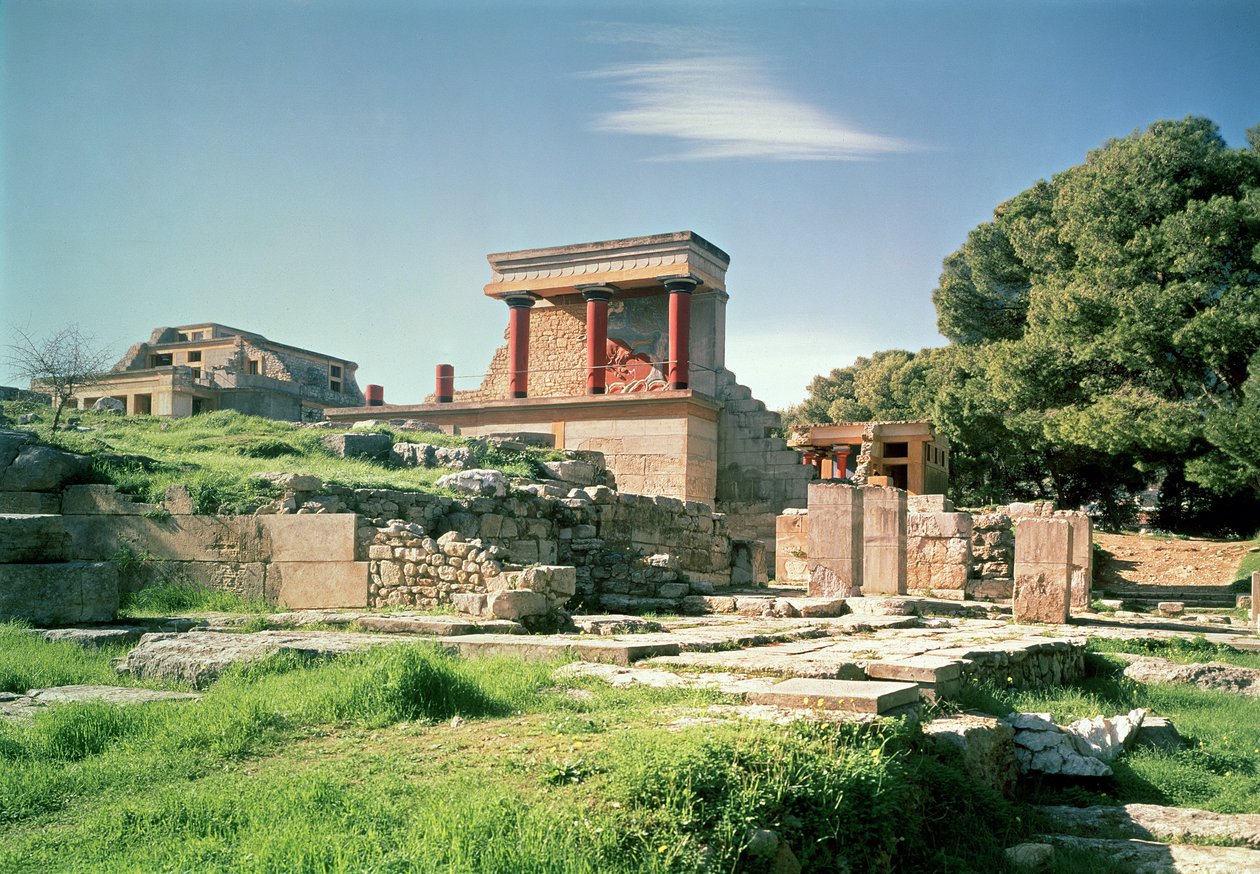
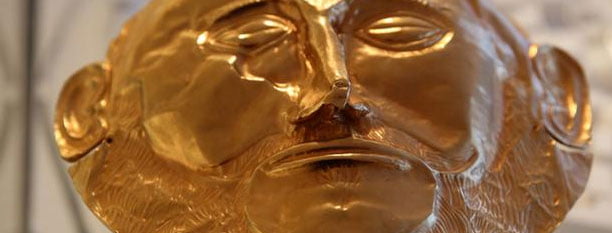
Generally, the Minoans were well ahead of their time in art and architecture. Their decline began with the volcanic eruption at Santorini, followed by wars with the Mycenaeans. The Mycenaeans, who stepped onto the historical stage just as they conquered the Minoans, appeared around 1600 BC. They built what could arguably be called the first fortress-cities in history, alongside elaborate royal tombs. They were a formidable civilization, especially in art—the famous Mask of Agamemnon, known even today, was recovered from their monuments.
———————————————————————————————————————-
DID YOU KNOW?
The epics of the Iliad and the Odyssey depict the Mycenaeans as heroic and courageous warriors. The very way they are portrayed in these epics gives us a clear sense of their significance.
———————————————————————————————————————–
Of course, the Mycenaeans couldn’t stay strong forever. Around 1100 BC, they collapsed due to internal strife and the incursions of the Sea Peoples.
The Dark Ages and the Archaic Period (1100 BC – 800 BC & 800 BC – 500 BC)
After the fall of the Mycenaeans, the Greek landscape plunged into about 300 years of darkness. While city-states began to form during this time, it was generally an era of declining trade, shrinking populations, and reduced spheres of influence for cities. Yet, as time marched on, they reached the point where they could work with iron—a massive boon for the civilizations to follow. Eventually, city-states like Athens and Sparta emerged, and as the Archaic Period dawned, Greek society was preparing to reach for the stars.
This was the era when powerful city-states truly came into their own. These small states were completely independent. There was no overarching empire looming over them; each city had its own laws, its own form of government, and its own religious practices. With populations likely numbering in the tens of thousands at most, these cities were governed by a unique, early form of democracy. But don’t mistake this for the modern democracy we know today—society was strictly divided into citizens (men), metics (resident aliens), and slaves.

There were many city-states and, naturally, many forms of government, though monarchy was generally the norm. Whether it was a king, an aristocratic family, or a tyrant in charge, power was concentrated. But Athens? Athens was different. Athens was governed by democracy. They had popular assemblies, but as we mentioned, it hadn’t reached its full form. For instance, only free men were considered citizens. Women were not slaves, but they weren’t citizens either. Metics were resident aliens who had moved from other cities—often for trade—and they had no voting rights. Slaves, of course, had no voice at all. This was the setup in Athens; elsewhere, class divisions were sharper and rule was much harsher. It is precisely because of this that philosophy and democracy flourished in Athens, where prosperity reached new heights. Consequently, great thinkers like Socrates, Aristotle, and Plato all emerged from Athens. Of course, they were still a bit further down the timeline; during this early period, philosophers like Thales and Anaximander were the ones leading the charge.
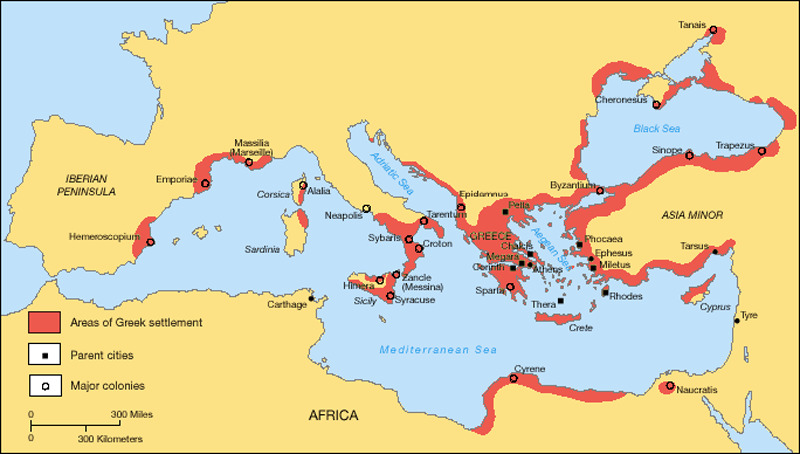
Now, we can’t spend the whole article focused on Athens, can we? If we turn our eyes back to the wider Greek landscape, we see that by the Archaic period, agricultural land was no longer enough. This pushed them to establish colonies across the Mediterranean and the Black Sea. While these colonies were smaller in scale and impact than the ones established in the Americas 2,000 years later, they still sparked their fair share of conflicts. This colonial era, in particular, saw intense competition between Greek city-states and the Phoenicians. You can see the colonial map of the era in the image below:
The Classical Period (500 BC – 323 BC)
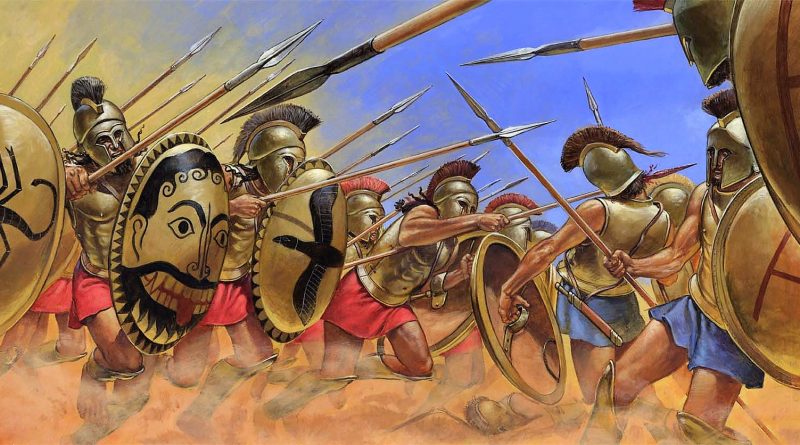
When we say “Classical Period,” we’re talking about everything that likely comes to mind when you think of Ancient Greece. Art, philosophy, and a more sophisticated social structure flourished during this time—though, as always, they couldn’t stay away from war. This period kicks off with the Persians, who began to threaten Greek city-states starting around 500 BC. Their first major attempt was the Battle of Marathon in 490 BC, where the Athenians managed to defeat them. But that wasn’t the end. The Persians tried again in 480 BC, and the combined forces of Sparta and Athens triumphed once more. The Persians were persistent, continuing their attempts at intervals for another 30 years, but they eventually lost and withdrew from the region entirely following the Peace of Callias. Then, trouble began brewing between the city-states themselves. The famous Peloponnesian War saw Athens and Sparta turn on each other.
Sparta won the war, but generally, all Greek states were damaged by the ordeal, leading to a period of fragmentation and civil war. Finally, in 338 BC, Philip II of Macedon united all the city-states, marking the rise of Macedonia.
Alexander the Great and the Hellenistic Period (323 BC – 31 BC)
Following Philip, a figure appeared on the scene whose name we all know: Alexander the Great!
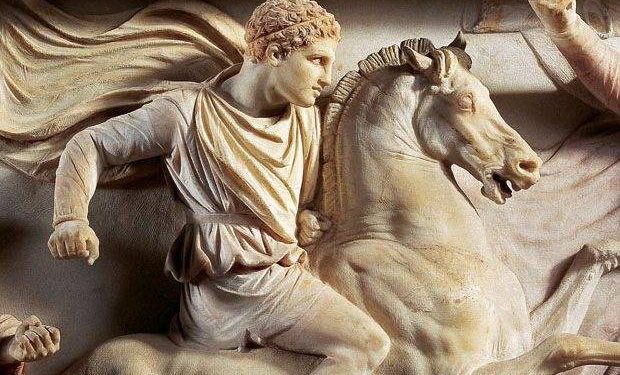
Alexander was a peerless military genius. We’ll have a separate article on him, so we won’t dive into all the details here, but we think his resume will impress you regardless. In just 15 years, Alexander completely dismantled the Persian Empire and pushed as far as Egypt, Mesopotamia, and even India. It was an incredible achievement; no state had ever managed such a feat before. Even Rome didn’t have that kind of speed. But such rapid success often brings a rapid fall.
When Alexander died in 323 BC, his legacy fractured instantly as his empire was carved up among his generals. This resulted in three major kingdoms:
- The Ptolemaic Kingdom (Egypt)
- The Seleucid Empire (Mesopotamia and Iran)
- The Antigonid Kingdom (Macedonia and Greece).
Among these, the Ptolemaic Kingdom is the one where Cleopatra—whom we mentioned in our Egypt history article—would eventually take the stage. All three kingdoms were eventually absorbed by the rise of Rome, with every one of them conquered by 31 BC.
———————————————————————————————————————-
DID YOU KNOW?
Alexander the Great studied philosophy, science, medicine, and literature under Aristotle, and he spoke of his teacher with great reverence throughout his life.
———————————————————————————————————————–
Regardless of their relatively short lifespan, we certainly can’t downplay these achievements. Even if the empire didn’t last, we still talk about the “Hellenistic Culture” he pioneered today. But what exactly is this culture?
Hellenistic Culture is essentially a massive transformation that emerged after Alexander’s conquests (from the late 4th century BC to the 1st century BC), defined by the synthesis of Greek culture with the East. During this period, Greek art, philosophy, science, and language spread across a vast geography from the Mediterranean to Central Asia, weaving itself into other cultures. While the Hellenistic period ended with Rome’s conquest of Egypt in 31 BC, the culture lived on. If you’re thinking, “Okay, but you still haven’t fully explained this culture,” let’s dig a bit deeper.
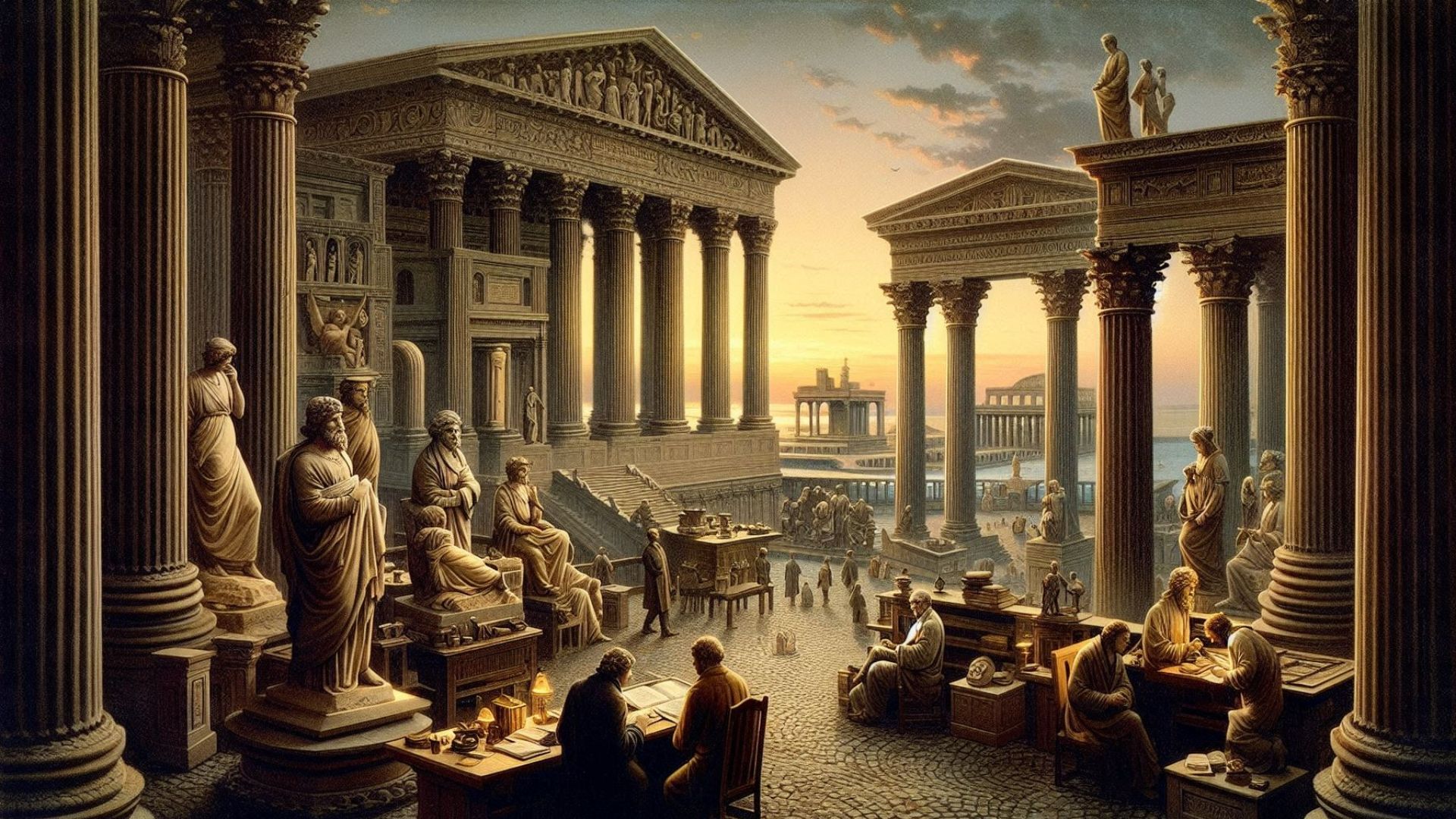
Eastern culture was always one where emotion and desire ran high. Greek culture, especially in the Classical period, tended toward a more balanced and idealized art form. When these two fused, the result was fascinating. Dramatically realistic works merged with Greek sculpture, leading to the first traces of what we would call Baroque art. It didn’t stop there, though. The scientific superiority of the Greek world spread to places like Egypt and Mesopotamia. With figures like Euclid and Archimedes, science gained tremendous momentum in these regions—a legacy that would eventually become a major component of Byzantine culture.
All in all, the history of Ancient Greece represents one of the brightest chapters in human civilization. From the turbulent world of seafaring to the deep inquiries of philosophy; from the golden age of art and science to the rise and fall of empires, this period is a cornerstone of the modern world. The city-states of the Archaic period, the democratic ideals and artistic peaks of the Classical period, and the cultural synthesis and global reshaping brought about by Alexander the Great formed one of history’s greatest transformations. While Ancient Greece lost its political independence to Rome, its legacy continues to live on in our philosophy, art, science, and even our modern systems of law and politics. Ancient Greece isn’t just a period in time; it is a symbol of humanity’s eternal quest for understanding.
References and Further Reading
Cartwright, M., & Che, X. (2025). Mycenaean civilization. World History Encyclopedia. https://www.worldhistory.org/Mycenaean_Civilization/
History with Cy. (2021, May 16). The history of Ancient Sparta and the Spartans (History of Ancient Greece) [Video]. YouTube. https://www.youtube.com/watch?v=v2EXg_6mwzI
Hornblower, & Simon. (2025a, May 16). Ancient Greek civilization | History, Map, Culture, Politics, Religion, Achievements, & Facts. Encyclopedia Britannica. https://www.britannica.com/place/ancient-Greece/Alexander-in-Egypt
Hornblower, & Simon. (2025b, May 16). Ancient Greek civilization | History, Map, Culture, Politics, Religion, Achievements, & Facts. Encyclopedia Britannica. https://www.britannica.com/place/ancient-Greece
The Editors of Encyclopaedia Britannica. (2025, May 9). Minoan civilization | History, Location, & Facts. Encyclopedia Britannica. https://www.britannica.com/topic/Minoan-civilization
Walbank, & W, F. (2025, June 2). Alexander the Great | Empire, Death, Map, & Facts. Encyclopedia Britannica. https://www.britannica.com/biography/Alexander-the-Great
Originally published in Turkish at Doğa Filozofu.