




“Nothing in biology makes sense except in the light of evolution.”
– Theodosius Dobzhansky
Communication is a cornerstone for the survival and flourishing of any species. But language is more than just a tool for exchange; it’s a cognitive system that shapes how we perceive and understand the world. While all animals use various methods to gather and share information, humans possess by far the most complex system—one that utilizes syntax, the ability to arrange words into meaningful, structured outcomes. This sophisticated capability is the result of a long, intricate series of physiological and cognitive evolutionary processes. The relationship between language and cognition has played a pivotal role in our development. Language helped us sharpen our communicative abilities and survive within our communities. It enabled the exchange of information between societies, which in turn paved the way for the progress of the human species. Of course, the development of language didn’t happen in a vacuum. You could even say there’s a chicken-and-egg relationship between cognitive, social, cultural, and morphological evolution and the process of linguistic evolution itself.
The Uniqueness of Human Language
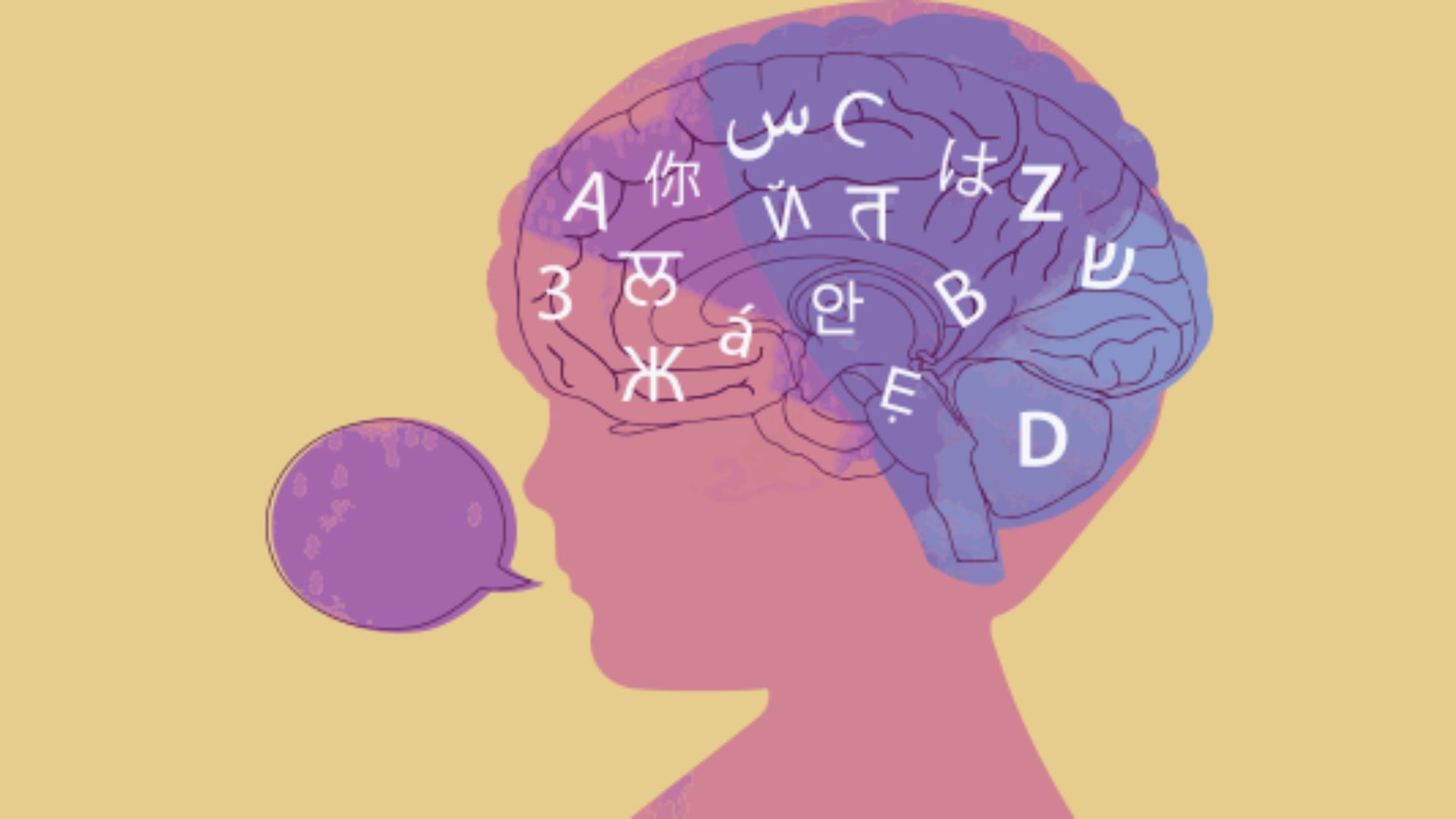
Perhaps the most persistent question in linguistics—or evolutionary linguistics, to be precise—is simply: “Why us?” It is an undeniable fact that humans have the most complex brain in the animal kingdom, and this complexity is directly linked to language. As our cognitive abilities expanded, so did our linguistic skills.
One of the first researchers to tackle the “how” and “why” of the relationship between cognitive evolution and its impact on language was Noam Chomsky, often called the “Father of Modern Linguistics.” Chomsky proposed the idea of a Universal Grammar—an innate blueprint that all humans are born with. This idea suggests that all humans share an inherent capacity to grasp the linguistic structure of any human language. This built-in ability makes us naturally wired for language acquisition. According to Chomsky, there is even a “Language Acquisition Device” in the brain that allows us to intuitively understand the language we are exposed to. While some of Chomsky’s theories have been debated or refined over time, his ideas provided a brilliant foundation for diving deeper into the origins of how we learn to speak.
How Humans Prepared for Language
To prepare for the arrival of language, both the human brain and body underwent significant changes. Our brains expanded, allowing for the development of structures capable of handling complex functions. These shifts enabled us to express more intricate thoughts and conceptualize abstract ideas.
Anatomical Preparation
Over the course of our evolution, our bodies underwent several changes that ultimately allowed us to speak the way we do today. These adjustments are among the most significant factors that set us apart from our ancestors.
One prime example is the descent of the larynx (the voice box) into the lower part of the neck. This anatomical shift allowed humans to produce a vast, diverse range of sounds.
A second example is the change in the flexion of the skull base. The bending of the skull base helped position the pharynx forward, which is essential for the clear articulation of sounds. This also affected the position of the tongue. The descent of the tongue into the throat, combined with its shape and position, enabled the production of complex speech sounds.
Thirdly, there were changes at the brain-bone interface. As the human brain grew, the structure and shape of the skull were altered to accommodate it. Roughly speaking, the expansion of the frontal lobes—where Broca’s area (responsible for language production, located in the left frontal region) resides—influenced the shape of the frontal bone to provide enough room for neural tissue to function and spread properly. (Lieberman, 2007)
While all these changes were beneficial for humans, they also brought side effects. Certain anatomical shifts, like the descent of the larynx, narrowed the airway and created a risk of choking, even while making complex speech possible. In addition to the increased risk of choking, the change in the larynx’s position made it more difficult to breathe and swallow at the same time. (Pinker, 1994) This could be seen as evidence of just how vital communicative speech was for our survival; we were willing to trade off easy breathing for the ability to talk.
Cultural Evolution
Evolution wasn’t just about cognitive or anatomical breakthroughs; cultural developments also played a huge role in shaping language into what it is today. Our growing ability to cooperate helped humans adapt to communities and improve ourselves. Language emerged as a collaborative tool, helping humans share knowledge and pass it on to other members of their groups, thereby creating a cross-generational transfer of information. (Deacon, 2003)

The Origins of Language
Studying the evolution of language is incredibly difficult because there is no fossil record for speech. Linguistics spans across various disciplines like biology and archaeology. However difficult it may be to study, two points are widely accepted: First, that language is a product of evolution, and second, that it is unique to humans. While the question of “when did language emerge?” remains a mystery, recent findings show that other hominids, such as Neanderthals and Denisovans, may have possessed some form of language. (Cuskley, n.d.) Although it’s hard to prove the existence of prehistoric language, it is likely that anatomically modern humans had language 60,000 years ago. (Dediu & Levinson, 2018)
Theories on the evolution of language often focus on comparative evidence between humans and other animals, and when it comes to understanding the origins of human speech, researchers frequently observe how infants acquire their first language.

During the early stages of language acquisition, children rely on signs and gestures before they start speaking. Gestures play a fundamental role in early communication and serve as a precursor to the development of spoken language. A study comparing gesture use in human infants and chimpanzees found that infants use gestures as a way to share interests, whereas chimpanzees use them primarily to manipulate others. (Tomasello & Carpenter, 2007)
All animals on Earth have their own unique systems for communicating with one another, so it’s important to acknowledge the critical role communication plays in survival. However, humans are the only species to possess such a uniquely complex system for communication. Our ability to create complex ideas, use syntax, and conceptualize abstract thoughts is unmatched by any other species. While it may feel perfectly natural and effortless to us now, the human species wasn’t always capable of producing speech. Throughout the journey of acquiring such a unique skill, humans had to sacrifice certain abilities. Yet, along the way, we also gained a wealth of cognitive and behavioral skills.
References and Further Reading
Ahmet Bican Ercilasun – The Birth and Evolution of Language: The Step Theory https://doi.org/10.54316/dilarastirmalari.995814
Hauser, M. D., Chomsky, N., & Fitch, W. T. (2010). The faculty of language: what is it, who has it, and how did it evolve? In Cambridge University Press eBooks (pp. 14–42). https://doi.org/10.1017/cbo9780511817755.002
Kerimoğlu, C. (2021). Chomsky’s problem: the evolution of language. Çukurova University Journal of Turcology Research, 6(2), 598-614. https://doi.org/10.32321/cutad.954455
Tomasello, M., & Carpenter, M. (2006). Shared intentionality. Developmental Science, 10(1), 121–125. https://doi.org/10.1111/j.1467-7687.2007.00573.x
Originally published in Turkish at Doğa Filozofu.