

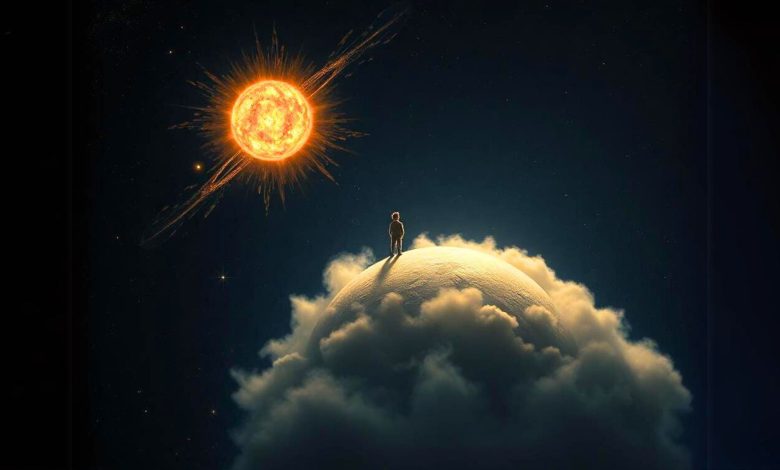
The universe is far more vast than we often imagine, and in the dark, uncharted corners beyond our reach—and our current knowledge—phenomenally powerful events are constantly unfolding. One of the most striking of these is the cataclysmic transformation of stars far more massive than any we can spot in our night sky, ending in spectacular stellar explosions. The aftermath of these events is just as colossal as the explosions themselves. But how does this happen? Why do stars explode? What remains in the wake of such violence, and how exactly is a supernova born? Let’s dive in and find the answers.
What is a Supernova and a Stellar Explosion?
Supernovae and stellar explosions are among the most dramatic events in the cosmos. They mark the final act of a star’s life, releasing a staggering amount of energy in the process. Let’s break down why they happen, how they form, and the consequences they leave behind.
Supernovae generally occur for one of two primary reasons:
1) Type Ia Supernovae:
These usually happen within binary star systems, where a white dwarf star has a companion. The white dwarf siphons material from its neighbor, and once it hits a critical mass (the Chandrasekhar Limit), its core collapses, triggering a supernova. That sounds a bit technical, so let’s simplify:
Think of a “white dwarf” as a small, incredibly dense star that starts feeding on a nearby companion star. The white dwarf doesn’t know when to quit; it keeps accumulating matter until it can no longer hold itself together, and—boom—it explodes. That is a Type Ia supernova.
2) Type II Supernovae:
This type occurs when massive stars (those at least eight times the mass of our Sun) reach the end of their lifecycle. Once the star exhausts its nuclear fuel, its core essentially turns into heavy elements like iron and nickel. When the nuclear reactions in the core finally cease, the outer layers collapse inward, leading to a massive, violent explosion.
In short: both scenarios result in a supernova, but one is driven by an “overdose” of matter, while the other is triggered by the exhaustion of the star’s fuel and the cessation of its internal activity.
Okay, the causes are clear enough—but what does the explosion process actually look like?
The Explosion Process
The process unfolds in three key stages:
- Core Collapse: Once the star runs out of nuclear fuel, gravity takes over and begins to crush the core.
- The Explosion: This compression creates such intense heat and pressure that it triggers a supernova explosion, blasting the star’s outer layers into space and releasing a colossal amount of energy.
- Supernova Remnant: What remains is either a neutron star or a black hole. The clouds of gas and dust left behind (supernova remnants) can eventually seed the birth of new stars and planets.
So, a supernova isn’t just an end. On the contrary, the energy and matter released become the building blocks for brand-new stars and planets. In a way, you could think of it as a very slow, cosmic birth.
Before we look at historical examples, let’s dive deeper into what these remnants actually do.
The Consequences of Supernovae and Stellar Explosions
While these explosions have many effects, we can summarize the most significant ones:
- Spreading Chemical Elements: Supernovae are the universe’s primary factories for heavy elements. Gold, uranium, and other elements are forged during these explosions and scattered across the cosmos.
- Creating Black Holes or Neutron Stars: Depending on the mass of the remaining core, it will collapse into either a neutron star or a black hole.
- Birthing New Stars and Planets: The leftover gas and dust provide the raw material necessary to form new stellar and planetary systems.
- Sources of Cosmic Rays: Supernovae are major sources of cosmic rays, high-energy particles that travel through interstellar space and can even reach Earth.
Beyond the fourth point, these events trigger a chain reaction of possibilities. See what we mean? While the word “explosion” often carries negative connotations, these stellar events are responsible for some of the most beautiful and creative processes in the universe.
Before we wrap up, let’s take a quick look at some historical supernovae—because they are the reason we understand these processes in the first place.
Examples of Supernovae
- SN 1987A: Observed in 1987 in the Large Magellanic Cloud, this is one of the most studied supernovae in modern astronomy.
-

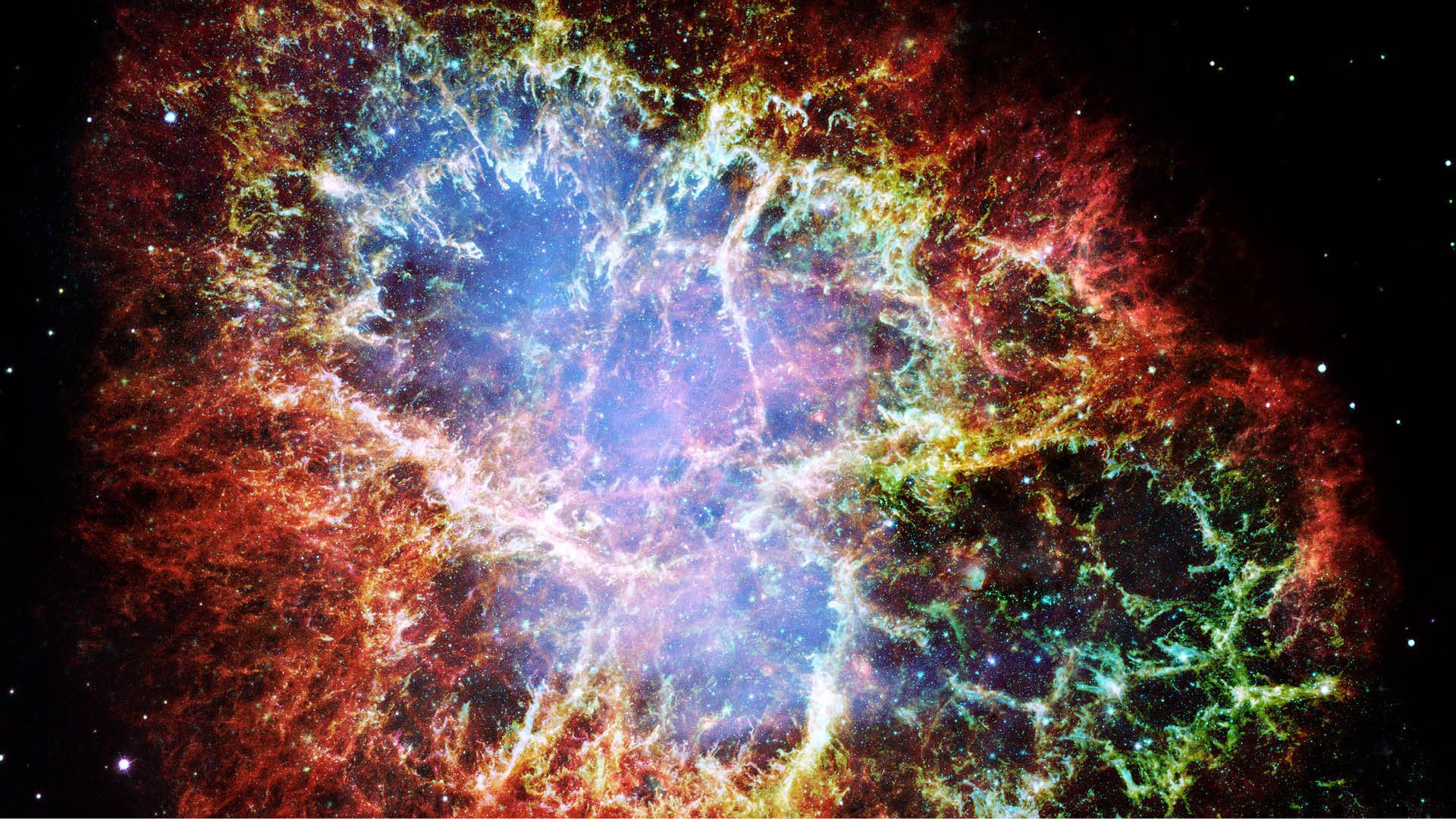
Supernova 1987A remnant. ALMA (ESO/NAOJ/NRAO)/A. Angelich, Hubble, and Chandra Observatories, 2014 The Crab Nebula: Observed in 1054 A.D., this supernova was recorded by Chinese astronomers and remains a subject of intense study today.
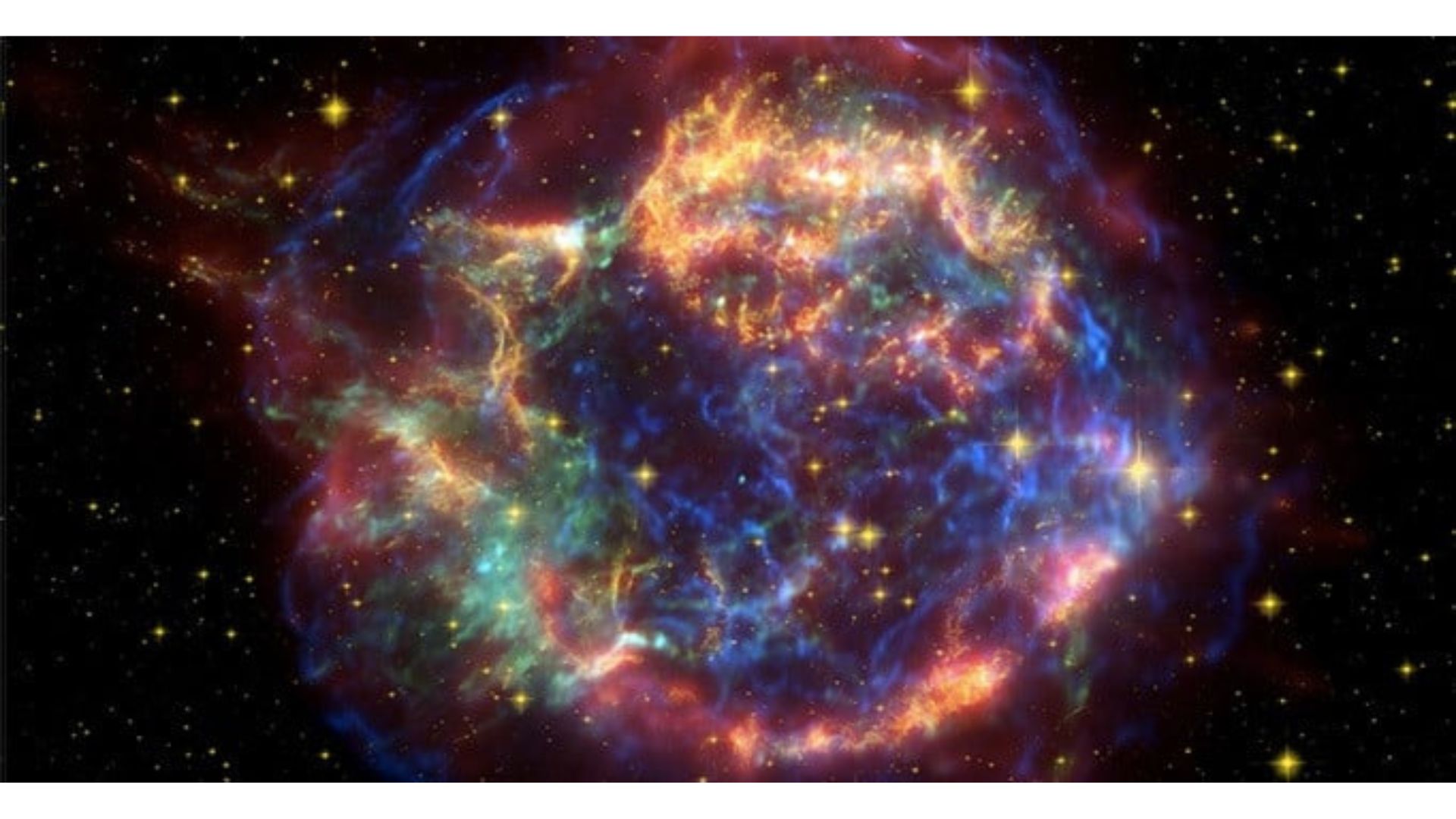
Crab Nebula - Kepler’s Supernova: Observed by Johannes Kepler, this was the brightest supernova seen in our galaxy in the last thousand years.
Kepler’s Supernova
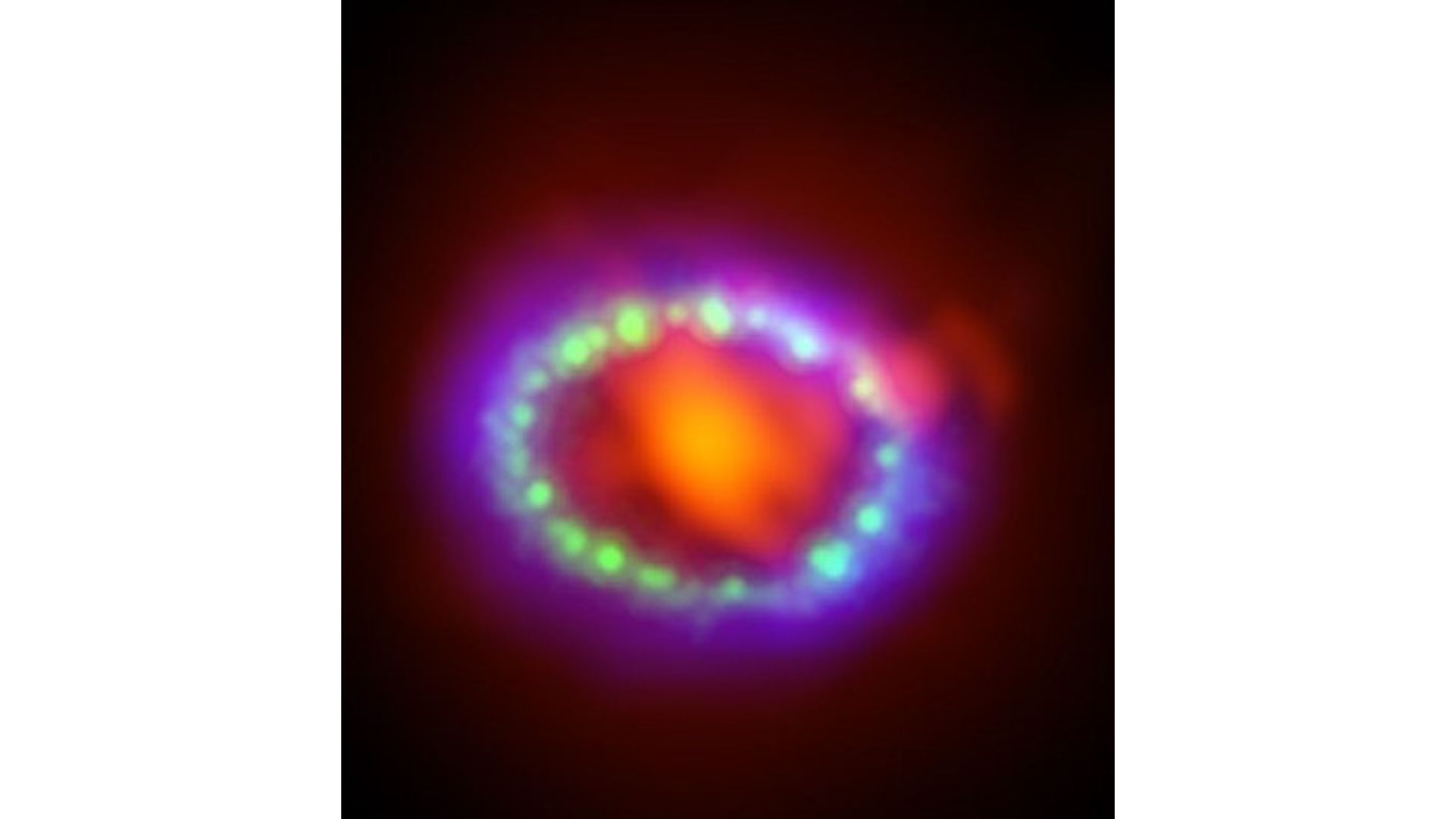
Looking back, the 1987 supernova provided us with more clues than any other, largely due to the technological leaps in science at the time.
You might be asking, “So what? Why does this matter for science?” Let’s find out what we’ve actually learned from these cosmic fireworks.
What Have Supernovae Taught Us?
The most striking thing is their sheer brightness. Supernovae are so luminous that, for a short time, they can outshine the entire galaxy they inhabit. They release the light of billions of stars and can be seen from thousands of light-years away. Furthermore, astronomers use supernovae to measure the expansion rate of the universe. Type Ia supernovae, in particular, act as “cosmic yardsticks,” helping us calculate how fast the universe is growing, which in turn helps us estimate the age of the universe and its ultimate fate. The supernova observed during the time of Copernicus actually sparked some of the first realistic theories on this very subject.
In every sense, these incredible events have given us the tools to better understand the universe we call home and have shed light on the massive, hidden forces constantly at work around us.
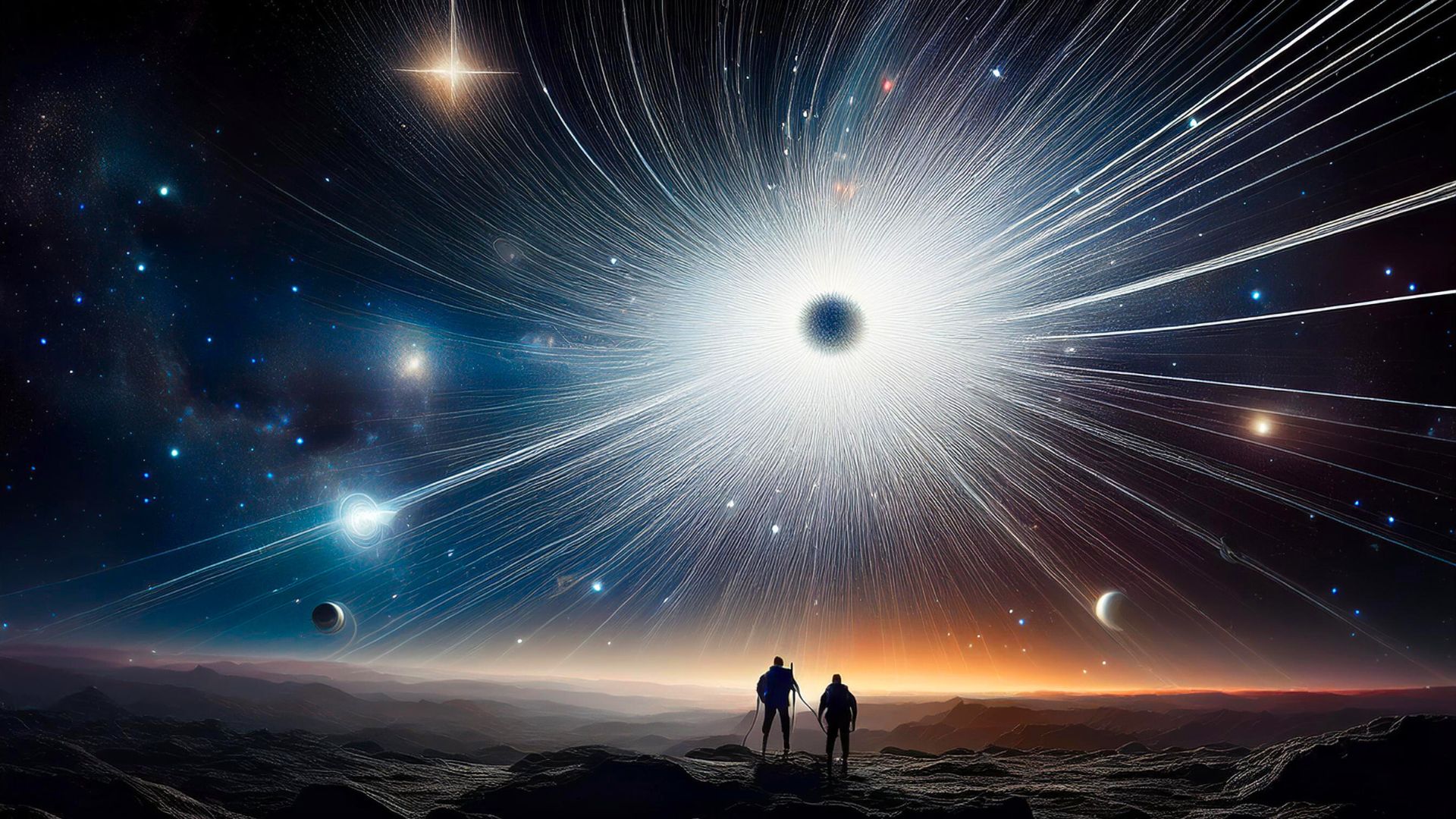
“Could this happen to us?” you might wonder. It’s a fair question. But rest assured, there is no immediate danger of a star exploding near Earth. Our own Sun is nowhere near the life stage required for either type of supernova, and such a prospect is thousands of years away, if it were even possible at all.
References and Further Reading
The Editors of Encyclopaedia Britannica. (2024a, September 20). Supernova | Definition, Types, & Facts. Encyclopedia Britannica. https://www.britannica.com/science/supernova
The Editors of Encyclopaedia Britannica. (2024b, September 20). White dwarf star | Definition, Size, Mass, Life Cycles, & Facts. Encyclopedia Britannica. https://www.britannica.com/science/white-dwarf-star
What is a supernova? | NASA Space Place – NASA Science for Kids. (n.d.). https://spaceplace.nasa.gov/supernova/en/
Originally published in Turkish at Doğa Filozofu.