

Can someone who isn’t fighting on the front lines really change the course of a war? If they observe that wounded soldiers are dying at higher rates simply because basic care—especially hygiene—is being neglected, then yes, they absolutely can. In fact, they can change it significantly. Before we dive into the revolutionary work of Florence Nightingale, widely recognized as the pioneer of modern nursing, who spent time in our own country caring for soldiers during the Crimean War, let’s get to know her a little better.
Florence Nightingale: Family and Early Life
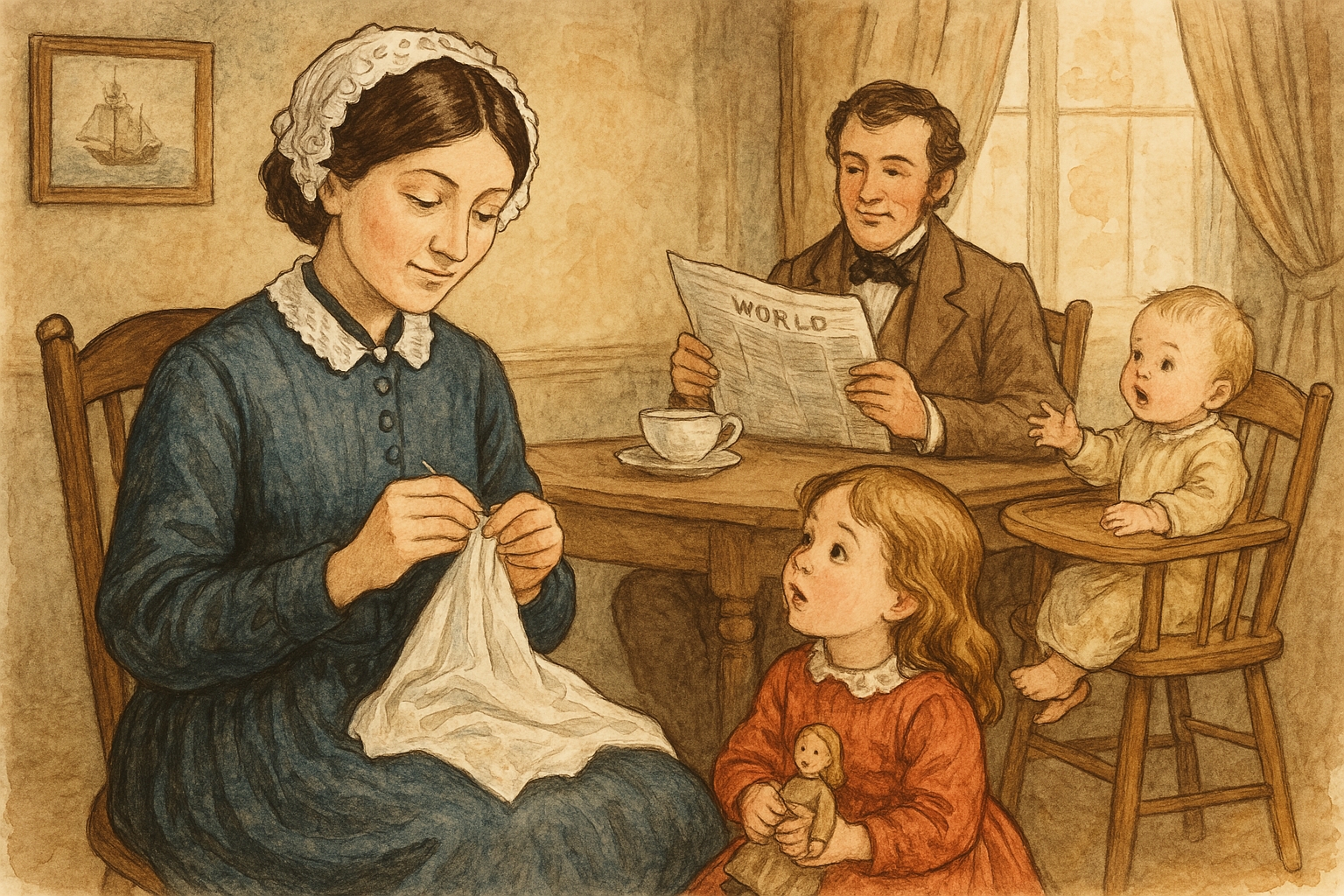
Florence Nightingale (May 12, 1820 – August 13, 1910) was a British nurse, but she was also a brilliant statistician and social reformer. Born into a wealthy family, she grew up in an era when women were barely valued beyond their roles as wives and mothers. Her greatest stroke of luck, however, was her father. He believed women should be educated and supported her every step of the way. Nightingale reached a high intellectual level at a young age, focusing on history, philosophy, and literature under her father’s guidance. By the time she was a child, she was already reading and writing in French, German, Italian, Greek, and Latin. Deeply uncomfortable with the gender roles imposed on women, she often engaged in serious, deep-dive conversations about society with her father, William Edward Nightingale.
Florence was a woman of deep faith. She felt that God gave her clear messages, and the most definitive of these led her to choose nursing. When she shared her ambition with her family, her father did some digging. In those days, nursing wasn’t a career for the intellectual elite; it was seen as a job for women from the slums, often associated with low moral character. A head nurse at a London hospital once famously remarked, “I have never seen a nurse who was sober.” It was common knowledge that many nurses were involved in sordid affairs with patients. Given all this, her family urged her to settle down and find a husband instead.
Despite being a beautiful woman, she never married. While she considered it at one point, she eventually abandoned the idea, viewing her singleness as a calling from God.
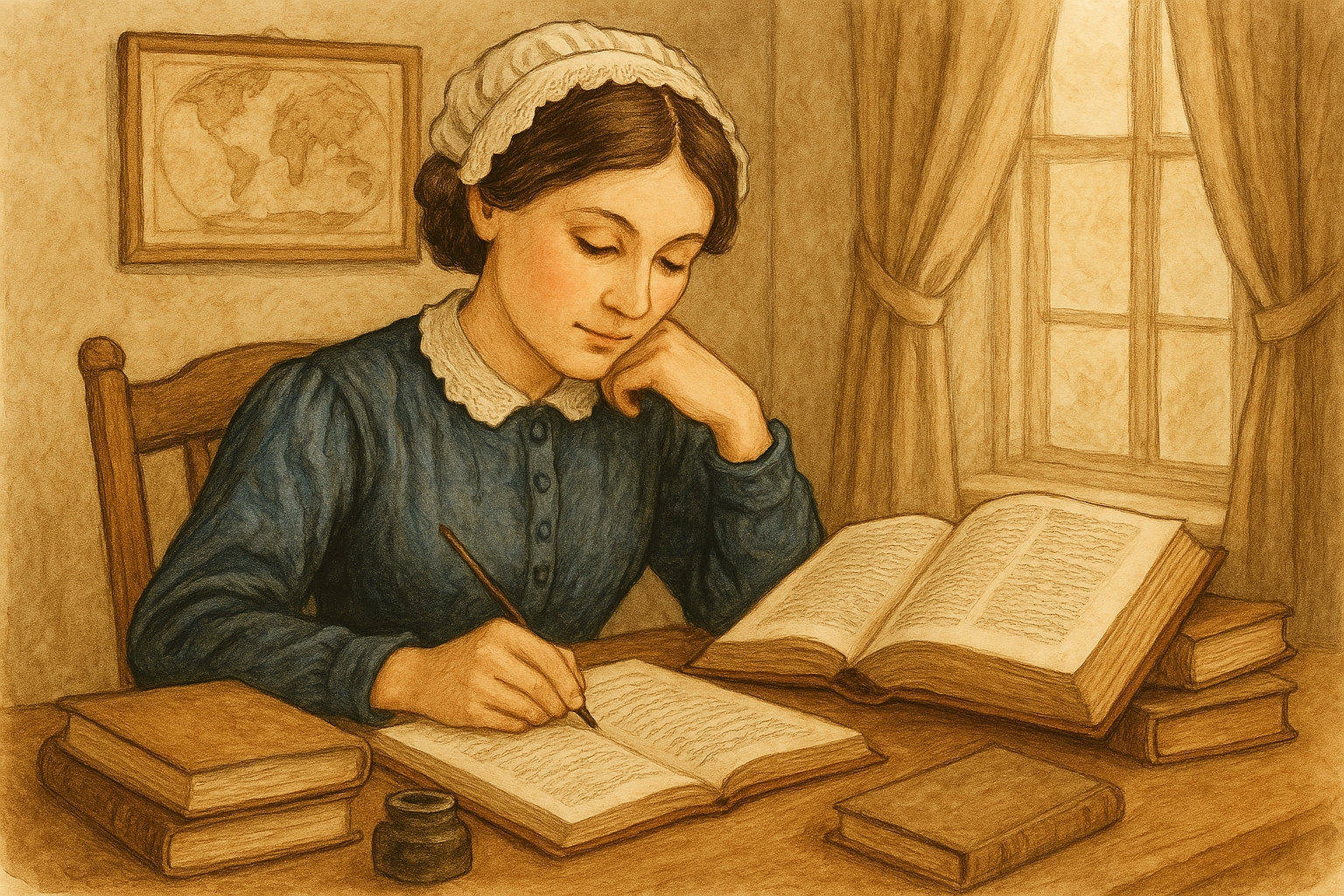
After her family blocked her from nursing, Nightingale turned to religion for comfort, but it didn’t fully satisfy her. Determined, she decided to pursue medical and health training regardless of the opposition. She enrolled in the Institution of Protestant Deaconesses in Kaiserswerth, Germany, where she received her foundational nursing education. By age 33, she had completed various training programs and worked with volunteer organizations. She was finally taking concrete steps toward her dream.
First Steps into Nursing
In 1853, she left her family home to begin working as a volunteer administrator at the Institute for the Care of Sick Gentlewomen in London. Her job was to oversee the nurses and the facility’s operations, while also ensuring the quality of the medicine. Thanks to Nightingale, the institution became highly advanced by the standards of the time.
When Florence Nightingale arrived at the hospital in Üsküdar (February 1855), her records showed a mortality rate of 42.7%. After her interventions and reforms (spring of 1855), that rate dropped to just 2%.
Nightingale in the Crimean War
In September 1854, the Ottoman Empire declared war on Russia due to disputes over Jerusalem and Orthodox rights. Britain and France, then Ottoman allies, sent their armies to Crimea. While the bulk of the fighting happened in Crimea, the hospital where the soldiers were treated was established in Üsküdar, Istanbul. This facility lacked almost everything. In fact, William Howard Russell, a war correspondent for The Times, reported that British soldiers were dying from neglect, noting a shortage of surgeons, nurses, and even basic bandages. In response, the French sent a group of 50 nurses known as the “Sisters of Mercy.”
When Florence Nightingale heard the news, she didn’t hesitate. She wrote to Sidney Herbert, the Secretary at War, expressing her desire to go to Turkey. Her request was granted, and she arrived in Turkey as the leader of a 38-person team. At the same time, The Times launched a fund to support the wounded soldiers.
When the team reached the hospital in Üsküdar, they were met with a horrific scene. The wards were filthy, infested with rats and fleas, and the stench of sewage was everywhere. The hospital was overcrowded and suffering from a severe lack of medical equipment. The few supplies available were controlled by military units. Dirty linens were washed in cold water and came back so unclean they often had to be destroyed. Nightingale wrote that the sheets were so coarse and rough that the wounded soldiers preferred to sleep on their own blankets instead.
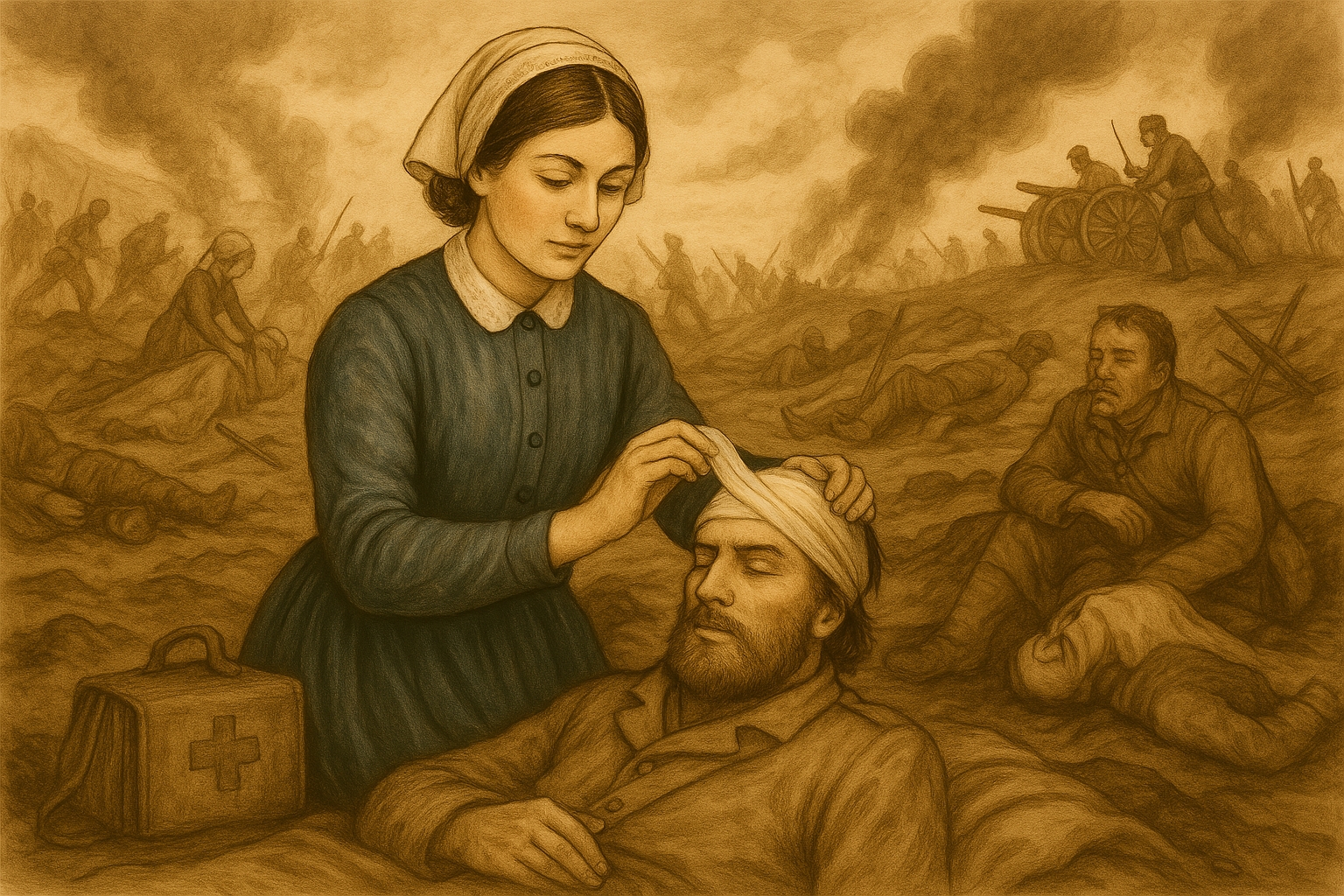
Florence worked tirelessly to bring professional management to the hospital, constantly battling military bureaucracy. Because she was a civilian and a woman, she wasn’t even allowed into the wards at first. Using the funds provided by The Times, she began meeting the soldiers’ needs. She enlisted the help of soldiers’ wives to wash the laundry. She implemented basic standards of hygiene, including bathing and fresh clothing, which proved to be life-saving.
The Lady with the Lamp
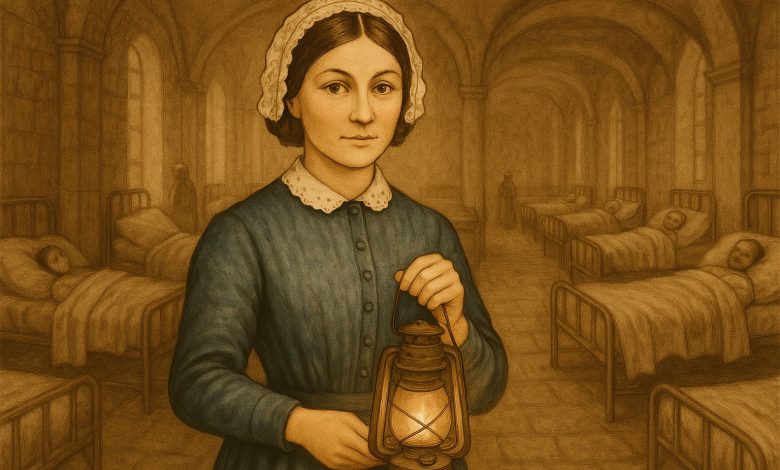
Even though she was in an administrative role, Florence Nightingale never stopped tending to the patients herself. At night, she would walk through the wards with a gas lamp to check on the wounded. This is how she became known as the “Lady with the Lamp.” She became such a vital figure for the soldiers that poems were written about her.
In a famous poem by Longfellow, she is described: “Lo! in that house of misery/ A lady with a lamp shall stand.”
When she returned to England after the war, she was world-famous. She refused to attend any of the ceremonies held in her honor, believing that the true achievement was simply making a hygienic environment accessible to all soldiers. Using her data, she collaborated with the British government to push through major military reforms.
Following these reforms, the “Nightingale Fund” was established as a token of gratitude. Nightingale used the approximately £45,000 raised to advance the nursing profession and build the nursing school of her dreams. In 1860, the Nightingale Training School for Nurses opened at St. Thomas’ Hospital in London. The school began training secular, well-educated, and intellectual nurses. This was a major turning point, transforming nursing from a profession for the uneducated into a respected career.
Nightingale’s background as a statistician was instrumental in her work. She analyzed health data and visualized mortality rates with charts. She famously used the “coxcomb chart” to illustrate public health issues, which helped her convince officials and push for data-driven health reforms.
Nightingale particularly drew attention to the impact of environmental hygiene on health. She is considered a pioneer, a mentor, and a philosopher of nursing. Her most famous publication is her book, “Notes on Nursing.” Her life, especially her success during the Crimean War, has been the subject of films like The Lady with the Lamp and The White Angel.
Today, one of the rooms Nightingale stayed in at the Selimiye Barracks in Üsküdar is preserved as a museum. It is open to visitors to commemorate her work in Istanbul and her contributions to nursing. You can visit the museum by appointment.
Florence Nightingale was the first woman to receive the Order of Merit. Her birthday, May 12, is celebrated annually as International Nurses Day, and the week surrounding it is recognized as Nurses Week. Today, the International Committee of the Red Cross presents the Florence Nightingale Medal to honor nurses who demonstrate exceptional courage and service in times of war or natural disaster.
References and Further Reading
Biography: Florence Nightingale. (n.d.). National Women’s History Museum. https://www.womenshistory.org/education-resources/biographies/florence-nightingale
Florence Nightingale – Wikipedia. (2006, May 14). https://tr.wikipedia.org/wiki/Florence_Nightingale
Florence Nightingale Medal – Wikipedia. (2024, November 26). https://tr.wikipedia.org/w/index.php?title=Florence_Nightingale_Madalyas%C4%B1&oldid=34390617
HISTORY.com Editors. (2025, May 28). Florence Nightingale – Biography, Facts & Nursing. HISTORY. https://www.history.com/articles/florence-nightingale
Selanders, & Louise. (2025, July 8). Florence Nightingale | Biography & Facts. Encyclopedia Britannica. https://www.britannica.com/biography/Florence-Nightingale/Homecoming-and-legacy
The Editors of Encyclopaedia Britannica. (n.d.). Florence Nightingale summary | Britannica. Encyclopedia Britannica. https://www.britannica.com/summary/Florence-Nightingale
Originally published in Turkish at Doğa Filozofu.