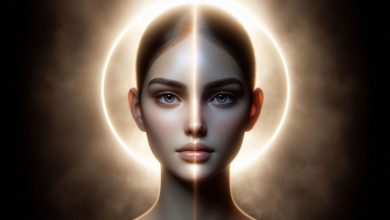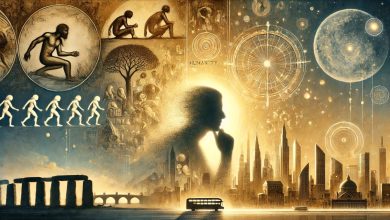

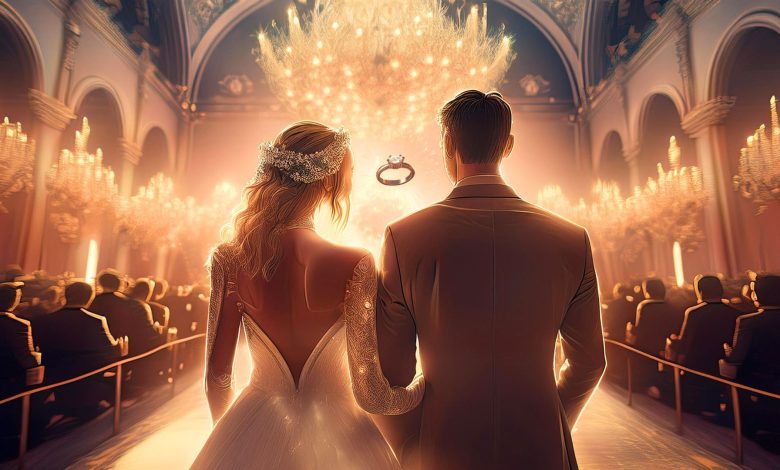
Is a bond that transcends time, where two souls touch through love, actually possible? And isn’t a healthy marriage essentially the modern-day equivalent of that connection?
The institution we call marriage has existed since the dawn of history, serving as both a sacred expression of love and a cornerstone of social order. Philosophically, marriage represents the delicate balance between individual freedom and commitment, reflecting our innate human desire to transcend the self and merge with another. From Plato’s idealized soulmates to Rousseau’s quest for naturalness and Beauvoir’s emphasis on freedom, marriage has been the stage upon which philosophers have conducted profound debates on love, loyalty, and identity. In this piece, let’s dive into both the historical journey of this ancient union and its place in the world of philosophy!
A Historical Journey
The concept of marriage didn’t just pop into existence at the beginning of time, did it? And we aren’t just talking about the legal formality of a ceremony. When we speak of marriage, we’re talking about a couple building a family with the intent of lifelong loyalty. This structure has undergone massive evolution. In the hunter-gatherer era, the idea of “marriage” was tenuous at best. Relationships were largely polygamous, and the bonds between partners were centered strictly on survival. Even if “love” existed, it was hardly a societal expectation. As humanity transitioned to a settled life, monogamy became more common, and a shared lifestyle began to take root.
Even then, marriage for a long time remained primarily a collaborative model for ensuring the protection and survival of offspring.
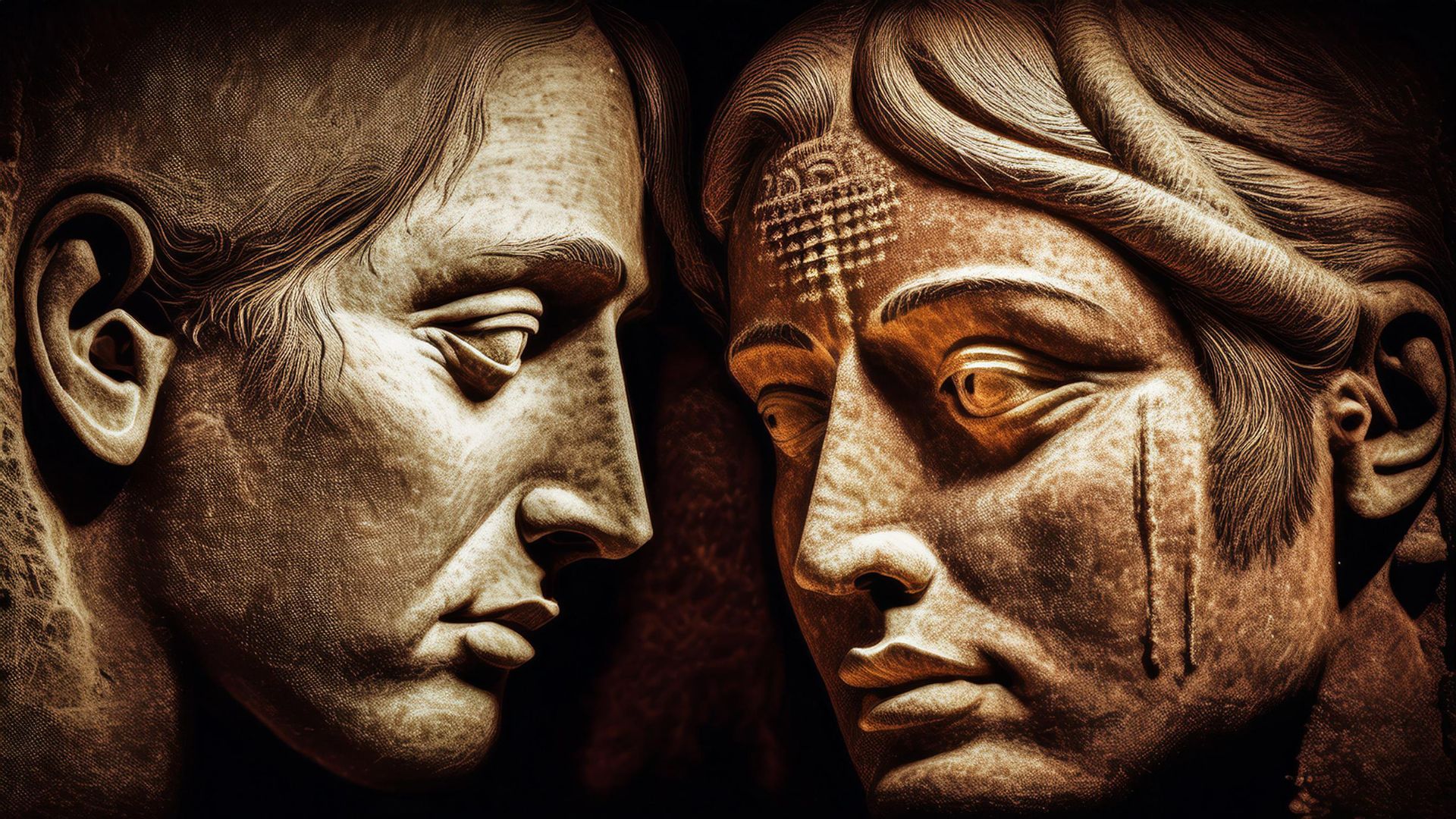
As we moved into ancient civilizations, marriage became an integral part of the social order—so much so that laws began to be written around it. For instance, the Babylonians had extensive regulations regarding marriage. Infidelity was met with harsh penalties, and marriage contracts were drafted in writing. Looking at China, we see a family structure deeply influenced by Confucianism, where marriage often served the economic interests of families, and spiritual elements—such as the compatibility of the couple’s horoscopes—were carefully considered.
For Ancient Greece, marriage was a sacred institution. In fact, it was customary for women on their wedding day to perform a ritual where they cut their hair and dedicated it to the goddess Hera. This served as a powerful ritual emphasizing the sanctity of the union.
Once societies settled and social structures solidified, we reached the Middle Ages, where marriage and religion became inseparable. Weddings were held as religious ceremonies within the church. This era established a rigid order where men and women had clearly defined roles: a model built on the expectation of submissive wives and protective husbands. It was a world full of rules and expectations. And speaking of the Middle Ages, we can’t skip over the Ottoman Empire, right? While they didn’t hold church ceremonies, marriage was rooted in Islamic law. Interestingly, compared to the Christian world of that time, women held more rights. A dowry or financial provision was allocated to the woman to be given to her during the marriage or in the event of a divorce. Still, it was hardly a perfect system, as wealthy men were entitled to have up to four wives, a right not afforded to women.
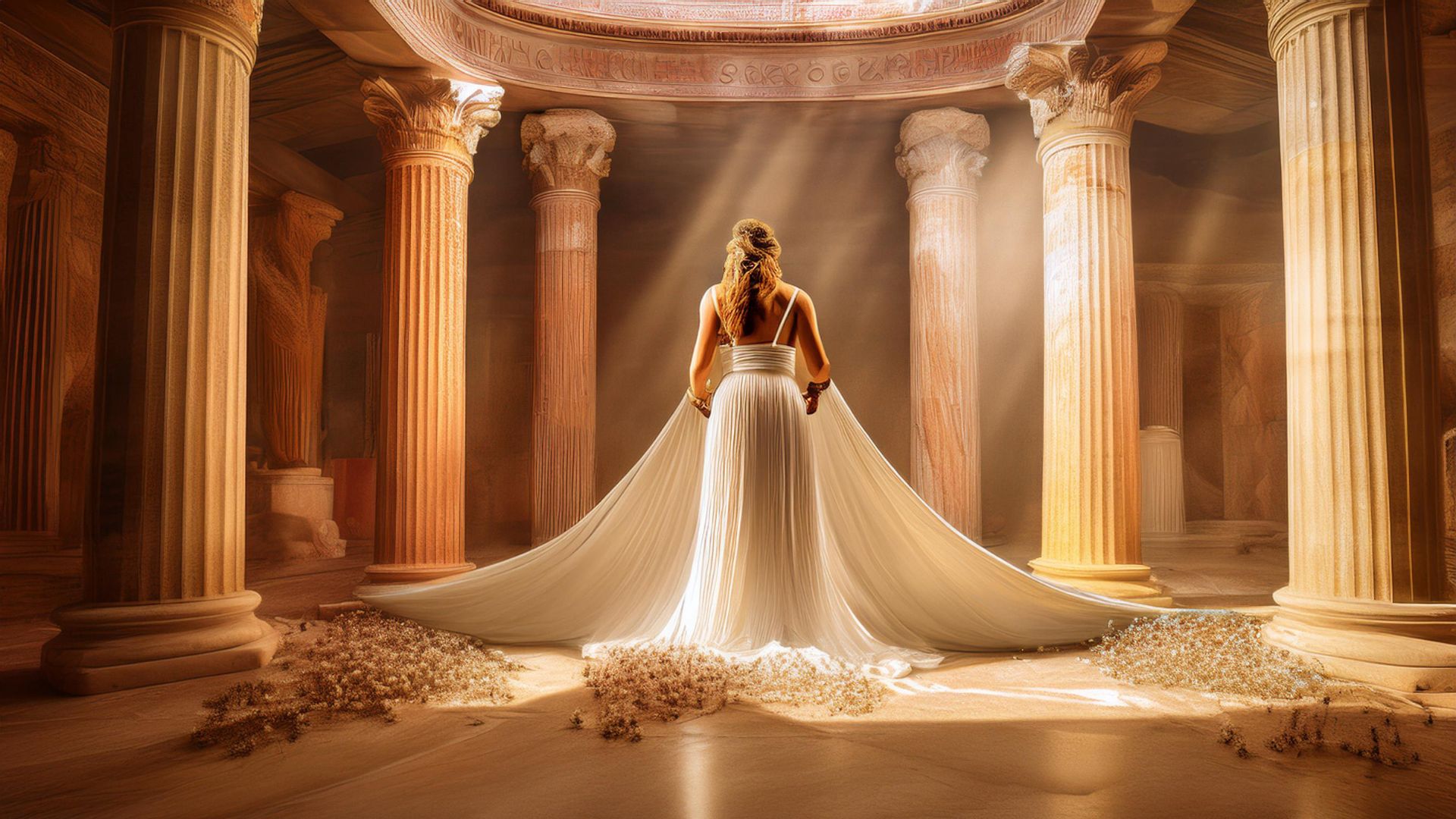
The good news is that by the late 18th century, these rigid judgments began to give way to the primacy of emotion. The rise of individualism and the Romantic movement lit a fire in the world of marriage. With the Industrial Revolution, women began entering the workforce, leading to greater independence. Those who read our philosophy of love piece will recall that freedom is the bedrock of love. Perhaps the strict laws and obligations of the past were what suffocated love all along. As women gained autonomy, the power imbalance between genders began to shrink. While there is still progress to be made, we have arrived at a point where the gap in rights and power is nearly non-existent or rapidly closing. Today, marriage is no longer just a signature on a piece of paper; it has evolved into a structure of two people choosing to build a life together, even without the legal procedure itself.
A Philosophical Journey
We’ve witnessed the historical trajectory of marriage. Of course, the structures we described weren’t uniform across every culture, but they represented the general pulse of the times. Philosophy, however, tells us a much more intimate, individual story.
Let’s start with a view you might remember from our previous look at love: For Plato, marriage is a pragmatic process that stems from love but serves as a crucial component of the social order. However, it could be said that he applies his broader narrative on love to marriage as well. So, what exactly is that narrative?

To recap from our last piece: “In his work ‘Symposium,’ Plato recounts a mythological story. According to this myth, humans were once spherical beings, each with two sets of limbs and two faces. Fearing their power, the gods split these spheres in two and scattered them across the world. Even separated, these halves always felt the presence of the other. Thus, the two halves began to search for one another. When they finally find their match, they achieve ‘true love.’ In short, love is the desire to find our lost other half.“
Here, we see that while Plato viewed marriage as a controlled tool for reproduction, he fundamentally believed in a genuine bond of affection and even a metaphysical soul connection beneath it all.
On the other hand, Jean-Jacques Rousseau approaches love and marriage differently. While he didn’t write a specific treatise on marriage, he viewed love as the pinnacle of purity and naturalness. To him, the artificial structures of society pollute and damage these clean emotions. Therefore, he believed that spontaneous, heartfelt connections formed outside of societal influence were the truest expressions of love.
Schopenhauer, meanwhile, approaches love and marriage with his signature somber lens. To him, love is a metaphysical urge—a drive beyond physics or science—that exists solely for the continuation of the species. For the sake of love, the happiness of the individual is sacrificed for the survival of the species. Yet, isn’t it arguably romantic that Schopenhauer saw love as an inevitable force beyond human control? Maybe we just want to see it as sweet, but can’t you catch a faint whiff of romance in there?

And now, Nietzsche! He isn’t exactly remembered as a romantic philosopher, and there’s a backstory to that. In 1882, Nietzsche met Lou Andreas-Salomé. Lou was an incredibly influential, independent, and brilliant woman in the intellectual circles of the time. Nietzsche engaged in deep philosophical conversations with her and became deeply infatuated. However, Lou was not a traditionalist when it came to romance; she cherished her freedom and did not return Nietzsche’s feelings. Later, Lou grew close to Nietzsche’s close friend, Paul Rée, which became a breaking point for Nietzsche. His relationships with both Paul and Lou ended. It’s hard not to notice the harsh stance he took toward women in his later works. Yet, despite this painful history, remnants of romanticism linger in his philosophy. For instance, Nietzsche sees love as critical to an individual’s liberation and the realization of their potential. To him, a passionate love can help a person rebel against the absurd structures surrounding them, realize their triviality, and find freedom—though he also acknowledges it can be dangerous and destructive. Perhaps that destructive part is a reflection of his own heartbreak. Still, Nietzsche’s view of love as a process of liberation is undeniably a romantic angle. Of course, he was famously anti-marriage. But let’s ask our dear readers to overlook that for now, so we don’t spoil the romantic tone of this article, shall we? Before we say goodbye to Nietzsche, we have to include his brilliant remark: “Marriage is the art of sustaining a long conversation.”

Finally, Erich Fromm comes to our rescue, reminding us that “Love is an art, and it requires effort!” You’re probably thinking, “What does that even mean?” We won’t keep you waiting for the answer. According to Fromm, true love isn’t just about emotional attraction; it’s grounded in respect, care, responsibility, and knowledge. This true love eventually matures into “mature love.” As time passes, the couple forms a unity while still preserving their own individual identities. To him, the fact that love requires deep commitment and conscious effort is what makes romantic relationships. Ultimately, that is the final form of a good marriage.
As you can see, the modern philosophical understanding of marriage no longer views it merely as a signature on a document or a rigid “husband and wife” institution. Marriage requires a solid emotional foundation, and if we look at it through a romantic lens, we could call it the intertwining of two souls forever. As the Doğa Filozofu family, we hope that when you are ready, you can build your own happy union—whether you choose to sign the state’s register or not.
References and Further Reading
Everitt, L. (2012, March 14). Ten key moments in the history of marriage. BBC News. https://www.bbc.com/news/magazine-17351133
Love (Stanford Encyclopedia of Philosophy). (2021, September 1). https://plato.stanford.edu/entries/love/
Marriage and Domestic Partnership (Stanford Encyclopedia of Philosophy). (2021, July 14). https://plato.stanford.edu/entries/marriage/
Philosophy of Love | Internet Encyclopedia of Philosophy. (n.d.). https://iep.utm.edu/love/
Plato on Friendship and Eros (Stanford Encyclopedia of Philosophy). (2023, June 14). https://plato.stanford.edu/entries/plato-friendship/
TED-Ed. (2014, February 13). The history of marriage – Alex Gendler [Video]. YouTube. https://www.youtube.com/watch?v=ZZZ6QB5TSfk
The Editors of Encyclopaedia Britannica. (2025, January 29). Marriage | Definition, History, Types, customs, Laws, & Facts. Encyclopedia Britannica. https://www.britannica.com/topic/marriage
Originally published in Turkish at Doğa Filozofu.