
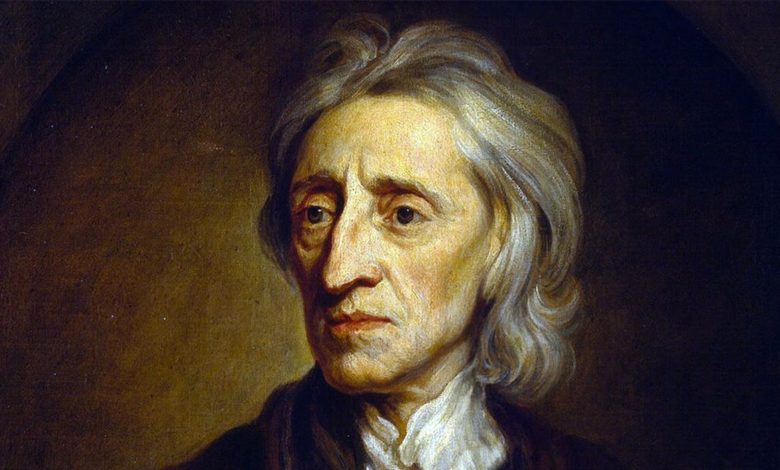
There are many philosophers whose names have been etched into the history of philosophy in golden letters. These are the household names—figures even those with little interest in philosophy recognize. Thinkers like Socrates, Descartes, and Kant fit this mold perfectly. And another name that stands right alongside them is John Locke. He is famously pinned down by the concept of “tabula rasa,” widely known for his assertion that the human mind is a blank slate at birth. But Locke is not a philosopher who can be neatly tucked into just one concept. Of course, none of the philosophers we cover in this series could ever be contained in a single article; each is a titan about whom entire libraries have been written. Our goal here is to provide a solid entry point. Locke is a complex figure, but in this piece, we want to explore him through two distinct lenses: Political Philosophy and Epistemology.
Let’s dive in and get to know this unique mind a little better.
Tabula Rasa
Let’s start with the reason everyone knows John Locke’s name: the blank slate. Locke explores this concept in his seminal work, “An Essay Concerning Human Understanding.” Throughout the book, he attempts to map out the process by which humans acquire knowledge. The prevailing view before Locke was that we possess innate knowledge—that we are born already “knowing” certain concepts. Locke pushed back against this, proposing that the human mind is a blank slate at birth. In other words, according to Locke, we start with zero knowledge. All our understanding must be built up through a lifetime of experience. There were no innate ideas or principles; all knowledge is formed through sensory experience and mental processing.

So, how do we actually acquire knowledge? Today, we learn by relating new information to what we already know. For example, if someone were to explain the concept of an air conditioner to us, our minds would define it as a device that can heat a room like a stove, but also bring the chill of winter indoors when needed. It relies on pre-existing concepts like “stove” and “cold.” Even the concept of a “stove” is derived from our understanding of “heat.” But here is the catch: if we didn’t have those base concepts of hot and cold, how could we possibly acquire new knowledge starting from scratch?
Locke has two answers for this: sensation and reflection. Let’s break them down:
Sensation: Ideas are formed in our minds through impressions gathered from the outside world via our senses. This is the perception of qualities like color, sound, and taste. For instance, we learn that an apple is red through sensation.
Reflection: These are ideas formed when the mind turns inward to observe its own internal operations. It involves the mind noticing its own perceptions, thoughts, desires, and processes. Therefore, reflection is based on internal experience. The mind reflects on what it perceives, and through that, generates new ideas.
These two sources ultimately allow our ideas to take shape. According to Locke, these ideas are divided into simple and complex ideas. Simple ideas are those that are easy to perceive and explain, like “hot” or “cold,” whereas complex ideas—like beauty or justice—are built by combining these simple building blocks.
To form these ideas, we need to interact with our environment, don’t we? If we never encountered a hot object, we would never develop the idea of heat. Objects themselves must possess certain properties for this to happen. Locke divides these properties into primary and secondary qualities. Let’s take a quick look at these as well:
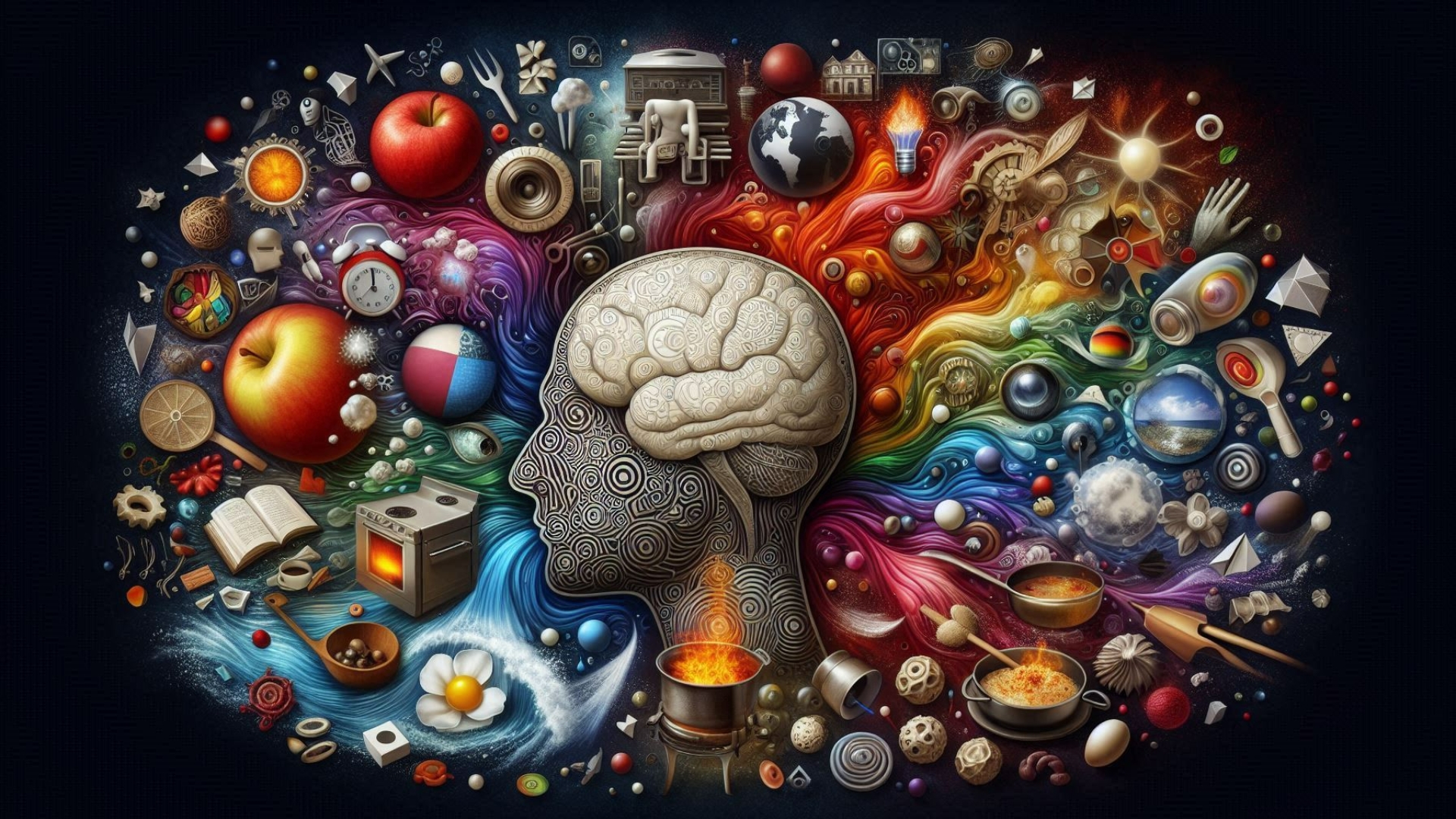
Primary Qualities: These are properties inherent to the objects themselves, which are unchanging and independent of the observer. They exist within the object and become apparent when we physically interact with the world. Examples include shape, size, motion, and position. These qualities exist whether we think about them or not.
Secondary Qualities: These are qualities that arise as a result of our sensory perception. They don’t exist in the object itself, but rather in how we perceive it. Examples include color, taste, smell, and sound. Locke argues that these qualities aren’t in the object, but are a byproduct of how our minds interpret the outside world.
And just like that, the puzzle is complete! According to Locke, we now understand the objects we interact with. Through these qualities, and using the framework of sensation and reflection, we build our ideas. Those ideas, in turn, allow us to grasp the complex concepts we discuss today.
That is how we acquire knowledge. Of course, the spark that kicks off this whole process is our interaction with the environment—our experiences. The knowledge that “the stove is hot” is born from the heat we feel when we touch it. In this respect, Locke is an empiricist. To him, the road to knowledge is paved with experience.
Before we move on to his political theories, one question remains: If our minds are blank slates at the start, where does the underlying capacity to perceive all of this come from? The answer, for Locke, is God. He believes this internal framework was gifted to us by a divine creator.
Everything is God’s Property
Beyond how we acquire knowledge, Locke also grappled with what an ideal state should look like. To do this, he utilized the concept of the “state of nature,” which we’ve touched upon in our pieces on Hobbes and Rousseau—though Locke’s version is a bit different. He argues that in a state of nature, all humans are equal and free. In this state, every individual has the right to life, liberty, and property. These are inherent, inalienable rights, yet they are often stripped away once states are formed. Locke argues that these natural rights are common to all and cannot be transferred or violated; they are rights people possess even in the absence of a government.
According to Locke, people form states to protect these natural rights. This is a pact formed by the free will of the people. The purpose of establishing a government is solely to safeguard those rights. Because individuals in a state of nature might infringe upon one another’s rights, they come together to create a government to better ensure justice and protection.
Through a social contract, people create a government that holds authority over them, but that authority is strictly limited: its only mandate is to protect life, liberty, and property. Locke believed that the state should act as a representative of the people and should only remain in power as long as it has their consent. In this sense, Locke was essentially proposing a republican regime within a Great Britain governed by absolute monarchy. He went so far as to argue that if these conditions weren’t met, the people had the right to change or overthrow the government. This approach defines the right to “hold the government accountable” and “rebel against oppressive regimes.”
Furthermore, the state Locke describes must have a separation of powers. A government based on law should be adopted, ensuring that legislative and executive powers are not concentrated in the hands of a single person. But on what principle does Locke base these views? For Locke, the answer is God. He believes these fundamental human rights are bestowed upon us by the divine. For example, the right to property is defined by the labor an individual invests in something; Locke argues that when people put work into natural resources, they acquire legitimate ownership of that thing, and no one can interfere with it. In the same vein, humans are God’s property. When people harm one another, they are essentially damaging God’s property. Likewise, all other property also belongs to God. This is the underlying reason why Locke considered things like war to be immoral. To him, these three fundamental rights must be protected at all costs. That is our responsibility to God.
In summary, Locke builds his philosophy upon the foundation of the divine. Both our rights and our mental framework come from God. And just like that, we’ve laid the groundwork for Locke’s epistemology and political philosophy. We hope you continue to explore his rich and enduring ideas.
References and Further Reading
John Locke (Stanford Encyclopedia of Philosophy). (2022, July 7). https://plato.stanford.edu/entries/locke/
Munro, A. (2024, August 20). State of nature | Definition, Hobbes, Locke, Rousseau, & Social Contract. Encyclopedia Britannica. https://www.britannica.com/topic/state-of-nature-political-theory/The-state-of-nature-in-Locke
Rogers, G. A. (2024a, August 25). John Locke | Philosophy, Social Contract, Two Treatises of Government, & Facts. Encyclopedia Britannica. https://www.britannica.com/biography/John-Locke
Rogers, G. A. (2024b, August 25). John Locke | Philosophy, Social Contract, Two Treatises of Government, & Facts. Encyclopedia Britannica. https://www.britannica.com/biography/John-Locke/Two-Treatises-of-Government
Rogers, G. A. (2024c, August 25). John Locke | Philosophy, Social Contract, Two Treatises of Government, & Facts. Encyclopedia Britannica. https://www.britannica.com/biography/John-Locke/An-Essay-Concerning-Human-Understanding
Originally published in Turkish at Doğa Filozofu.