

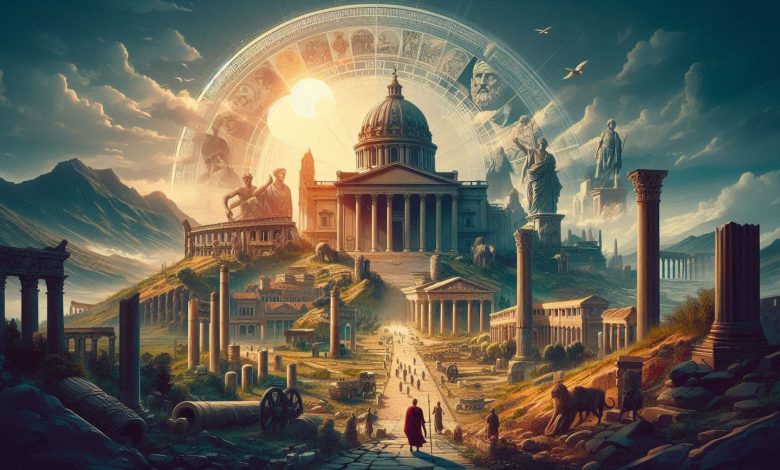
Rome… It wasn’t just a city or a state; it was the name of an entire era. Evolving from a humble settlement into an empire that shook the world, this civilization left its mark on history as much through its betrayals, wars, and ultimate collapse as it did through its triumphs. The cunning politics of the Senate, the iron discipline of the legions, and the bloody arenas of the gladiators—what exactly made Rome so great? And more importantly, how did such a mighty empire fall?
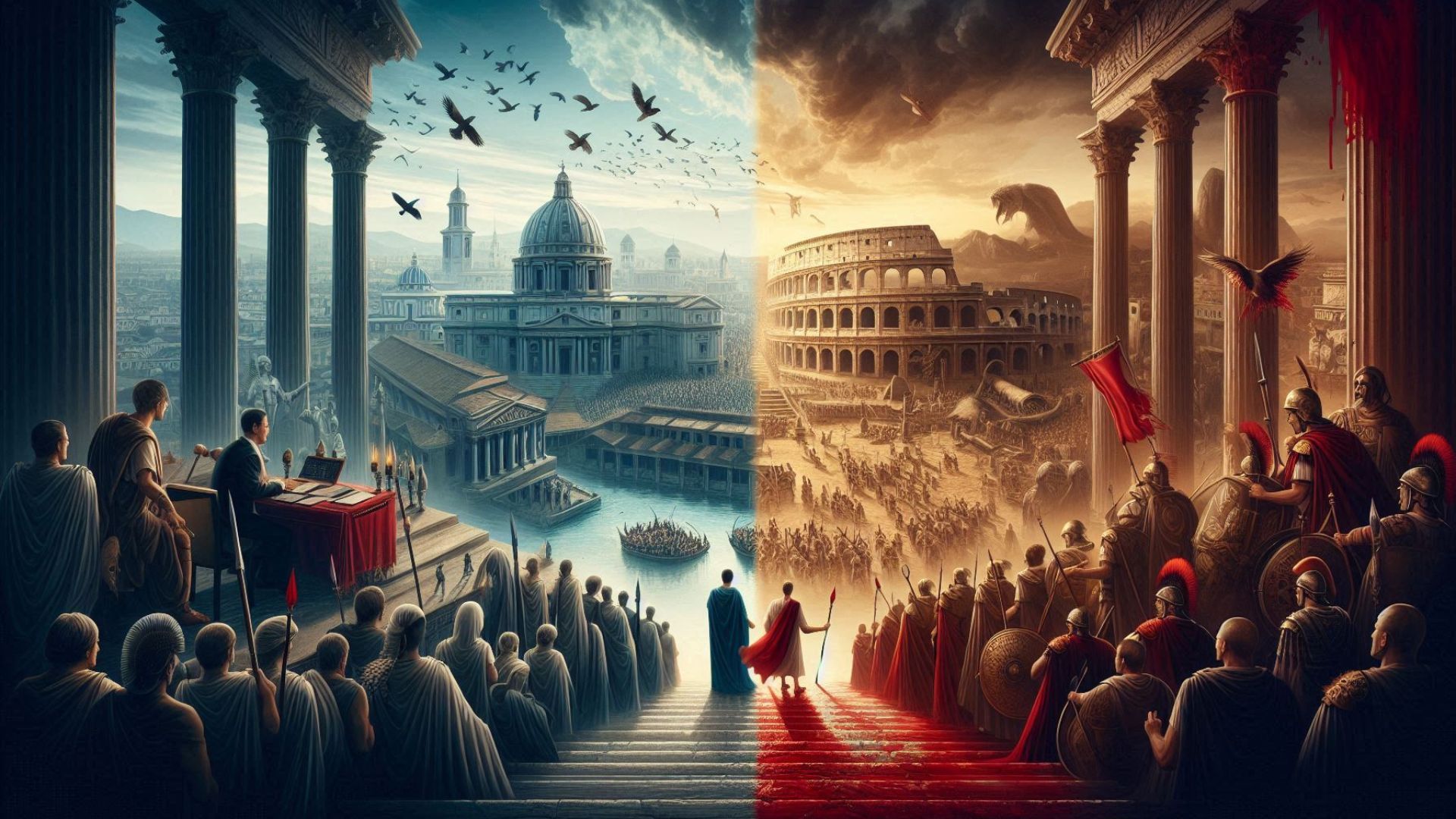
The Kingdom Period (753 BC – 509 BC)
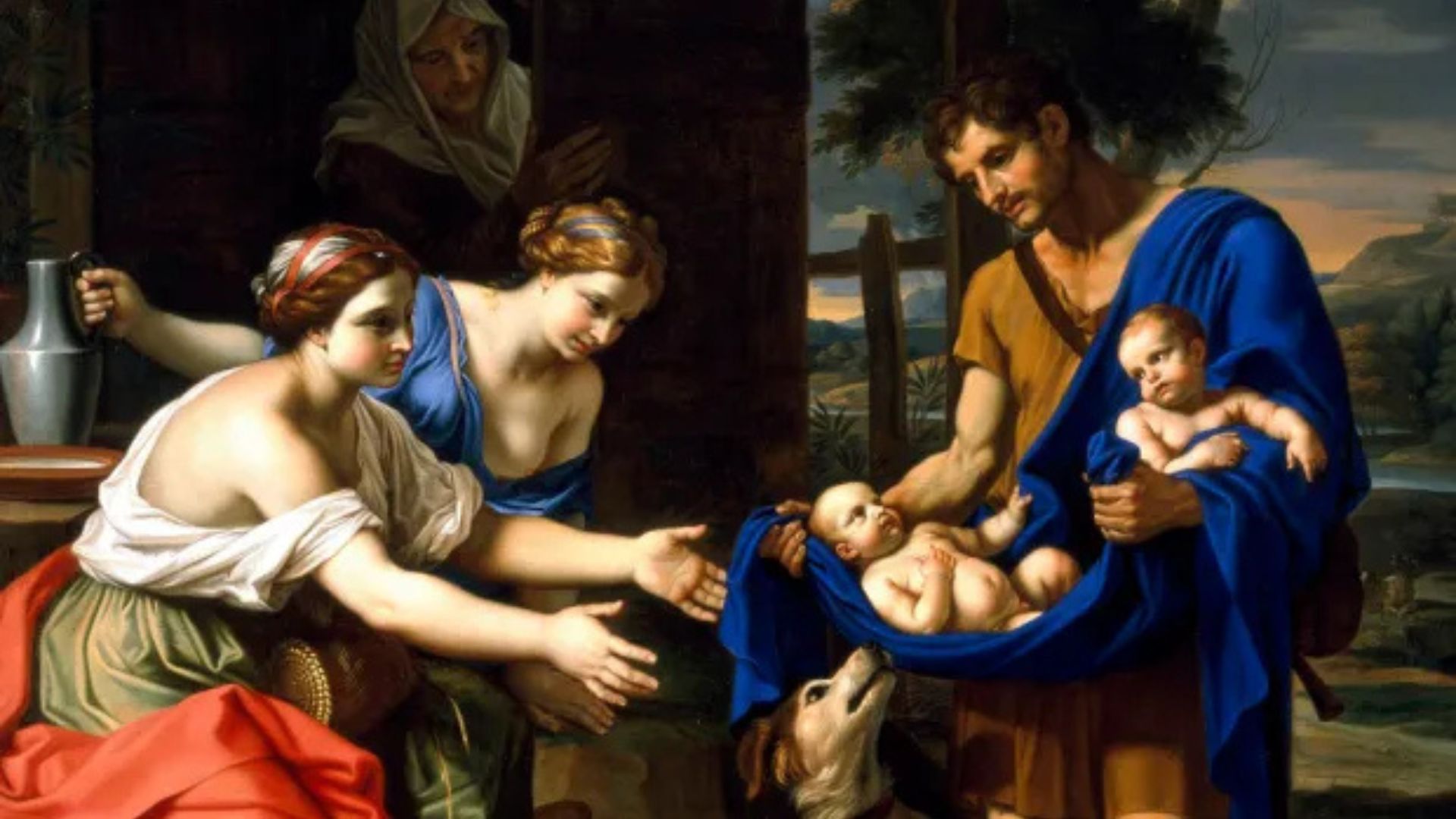
The history of Rome is rooted in legend. According to the myth, twin brothers Romulus and Remus were raised by a she-wolf on the banks of the Tiber River. Having grown up through hardship, the brothers decided to build a city where everyone could live in peace. But they weren’t children anymore; the ambitions of adulthood had taken hold. A dispute eventually broke out, leading Romulus to kill Remus and become the sole ruler of the city he founded in 753 BC. While this remains a legend, historical accounts suggest that Rome’s founding was indeed built on Romulus seizing power by eliminating his brother.
Romulus established the first Senate and organized the people—or, more accurately, he organized the state he had just created. Rather than listing every king in this period—many of whom share remarkably similar names—let’s take a bird’s-eye view. After Romulus, six more kings followed. The first established Rome’s religious institutions and official authorities. His successor transformed Rome into a true military powerhouse, launching a series of conquests. The next king essentially said, “Religion and military are set, now let’s focus on the economy,” strengthening trade routes and building ports. The king who followed him commissioned Rome’s first major infrastructure projects. By this point, there had been five kings in total. The sixth king, believing the state was sufficiently developed, focused on internal order, implementing social and political reforms and conducting the first census. The final king, however, was a different story. While his predecessors had all built upon the work of those before them, the last king, Superbus, adopted a despotic style of rule. He was eventually overthrown by the people, ending the Kingdom period and giving rise to the Republic—one of the most brilliant chapters in Roman history.
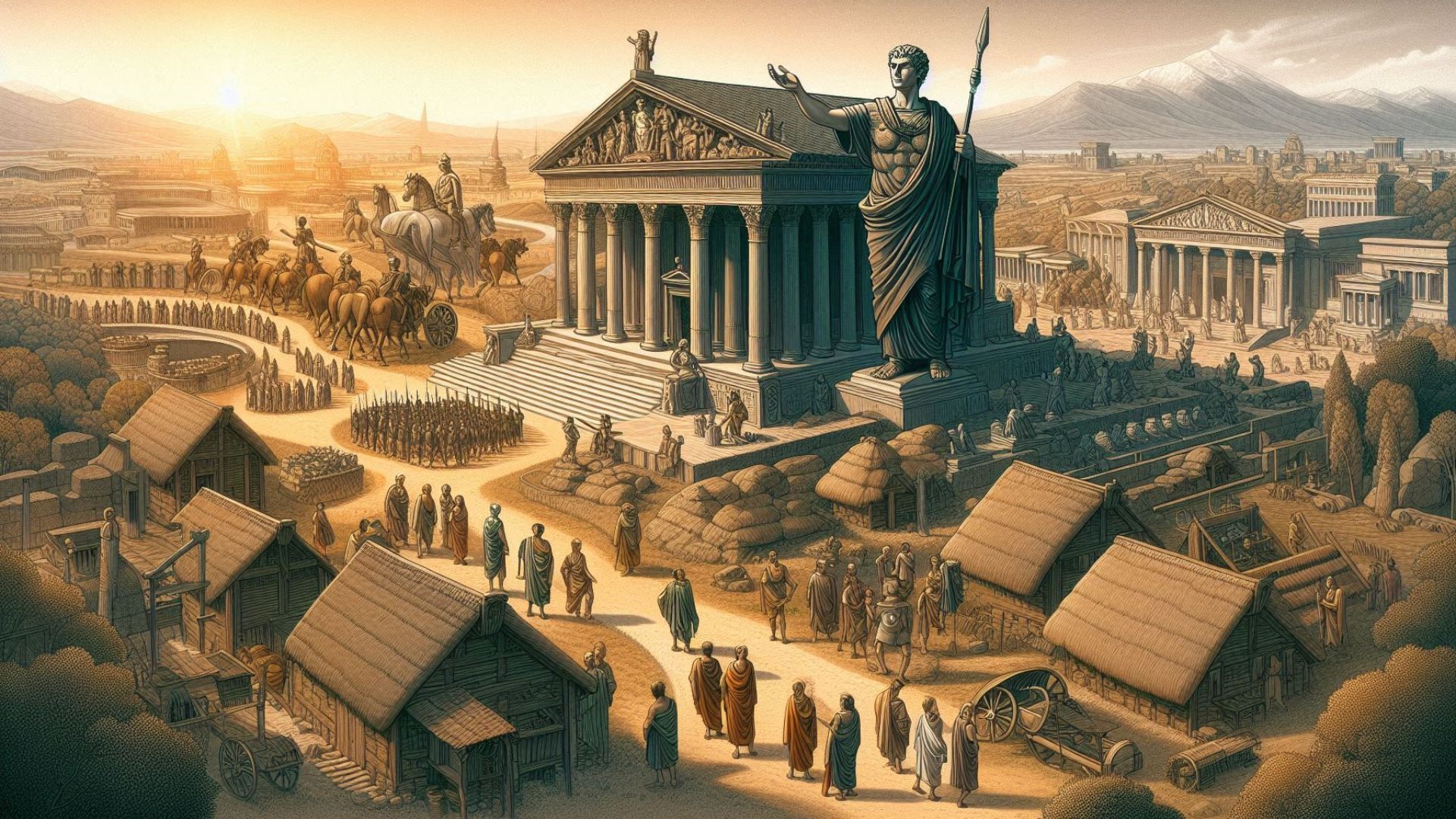
A little-known but fascinating fact about the early Kingdom period is that Rome grew its population by abducting women from neighboring tribes. The Romans invited the neighboring Sabines to a festival, only to seize their women during the celebration. This triggered a war between the two peoples, but since the kidnapped women had married Romans and borne children, they eventually stepped in to broker peace between the two sides.
The Roman Republic (509 BC – 27 BC)
After the people ousted the despot Superbus, power shifted into their hands. With no king to dictate terms and a public weary of feeling undervalued, this period became an era where the rule of law flourished. Rome’s first written laws were created to prevent the arbitrary rule of the aristocracy, establishing the foundations of Roman Law, which would later become the bedrock of modern European legal systems. Roman art also evolved during this time, heavily influenced by Greek sculpture and architecture. In the realm of philosophy, giants like Cicero—whose work is still praised today—emerged. Of course, the Republic wasn’t just about art and philosophy; it was a period of intense political and military development.
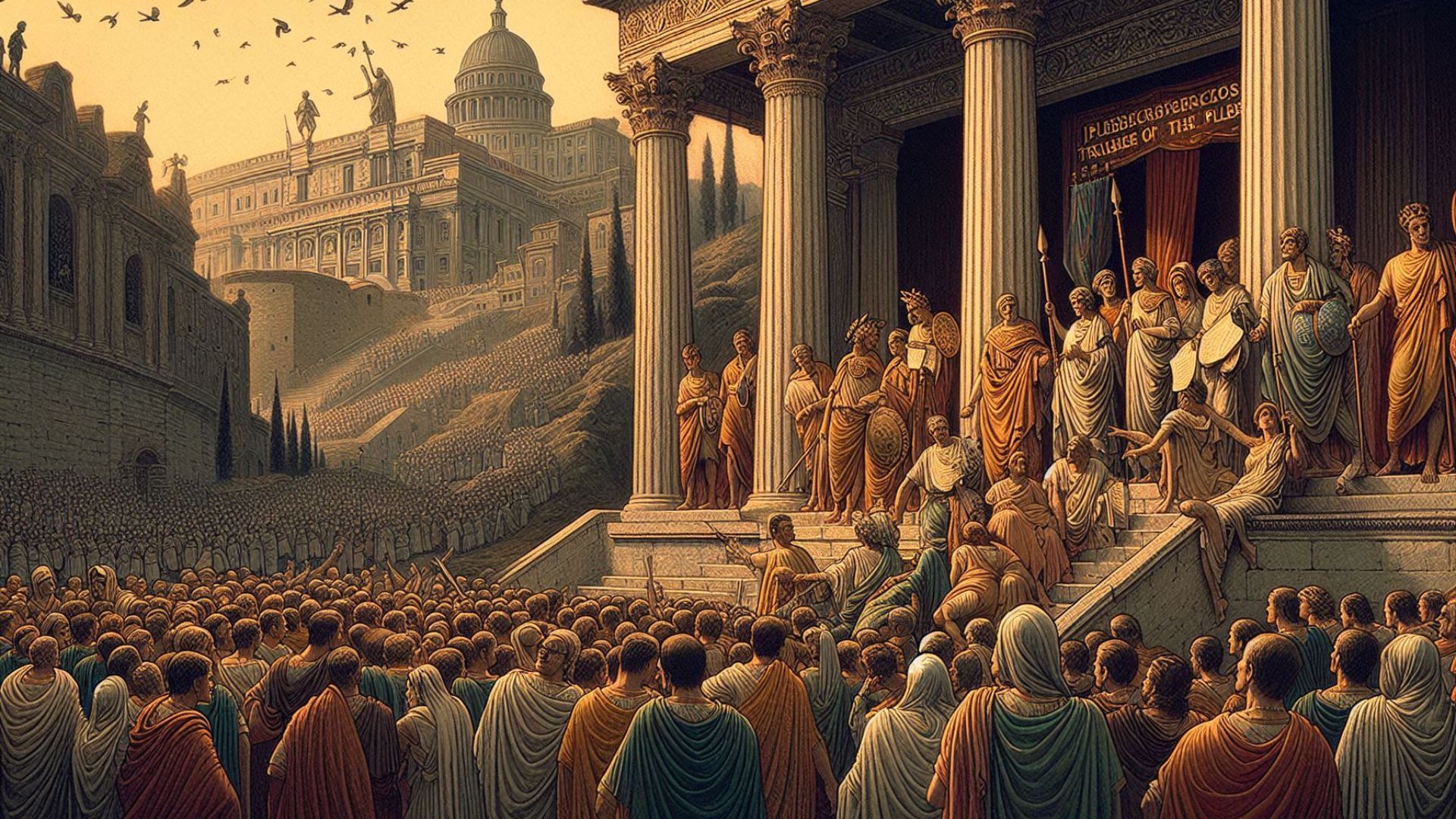
This new Republic was an oligarchy where the public participated in government not directly, but through elected representatives. Two consuls replaced the kings, and power was distributed among the Senate, the popular assemblies, and the magistrates. This system relied on four key pillars:
- The Senate: The most powerful body in the state, composed primarily of members from aristocratic families (the Patricians).
- The Consuls: Two individuals elected annually to serve as commanders-in-chief of the army. In times of extreme crisis, a dictator could be appointed for a six-month term (such as the famous Cincinnatus).
- Popular Assemblies: Platforms where citizens voted on laws and elected various officials.
- Tribunes of the Plebs: An office created to protect the rights of the plebeians (the common people). The Tribunes held the power of veto.
Even though the Republic was more equitable than the monarchy, friction remained. Tensions simmered between the aristocrats and the working class. When injustices became unbearable, the workers revolted; in 494 BC, the Plebeians famously “seceded” from Rome, leading to the creation of the Tribunes of the Plebs. This led to the legal reforms mentioned earlier, culminating in the Twelve Tables of 451 BC, which ensured that the law was no longer subject to the arbitrary whims of the aristocracy.
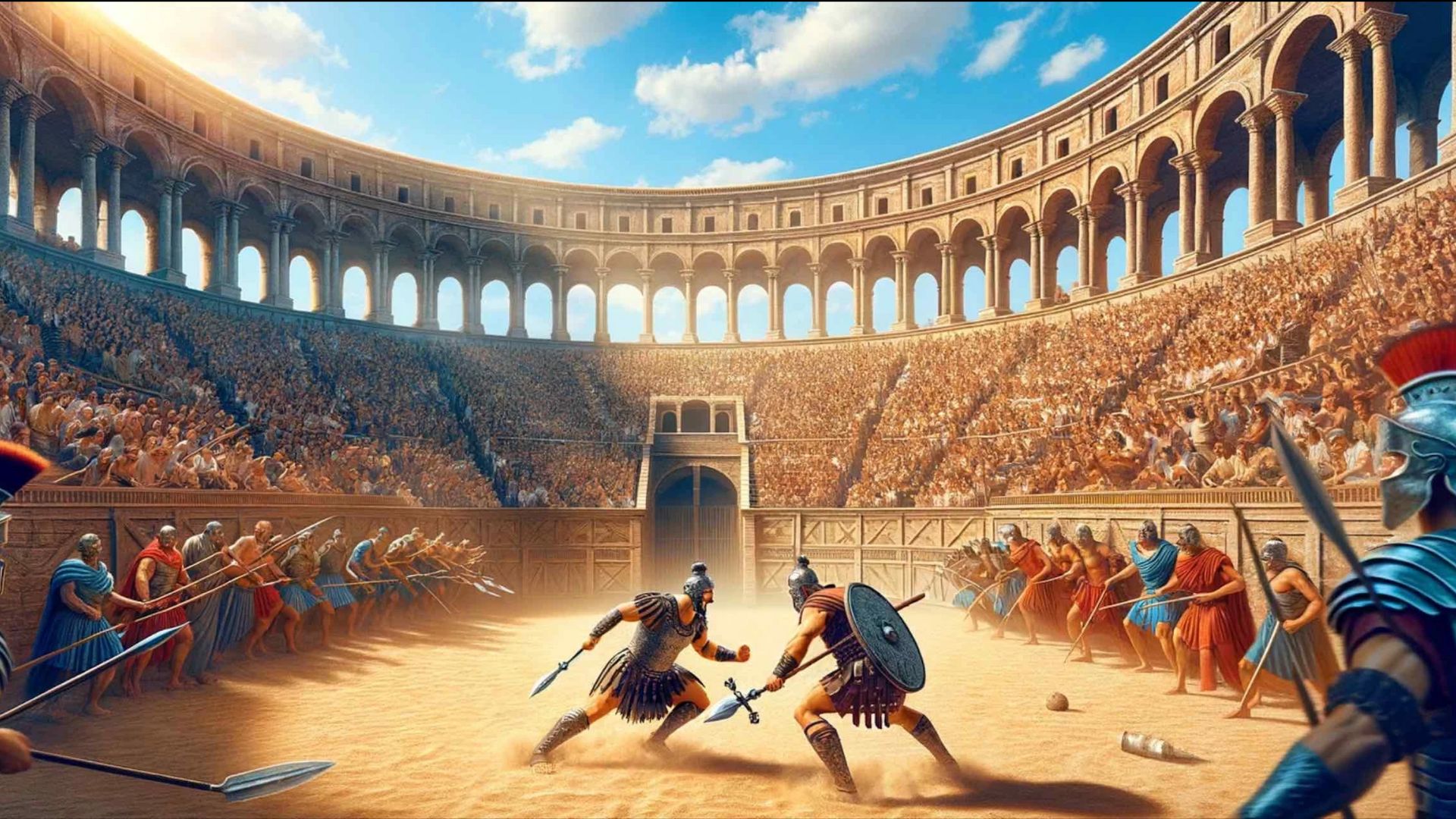
During this time, there was a form of entertainment we’re all familiar with: Gladiatorial combat!
Gladiators were warriors who fought to the death in Roman arenas. They were drawn from prisoners of war, criminals, slaves, and occasionally even free citizens. To ensure a spectacular fight, they were trained in specialized schools. These were lethal, high-stakes performances.
Contrary to popular belief, gladiator matches didn’t always end in death. Trained gladiators were expensive assets, so it didn’t make economic sense to kill them off. Furthermore, at the signal of the crowd or the arena officials, fighters could be spared or executed. Some gladiators became genuine celebrities with massive fan followings.
This tradition of lethal combat eventually hit a breaking point in 73 BC, when a gladiator named Spartacus led a massive uprising. Nearly 70,000 slaves revolted against Rome, defeating its armies for a time. While Rome eventually crushed the rebellion and crucified the survivors, the dramatic scale of the revolt has inspired works as iconic as the film “Gladiator.”
Of course, the bloodshed wasn’t just inside the arena. Rome had enemies—and ambitions—beyond its borders. Initially, Rome set its sights on the Italian peninsula, conquering the city-states of Latium and Campania. But these conquests weren’t won in a single stroke. Powerful groups like the Samnites stood in the way, leading to three major wars where Rome decisively defeated both the Samnites and the Gauls who had allied against them. Next came Southern Italy, which fell under Roman control by 272 BC. But was the Italian peninsula enough? Absolutely not. After securing Italy, Rome crossed paths with Carthage—a rival you might remember from our Ancient Greek History post. Rome built a massive navy to challenge Carthage, winning Sicily in 241 BC. But Carthage wasn’t finished. In 218 BC, the Carthaginian general Hannibal famously crossed the Alps with his army to strike at the heart of Italy. Rome lost battles, but they persisted, ultimately defeating Hannibal and Carthage in 202 BC, which signaled the start of Carthage’s decline. Their final conflict occurred in 149 BC, resulting in the total destruction of Carthage.
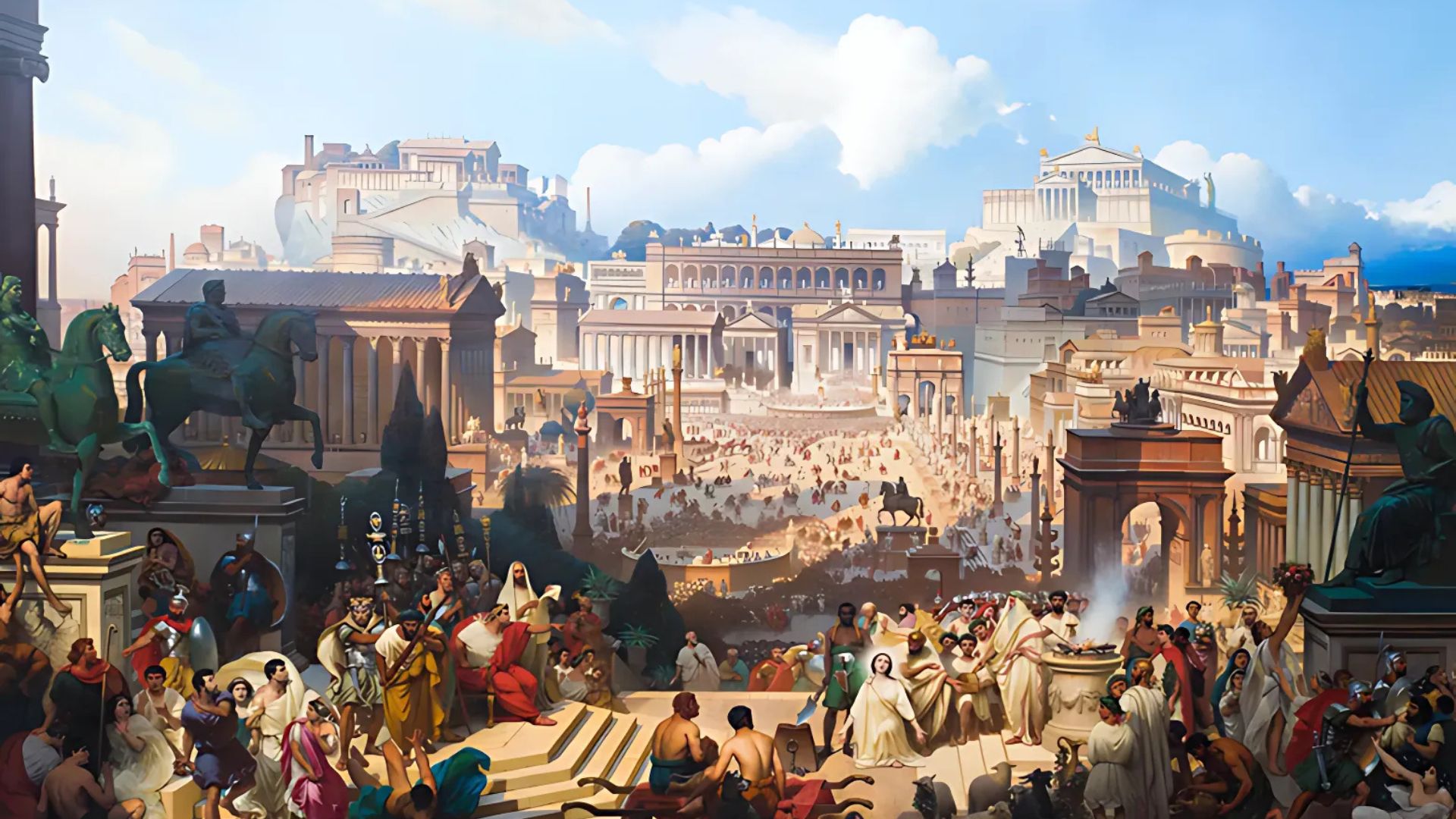
Following this, the Ancient Greek world, which had deep ties to Italy, caught Rome’s eye. After the death of Alexander the Great, his empire had fractured into three major states. You can dive into the details of that era in our upcoming Alexander the Great article.
Macedonia remained a power after Alexander, but not for long. Rome began wars with them in 200 BC and soon brought them under total control. The Greek city-states couldn’t put up much resistance either. Next came Anatolia. In 190 BC, Rome defeated the Seleucid King Antiochus III at the Battle of Magnesia. Later, the Kingdom of Pergamon was bequeathed to Rome in 133 BC. By 63 BC, Rome was the sole master of Anatolia. Finally, there was Egypt, ruled by Cleopatra. Rome quickly conquered Egypt, expanding its borders as far as it could. You can find the details of that conquest in our History of Egypt post.
As a result of all this, Rome became the master of the Western and Eastern Mediterranean, yet internal problems persisted. The most famous of these is the story of betrayal between Julius Caesar and Brutus.
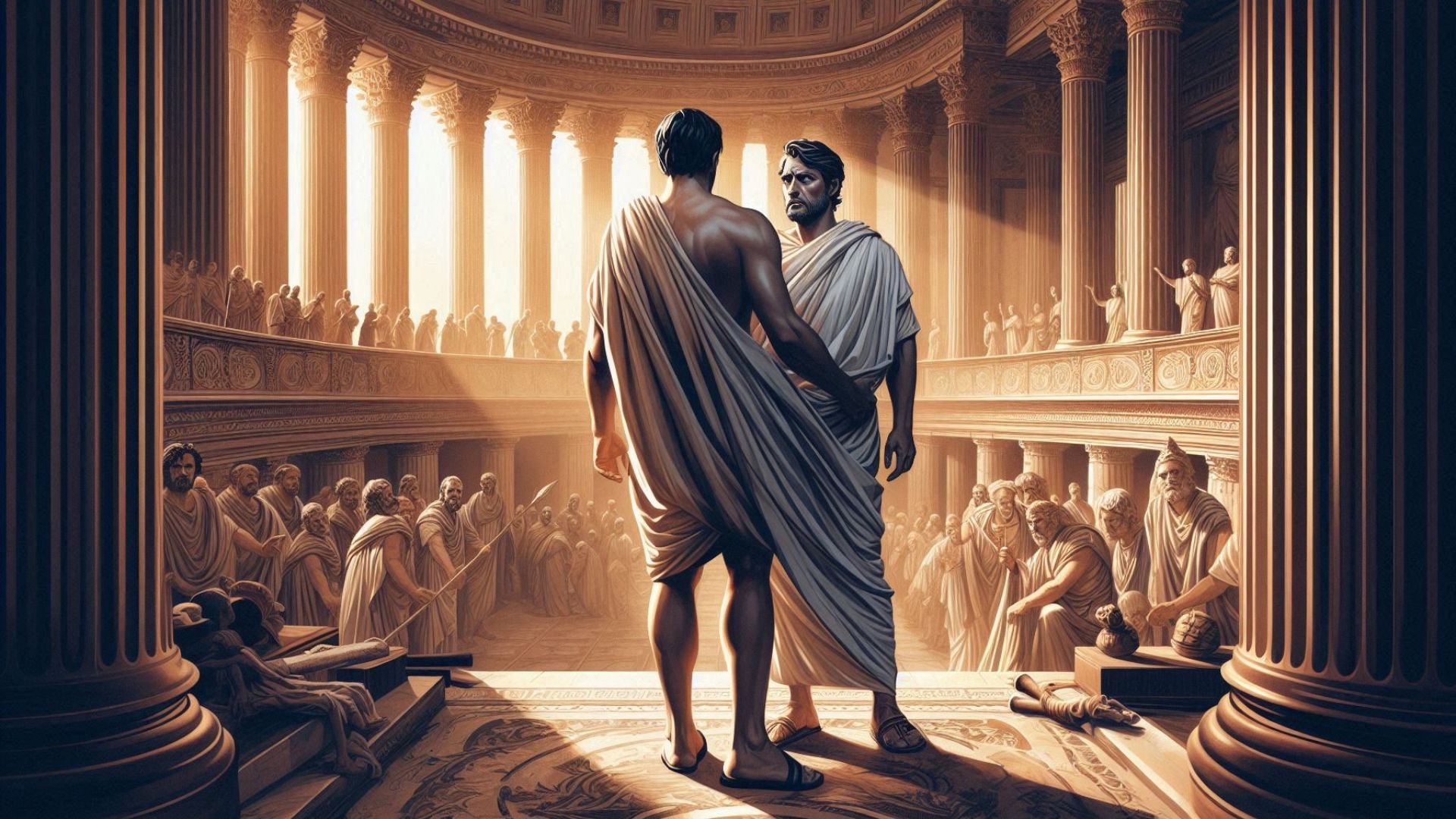
Julius Caesar was one of Rome’s greatest generals. He rebelled against the status quo and, following a civil war, seized control of Rome. During this time, he had a close friend: Junius Brutus.
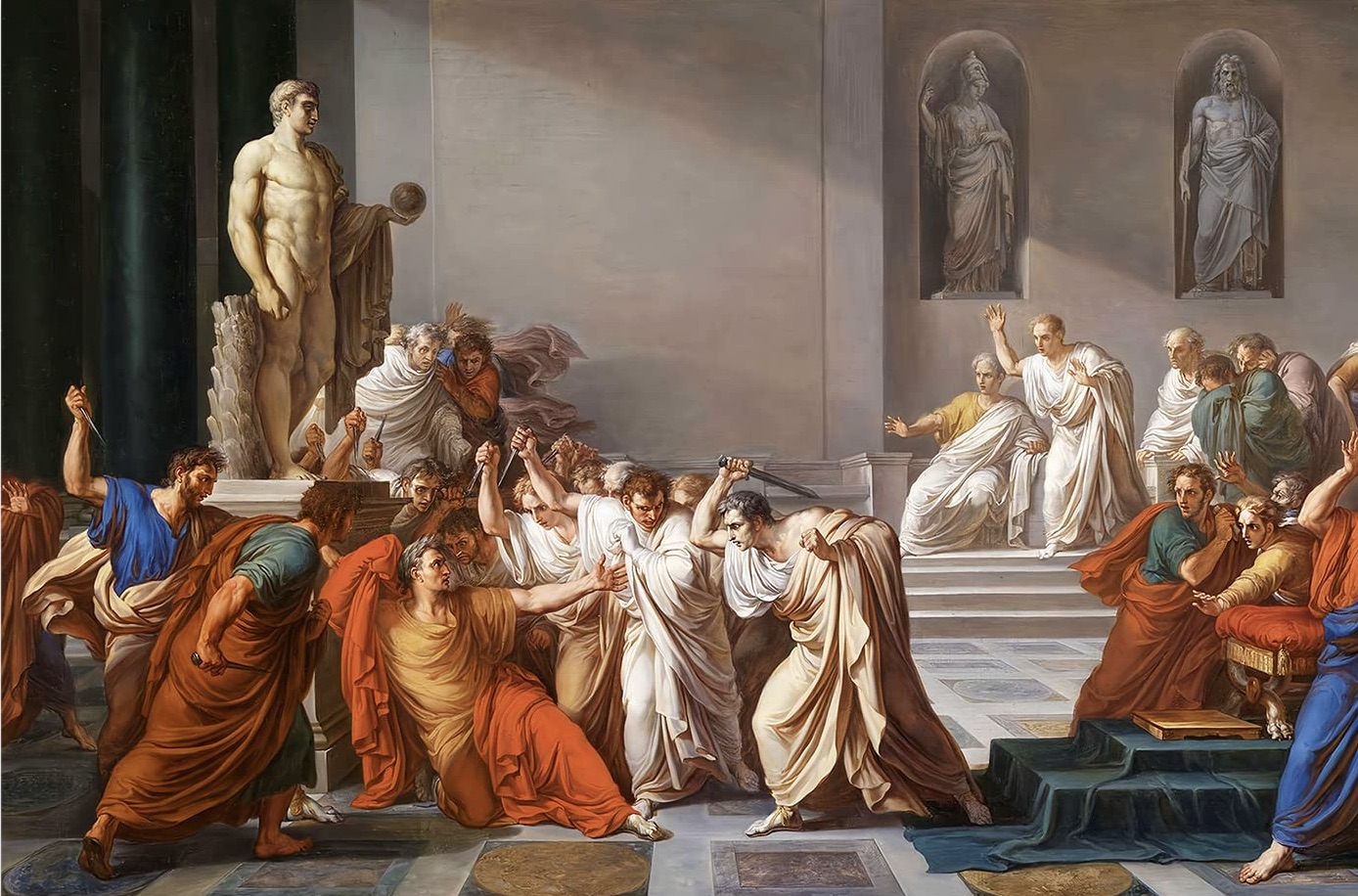
Caesar had treated him like a son, granting him immense power, but the senators were deeply unsettled by Caesar’s growing influence. They sought out Brutus, the only man who could catch Caesar off-guard. On March 15, 44 BC, Caesar was summoned to the Senate by Brutus. Waiting for him were nearly 60 senators, Brutus included, all armed with daggers. According to the legend, the assassins stabbed Caesar 23 times. In his final moments, Caesar looked at his friend and uttered those famous words:
“Et tu, Brute?”
As we all know, this betrayal didn’t end well for Brutus. Caesar’s death triggered a massive civil war; Brutus was defeated by Caesar’s allies and subsequently took his own life.
This great betrayal marked the end of the Republic and the official beginning of the Imperial Period.
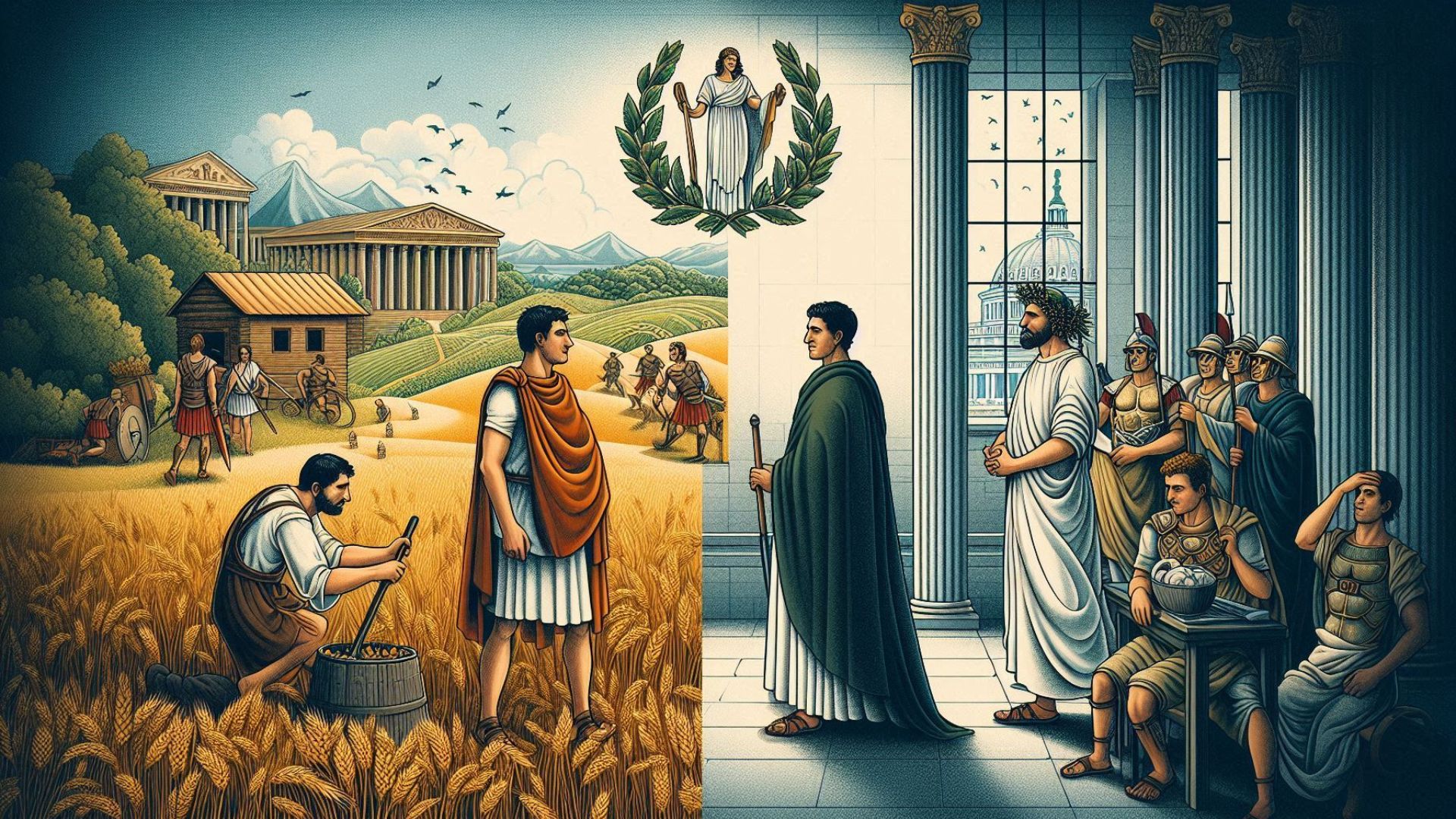
While “dictator” is seen today as an authoritarian title, in the Roman Republic, it was a temporary, legal office. In times of great crisis, the Senate would grant absolute power to a single individual for a six-month term. One of the most famous Roman dictators was Cincinnatus. A humble farmer, he was chosen as dictator during a military emergency, gathered his army, defeated the enemy, and promptly resigned his power to return to his farm. Julius Caesar, however, broke this tradition by being named dictator for life, paving the way for the Republic’s collapse.
The Imperial Period (27 BC – 476 AD)
The Roman Imperial period began in 27 BC when Augustus ended the Republic and established the Principate. This era, marked by profound cultural and political transformation, is divided into the Early Empire (27 BC – 284 AD) and the Late Empire (284 AD – 476 AD). In the Early Empire, the Emperor held all the reins of power. While the Senate continued to exist, it was a shadow of its former self. Even laws began to be issued in the Emperor’s name.
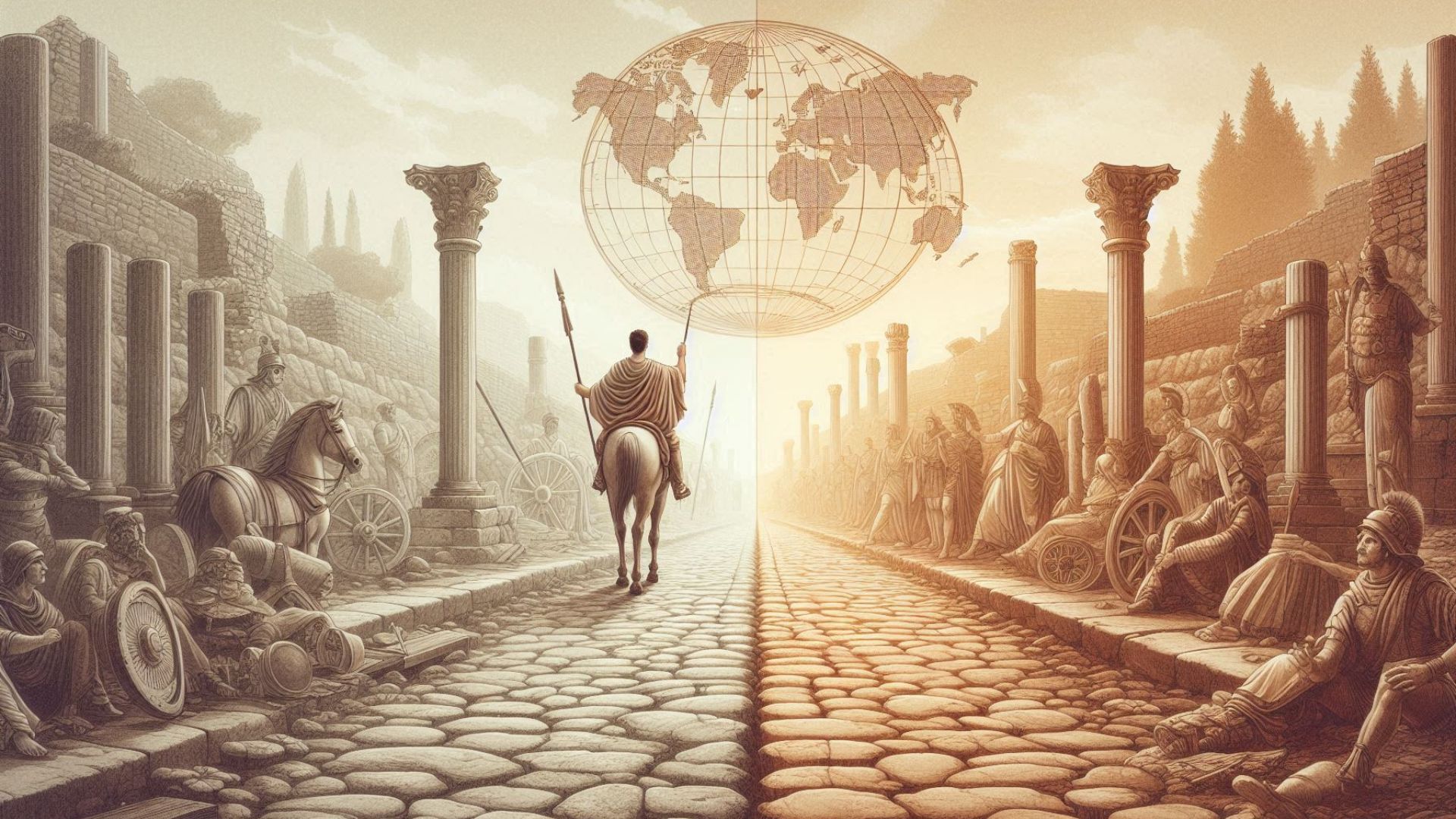
During this period, the empire drew its strength from its military. Legions were professionalized, and the Praetorian Guard was created specifically to protect the Emperor. It was also during this early period that the Empire reached its greatest geographic extent. The era concluded with the reign of the philosopher-emperor Marcus Aurelius; after his death, the empire began to fracture, ushering in the turbulent Late Empire.
After Aurelius, Diocletian introduced reforms to stop the rot, establishing the Tetrarchy, where Rome was ruled by four leaders. Economic reforms were implemented, but they weren’t enough. Initially, Rome had rejected Christianity, leading to intense persecution, especially after 250 AD. Constantine saw that this policy was failing; he issued an edict legalizing Christianity and established his own capital in Istanbul—then known as Constantinople.
Transportation in Rome was incredibly advanced. A postal service known as the “Cursus Publicus” ensured rapid communication across the empire. The roads were built so well that many are still in use today. This is the origin of the saying, “All roads lead to Rome.”
While these changes were happening, Rome was bleeding out. Having conquered every reachable territory, Rome stopped expanding. With no new influx of wealth, the state spent more than it earned and couldn’t balance the books. This instability eventually led to the permanent split between the Western and Eastern (Byzantine) Roman Empires.
The Two Romes After the Collapse
We can pick up the pace here. In the eyes of many, the “Rome” we think of today effectively ended with the death of Caesar, replaced by a ghost of its former self. Following the split, the Western Empire couldn’t hold on for long. In 476 AD, the Germanic chieftain Odoacer deposed the Western Emperor Romulus Augustulus—a date officially recognized as the end of the Western Roman Empire. The Eastern Roman Empire, or Byzantium, would survive for another thousand years until it was finally brought to an end by Sultan Mehmed the Conqueror in 1453.
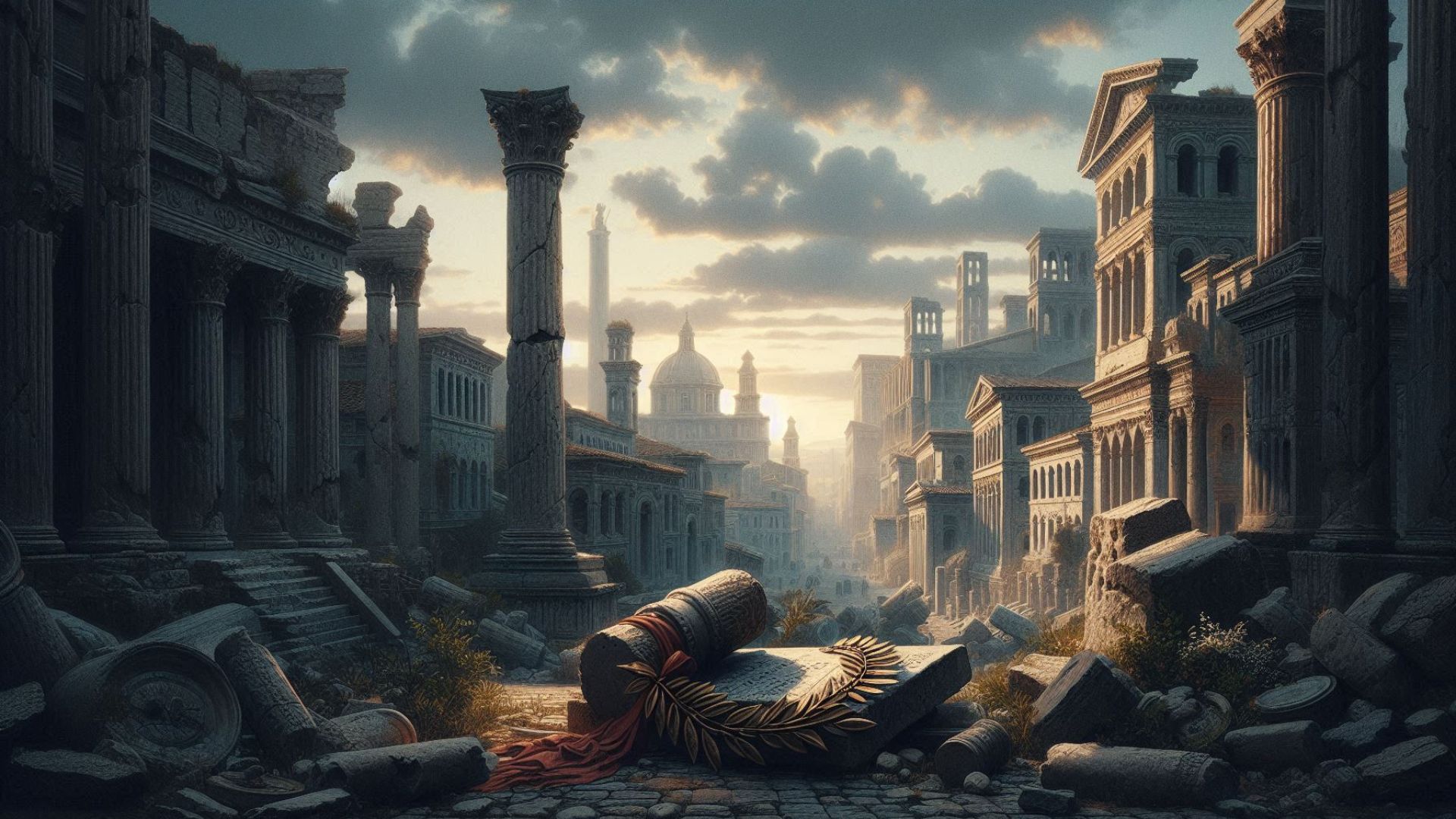
Rome didn’t exactly die, nor did it vanish. Its laws, art, military discipline, and political philosophy live on in our modern world. While the ideals of the Republic inspire democratic governments today, Roman engineering remains the foundation of our civilization. Yet, perhaps Rome’s greatest legacy is the lesson it teaches us: even the mightiest empires can fall to hubris, betrayal, and internal decay. The story of Rome continues to serve as a mirror—not just for the past, but for our present and our future.
Tufan Özdemir wrote this piece, with content verification by Özge Arslan, editing and linguistic review by İpek Yıldırım, design by Banu Ankara, and final quality control by Mete Esencan.
References and Further Reading
Mancebo, I. G. (n.d.). Roman Empire (27 BC – 476 AD) – History of Rome. https://www.rome.net/roman-empire
Rome’s Transition from Republic to Empire. (n.d.). https://education.nationalgeographic.org/resource/romes-transition-republic-empire/
The Editors of Encyclopaedia Britannica. (2025a, June 9). Roman Republic | Definition, Dates, History, Government, Map, & Facts. Encyclopedia Britannica. https://www.britannica.com/place/Roman-Republic
The Editors of Encyclopaedia Britannica. (2025b, June 27). Roman Empire | Definition, History, Time Period, Map, & Facts. Encyclopedia Britannica. https://www.britannica.com/place/Roman-Empire
Originally published in Turkish at Doğa Filozofu.