

Ready to take a quick trip back through recent history? If you said yes, today is your lucky day! We’re diving into the Gulf War.

As the calendar turned to 1990, the world was still trying to wrap its head around the end of the Cold War. The decades-long standoff between the U.S. and the Soviet Union had finally thawed, but what would come next? The answer wouldn’t be found in some distant land, but in the heart of oil and strategy: the Middle East. When Iraq, led by Saddam Hussein, invaded its small but wealthy neighbor Kuwait, it didn’t just redraw borders—it sent the entire global order into a tailspin. This wasn’t just a simple act of greed; it was fueled by deep economic crises, historical grievances, and dreams of regional dominance. Of course, Iraq wasn’t the only major player in this drama, as the U.S.-led coalition was about to deliver a resounding response. So, this is how the 1991 Gulf War began. Let’s peel back the layers of this conflict together.
The Backdrop of the Invasion
In the years following the end of the Cold War, the world was stepping into a new era as the familiar poles of power began to dissolve. With the Soviet Union in the throes of collapse, the U.S. stood alone as the world’s only superpower, and it wasn’t yet clear how it would wield that weight. For the previous 40 years, every move America made was checked by the Soviets—and vice versa. Both sides had been keeping each other in check, but suddenly, the U.S. had no one left to answer to.
It was during this transition that the long-simmering tensions in the Middle East reached a boiling point. Iraq, exhausted and economically battered from the Iran-Iraq War (1980–1988), found itself spiraling into a crisis due to a mountain of foreign debt and plummeting oil prices. As Saddam Hussein looked for a way out of this economic stranglehold, he set his sights on his southern neighbor, Kuwait. For Saddam, invading Kuwait wasn’t just about economic relief; it was a chance to cement his status as a leader in the Arab world. Appealing to the masses with Pan-Arab ideals, he positioned himself as a bold figure standing tall against the West. This move was bolstered by propaganda aimed at winning legitimacy, particularly by tapping into the Palestinian cause and the broader anti-Western sentiment among Arab populations.
Source: BBC News Türkçe
It was during this transition that the long-simmering tensions in the Middle East reached a boiling point. Iraq, exhausted and economically battered from the Iran-Iraq War (1980–1988), found itself spiraling into a crisis due to a mountain of foreign debt and plummeting oil prices. As Saddam Hussein looked for a way out of this economic stranglehold, he set his sights on his southern neighbor, Kuwait. For Saddam, invading Kuwait wasn’t just about economic relief; it was a chance to cement his status as a leader in the Arab world. Appealing to the masses with Pan-Arab ideals, he positioned himself as a bold figure standing tall against the West. This move was bolstered by propaganda aimed at winning legitimacy, particularly by tapping into the Palestinian cause and the broader anti-Western sentiment among Arab populations.
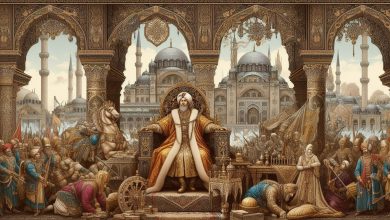
Iraq saw Kuwait not just as an oil-rich nation, but as a piece of territory that was historically its own. While Saddam tried to lend legitimacy to his claims by citing border issues left over from the Ottoman era, the real goal was simple: economic and strategic power. Saddam argued that by ramping up oil production and driving prices down, Kuwait was sabotaging Iraq’s economy. Tensions were further stoked by Kuwait’s refusal to fully forgive the war debts Iraq had incurred.
With these justifications, the Iraqi army crossed into Kuwait on August 2, 1990, and quickly occupied the country. This wasn’t just a regional spat; Kuwait’s vast oil reserves and strategic location made it vital to global energy security. For the U.S. and its allies, this was a massive crisis that threatened Western interests. Furthermore, the invasion was a direct violation of the fundamental principle of the post-WWII international order: the inviolability of sovereign borders. The U.S. couldn’t stand by, and President George H.W. Bush viewed the crisis not just as the invasion of Kuwait, but as a litmus test for America’s new role as the sole superpower.
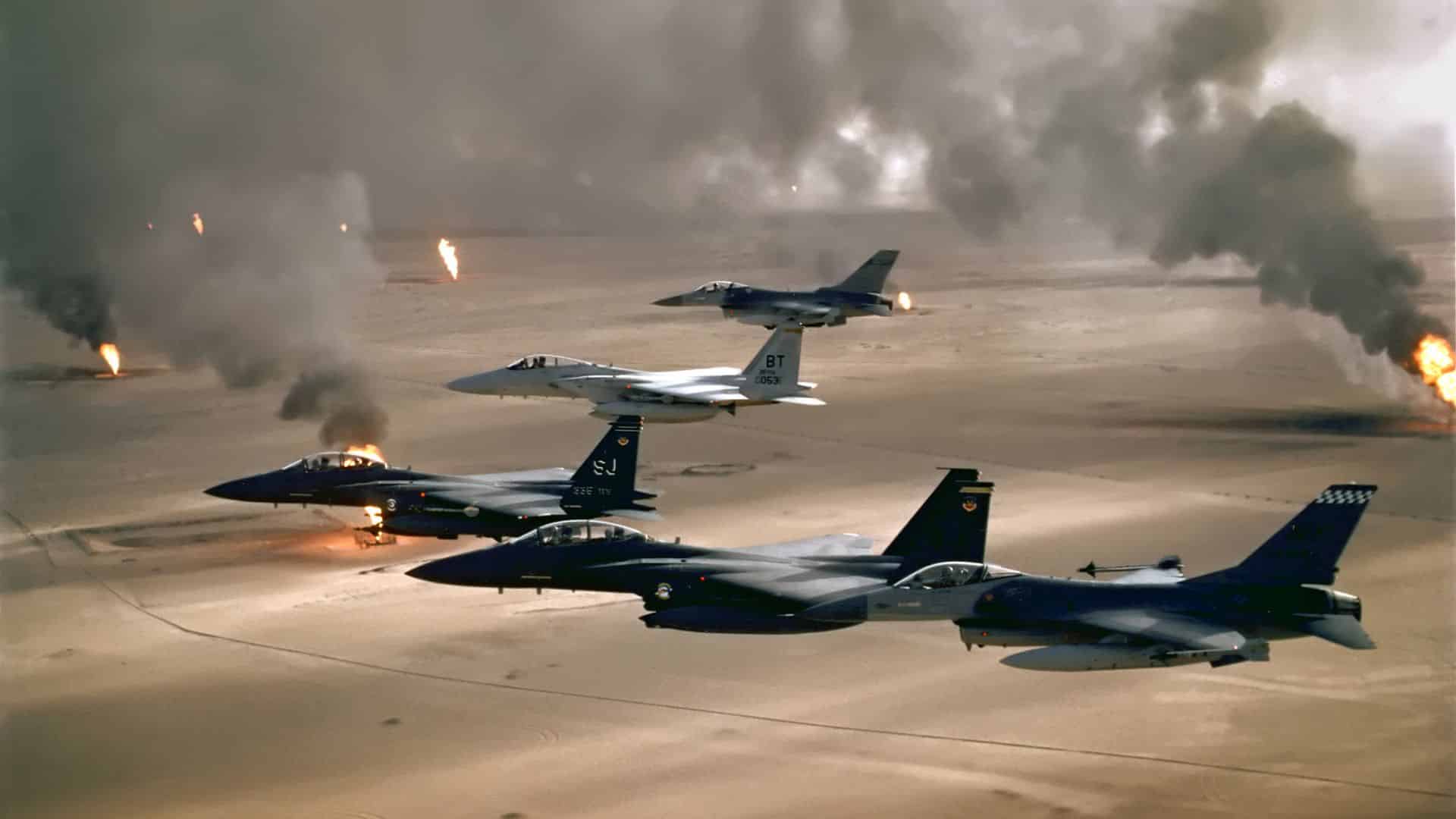
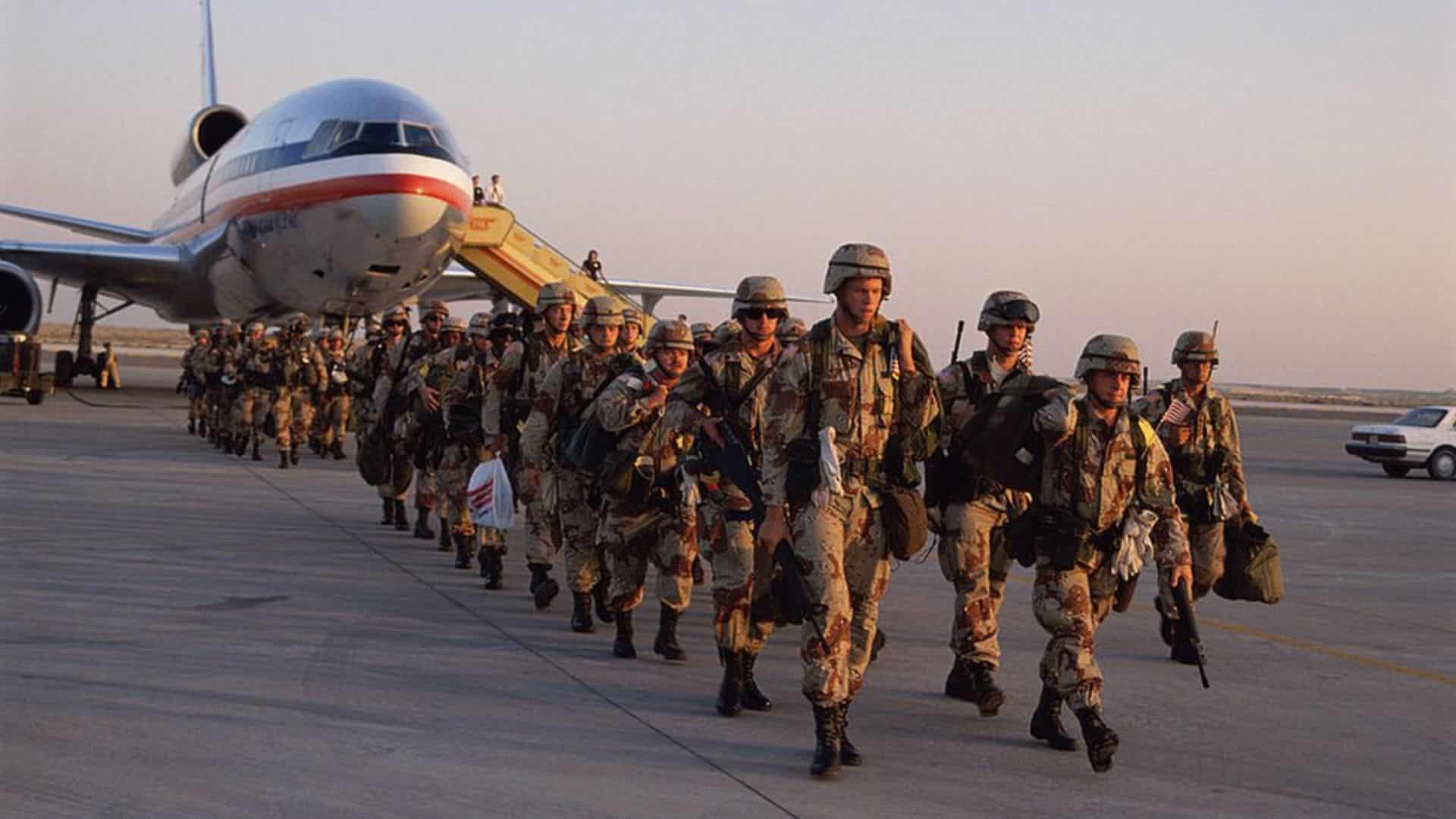
The U.S. moved quickly on the diplomatic front, securing the support of the United Nations. Economic sanctions were imposed, and Saddam was given a deadline to withdraw, but he refused to budge. The result was the formation of a broad coalition of 39 countries led by the U.S., followed by a massive military buildup in the Gulf. Saddam’s stubbornness wasn’t just empty pride; he was trying to put on a show of strength for his own people and the Arab world. He also operated under the false assumption that the U.S. wouldn’t actually launch a full-scale ground invasion. Having served as a “buffer” against Iran in the eyes of the West for years, he hoped he could negotiate his way out of this crisis, too. Of course, that’s not how things played out.
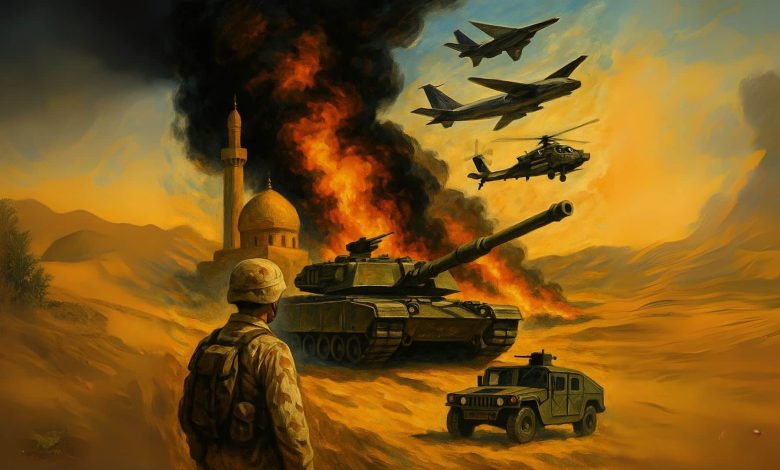
The operation began with “Operation Desert Shield,” which established a defensive line on the Saudi Arabian border. Then, on January 17, 1991, “Operation Desert Storm” kicked off with massive, weeks-long aerial bombardments that devastated Iraq’s infrastructure. Finally, the ground campaign commenced, and in just a few days, the Iraqi army was ousted from Kuwait.
Iraq suffered a major military defeat, but Saddam Hussein managed to hold onto power. The U.S. and coalition forces chose not to march into Baghdad to topple the regime, yet the war still fundamentally shook the dynamics of the Middle East. The U.S. became a permanent military fixture in the region. Gulf states began to entrust their security to the West. Meanwhile, the destruction and the subsequent embargoes in Iraq plunged the population into years of crushing poverty.

The war only fueled more distrust and anger toward the West among local populations. Even though Iraq had clearly violated international law by invading Kuwait, the military response led by the U.S. left the region feeling deeply unsettled. The aftershocks of that sentiment are still felt today, exacerbated by the many events that followed.
So, what did the 1991 Gulf War teach us? Did it show us the hubris of a dictator, or the raw reality of how great powers operate? Perhaps it was both. Saddam Hussein, who began this adventure fueled by historical claims, ended up isolated, his economy in ruins, and his people enduring immense suffering. But what’s truly striking is how this war reshaped the destiny of the Middle East. The U.S. was no longer just a superpower; it had become an arbiter—a force that established the rules of the game in the region. Gulf countries began looking to Washington for their security, Iraq started its slow descent into internal fracturing, and the world began to view “military intervention” as a more legitimate tool for conflict resolution. Even today, the legacy of the Gulf War continues to shape the state of these nations. Isn’t that how history always goes? Every war seems to sow the seeds for the next one.
References and Further Reading
32.Gün. (August 8, 2023). Körfez krizinde neler yaşandı? | 1991 [Video]. YouTube. https://www.youtube.com/watch?v=W0JA9b_uMKs
HISTORY.com Editors. (May 28, 2025). Persian Gulf War: Dates & Operation Desert Storm – HISTORY. HISTORY. https://www.history.com/articles/persian-gulf-war
The Editors of Encyclopaedia Britannica. (September 12, 2025). Persian Gulf War | Summary, dates, combatants, casualties, syndrome, map, & facts. Encyclopedia Britannica. https://www.britannica.com/event/Persian-Gulf-War
Turkish Asian Center for Strategic Studies (TASAM). (n.d.). 1. Körfez Savaşı [PDF]. https://tasam.org/Files/Icerik/File/1__K%C3%B6rfez_Sava%C5%9F%C4%B1_pdf_1690c694-7b42-41e3-9699-2159ac18bb8f.pdf
Originally published in Turkish at Doğa Filozofu.