



We’re all built differently, aren’t we? Some of us are glued to the latest political developments, while others run from politics as fast as their legs will carry them. But no matter how hard we try to tune it out, there’s one movement that inevitably finds its way into our ears: Communism.
And let’s not forget Marxism and Socialism—terms that often get tossed around as if they were all the same thing. Today, we’re going to take a closer look at these concepts and the history behind them.

This piece is actually the second installment in our series on the history of ideologies. As you might remember from our article on “The History of Fascism,” our goal is to introduce you to the ideologies that have left their mark—for better or worse—on world history. Throughout this series, and indeed across all content here at Doğa Filozofu, you won’t find personal praise or condemnation. Our mission is simply to present the facts to you, neutrally.
Karl Marx and His Influence
Before we dive into these three concepts, we need to briefly pay our respects to the forefather of them all: Karl Marx.
We have a dedicated piece on Marx coming up soon. But if you’re thinking, “Can you just give us the summary now?” then buckle up, because we’re about to take a lightning-fast trip through his life. (Did you catch the pun, dear reader? Marx-Mars… well, maybe it didn’t land quite right.) Anyway, let’s get into Marx.
Karl Marx was a philosopher who launched a deep, systemic critique of capitalism. His magnum opus, “Das Kapital,” aimed to lay bare the contradictions and exploitation mechanisms of the capitalist system. Marx argued that capitalism exploited the working class and deepened inequalities through the accumulation of capital. To him, the system was inherently prone to crises and would eventually collapse under the weight of its own contradictions. “Das Kapital” sent shockwaves far beyond economics, profoundly influencing sociology and political science, and ensuring that Marx left an indelible mark on the history of philosophy.

His ideas gave birth to a multitude of thought systems, but we can generally group them into three main currents: Marxism, Socialism, and Communism.
While these terms are often used interchangeably in casual conversation, there are fundamental differences between them. Let’s break them down.
Communism, Socialism, Marxism
Socialism: Socialism is an ideology based on the social ownership of the means of production with the ultimate goal of a classless society. However, socialism is also viewed as a transitional stage to reach that goal. Socialists advocate for state intervention in the economy to put an end to capitalist exploitation. Generally, socialism aims to achieve social justice through reforms within democratic processes.
Communism: Communism is seen as the final destination of socialism. In a communist society, the state eventually withers away, leaving behind a classless, property-less society. The means of production are entirely under societal control, and resources are distributed based on individual need. Communism envisions a much more radical transformation than socialism.
Marxism: Marxism is the entire body of Karl Marx’s economic, social, and political theories. It is built on historical materialism, which argues that social changes are driven by economic foundations. According to Marx, social orders are shaped by the interests of the classes that own the means of production, and capitalism will eventually give way to socialism, and finally, to communism. Marxism provides the theoretical foundation for communism, with socialism serving as a necessary step along the way.

Let’s put this into a table to make it a bit clearer:
| Concept | Definition | Example |
| Socialism | Aims for the fair distribution of wealth and resources. | In a town, all farmers pool their produce and distribute it equally. However, farmers still retain ownership of their own land and homes. |
| Communism | Aims for a classless, stateless society. | In that same town, private property no longer exists. All fields, homes, and goods belong to the community. Everyone receives according to their needs; no one holds private assets. |
| Marxism | Explains history and society through economic foundations. | Marx argues that the town’s economic structure—the relationship between farmers and workers—will dictate how the town evolves. To him, the transition from socialism to communism is inevitable. |
We hope that clears things up a bit. At their core, all three ideologies serve the same overarching goal, just through different methods of implementation.
Of these three, socialism is noticeably closer to capitalism. Communism represents a much stricter approach. Socialism, as you might recall from our piece on Marx, seeks to eliminate the income gap between workers and employers while still accepting concepts like personal property. Communism, on the other hand, advocates for complete collective ownership. Marxism is the grand umbrella under which all of Marx’s narratives sit—it’s the architectural framework for the other two.
Marx actually preferred reaching the goal of communism, but he also acknowledged that the transition from socialism to communism would be incredibly difficult. He generally defined the primary step as moving from capitalism to socialism.
Which Countries Adopted These Ideologies?
Even though the world at large has largely rejected these ideologies with a stern hand, some countries have embraced them quite firmly. So, who are these nations?
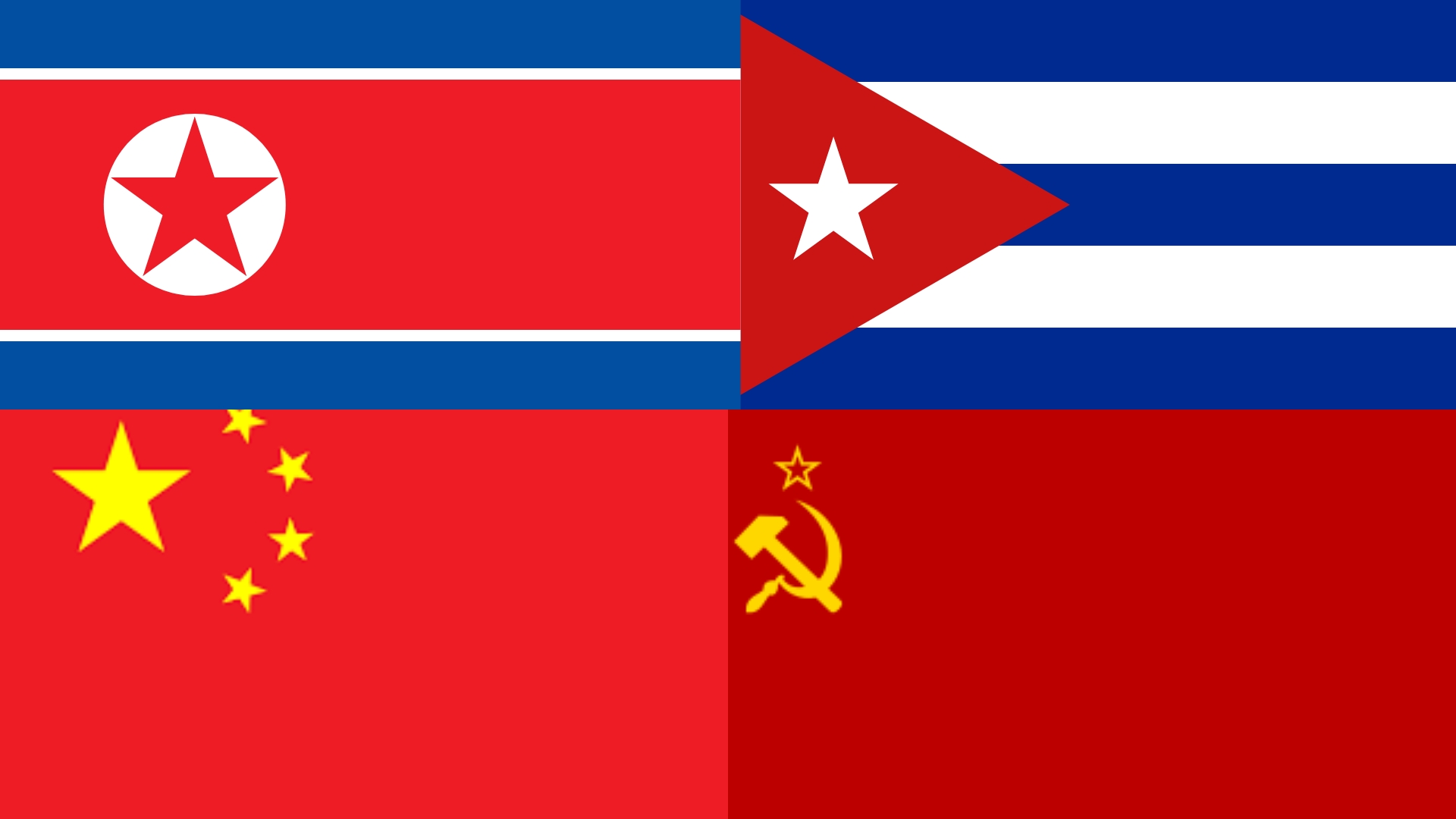
The Soviet Union (USSR): Established in present-day Russia after the 1917 Revolution, the Soviet Union was the world’s first communist state. Under Lenin’s leadership, a socialist government was formed, which hardened into a much stricter structure during the Stalin era. The USSR is known for its socialist economic policies, but the results were, unfortunately, less than stellar. While significant industrial and scientific progress was achieved, it came at the cost of political repression, the suppression of freedoms, the Gulag system, and famines that claimed millions of lives. The Soviet Union dissolved in 1991 following economic and political crises, and Russia has since distanced itself from socialism.
China: The People’s Republic of China was founded in 1949 under the leadership of Mao Zedong. Under Mao, China implemented sweeping land reforms and industrialization policies in line with socialist principles. Sadly, much like in the USSR, policies like the “Great Leap Forward” and the “Cultural Revolution” led to massive societal destruction and the deaths of millions.
Cuba: Following the revolution led by Fidel Castro in 1959, Cuba became a socialist state. Cuba has been noted for its socialist healthcare and education systems, but the US embargo and internal economic struggles have placed immense pressure on the national economy. While they continue with these policies today, the challenges they face remain significant.
North Korea: Following the Korean War, a socialist state was established in North Korea in 1953 under the leadership of Kim Il-Sung. Today, North Korea is governed by a centralized, planned economy, but it remains a closed society ruled by a dictatorship.
All of this suggests that, at least so far, these ideologies haven’t quite found their footing in the current world order. Of course, the reasons why are up for debate. Some argue that because the entire global order is built on capitalism, these states were doomed to fail regardless of their efforts. Others blame the failures on the incompetence of the leaders.
Another perspective suggests that the problems are inherent to the movements themselves. So, why do people think that? What are the common objections? Let’s take a look at the most frequent critiques.
The Critics
Generally, there are four main reasons why people oppose these three ideologies. What are they? Let’s examine the first three:

Economic Inefficiency: It is argued that socialist and communist systems lead to economic inefficiency because they dismantle market mechanisms. This certainly played out in the states we mentioned above. However, one could also argue that these failures were due to the incompetence of the leadership or the fact that they were operating within a hostile, capitalist-dominated global system.
Political Repression and Human Rights Violations: The criticism that these systems are implemented through authoritarian regimes and severely restrict individual freedoms is frequently raised. As seen in the USSR, China, and North Korea, socialist administrations have been notorious for political oppression and censorship. Again, one could argue this is more about the leadership’s style than the ideology itself. After all, Mussolini’s Italy and Nazi Germany faced similar issues, yet those countries were far from socialist or communist.
Economic Development Issues: Critics also claim that these systems stifle economic growth and fail to solve poverty. The economic collapse of the USSR and the Eastern Bloc are often cited as prime evidence for this.
As you can see, none of these are direct criticisms of the philosophy of socialism, communism, or Marxism itself; they seem more like critiques of the implementation. However, the fourth point of criticism stands apart, arguing that the problem lies in the ideologies themselves.
Individualism
A significant portion of those who oppose socialism, communism, or Marxism in general argue that this group of ideologies is fundamentally at odds with individual rights and human nature. Because these systems restrict private property and private enterprise, they are viewed as suppressors of individuality. Unlike in capitalist systems, individual liberties in socialist systems are often subordinated to the collective good. This can hinder individuals from pursuing their own economic interests or shaping their lives according to their own desires.
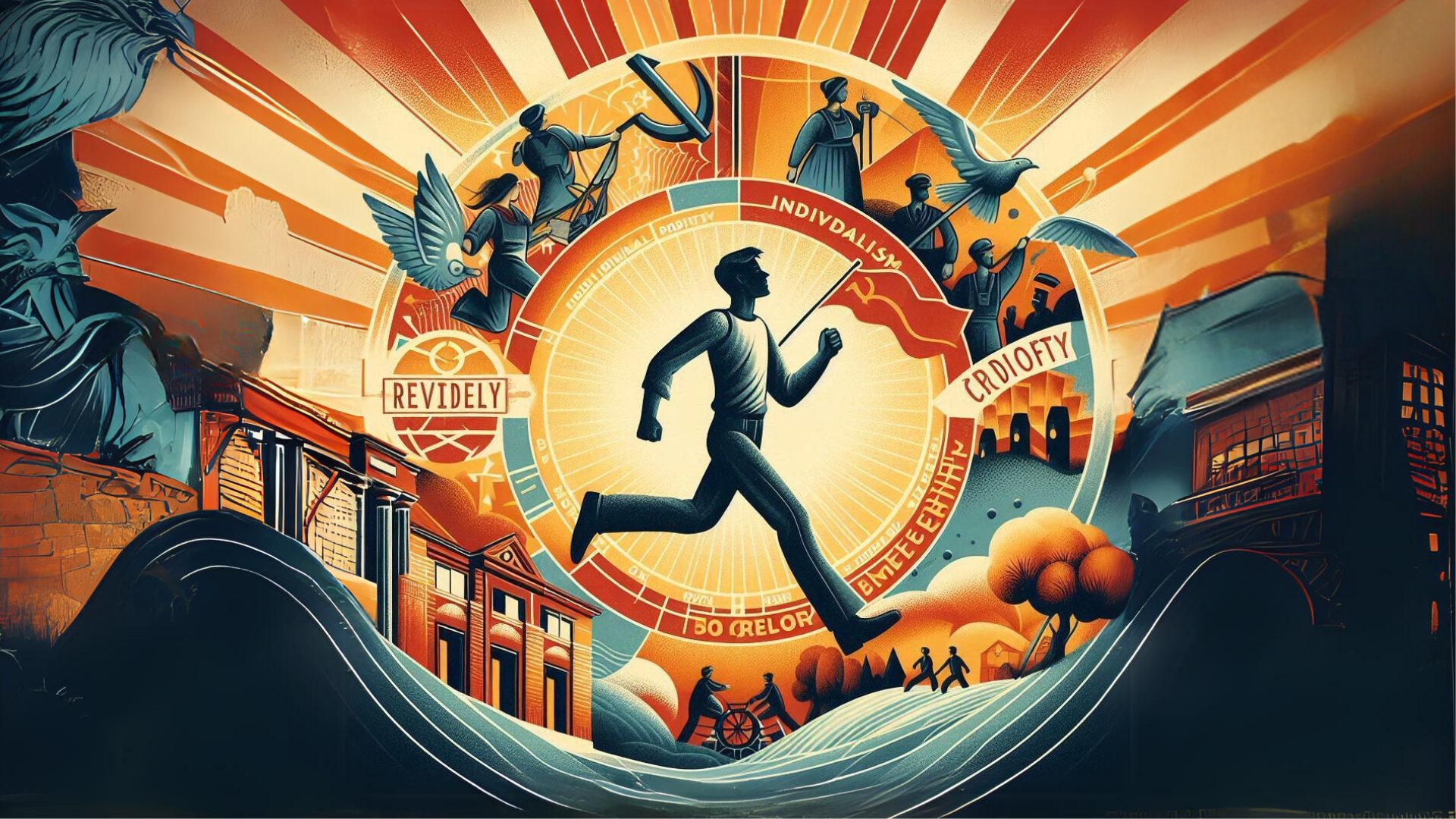
Of course, there is a counter-argument: proponents of these ideologies contend that these systems prioritize social justice and equality over unchecked individual ambition, aiming to create a society where everyone’s basic needs are met. To Marx, true individuality can only emerge in a classless, exploitation-free society.
Continuing from here would mean moving into personal opinion, so we’ll end our journey here. We hope that, regardless of the system, we all wake up to a world where individuals can be happy and at peace.
References and Further Reading
Britannica money. (2024a, August 20). https://www.britannica.com/money/socialism
Britannica money. (2024b, September 12). https://www.britannica.com/money/capitalism
Dagger, R., & Ball, T. (2024, September 22). Communism | Definition, History, Varieties, & Facts. Encyclopedia Britannica. https://www.britannica.com/topic/communism
McLellan, D. T., & Chambre, H. (2024a, September 25). Marxism | Definition, History, Ideology, Examples, & Facts. Encyclopedia Britannica. https://www.britannica.com/topic/Marxism
Originally published in Turkish at Doğa Filozofu.