

Throughout history, many great kingdoms and dynasties have risen. Empires like the Ottomans, the Byzantines, and the Romans have all shaped the world in their own way. But there is one group that didn’t know much about losing: The Vikings.
The Vikings were a society centered on seafaring and warfare, with little interest in traditional administration. So, how did this group—whose name we all recognize today—come to be? What did they achieve? And how did they fade away? Let’s dive in and find the answers together.
The Birth of the Vikings
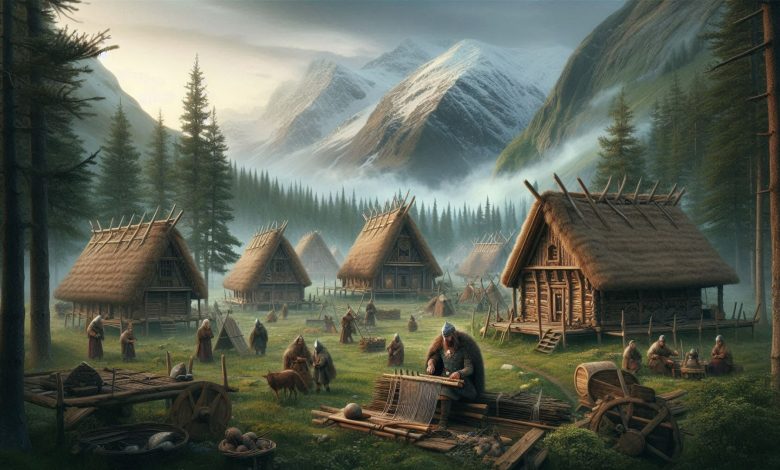
First off, “Viking” wasn’t the name of a country. They were organized into clans. Scattered across the lands we now know as Sweden, Denmark, and Norway, these clans were composed of sailors, merchants, warriors, and explorers. Their name itself translates roughly to “one who goes on a sea voyage” or simply “raider.” That’s actually the best way to describe them; the Vikings weren’t really a “standing army” type of society. Instead, they relied on naval raids, swooping in to plunder wherever they landed. But why did they do it? The reason is quite simple: The climate.
The geography the Vikings inhabited was harsh enough to challenge even the most organized state; for these small clans with limited resources, it was a constant survival test. They frequently clashed with one another to expand their territories and secure better resources. Over time, these smaller clans began to consolidate, eventually giving rise to three major Viking powers: the Danes, the Norwegians, and the Swedes.
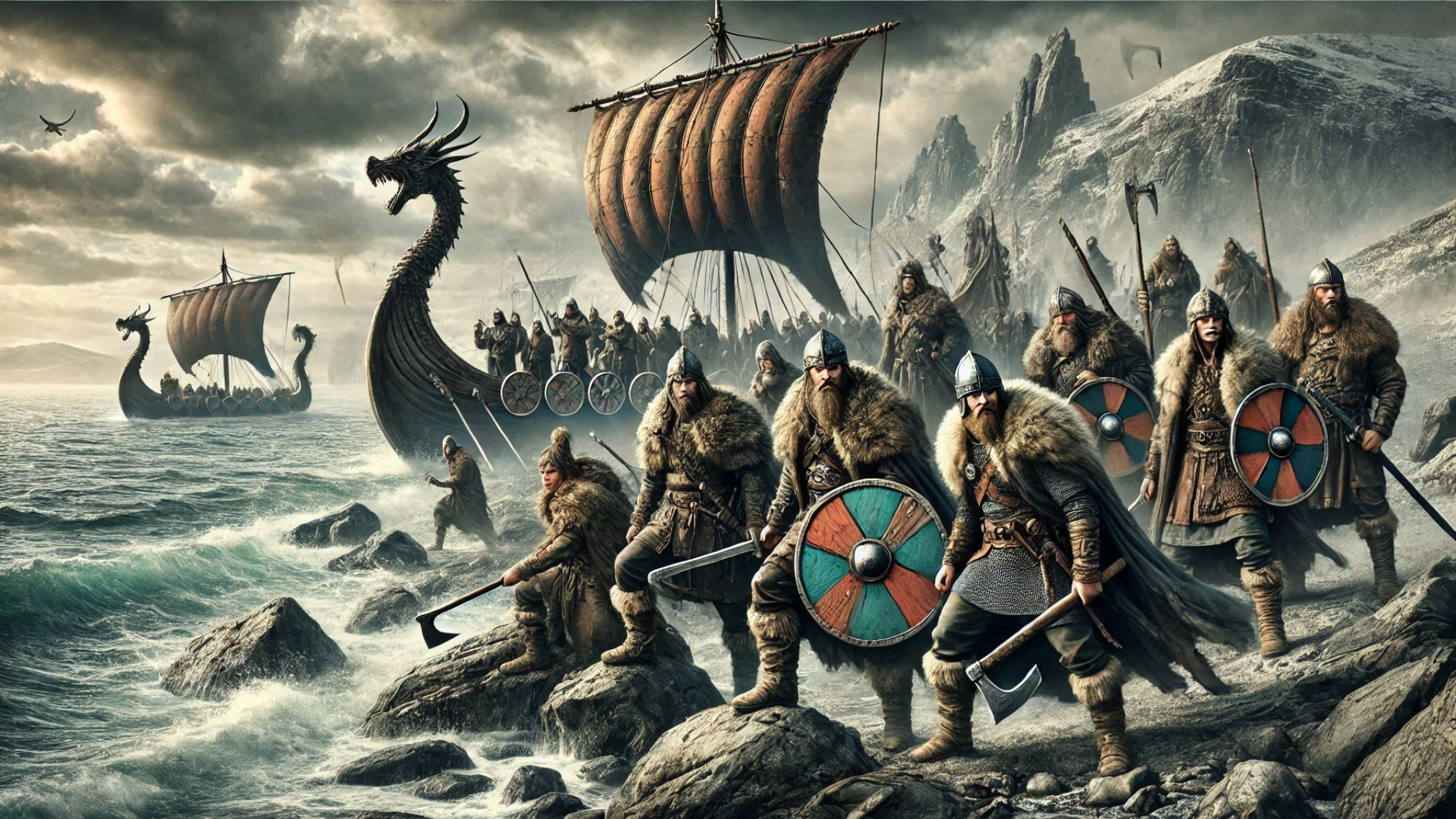
These groups first stepped onto the historical stage in the 8th century with a raid on the English coast. During that era, England, Ireland, Scotland, and the coastlines of Western Europe were frequent targets of Viking incursions. Of course, the West wasn’t their only objective. Any place far from the cold North was enticing to them. They sought warmer, wealthier lands. The Vikings spread as far as Russia and the Byzantine Empire, establishing trade routes to secure a more comfortable life. They traveled so far and wide that it is even believed Leif Erikson sailed west from Greenland around 1000 AD to reach a region he called Vinland (modern-day Canada). The Vikings were masters of the sea. While navigating the open ocean was a nightmare for most until the Age of Discovery, the Vikings were doing it centuries earlier in their longships.
Viking Culture and Society
We want to get to know our Scandinavian friends beyond just their raids and attacks, don’t we? After all, these people were more than just warriors. So, who were they really? Viking society was divided into three main classes: Jarls (nobles), Karls (free farmers), and Thralls (slaves). Even with slaves, it’s fair to say they practiced a form of democracy. They had their own assemblies where important decisions were made. Their people weren’t solely focused on war; they were experts in wood carving, metalwork, and shipbuilding. Their ships were more than just vessels for war and trade—they were significant religious and social symbols. Arts like literature held a special place in their culture. Their oral tradition was rich with sagas (epic tales) and poetry, which recounted their daily lives, discoveries, and heroic feats. And, of course, there is the mythology we all know today. Figures like Odin, Thor, and Loki were central to their belief system, and their warrior-explorer spirit was deeply rooted in these legends.
Internal and External Relations
The Vikings carried out countless raids and conquests throughout history. While few of these conquests were long-lasting, their impact was anything but small. For instance, they repeatedly raided England and France, even controlling a portion of England (the Danelaw). Beyond that, they established a foothold in France, creating the region of Normandy and evolving into the group known as the Normans. Don’t think their success was limited to the West, either! In Eastern Europe, they laid the foundations for Russian city-states like Novgorod and Kiev.
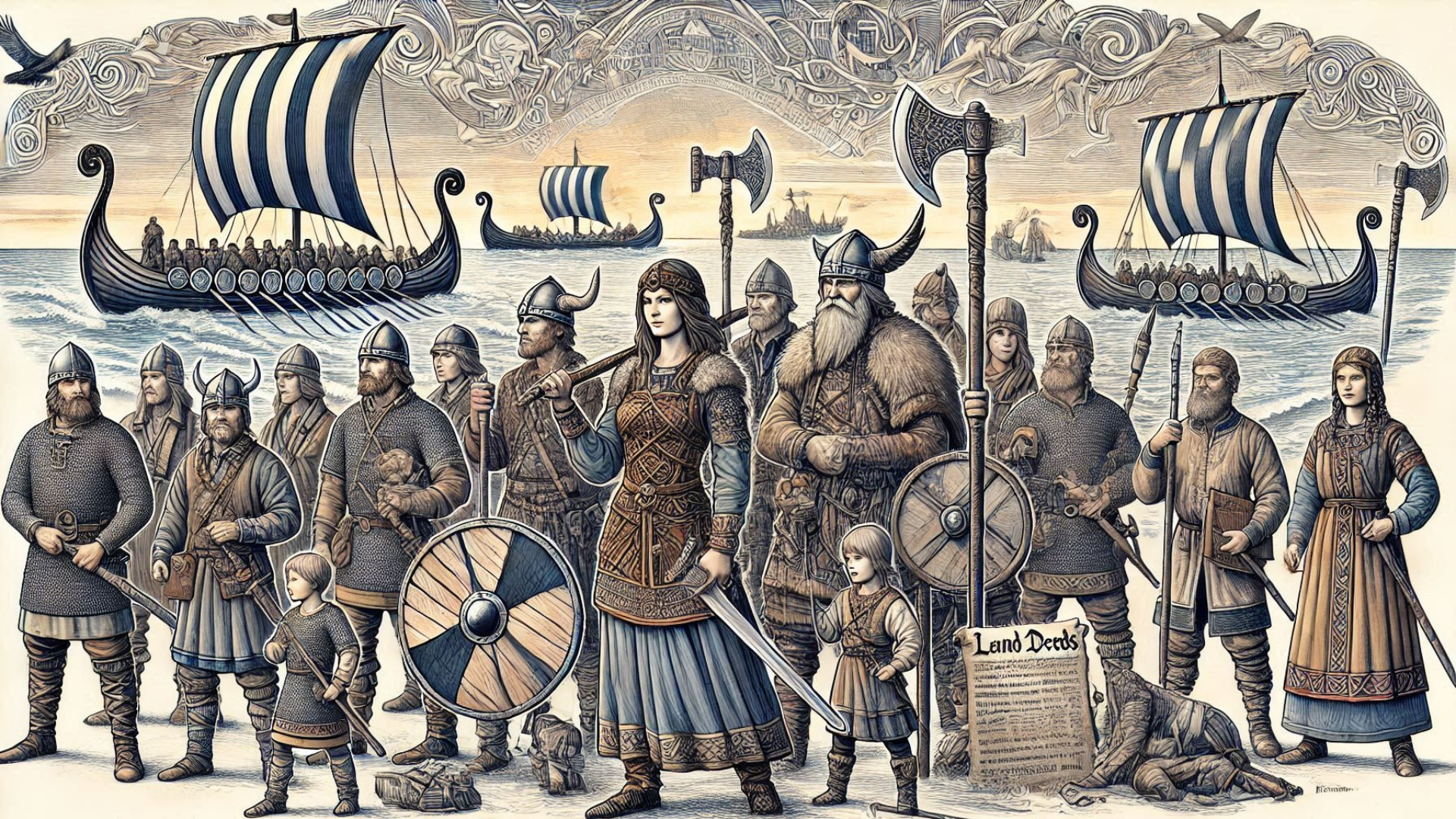
They were so skilled in combat and seafaring that the Byzantine Empire even employed them as elite mercenaries.
From the 10th century onward, the Vikings transitioned into the states we mentioned earlier, laying the groundwork for nations that still exist today. Their culture began to formalize into structured states largely through the adoption of Christianity. Over time, their original culture was assimilated, and by the 12th century, we could no longer speak of a distinct “Viking” structure. Before we move on, though, there are a few surprising facts about the Vikings you should know.
For example, women held a surprisingly important status. Compared to other Medieval societies, Viking women were quite free: They could own land, file for divorce, and engage in trade.
They weren’t just obsessed with war, either. Although seafaring and raiding get all the headlines, most Vikings were farmers. Agriculture was the backbone of their social structure, and they were quite successful at it. This agricultural success was followed by trade; evidence proves they even traded with the Abbasid Caliphate along the routes they controlled.
As we can see, the Vikings weren’t a savage, ignorant people. They may not have been at the forefront of scientific advancement, but they possessed a cultural treasure trove that was undeniably rich.
Assimilation
We can hear you asking, “Why did the adoption of Christianity lead to their assimilation?” The answer lies in an indirect process. The Vikings were practitioners of a pagan religion. Paganism was closely tied to nature and didn’t have rigid, restrictive commandments. Christianity, however, forbade acts like brutality and looting. In that sense, their culture of raiding weakened. Of course, the fact that raiding was no longer profitable played a massive role, too. Over time, castles became more common, ports were fortified, and defenses against raids grew stronger. They simply couldn’t achieve the same success in looting even if they wanted to. Because of this, the Danish kingdom—which remained strong—and the emerging kingdoms of Norway and Sweden became the new order. Today, their legacy lives on, fueling video games, cartoons, and television series. People find the Vikings fascinating and want to learn more. Perhaps it’s because they were different—a culture that wasn’t afraid to go against the grain of the established order.
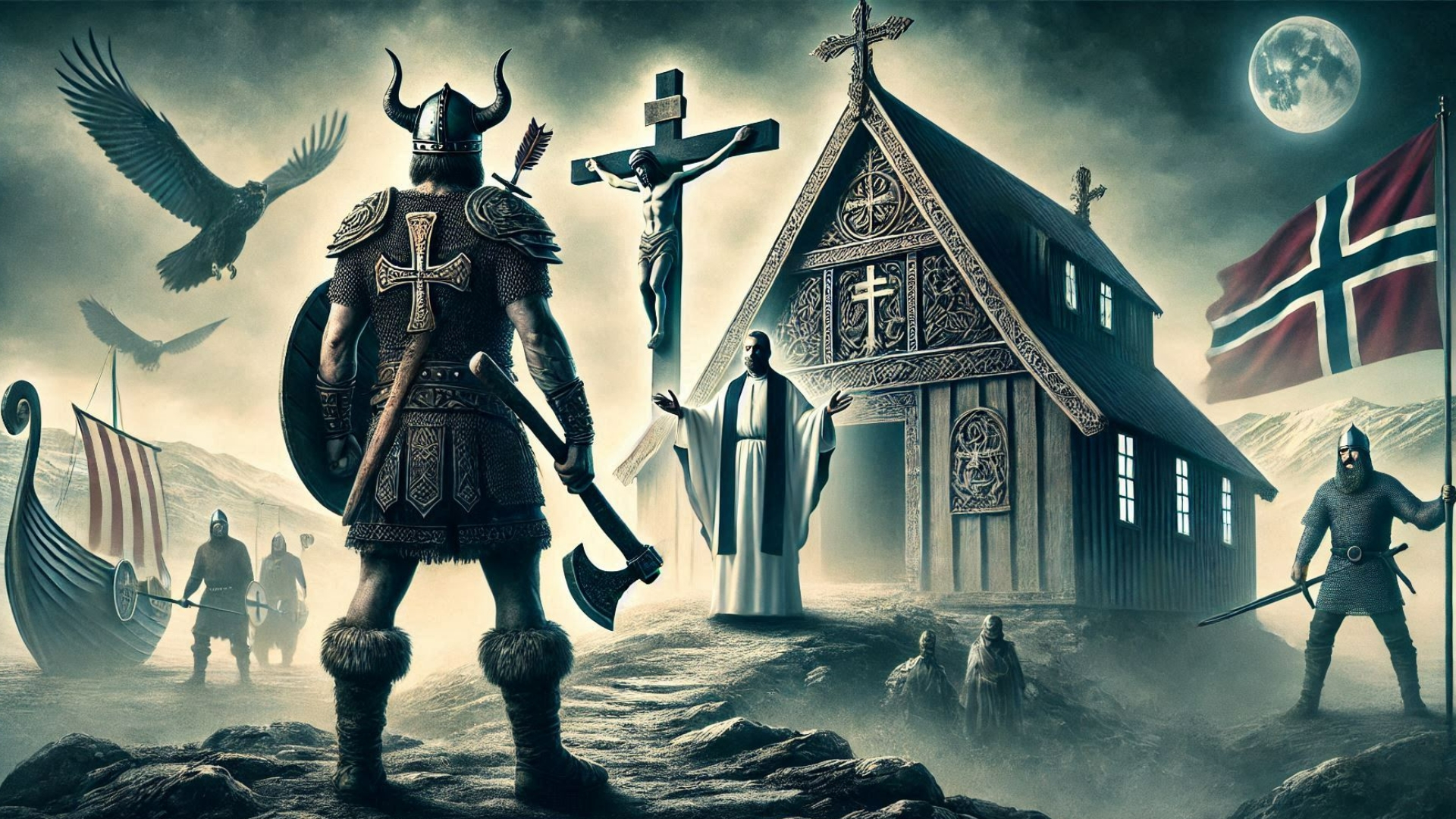
The Viking Age may have ended, but as we’ve noted, their legacy has clearly lasted forever. Perhaps you’re here because of the *Vikings* series or the *Assassin’s Creed Valhalla* game. Or maybe you’re excitedly waiting for a new Viking show or game. We are certain more will come, because the fascination with them has never faded.
References and Further Reading
Anderson, R. T., Linton, M. I., Anderson, S. V., Folke, H., & Nokkentved, C. (2024, November 26). Denmark | History, geography, Map, & Culture. Encyclopedia Britannica. https://www.britannica.com/place/Denmark/The-Viking-era
Onion, A. (2023, May 18). Vikings | HISTORY , Origins & Tactics | HISTORY. HISTORY. https://www.history.com/topics/exploration/vikings-history
The Editors of Encyclopaedia Britannica. (n.d.). Why did Viking raids stop? | Britannica. Encyclopedia Britannica. https://www.britannica.com/question/Why-did-Viking-raids-stop
The Editors of Encyclopaedia Britannica. (2024, November 25). Viking | History, Exploration, Facts, & Maps. Encyclopedia Britannica. https://www.britannica.com/topic/Viking-people
Vikings. (n.d.). Visit Norway. https://www.visitnorway.com/things-to-do/art-culture/vikings/
Wallenfeldt, J. (n.d.). Did the Vikings Discover America? Encyclopedia Britannica. https://www.britannica.com/story/did-the-vikings-discover-america
Originally published in Turkish at Doğa Filozofu.