
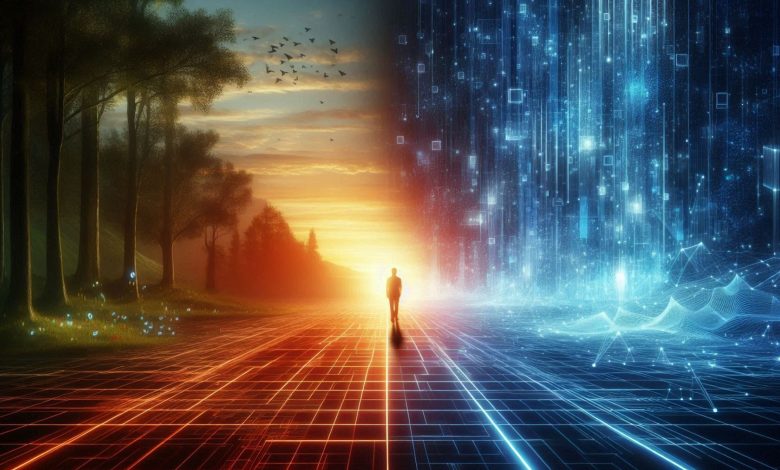

There’s a question that has popped up in just about every friend group at least once: “Is reality actually real, or are we just living in a simulation?”
While it might sound like something ripped straight from a sci-fi flick, it’s a topic being debated with intense seriousness by philosophers and scientists alike. Here at OkButWhy, we’re going to dive deep into this exact subject today. We’ll explore the “Simulation Theory” through the lens of Swedish philosopher Nick Bostrom to help us wrap our heads around it and maybe even form some opinions of our own. Ready? Let’s get into it!
Reality, Philosophically Speaking
One of the best ways to get a handle on simulation theory is to look at how the perception of reality has been shaped throughout Western philosophy. After all, it’s always good to have a little philosophical foundation to stand on, right?
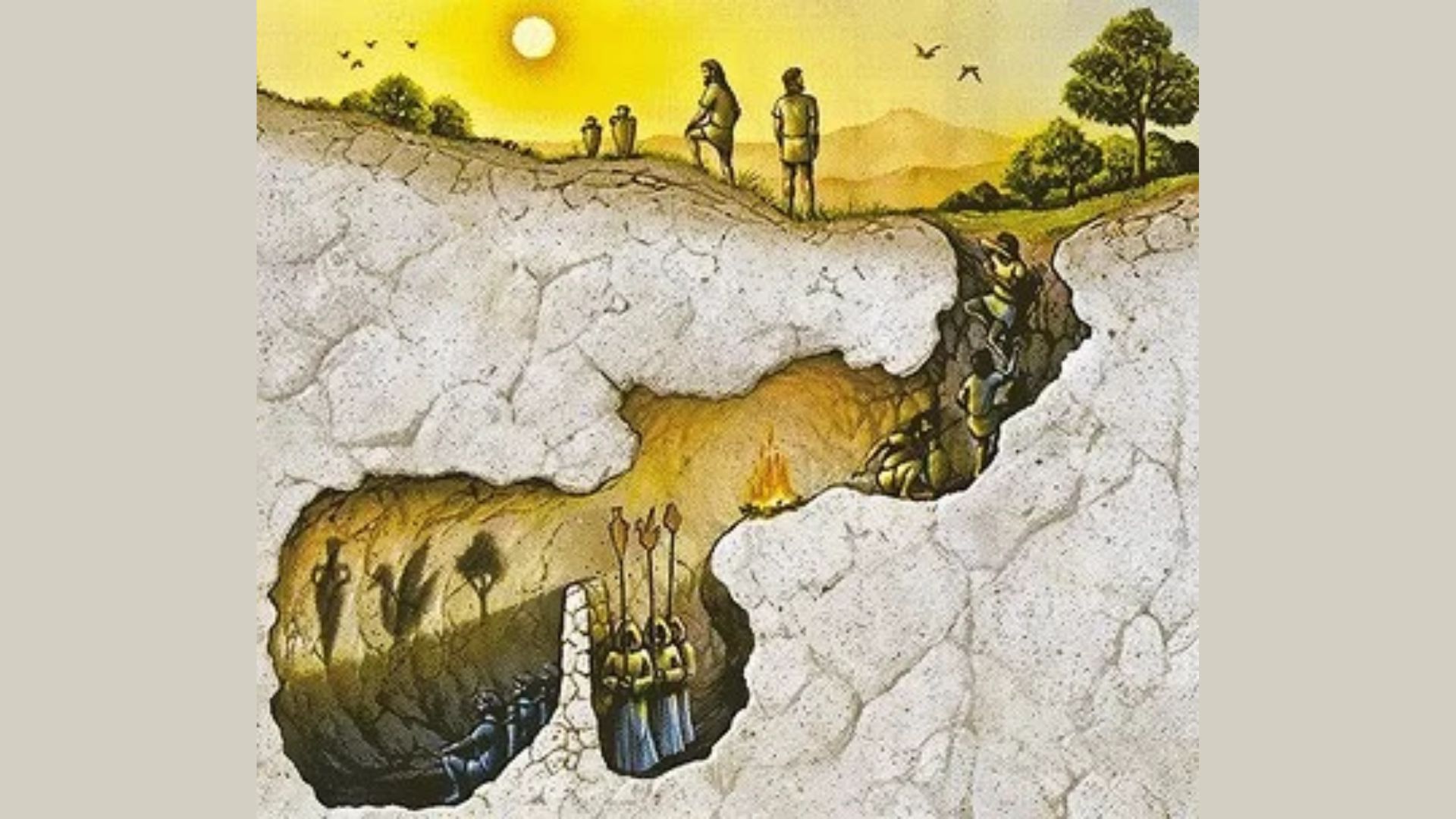
Let’s start with Plato’s Allegory of the Cave, as it’s essentially one of history’s earliest “simulation-adjacent” narratives. According to Plato, we’re like prisoners who mistake the shadows on the cave wall for reality. These shadows are merely reflections of the truth. True reality can only be grasped by stepping out of the cave—that is, through intellectual enlightenment. We’ve written a detailed piece on this before; if you’d like to take a look, be our guest: The Philosopher of Ideals: Plato.
Then there’s Descartes, who used his method of radical doubt to question all sensory knowledge. His famous proposition, “I think, therefore I am,” relies on the certainty of thought before it even touches on the existence of the external world. Descartes’ famous “evil demon” thought experiment is strikingly similar to the simulation hypothesis: What if there’s a powerful entity manipulating all of reality just to deceive me? Believe it or not, we’ve covered this too. For those interested, here you go: I Think, Therefore I Am: Descartes.
With these two narratives in mind, I think we’re ready to move on to Bostrom. If you have any questions along the way, feel free to stop us… or, at the very least, drop us a message on Instagram.
Bostrom and the Simulation
In his 2003 paper, “Are You Living in a Computer Simulation?”, Nick Bostrom proposes a trilemma. The logic goes like this:
- Civilizations that reach advanced technological maturity go extinct or destroy themselves.
- These civilizations have no interest in running simulations of their ancestors.
- These civilizations do run simulations of their ancestors, resulting in a vast number of simulated universes.
According to Bostrom, if either of the first two premises is false, then the third is likely true. In other words, the world we’re living in is very likely a simulation.
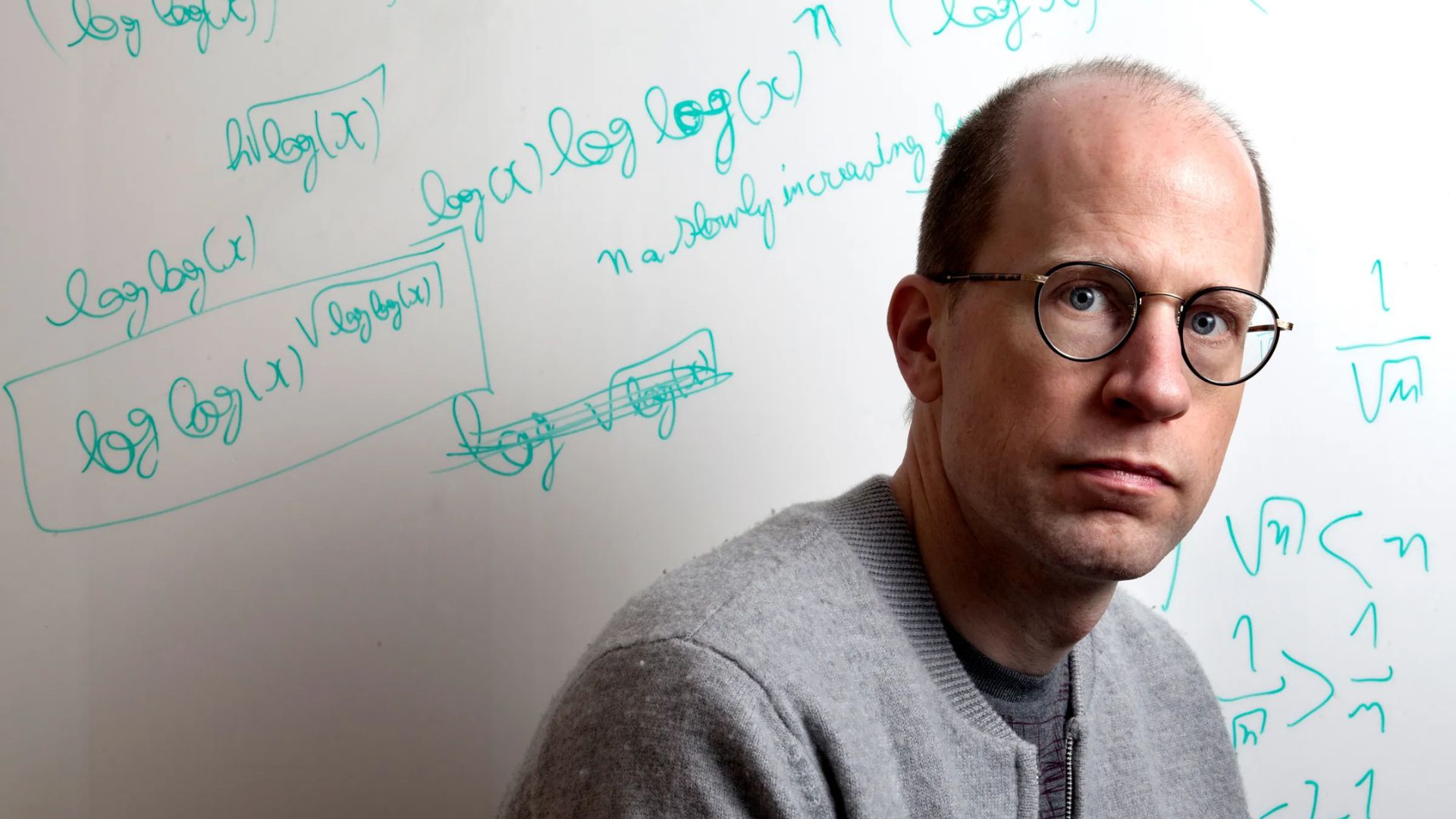
This argument isn’t just philosophical speculation; it’s rooted in mathematical probability theory. If billions of simulations can be run, and those simulations contain conscious beings, then the statistical likelihood that our current world is a “base” reality rather than a simulated one is logically slim.
Okay, okay, you’re right—Bostrom came in hot with that one! Let’s break this theory down from a philosophical perspective. Dear Bostrom, if you’re going to make a claim like that, we’re going to hit back with some questions. It’s the hallmark of philosophy that we can approach such claims through three main branches: ontology, epistemology, and phenomenology. Here are our questions:
Ontology: What is reality? If we are in a simulation, is existence just a series of information processing tasks? Is being based more on information than physical matter?
Epistemology: What do we actually know? Could everything we know simply be data generated by simulation parameters?
Phenomenology: Even if the world we experience is fake, aren’t the experiences themselves real? Merleau-Ponty’s concept of “embodied consciousness” suggests that we shouldn’t ontologically devalue the life of a subject within a simulation.
Of course, no matter how good these questions are, the answer is ultimately up to you. We’ll continue, but first, let’s bring in a little backup from Baudrillard.
Baudrillard and the Simulacrum: Beyond Reality
Jean Baudrillard, with his concept of the “simulacrum,” argues that we no longer produce reality, but rather representations of reality. He suggests that in postmodern society, we are no longer facing reality itself, but copies—or even copies of copies. What does he mean? Essentially, Baudrillard argues that with the digitalization of the world, reality has lost its meaning, leaving us with something that has become a mere replica. The representation of the real has become more important than the real itself. Just like how people are evaluated based on their Instagram profiles, TikTok algorithms, or job titles, reality itself has become skewed. To stick to Baudrillard’s own classic example: Disneyland. For him, Disneyland presents itself as entertainment to mask the fact that “real America” is actually the illusion. This could lead us down a political rabbit hole, so let’s stick to our own examples. You might be asking: “What does this have to do with Bostrom?”

The connection is that both argue that reality may consist of a fake surface that has become so internalized that it’s now impossible to detect.
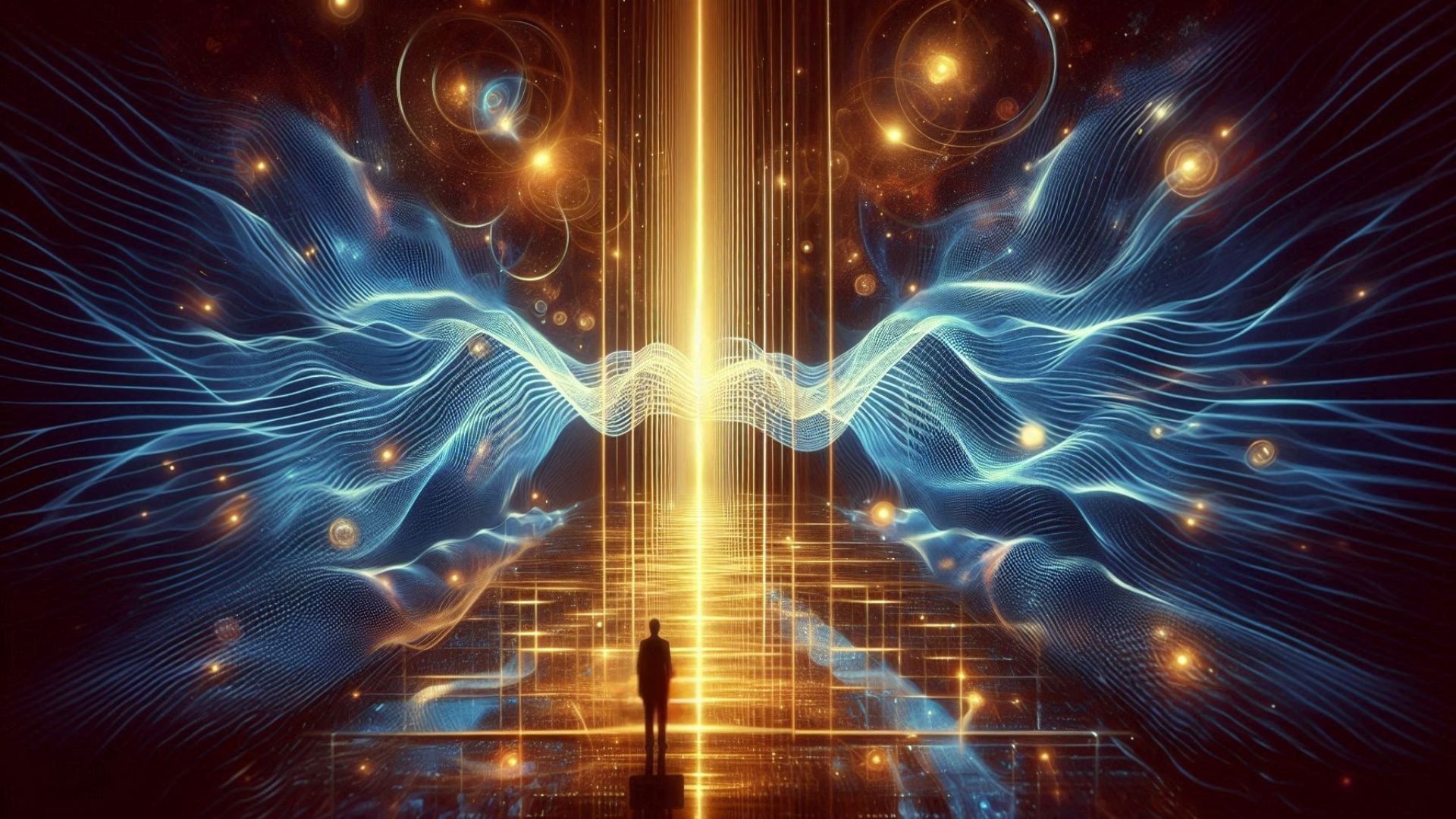
Science actually supports this to some extent. For instance, in quantum physics, the fact that observation changes the outcome—the “observer effect”—challenges the objectivity of reality. Let’s briefly explain this. Simply put, the observer effect is the phenomenon where the act of observing a system or event changes that system or event. In other words, looking at something can disrupt its natural state. This effect is observable across both physical and social sciences, but its most striking form is in quantum physics. At the quantum level, the observer effect means that the act of measurement changes the state of the system. This is famously illustrated by the double-slit experiment:
- An electron or photon can behave like both a particle and a wave while passing through two slits.
- However, as soon as someone tries to detect which slit the particle passes through, the behavior changes: the wave pattern disappears, and only particle behavior remains.
This gives rise to the idea that “reality” only takes form when it is observed. The observer is not a passive perceiver of reality; they become a part—or even a creator—of it.
If we followed this line of thought, we’d end up all the way with Berkeley, but we don’t want to confuse you further. If you’re feeling up for a headache, we’ve written about that too. Here’s the link: To Be is to be Perceived: Berkeley.
Let’s slow down for a second. Physicist John Archibald Wheeler’s “it from bit” hypothesis suggests that everything in the universe can be reduced to information. If the universe is information-based, it strengthens the possibility of it being a simulation. At least, the proponents of this theory think so, because information is not metaphysical; it is entirely data-driven. Today, video games, augmented reality (AR), and AI technologies give us a glimpse into how a simulation might function. For instance, the way you control the simulation in a game like *The Sims* might suggest we could be living through something similar.
Of course, these narratives aren’t the whole story, are they? Bostrom has faced both criticism and support. For example, David Chalmers is a philosopher who takes the hypothesis seriously, accepting it as a “version of reality.” According to Chalmers, even if we are in a simulation, that simulation is our reality; the definition of “reality” is about structure, not content. He argues that being in a simulation doesn’t diminish the importance of truth or the value of life. He suggests that if we are in a simulation, the only thing that would really change is religion. While Chalmers doesn’t fully endorse Bostrom, he acknowledges that it’s a possibility.
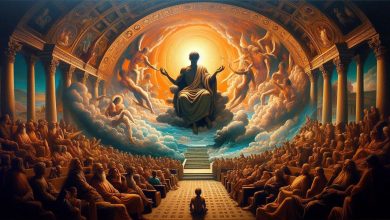
This image was generated with the help of AI. Thinkers like Daniel Dennett view the simulation hypothesis much more critically. According to Dennett, consciousness is not a process that can be easily simulated. Creating a conscious being cannot be explained by processing power alone. Another criticism lies in the realm of verifiability. Because simulation theory doesn’t meet Karl Popper’s criterion of “falsifiability,” some argue it isn’t scientific, but merely metaphysical speculation. If you’re wondering what that means, we’d like to offer you our Popper article, which we’ve shamelessly (and proudly) linked throughout this site.
Whatever the case, and whatever we choose to believe, simulation theory has certainly added a new option to the table. While the reality of this possibility—popularized by *The Matrix*—remains unknown, it has definitely added a new dimension to the things we ponder. So, what do you think? Which reality do you believe we’re living in?
References and Further Reading
Ananthaswamy, A. (2020, October 13). Do we live in a simulation? Chances are about 50–50. Scientific American. https://www.scientificamerican.com/article/do-we-live-in-a-simulation-chances-are-about-50-50/
Bostrom, N. (2003). Are we living in a computer simulation? The Philosophical Quarterly, 53(211), 243–255. https://doi.org/10.1111/1467-9213.00309
Science Time. (2024, March 23). The simulation hypothesis explained by Nick Bostrom [Video]. YouTube. https://www.youtube.com/watch?v=WvnIXeAz1mk
The Autodidact’s Toolkit. (2024, August 21). Simulacra and simulation by Jean Baudrillard [Video]. YouTube. https://www.youtube.com/watch?v=g9CAbTf63NE
The Why Files. (2022, June 7). We live in a simulation. The evidence is everywhere. All you have to do is look [Video]. YouTube. https://www.youtube.com/watch?v=4wMhXxZ1zNM
Originally published in Turkish at Doğa Filozofu.