

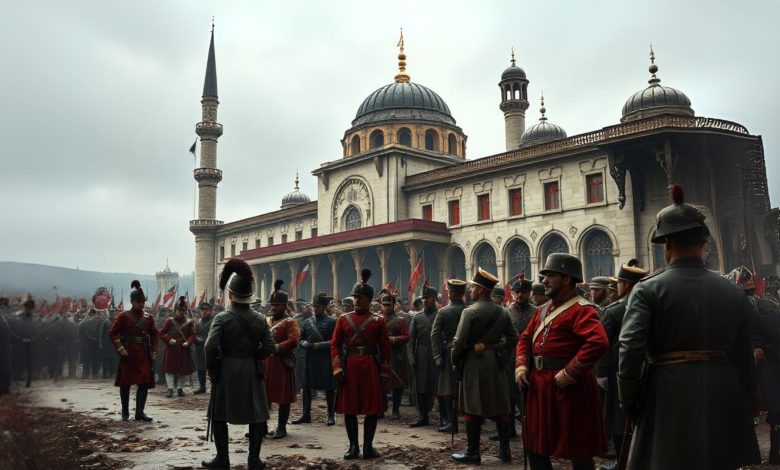
The Ottoman Empire entered a long, agonizing period of decline and decay, a process that culminated in its total dissolution in the early 20th century. Then, in 1923, under the visionary leadership of Mustafa Kemal Atatürk, the Republic of Turkey was established as a modern, secular, and independent nation-state upon the ashes of the Ottoman legacy.
You can read all about this transition in our upcoming article on the National Struggle Period, which will follow this series. But first, let’s dive into the events leading up to 1918.
A Quick Recap
To make sense of this, let’s summarize our previous articles and the state of the Ottoman Empire up to 1792 in one quick paragraph:
From its founding in 1299, the Ottoman Empire went through a period of rapid expansion, reaching its zenith in the 16th century. During this golden age, the empire exerted massive influence across Europe, Africa, and Asia. However, starting in the 17th century, it began to fray under the weight of economic crises, military setbacks, and a weakening central authority. The Treaty of Karlowitz in 1699 was a watershed moment for the Ottomans, marking the first time they were forced to concede territory.
Following that treaty, the empire spiraled into a rapid decline. After losing ground incrementally for about a century, the Ottomans earned the unenviable nickname of the “sick man of Europe.” Eventually, the fact that this decline had reached a point of no return was cemented by the Treaty of Jassy in 1792, where the Ottomans suffered a definitive defeat at the hands of Russia. And so, the Ottoman dissolution period began. Throughout this era, the empire would repeatedly attempt reforms, constantly struggling to return to its former glory. Of course, as we know today, those efforts were not enough.
Throughout this piece, we’ll focus primarily on key events rather than individual sultans. As always, we have to remind you that we can’t possibly cover 600 years of history in a single article. Our goal here is to give you a clear, cohesive picture of the empire’s final chapter. Now, let’s take a closer look at this closing act.
The “Sick Man”
During this time, the Ottoman Empire was no longer the powerhouse it once was. The European powers knew it—so well, in fact, that they openly referred to it as the “sick man.” The phrase is famously attributed to Tsar Nicholas I of Russia during the 1853 London Conference. He put it like this:
“We have a sick man on our hands, a man who is gravely ill. I tell you frankly, it would be a great misfortune if we were to lose him before making the necessary arrangements. The Ottoman Empire may collapse at any moment. If that happens, it will fall upon us; we cannot resurrect the dead. Once the Ottoman state dies, it will stay dead. That is why I ask you: would it not be wiser to take precautions now rather than face the chaos, anarchy, and perhaps even a general European war that would follow?”
Long before that comment, at the turn of the 19th century, Europe was already dreaming of carving up the Ottoman Empire. The biggest question of the day was who would grab the largest piece. Interestingly, until the mid-19th century, it was actually Britain that most often shielded the Ottomans. Fully aware of their precarious position, the Ottomans adopted a balance-of-power policy, trying to maintain good relations with European states to stave off conflict. Britain, eager to keep Russia away from Europe and the warm seas, was more than happy to keep the Ottomans close for their own strategic reasons.
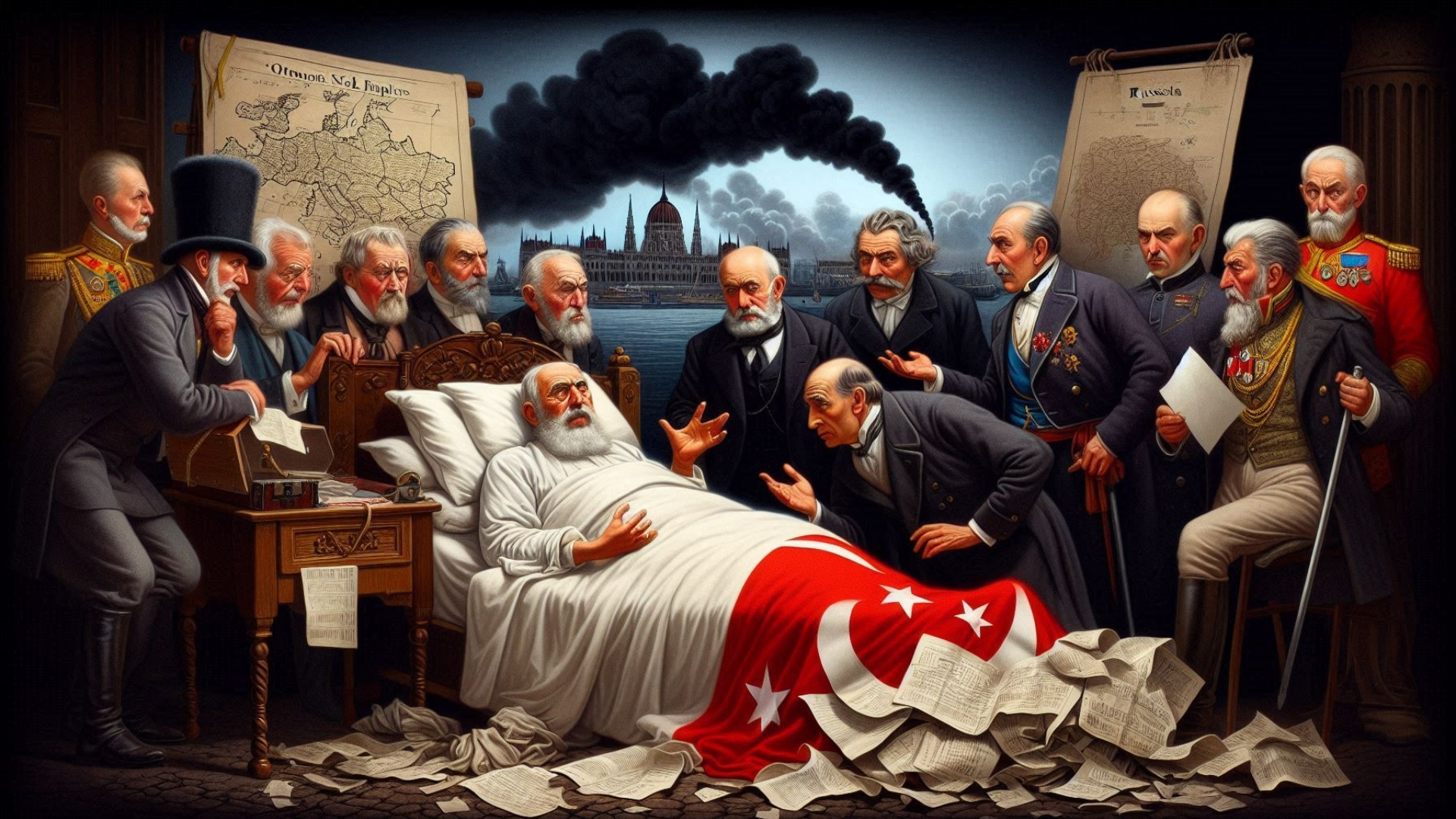
Now, with that context and the “sick man” metaphor in mind, let’s examine the process from the beginning, focusing first on the independence movements that caused so much of the trouble.
Independence Movements
Following the Treaty of Jassy, the biggest headaches for the Ottomans stemmed from the aftershocks of the 1789 French Revolution. The rising tide of nationalism sparked uprisings in multi-ethnic countries like the Ottoman Empire. The first was the Serbian Revolt in 1804. Of course, the Serbs weren’t just motivated by the revolution; Russia’s Pan-Slavism policy in the Balkans was a major catalyst. With the internal order already crumbling and the “sick man” weakening, this nine-year rebellion kicked off in 1804.
Led by Karađorđe, the initial revolt failed by 1813, but a second one broke out in 1815 under Miloš Obrenović. To prevent Russian intervention and buy some breathing room, the Ottomans were forced to grant the Serbs autonomy. Following this, the 1829 Treaty of Adrianople made Serbia semi-independent, and the Ottomans recognized Obrenović as the Prince of Serbia. In short, the Ottomans had effectively lost Serbia. This wasn’t just a territorial loss; it drained the treasury, cost lives, and emboldened other nations to follow suit.
Soon after, the Greeks followed suit. Their struggle for independence began on March 17, 1821, with an uprising in the Peloponnese. The rebellion grew, supported by both local organizations and European powers. After long, bloody conflicts and the intervention of Britain, France, and Russia, the Ottomans were defeated at the Battle of Navarino in 1827. The 1829 Treaty of Adrianople recognized Greek independence, and the 1832 Treaty of Constantinople finalized its borders. Thus, Greece became the first nation to gain independence from the Ottomans. Since Serbia had only gained semi-autonomy, the birth of Greece was truly unprecedented. Serbia would only achieve full independence in 1878. Following Greece, Romania, Montenegro, and Serbia all gained independence in 1878. Sadly, the losses didn’t end there. In 1908, Bulgaria declared independence, followed by Albania in 1912. It’s worth noting that these events were punctuated by the Balkan Wars.
There were two Balkan Wars. The first took place between 1912 and 1913, fueled by Ottoman weakness and the rising nationalism of Balkan states. Serbia, Greece, Bulgaria, and Montenegro formed a military pact called the Balkan League to seize Ottoman territories in the Balkans. Exploiting the empire’s vulnerability, they declared war, and the Ottomans lost most of their holdings in Albania, Macedonia, and Thrace. In the second war, the Ottomans weren’t the main protagonist. Bulgaria, having taken a larger share of the spoils than the others were comfortable with, suddenly found itself fighting its former allies. Seeing an opening, the Ottomans managed to reclaim Edirne and Kırklareli, both of which remain within our borders today.
These independence movements were primarily fought in the Balkans, but the empire’s problems extended far beyond that. Before we dive into internal affairs, let’s take a look at foreign relations.
Foreign Relations and Challenges
During this period, the Ottomans mostly tried to adopt a balance-of-power policy to avoid war. While Russia rarely played along, Ottoman-British relations kept this strategy afloat for a time. Despite this, Russia and the Ottomans frequently clashed throughout the 19th century. The first major conflict after the Treaty of Jassy broke out in 1806, ending 14 years of peace. Russia had been constantly stirring the pot in the Balkans, and they eventually forced a confrontation. Sadly, it ended in disaster for the Ottomans, concluding with the 1812 Treaty of Bucharest. Wallachia and Moldavia were returned to the Ottomans, but Bessarabia was ceded to Russia, and the Serbs were granted autonomy. As we mentioned, this was happening right alongside the Serbian revolts—the two issues were deeply intertwined.
Russia wasn’t satisfied for long. In 1828, they used the Ottoman suppression of the Greek Revolt as a pretext to declare war again. Russia won quickly, and Greece gained its independence.
Another war, unsurprisingly, came from Russia. The 1853 Crimean War saw Russia pushing to reach the Black Sea and threatening the Ottomans. Britain and France jumped in to support the Ottomans, and Russia was defeated. The 1856 Treaty of Paris confirmed their loss, and while the empire was still the “sick man,” its integrity was guaranteed by the European powers.
Of course, Britain and France didn’t do this out of love for the Ottomans. They preferred a weak Ottoman Empire that they could easily carve up later over a powerful Russia occupying those lands.
Yet another war, yet another Russian rival. The motivation was again the Balkans. Russia instigated trouble and used Ottoman “oppression” as an excuse for war. This time, the outcome was different. The Ottomans suffered a massive defeat, and the 1878 Treaty of San Stefano forced them to grant autonomy to Bulgaria and concede significant territory. European powers intervened again, leading to the Treaty of Berlin (1878), where Bulgaria was split into three regions and became an autonomous principality under Ottoman suzerainty. Serbia, Montenegro, and Romania gained full independence.
Following this, direct wars between Russia and the Ottomans ceased until World War I, but there was no rest for the empire. Greece, unsatisfied with what it had already gained, tried to seize Crete, which was strategically vital for the Mediterranean. War broke out in 1897. The Ottomans won militarily, but European powers intervened and pressured the Ottomans to grant Crete autonomy, as if Greece had won the war.
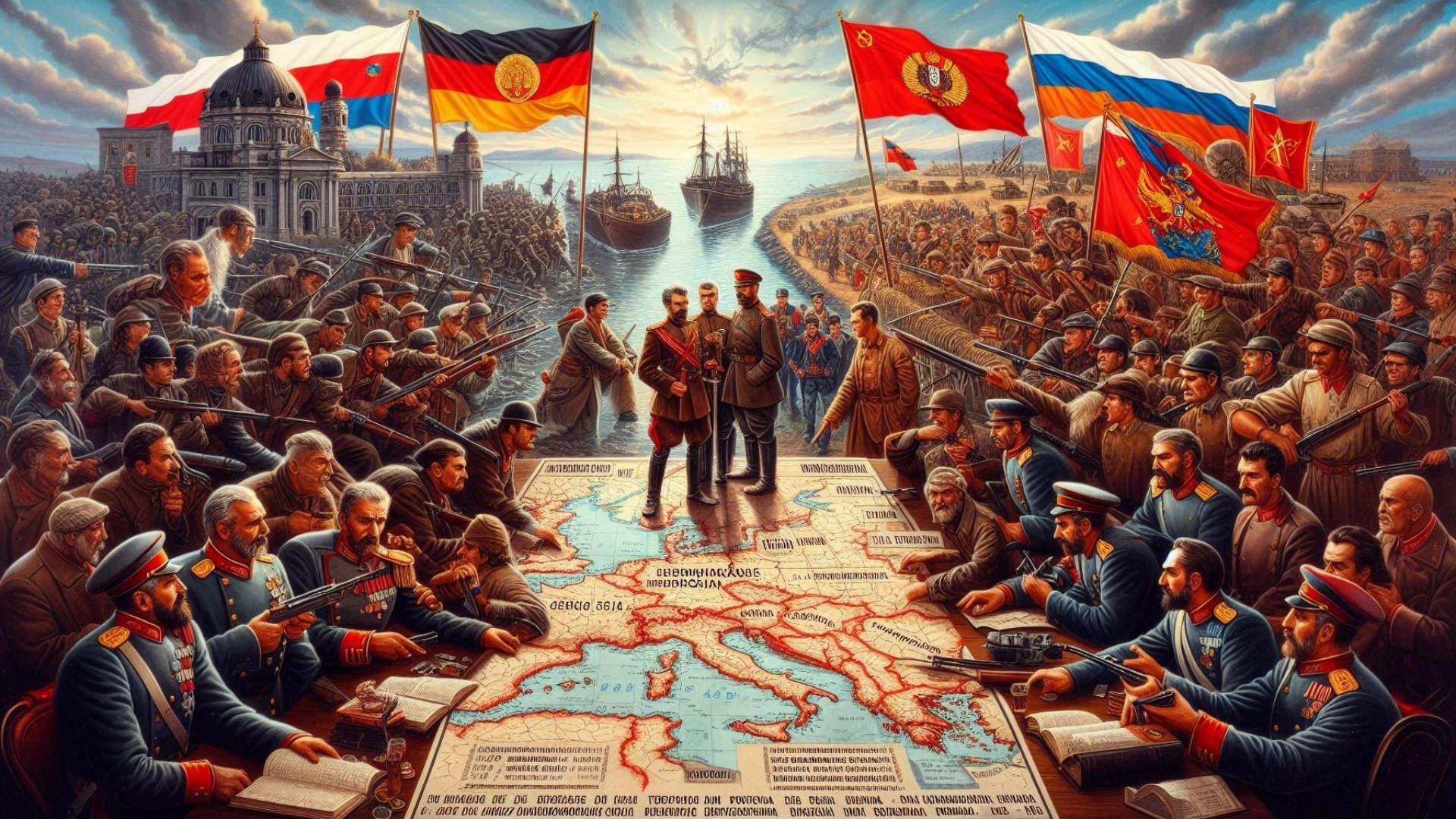
We’ve already touched on the Balkan Wars, but there was one more conflict: the Italo-Turkish War.
This war saw the involvement of a young Atatürk. The antagonist was Italy, which had recently completed its political unification and wanted to join the ranks of the colonial powers, but found most of the world already claimed. One region caught their eye: Tripolitania (Libya).
Tripolitania was key for Italy to establish a Mediterranean power base and gain a foothold in Africa. Italy attacked, and while the Ottomans initially showed promise with the help of volunteers like Atatürk, the outbreak of the Balkan Wars forced the empire to fight on two fronts. This ultimately led to the loss of both wars, and Tripolitania was lost.
The only remaining conflict was World War I. Of course, that won’t fit here, but we have good news: we have a detailed article on that very topic. You can check out that war on our website.
So, we’ve covered the exhausting period of wars. But independence movements and Russian issues aren’t enough to explain everything, are they?
Internal Developments and Issues
Before we talk about the problems, let’s introduce the sultans of the era. Here’s a quick guide—and a few spoilers for things to come:
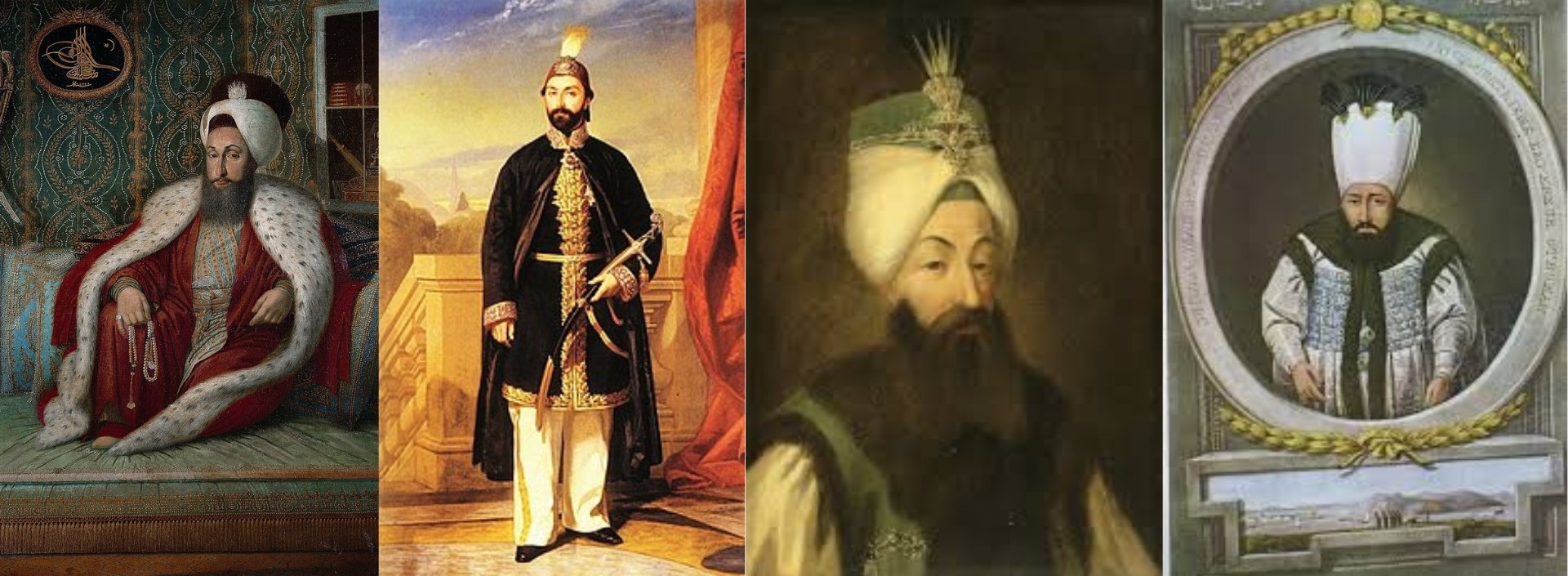
Selim III (1789–1807):
Selim III was a sultan who tried to enact serious reforms to stop the decline. His military and administrative reforms, known as Nizam-ı Cedid (New Order), aimed to modernize the army. However, he faced fierce internal opposition and was deposed.
Mahmud II (1808–1839):
Mahmud II carried out radical reforms to modernize the state. He abolished the Janissary Corps and built a Western-style army. He strengthened the central government and laid the foundations for the Tanzimat era.
Abdülmecid I (1839–1861):
The sultan who launched the Tanzimat reforms, Abdülmecid took significant steps toward modernization. By issuing the Edict of Gülhane, he sought to bring the Ottoman Empire into greater alignment with the West.
Abdülhamid II (1876–1909):
Following the Tanzimat reforms, Abdülhamid II became one of the longest-reigning sultans. He adopted an absolutist style of governance to strengthen central authority. However, foreign policy failures and internal demands for reform led to the declaration of the Second Constitutional Era and his eventual deposition.
There were other sultans in between, but they were often deposed, died, or were assassinated. We touched on Selim III earlier, so let’s focus on Mahmud II, the stabilizer of the Dissolution Period, who took the throne in 1808. He was a truly unique figure of his time.
The Era of Mahmud II
Mahmud II saw the problems, understood them, and made it his mission to find solutions. He realized there were methods that needed to be adopted from the West. He ascended the throne in 1808 amidst power struggles with the help of Alemdar Mustafa Pasha. The empire was in chaos: central authority had collapsed, and territory was being lost left and right.
In his early years, Alemdar Mustafa Pasha was key to securing control. He implemented the Sened-i İttifak (Charter of Alliance) to balance the power of local notables (ayan) with the central government. This document committed the notables to loyalty while strengthening the sultan. To do this, Mahmud II set his sights on a major problem: the Janissaries.
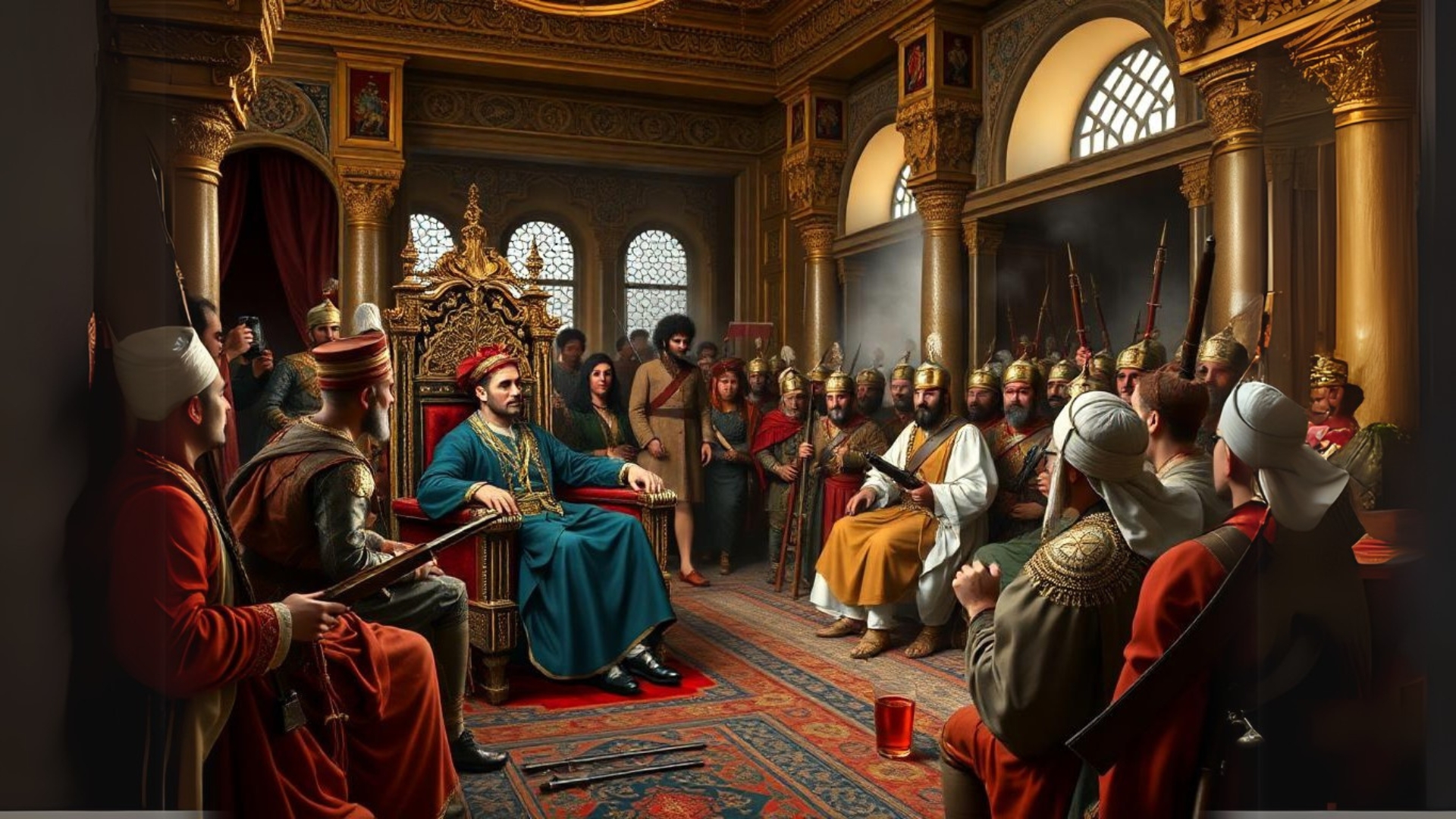
For nearly a century, the Janissaries had been dictating to sultans and sabotaging reforms. Naturally, they didn’t like Mahmud II’s changes. In 1826, they revolted. Mahmud II crushed the uprising, abolished the Janissary Corps, and replaced it with a modern army called Asakir-i Mansure-i Muhammediye (Victorious Soldiers of Muhammad). This became known as the Vaka-i Hayriye, or the “Auspicious Incident.” Having removed the biggest internal threat, Mahmud II introduced a series of reforms: he established ministries, reined in the warlords, and introduced the fez—viewed at the time as a Westernization move. It wasn’t an ancient cultural relic; it was a modernization effort that Atatürk would later abolish less than a century later. He also introduced official newspapers, medical schools, and the blueprints for the Tanzimat reforms.
Sultan Abdülmecid
To avoid dragging this out, we’ll pick up the pace. Abdülmecid took the throne at 16 after his father’s death. Committed to continuing his father’s reforms, he leaned into modernization and Westernization, ultimately declaring the famous Tanzimat Edict.
With this decree, the Ottoman Empire laid the foundations for a legal system that guaranteed basic rights and freedoms for its citizens. The key points were:
- Security of life, property, and honor for all.
- Regular and fair tax collection.
- Standardized military service.
- Innovations to ensure justice in the courts.
The Tanzimat Edict was the first step toward spreading the concept of the rule of law and modern governance in Ottoman society.
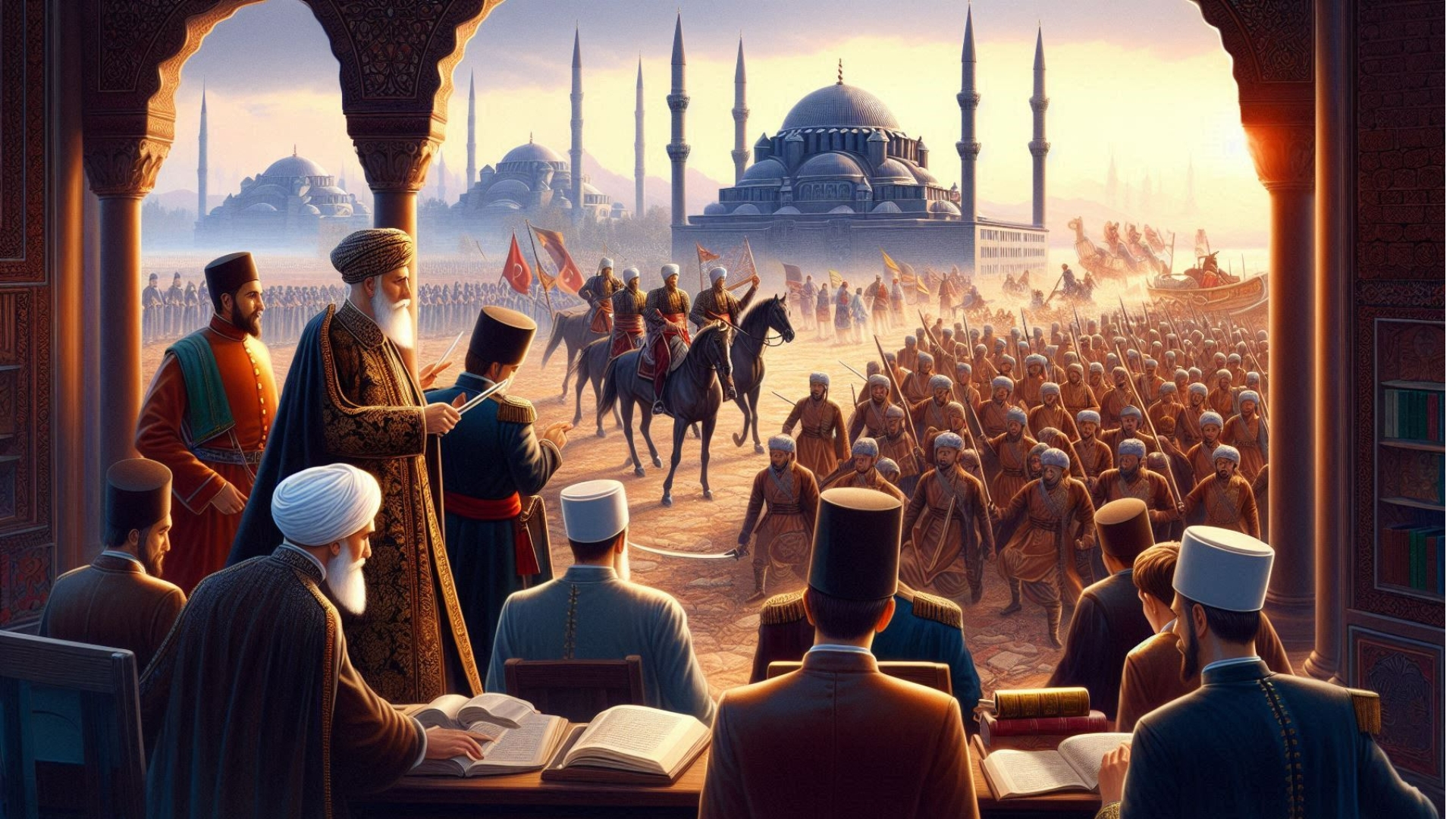
Abdülmecid also realized reforms were needed in every sector. He opened modern educational institutions and established the Darülfünun (the precursor to today’s Istanbul University). Anticipating future conflicts, he sought to create a disciplined, modern army. In 1856, he accelerated these reforms with the Islahat Edict, which built upon the Tanzimat.
Steps were also taken in transportation, communication, and tax systems. While these efforts didn’t fully prevent the external disasters, many historians agree that the reforms of Mahmud II and Abdülmecid extended the life of the Ottoman Empire.
However, this era also dealt with a harsh political crisis: the revolt of Muhammad Ali Pasha, the Governor of Egypt. Sultan Abdülmecid continued the struggle his father had begun. Through European intervention, the London Convention (1840) was signed; Egypt remained part of the empire but gained massive autonomy, and Muhammad Ali Pasha’s family became hereditary governors. His goal had been to topple the Ottoman administration, and while he didn’t succeed, the ordeal left a deep mark on the empire.
You might notice that we haven’t explored every single detail. As we mentioned, we can’t cover a massive empire in 15 minutes. Our goal is to give you the chronological narrative of the Ottoman story.
Before we sign off, let’s briefly summarize the period from 1861 to 1923. Sadly, the empire could not stop its decline, losing territory, sinking into debt, and ultimately heading toward collapse. The Balkan and Italo-Turkish wars accelerated this slide, dragging the empire into the blind abyss of World War I. You can find the details of that in our World War I article. Don’t worry, you’ll be able to read about the final four years of the Ottoman era—the 1919–1923 period—in our upcoming “National Struggle Period” article.
And with that, we have journeyed through over 600 years of Ottoman history together. Thank you for your interest and patience throughout this series!
References and Further Reading
Know about the disastrous Gallipoli Campaign and the role of ANZAC troops in the battles of World War I. (n.d.). [Video]. Encyclopedia Britannica. https://www.britannica.com/video/191881/overview-focus-Gallipoli-Campaign-World-War-I
Shaw, S. J., & Yapp, M. E. (2024, October 5). Ottoman Empire | Facts, History, & Map. Encyclopedia Britannica. https://www.britannica.com/place/Ottoman-Empire/Dissolution-of-the-empire
The Editors of Encyclopaedia Britannica. (n.d.). Russo-Turkish Wars summary | Britannica. Encyclopedia Britannica. https://www.britannica.com/summary/Russo-Turkish-wars#:~:text=Russo%2DTurkish%20Wars%2C%20Series%20of,port%20on%20the%20Black%20Sea.
The Editors of Encyclopaedia Britannica. (1998a, July 20). Abdülmecid I | Ottoman Reforms, Tanzimat & Legacy. Encyclopedia Britannica. https://www.britannica.com/biography/Abdulmecid-I
The Editors of Encyclopaedia Britannica. (1998b, July 20). Mahmud II | Ottoman Sultan & Reformer. Encyclopedia Britannica. https://www.britannica.com/biography/Mahmud-II-Ottoman-sultan
The Editors of Encyclopaedia Britannica. (2024, October 1). Balkan Wars | Facts, Causes, Map, & Significance. Encyclopedia Britannica. https://www.britannica.com/topic/Balkan-Wars
Originally published in Turkish at Doğa Filozofu.