


We’re fed a lot of information throughout our lives. Some of it gets so deeply ingrained in our minds that it turns into a cliché. One of those is the classic: “Everything has an end.” This phrase is usually applied to life itself. Every living thing has a lifespan, and one day, for one reason or another, that life will come to a close. Yes, yes, we know—this is getting a bit gloomy. Life is long and full of beauty, of course, but bear with us. We have to set the stage for the topic we’re about to dive into, don’t we? The milk we drink, the food we eat, our work hours—everything has an expiration date. Well, according to scientists, the universe we live in also has a “use-by” date. It doesn’t have a format like “Best Before: 01/31/2920,” but scientists are certain it will happen. In this post, we’re going to walk through the scenarios they’ve proposed.
Scientific Scenarios
Before we dive into the scenarios, we want to make sure this post doesn’t feel like a downer. So, consider putting on some upbeat music, grabbing a nice coffee, or just getting into a cozy headspace before reading on.
We’re joking, of course—these are scenarios that not even the great-grandchildren of our great-grandchildren will see. Or at least, that’s the forecast. So, rest easy. In this post, we’ll cover a few of the most widely accepted possibilities. There are, naturally, many more theories out there. If you want a full list, you can check out the “References and Further Reading” section at the end. Let’s jump in.
-
The Big Crunch
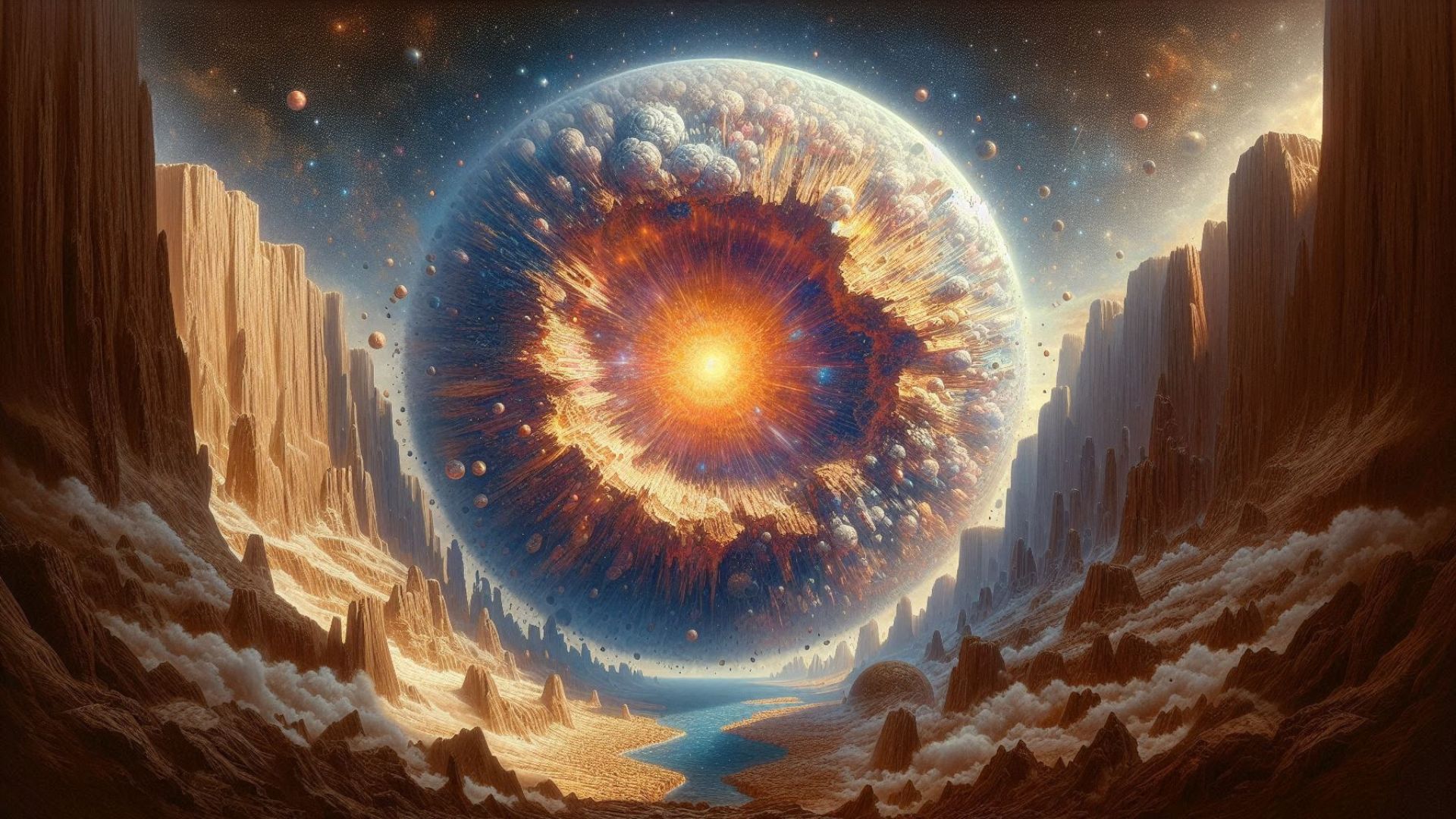
This scenario is based on the idea that the expansion of the universe will eventually stop and then reverse. At a certain point, the universe will reach its maximum expansion and then, pulled by the force of gravity, begin to contract. This process will cause all matter and energy in the universe to condense into a single point, eventually resulting in a “Big Crunch.” In the end, all the matter and energy are packed together, and the universe meets its end just as it began: with a Big Bang in reverse.
To put it in perspective:
Imagine you throw a ball into the air. It rises and rises, reaching the highest point that the force of your throw can carry it. Now, it’s time to fall, right? At that peak, gravity starts pulling it back down; it descends and returns to your hand. The universe expands in the same way; once it reaches its peak, it begins to contract and eventually returns to its starting point. Since we accept the Big Bang as our starting point, we can figure out exactly where it’s headed.
-
The Big Freeze
If you’re hungry, you might have misread this as a “Big Feast,” but sadly, we’re talking about a “Big Freeze.” According to this scenario, the universe will continue to expand indefinitely, and as a result of this expansion, all energy will be spread so thin that it reaches a state of equilibrium. In this process, stars, galaxies, and other celestial bodies lose their energy and grow cold.
As a result, the energy of the universe drops to a minimum, and there is no usable energy left. This leads the universe into a “heat death” known as the “Big Freeze.” Matter and energy remain in a cold, motionless state.
Again, to give you an example:
Think of a cup of hot coffee. At first, it’s steaming and piping hot—the kind of hot that would burn your tongue for two days. As time passes, the coffee cools down until it reaches room temperature. At that point, it’s neither hot nor cold; everything has balanced out. The universe, by constantly expanding and cooling, eventually becomes completely stagnant and cold. Another lovely (!) prospect, isn’t it?
-
The Big Rip
This is, in our opinion, one of the scarier scenarios. According to this theory, the rate of the universe’s expansion is constantly increasing, eventually causing everything to be torn apart. Dark energy accelerates this expansion until galaxies, stars, planets, and even atoms themselves are ripped to shreds.
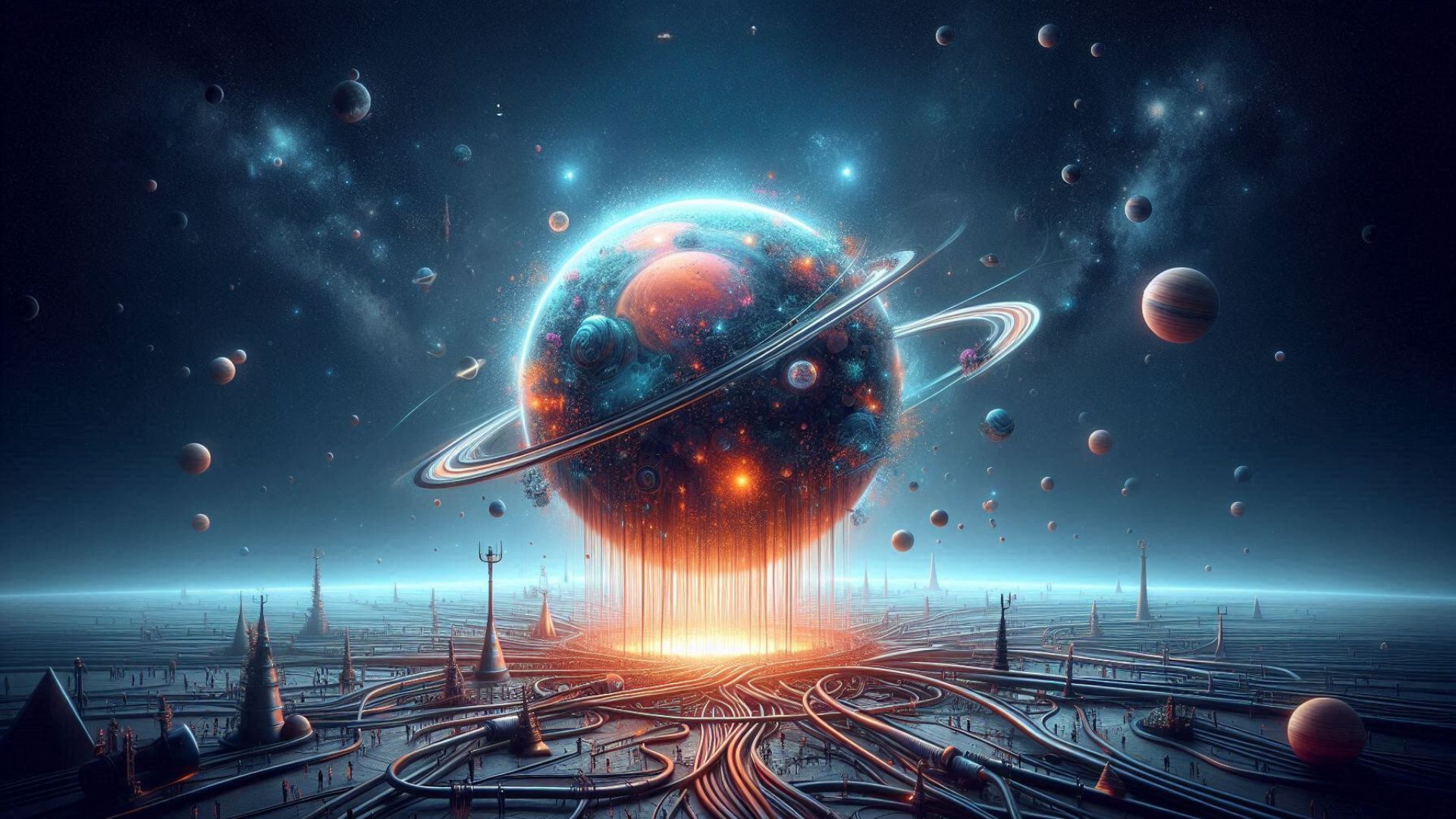
Let’s visualize it this way:
Assume you have a rubber band. Now, start pulling it from both sides. You stretch it, and then you stretch it even more. But if you push the stretching too far, the band eventually snaps. The universe, as it expands, could lead to everything being torn away from everything else in the same way.
In short, this leads to a state where, through infinite expansion, everything is completely obliterated. You’re smiling (!) while reading this possibility, right?
-
The Big Bounce
According to this theory, the universe follows a cyclical model of expanding and then contracting. Once the universe completes its expansion phase, it will begin to shrink, eventually ending in that contraction. After this point, it will expand again with a new “Big Bang.”
This scenario is based on the idea that the universe goes through constant cycles of expansion and contraction. With every “Big Bounce,” the universe is reborn and enters a new evolutionary process. At least this is a scenario that includes a rebirth, right?
-
Vacuum Decay
The final possibility we’ll cover in this post has a more charismatic name than the others: “Vacuum Decay.”
Before we dive in, we want to briefly explain the term “vacuum,” which we’ll be using throughout this section.
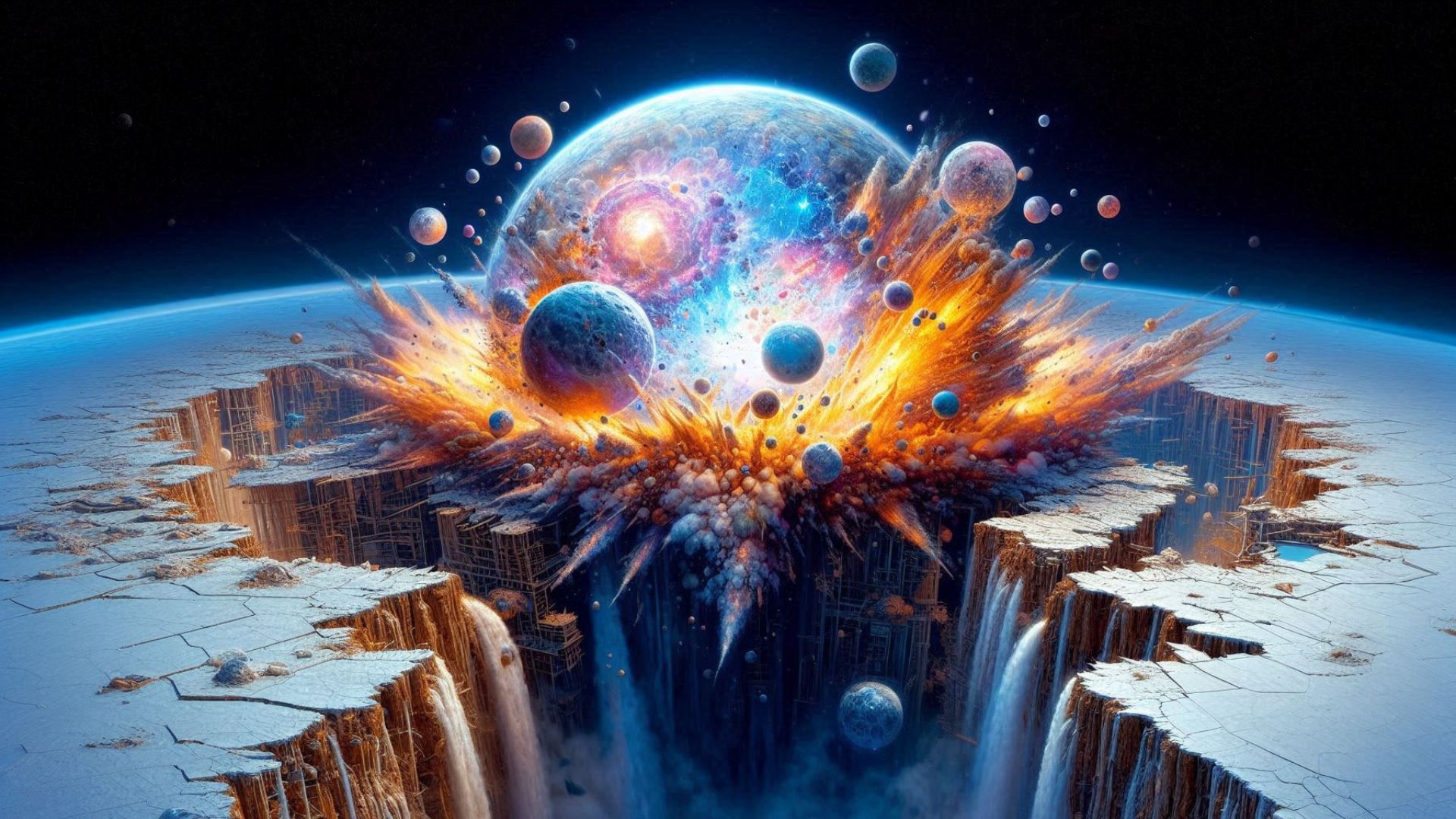
“Vacuum” usually means empty space, but in physics, it doesn’t refer to a completely empty void; rather, it describes an environment with a very low energy level. The current state of the universe is like this. This possibility is based on the idea that the universe’s current vacuum state might actually be unstable and could transition to a different vacuum state with an even lower energy level. If this happens, a “true vacuum” state would form in one region of the universe and spread at the speed of light, destroying everything in its path.
In simpler terms: right now, the universe seems to be in a balanced, low-energy state, but this balance might be unstable. If this balance is broken somewhere and a transition to a lower energy level occurs, this new “true vacuum” state could spread across the entire universe, affecting everything. It’s like a row of cards on a table starting to fall—once it starts, it becomes an unstoppable process. It could completely alter the structure of the universe or destroy it entirely. In other words, unlike the other scenarios, Vacuum Decay relies on the shifting of fundamental balances. Just like how one domino falling causes the rest to follow, this scenario is based on the idea that the balance of the entire universe is tied to that vacuum state changing.
The State of the Universe
Even though we’ve looked at some deeply depressing scenarios, as we mentioned at the beginning, none of these look like they will happen in the coming years. Of course, those who propose these and similar theories can’t give an exact date, but generally, the timelines projected for these events are millions or even billions of years away.
Naturally, there are also versions of these scenarios adapted to our own planet, but even for those, it’s believed the timeframe is far beyond the years that have passed since the dawn of human history. So, rest easy, dear reader, and may your beautiful lives bring you even more happiness. You are far too young and valuable to spend your time worrying about things like this!
References and Further Reading
Almeida, J. (2024). The “Dead Universe” Theory: Natural Separation of Galaxies Driven by the Remnants of a Supermassive Dead Universe. Natural Science, 16(06), 65–101. https://doi.org/10.4236/ns.2024.166006
Krauss, L. (2013, December 16). What does the future of the universe hold? Smithsonian Magazine. https://www.smithsonianmag.com/science-nature/what-does-future-universe-hold-180947977/#:~:text=The%20current%20expansion%20will%20continue,truly%20cold%2C%20dark%20and%20empty.
Lea, R. (2024, April 16). Dark energy could be getting weaker, suggesting the universe will end in a “Big Crunch.” Space.com. https://www.space.com/desi-cosmological-constant-dark-energy-history
Rees, M., & Krauss, L. M. (1998). Before the beginning: our universe and others. Physics Today, 51(2), 70–72. https://doi.org/10.1063/1.882150
Tearing apart the universe. (2020, October 20). American Scientist. https://www.americanscientist.org/article/tearing-apart-the-universe
Vaas, R. (2006). Dark Energy and Life’s Ultimate Future. Springer: Dordrecht 2006. https://arxiv.org/pdf/physics/0703183
Wikipedia contributors. (2024, September 27). Ultimate fate of the universe. Wikipedia. https://en.wikipedia.org/wiki/Ultimate_fate_of_the_universe
Originally published in Turkish at Doğa Filozofu.