
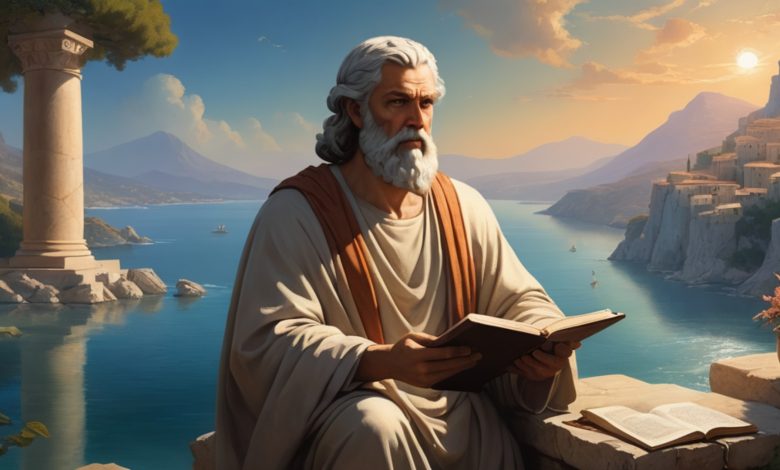
Meet Zeno of Elea: a philosopher who was anything but boring, famously arguing that nothing is as it seems and that the universe is just a never-ending chain of paradoxes.
His Life
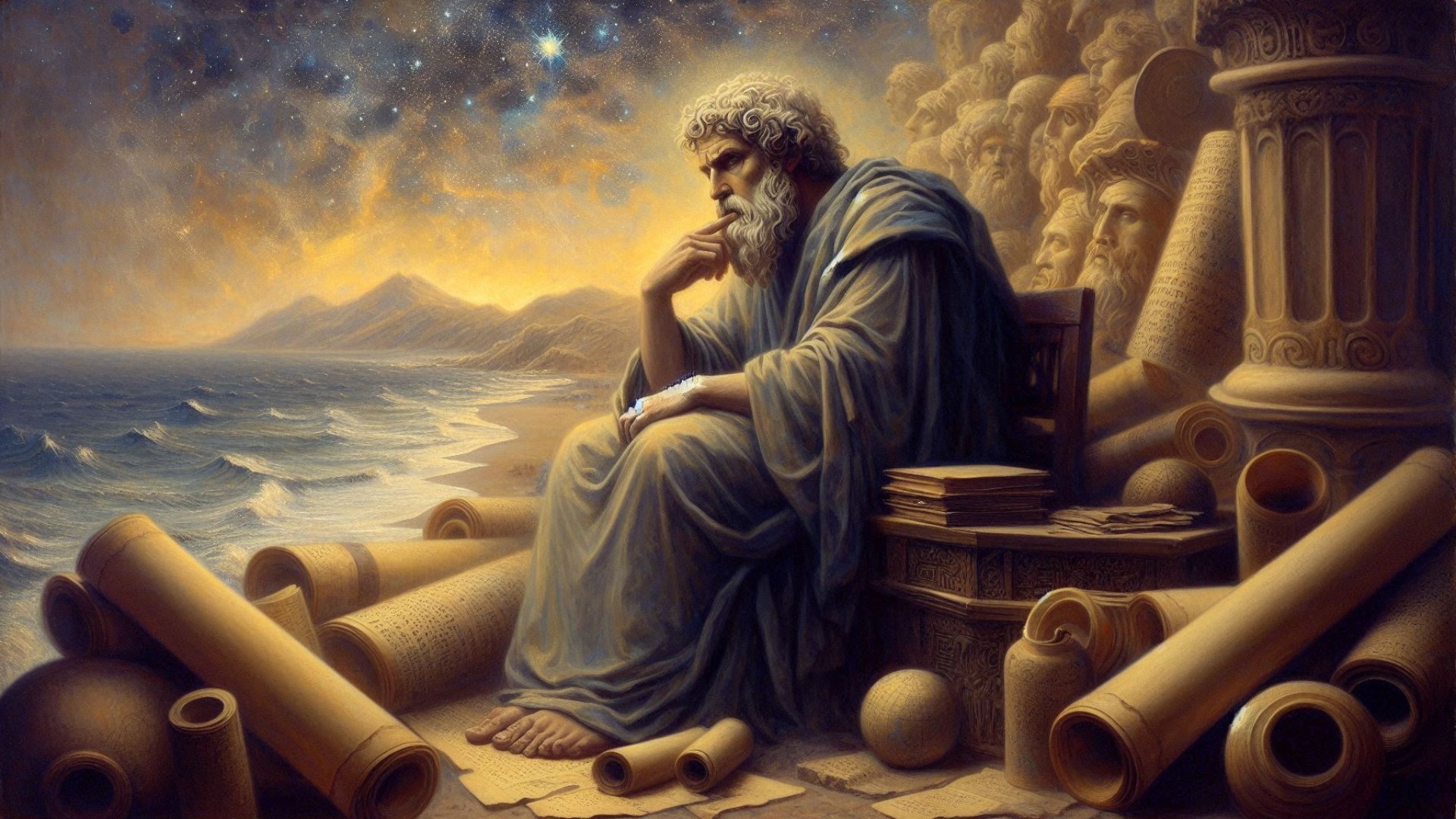
As one of the most controversial figures in the history of philosophy, Zeno stands among those early thinkers who laid the foundation for Western thought. A student of Parmenides, he is best known as the most fierce defender of his master’s ideas. Born around 490 BC in Elea, on the west coast of Southern Italy, there is unfortunately very little reliable information about his life. Plato tells us that Zeno was brought to Athens by Parmenides, where he met Socrates. However, modern scholars suspect this is just a narrative device Plato used to flesh out his philosophical storytelling. Given Plato’s tendency to use characters and dramatic encounters in his dialogues to make his philosophical points hit home, this theory is widely accepted. But as with most things regarding Zeno’s life, the details remain shrouded in mystery.
The Eleatic School
Before we dive into Zeno’s philosophy, getting a handle on the Eleatic School will make things much clearer. This was one of the major schools of thought in Ancient Greece, renowned for its contributions to metaphysics and the philosophy of being. Its core philosophy rests on the belief of its founder, Parmenides, that reality is a single, unchanging entity. Existence is one, indivisible, and an immutable whole. Our senses, however, are deceptive. The notions of plurality, change, and motion that we get from our senses are mere illusions. Therefore, true knowledge is only accessible through reason. Zeno’s paradoxes were specifically designed to support this view—that change and transformation are impossible. By building on Parmenides’ concept of the unity of being, the Eleatic School shaped fundamental debates on existence, unity, and motion, leaving a lasting mark on every philosopher who followed.
Zeno’s Paradoxes
While most Ancient Greek thinkers typically expressed their philosophical views through poetry, Zeno was a pioneer in transitioning to prose. He laid out his arguments through paradoxes: first, he would accept an opponent’s premise as true, then demonstrate the contradictions that followed—a method known as proof by contradiction. Zeno’s paradoxes are essentially logical puzzles crafted to support Parmenides’ claims about the impossibility of motion and plurality. Interestingly, Zeno didn’t name these paradoxes himself; while his original writings haven’t survived, later thinkers gave them the titles we use today. Let’s take a closer look at a few of these cornerstones of Zeno’s philosophy.
The Achilles and the Tortoise Paradox
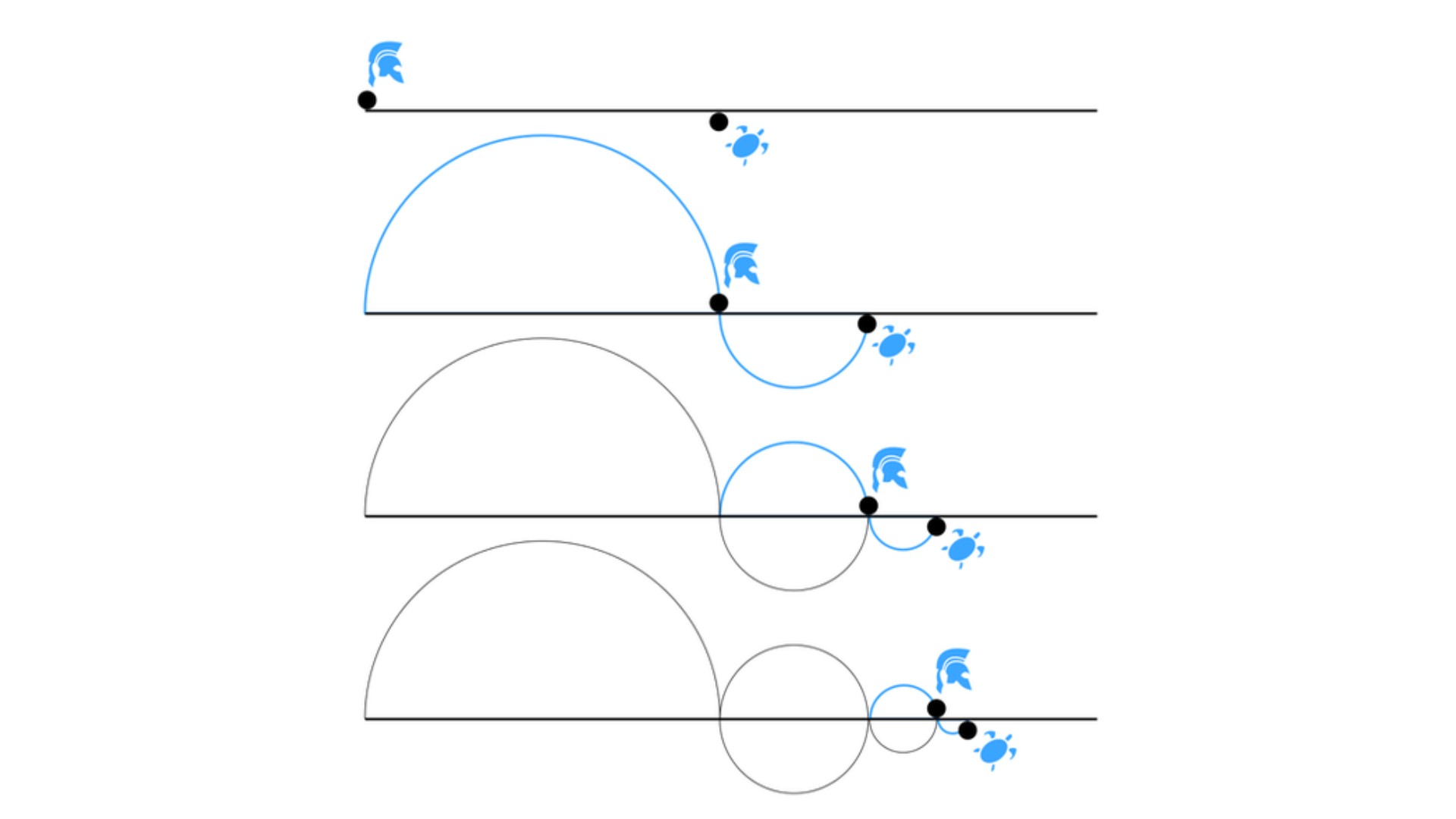
Perhaps his most famous puzzle, this paradox focuses on the illusory nature of motion. It begins with a race between Achilles, the swiftest runner in antiquity, and a tortoise. Achilles gives the tortoise a head start, but no matter how fast he runs, he can never overtake the creature because the gap between them can never truly be closed. According to the paradox, whenever Achilles reaches the point where the tortoise started, the tortoise has already moved a little further ahead. This race turns into an infinite loop, and Achilles never actually passes the tortoise. It’s impossible to ignore the questions this raises about the infinite divisibility of space. While modern mathematics shows us that Achilles does eventually overtake the tortoise, this paradox remains a crucial touchstone in debates about the nature of motion.
The Arrow Paradox

This one centers on an arrow fired from a bow. If we look at a snapshot of the arrow in flight, can we tell the difference between a stationary arrow in space and one that has been fired? Is there any difference between the two photos? According to Zeno, no—there is no difference, and at any given moment, the arrow must be at a specific point, essentially at rest. From this, he argues that motion does not exist and that only static “moments” are real. With this, Zeno tried to show that motion is merely an illusion.
The Dichotomy Paradox
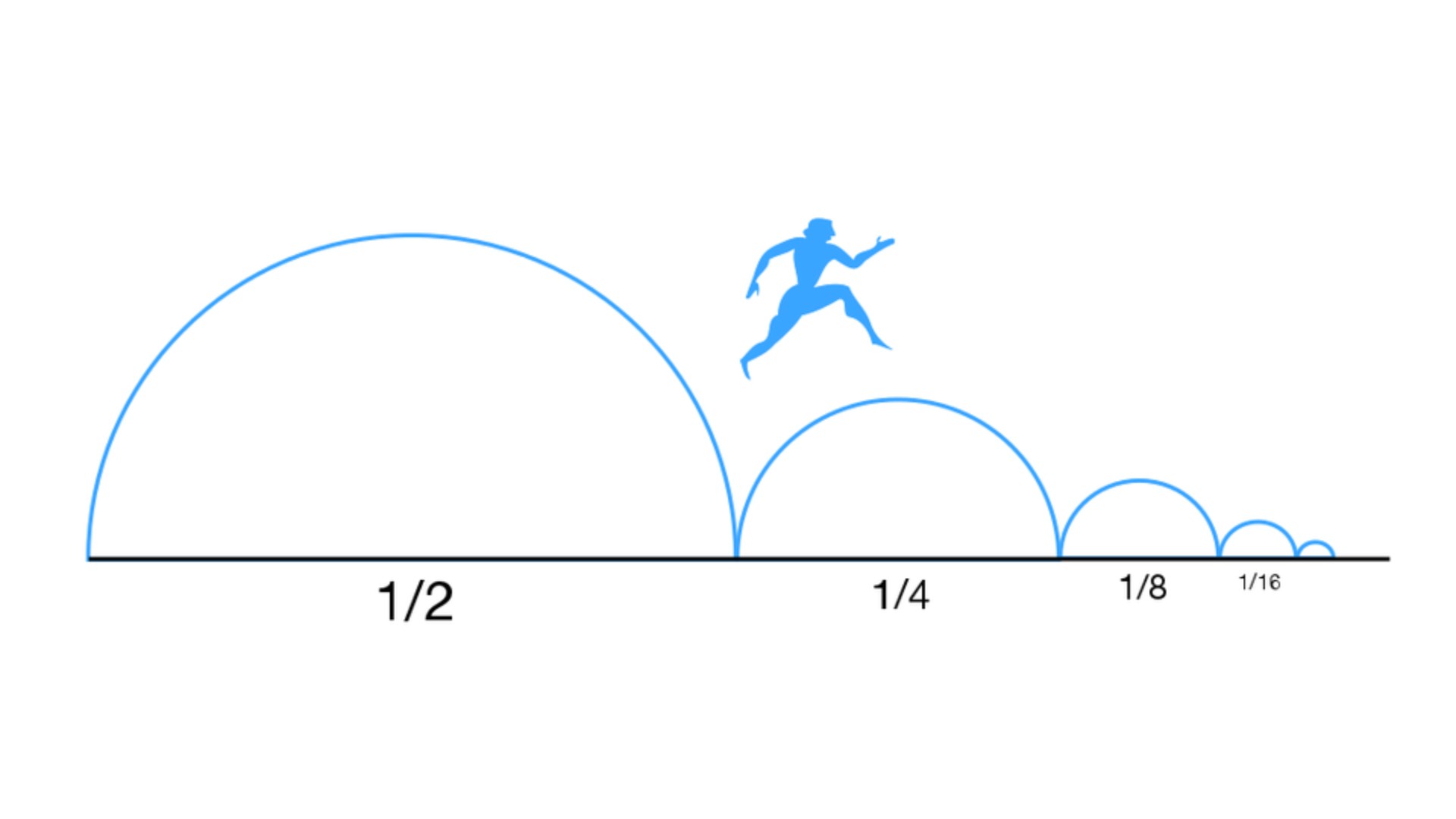
According to this paradox, completing any journey is theoretically impossible. Zeno breaks it down like this: Suppose you want to go somewhere; first, you must cover half the distance. Then, you must cover half of the remaining distance, then half of that, and so on. This cycle continues forever, meaning you can never actually reach the destination. By using this concept of infinite division, Zeno argues that motion is nothing more than a trick of the mind. While modern math allows us to solve this using limits and infinite series, it remains a strikingly impressive argument for its time.
The Stadium Paradox
Imagine a stadium with three groups of objects: Group A standing still, Group B moving to the left, and Group C moving to the right. According to the paradox, if B and C move at the same speed, C appears to move past B twice as fast as it moves past the stationary A, which creates a logical contradiction in perceived speeds. A bit confusing, right? In reality, Zeno uses this paradox to argue that motion can only be defined relative to an observer and that it creates logical inconsistencies when comparing relative velocities. The end goal, as always, is to insist that motion is logically impossible.

Zeno’s paradoxes have sparked significant debate for centuries, not just in philosophy but in mathematics and physics as well. These puzzles are important not only for the views they defend but for the sheer creativity of the method used to prove them. In defending his master Parmenides’ idea that reason and logic are superior to sensory experience, Zeno provides us with a profound method of rigorous inquiry.
References and Further Reading
Horlu, D. (n.d.). Elealı Zenon – Hiç olmazsa bir kere itiraz et başka bir fikir söyle de iki kişi olduğumuzu anlayayım. Destek Yayınları.
Zeno of Elea (Stanford Encyclopedia of Philosophy). (2021, April 8). https://plato.stanford.edu/entries/zeno-elea/
Zeno’s Paradoxes | Internet Encyclopedia of Philosophy. (n.d.). https://iep.utm.edu/zenos-paradoxes/
Originally published in Turkish at Doğa Filozofu.