


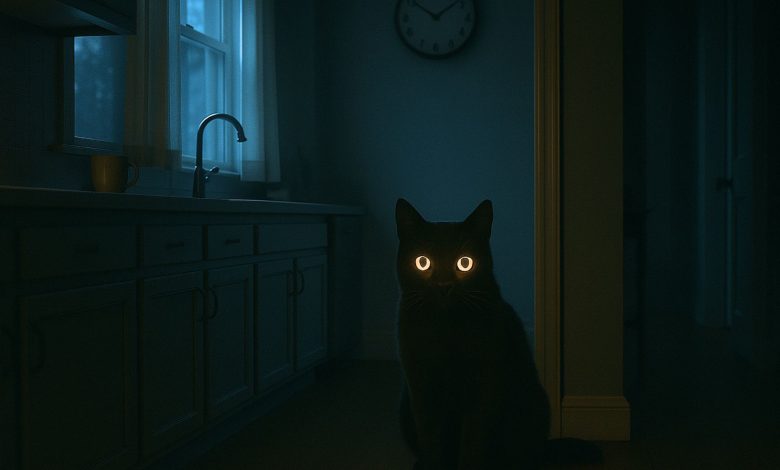
It’s the middle of the night, you’re craving a snack, and you’re sneaking into the kitchen… Suddenly, two glowing eyes are locked onto you from the darkness! Your heart skips a beat. A ghost? An alien? Nope—just your sweet cat’s curious gaze. But why exactly do their eyes shine like headlights?
If you lived in Ancient Egypt, the answer would have been: “Cats store the light of the setting sun in their eyes.” As lovely as the legends are, let’s invite science to the stage to get the real story!
Eyes That Reflect, Not Emit
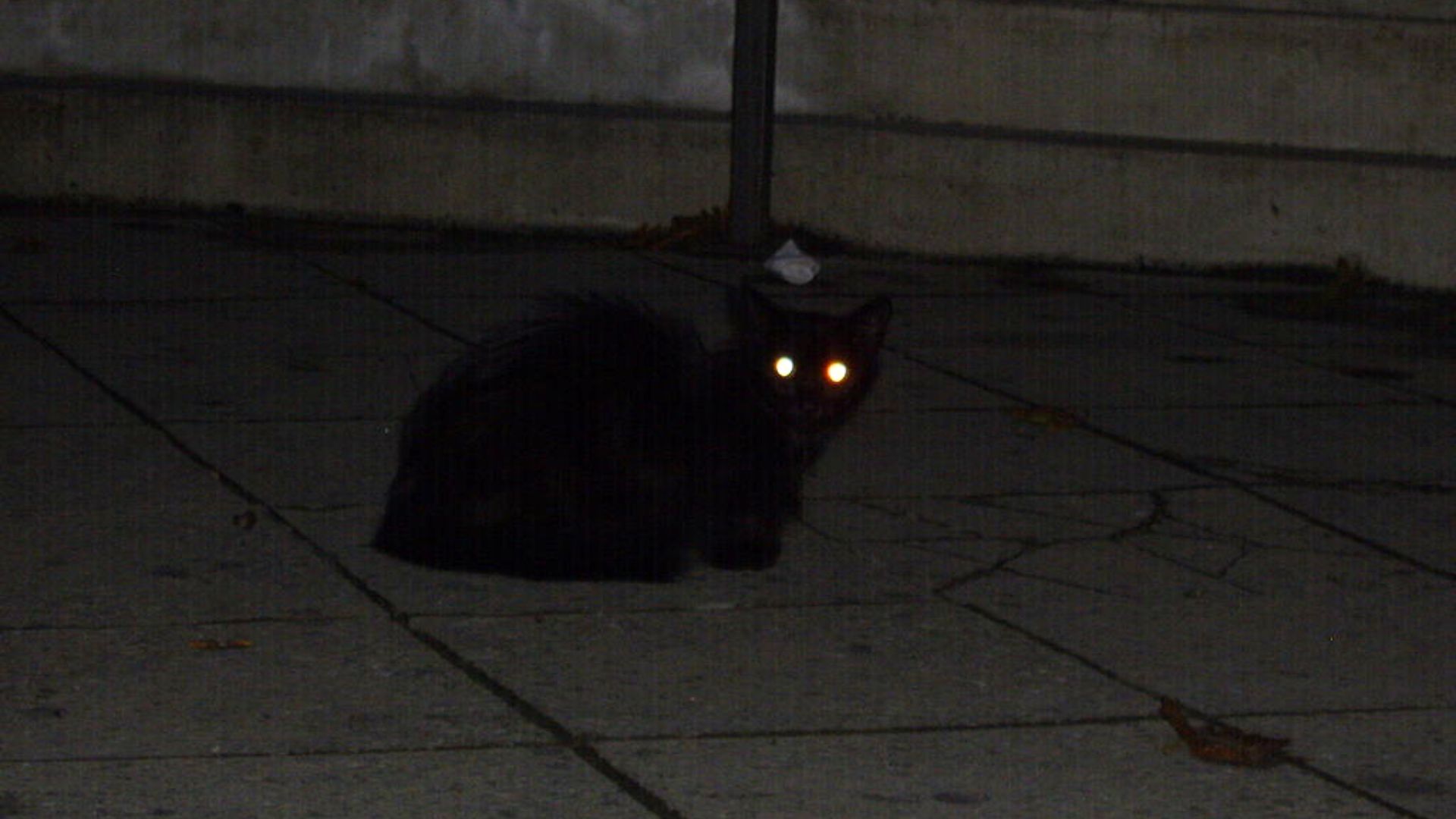
Let’s clear up a misconception right away: cat eyes don’t emit their own light. However, they reflect incoming light so efficiently that it’s impossible for them not to look like little light sources in the dark.
This trait is the result of a biological adaptation that takes their night vision to extraordinary levels.
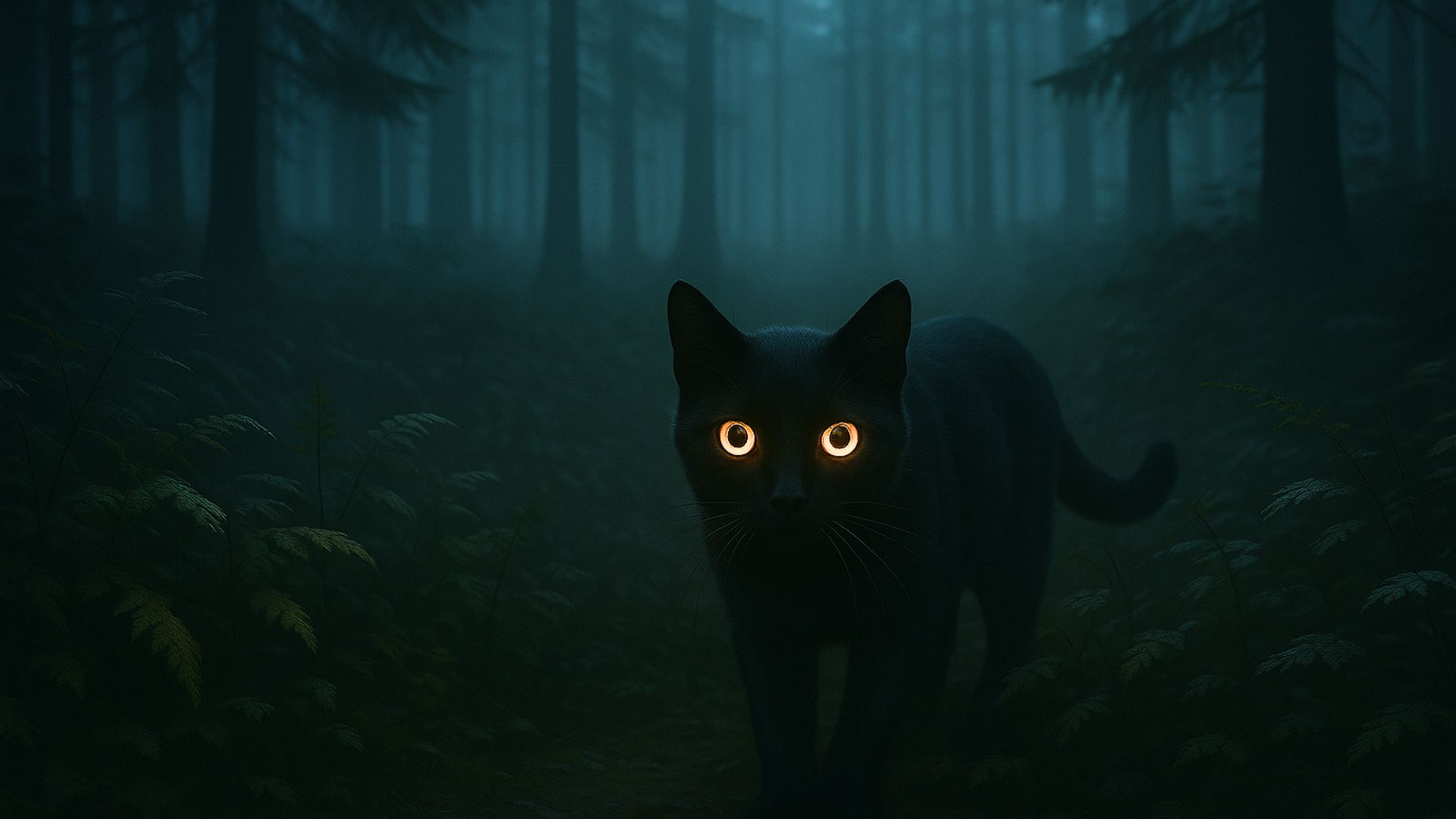
Pupils and Retinas Hungry for Light
A cat’s cornea and pupils are significantly larger than a human’s. Especially in low light, their pupils dilate to massive proportions, turning them into veritable light-hunters that seem to say, “Whatever light is out there, bring it on!” While we stumble around in the dark holding onto walls, cats can navigate almost pitch-black environments with ease thanks to these structures that can capture even the tiniest speck of light.
Deep within the retina, there are two main types of cells that process visual information: cone cells for daytime vision and color perception, and rod cells for night vision. The number of rod cells in a cat’s retina is 6 to 8 times higher than in humans. This makes them natural-born hunters optimized for the night.
Tapetum Lucidum: The Glowing Layer
The size of a cat’s pupils and the abundance of rod cells make their night vision impressive, but the real secret behind that iconic glow is a layer that sounds like it came straight out of the Harry Potter universe: the Tapetum lucidum!
Located just behind the retina, this thin, reflective layer acts like a mirror. When light enters the eye and misses the initial receptors, this layer says, “Hey, get back here!” and bounces it right back onto the retina.
This layer contains riboflavin, a B vitamin. Riboflavin reflects light at wavelengths that cats can perceive, significantly boosting their visual sensitivity. The result? A vision system programmed specifically for the night, allowing them to perceive their surroundings even when it’s nearly dark.
So, Why Don’t Our Eyes Glow?
This super night-vision system isn’t unique to cats. Foxes, dogs, deer, fish, dolphins, and even some lemurs can make their eyes shine in the dark.
But pigs, birds, and most rodents don’t have this advantage. They’re just like us—best not to wander around in the dark without a flashlight!
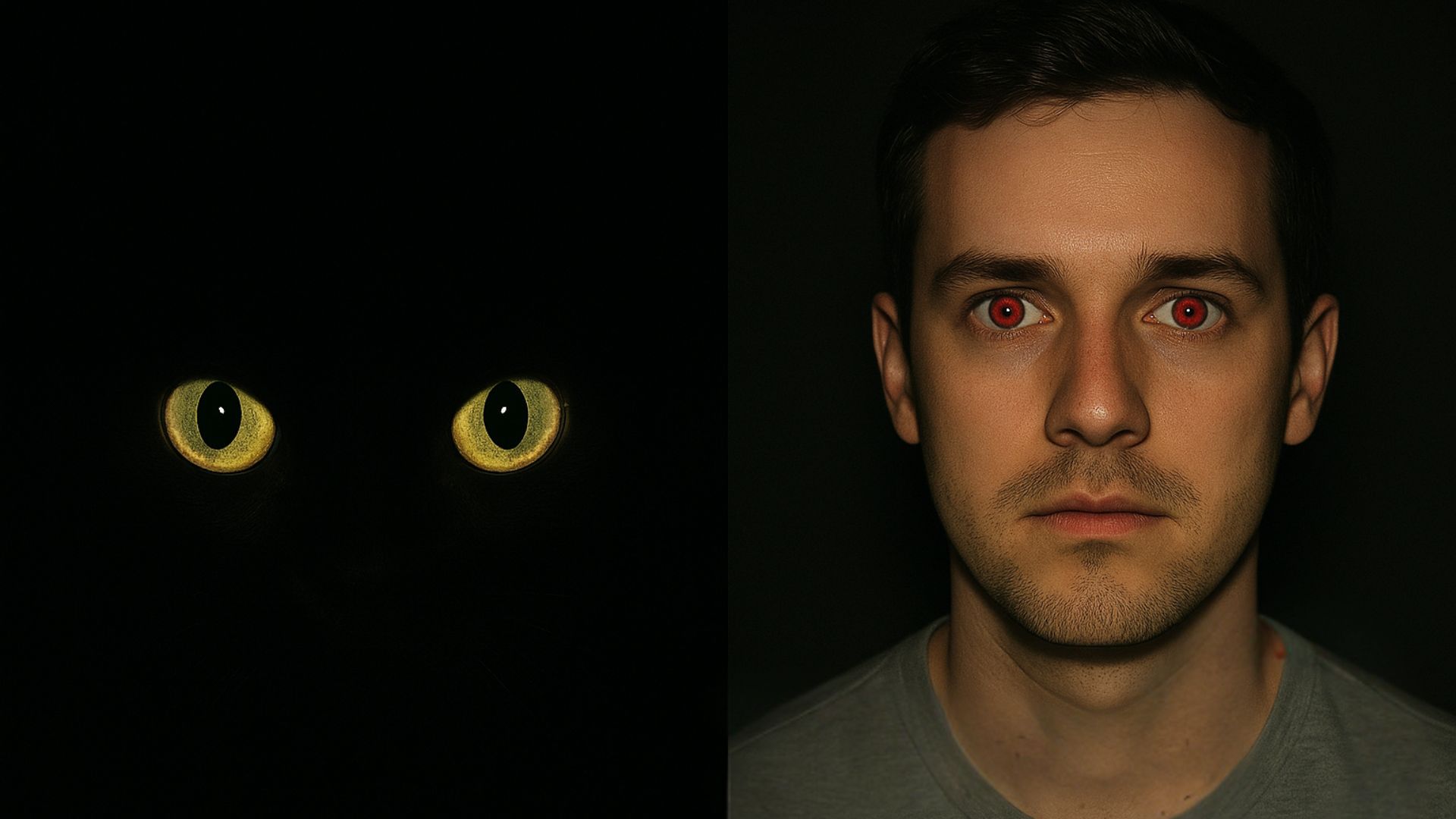
You might be wondering: Why don’t our eyes glow? The short answer: Humans lack a Tapetum lucidum. That’s why our eyes don’t shine in the dark. However, if you take a photo with a flash, you get that infamous “red-eye” effect. That red light is just a reflection off the blood vessels at the back of our eyes—not exactly a cool superpower, unfortunately.
Is There a Price for This Glow?
Tapetum lucidum provides incredible night vision, but it has a downside: image clarity. Reflecting light back onto the retina a second time can cause a slight drop in visual sharpness. In other words, their image resolution is a bit lower compared to a human’s. But unless your cat has plans to start reading books, we doubt they’re complaining.
Evolution’s Gift to the Night
The way a cat’s eyes glow in the dark is no mere visual coincidence.
This feature is an impressive defensive and hunting strategy that has evolved over time to help a creature master the night. That shimmer you see is a light show shaped by a bit of aesthetics, a bit of biology, and a whole lot of evolutionary genius.
References and Further Reading
20/20 Vision: Why do cats’ eyes glow in the dark? (n.d.). Diamond Pet Foods. https://www.diamondpet.com/blog/health/conditions/why-do-cats-eyes-glow-in-the-dark/
Estep, E. (2023, May 16). The conversation: Why do cats’ eyes glow in the dark? News. https://news.utk.edu/2022/04/18/the-conversation-why-do-cats-eyes-glow-in-the-dark/
Harrison, B., DVM, & Harrison, B., DVM. (2023, November 27). Why do cats’ eyes glow in the dark? https://www.kinship.com/cat-behavior/why-do-cats-eyes-glow
Meowfest: Why do cat eyes glow in the dark? (n.d.). https://carnegiemnh.org/meowfest-why-do-cat-eyes-glow-in-the-dark/
Seabrook, A. (2008, October 31). Why do animals’ eyes glow in the dark? NPR. https://www.npr.org/2008/10/31/96414364/why-do-animals-eyes-glow-in-the-dark
The spooky science of glowing eyes in cats | Panthera. (2024, October 24). Panthera. https://panthera.org/blog-post/spooky-science-glowing-eyes-cats
Originally published in Turkish at Doğa Filozofu.