
If you’re a regular reader of Doğa Filozofu, you’ll remember that we’ve tackled plenty of paradoxes before. In this piece, we’re diving into another one—but this time, we’re going to examine how the rules of logic collide within our language. We realize that probably sounds like nonsense right now, but stick with us: in a moment, we’ll dive into a fascinating topic that will make that last sentence perfectly clear. So, kick back, get comfortable, and let’s get into it!
Logic 101
Before we get ahead of ourselves, let’s briefly touch upon the science of logic, which will be a key player in this article. Most of us have some hazy memories of high school logic classes, right? Mathematically speaking, logic is essentially the process of translating language or statements into symbols—the same foundation used to write the algorithms for the AI we use today. For example, when we say, “When it rains, the ground gets wet. It’s raining today. Therefore, the ground is getting wet,” logic breaks those statements down like this:
Let’s say the second sentence is represented as “P.” So, whenever we say P, we are stating, “It is raining today.” Let the third sentence be “Q.” In that case, logically speaking, these statements look like this:
P
(It is raining today.)
Q
(The ground gets wet.)
Since our main conclusion in the first sentence depends on the truth of the following two, we get a statement that looks like this:
P→Q
(If it rains, then the ground gets wet.)

This form of reasoning is known in classical logic as modus ponens (the way that affirms). You can summarize it as: “If P is true, and it has been proven that P is true, then Q must also be true.” Because it’s clearly stated that P is true, we accept that Q is inevitably true as well.
Logic is much more than just a mathematical tool; it plays a critical role in everything from philosophy and computer science to legal systems and our own everyday reasoning. For instance, when AI systems make decisions, they rely on logical inferences just like this one to model human thought. Similarly, legal rulings rely on logic: if a specific law requires a certain outcome when a condition is met, the logical structure of that law functions exactly as we’ve seen here.
In this context, philosophical puzzles like Moore’s Paradox—which question the relationship between language and logic—aren’t just theoretical fluff. They help us understand how logic and pragmatics are intertwined when we communicate in daily life. So, it’s worth taking a closer look at how logic functions in both theoretical and practical domains.
That is mathematical logic in its simplest form. Of course, it becomes an incredibly heavy discipline once you get into the details, but for this article, that’s all we need. Now, let’s get to the main event!
Moore’s Paradox
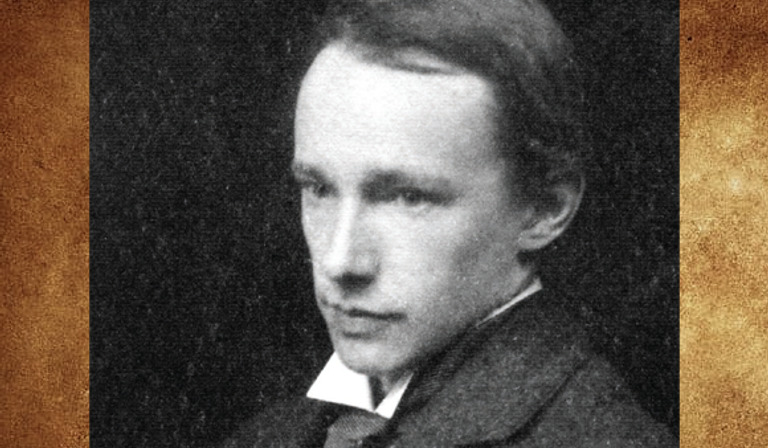
Moore’s Paradox is a problem introduced by the 20th-century philosopher G.E. Moore that sparked massive debates in epistemology and the philosophy of mind. At the heart of the paradox lies the fact that certain types of statements seem logically and cognitively contradictory, even though they are grammatically consistent. What do we mean by that?
Take our previous statement: “If it rains, then the ground gets wet.” That statement is clearly saying: “If it rains, I believe the ground is getting wet.”
Now, what if we said: “It’s raining, but I don’t believe it.”
That sentence doesn’t quite sit right with our intuition, does it? The moment we say “it is raining,” we are implying that we believe it is happening. If we say, “I was told it’s raining, but I don’t believe it,” that makes logical sense—but the original sentence doesn’t quite work the same way, does it?
We can feel you asking, “So, where is the paradox?” The paradox lies in the fact that, mathematically, this sentence is perfectly fine. Logically, it’s equivalent to the expression “P, but I don’t believe P.” But logically, the statement “I don’t believe P” is not the opposite of “P.” Therefore, from a purely logical standpoint, there is no issue. According to mathematical logic, the sentence “I was told it’s raining, but I don’t believe it” is in the same category as “It’s raining, but I don’t believe it.” Neither contains a contradiction.
According to philosophers like Wittgenstein and Kripke, who focused on the philosophy of language, the statements in Moore’s Paradox appear contradictory in terms of how language actually functions. When we state that something is true, it is assumed that we believe it. Therefore, saying “P, but I don’t believe P” violates the pragmatic rules of language. In their view, there is no paradox—the sentence is simply flawed, both linguistically and logically. Of course, the philosophy of language isn’t the only lens we can use. Philosophy is a vast field with countless perspectives. This has led to many different responses to the paradox, but generally, the consensus is that it isn’t a true paradox at all, but rather a logical error or a linguistic misuse.

Moore’s Paradox shows us that our way of thinking doesn’t perfectly overlap with mathematical logic. This helps explain why our decisions sometimes fall short of being purely rational.
Ultimately, examples like Moore’s Paradox reveal the subtle differences between the pragmatic rules of language and the structures of logic, and how those differences shape human thought. When we think in accordance with the rules of logic, we can construct more consistent and robust arguments—both individually and as a society. In this sense, logic is more than just an abstract tool; it is an indispensable foundation for organizing our thoughts and our communication.
References and Further Reading
Carneades.org. (2014, October 27). Moore’s Paradox [Video]. YouTube. https://www.youtube.com/watch?v=Qa57ZKNkcaE
Sorensen, R. (2022, March 3). Epistemic paradoxes. Stanford Encyclopedia of Philosophy. https://plato.stanford.edu/entries/epistemic-paradoxes/
The Editors of Encyclopaedia Britannica. (2025, September 8). Brain Games: 8 philosophical puzzles and paradoxes. Britannica. https://www.britannica.com/list/8-philosophical-puzzles-and-paradoxes
The Editors of Encyclopaedia Britannica. (2025, October 31). G. E. Moore. Britannica. https://www.britannica.com/biography/G-E-Moore
Originally published in Turkish at Doğa Filozofu.