
Certain traits in society are considered “better” than others, aren’t they? In the U.S., for instance, individuals of European descent with light skin and light eyes often receive positive reinforcement, while Black individuals frequently face unfair negative stereotypes. Another example is how we tend to treat people we find aesthetically pleasing with more kindness and warmth than others. But is this right? Can we show people the error in this way of thinking? That was exactly the goal of the Blue-Eyed/Brown-Eyed experiment conducted by American teacher Jane Elliott in 1968. Together, we’re going to explore how discrimination is formed and how it spreads. If you’re ready, let’s dive in!
Blue Eyes Are Best!
Elliott was deeply troubled by the scale of discrimination in the United States. She found it fundamentally wrong that people were judged—and treated—based on traits they couldn’t change and shouldn’t have to. Elliott launched this experiment to both create a striking demonstration of this injustice and to understand the very nature of discrimination. Her goal was to give her students a direct, visceral experience of what racism and prejudice actually feel like. She wanted to show how people are marginalized simply because of their appearance or innate characteristics, and in doing so, help her students develop true empathy.
Elliott divided her classroom into two groups based entirely on eye color: Blue-eyed and brown-eyed.
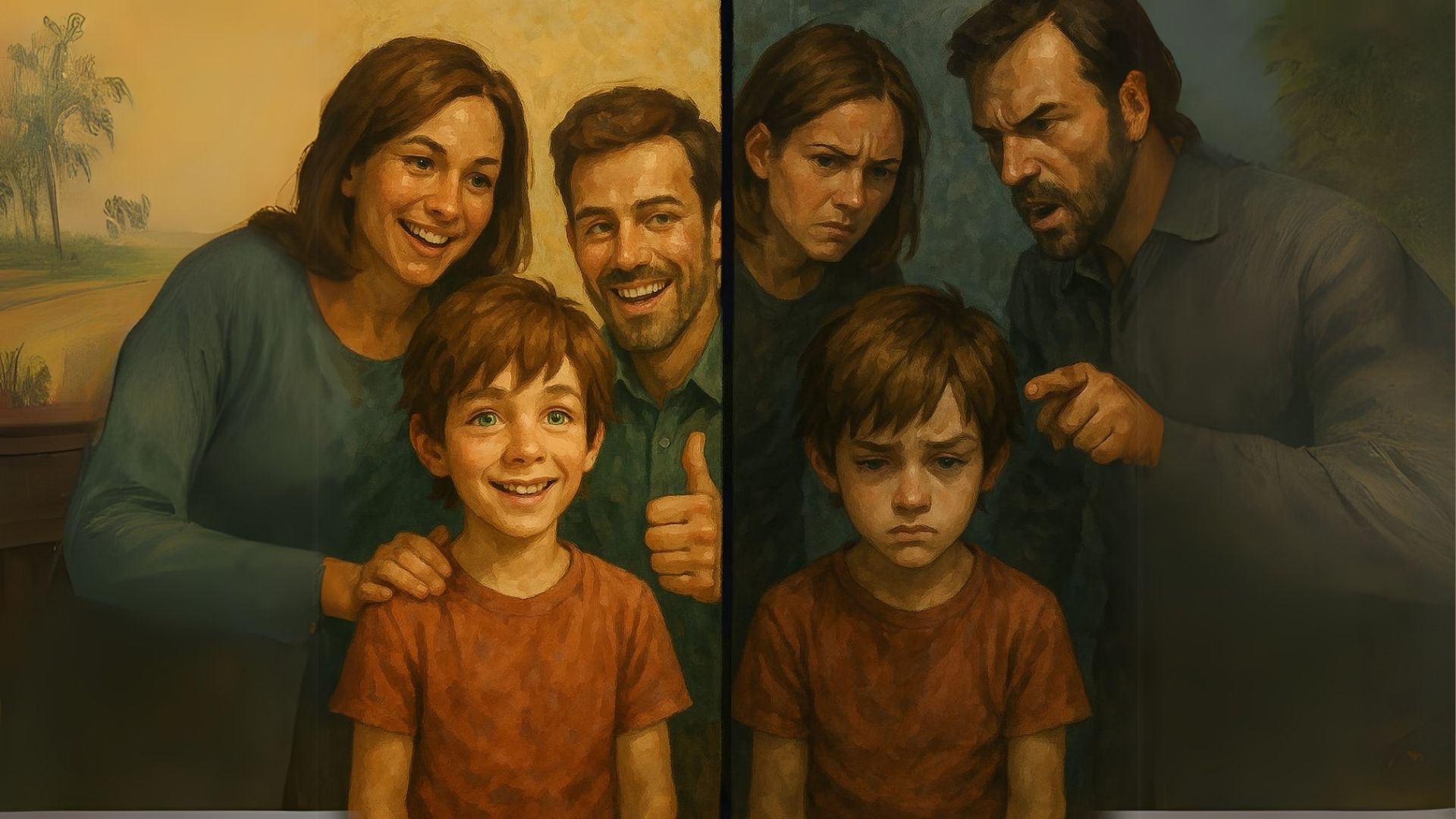
At the start, Elliott told the class that blue-eyed people were smarter, harder-working, and superior. She labeled the brown-eyed students as slower, lazier, and less intelligent. She didn’t stop there. She granted the blue-eyed children special privileges: longer recess, permission to sit anywhere they liked, and—most critically—they were strictly forbidden from playing with the brown-eyed children. Naturally, she treated the brown-eyed children with condescension and disdain, moving them to the back of the room and belittling them at every turn. Elliott was certainly not a racist herself; she was simply flipping the script to show how quickly these dynamics take hold.
Almost immediately, the brown-eyed children’s desire to go to school, their self-confidence, and their classroom participation plummeted. The opposite happened for the blue-eyed children. Furthermore, the blue-eyed kids began ostracizing the very same friends they had been close with just a day before.
The Tables Turn
At a certain point, Elliott put a stop to it and reversed the entire dynamic. This time, she declared that the brown-eyed children were the superior group, granting them all the privileges she had previously given to the blue-eyed students, and imposing all the restrictions on the blue-eyed ones. They had effectively swapped places. There was one big difference, though—wasn’t there? In the first scenario, the blue-eyed children hadn’t experienced oppression, nor had the brown-eyed children felt “privileged.” But now, past feelings were in play. Surely the blue-eyed children, having been on the receiving end of this cruelty, would reject the discrimination, or the brown-eyed children, knowing how it felt to be on the bottom, would refuse to treat their peers with such malice?

Regrettably, that is not what happened. The blue-eyed children’s confidence evaporated, and they became timid and withdrawn. The brown-eyed children, meanwhile, continued their day by excluding the blue-eyed ones. Elliott saw just how easily people fall into these meaningless, illogical, and deeply harmful prejudices. Looking at it through the lens of the children, she arrived at some critical conclusions.
The Significance of the Experiment
This experiment showed Elliott how easily children can adopt feelings of superiority or inferiority simply through the guidance of an authority figure. Furthermore, she witnessed firsthand that once a child internalizes these feelings, the “inferior” ones become more timid and perform worse, while the “superior” ones become bolder and more successful. Perhaps the most striking result for Elliott—and for you, our readers—was that even the children who had previously been discriminated against adopted the same oppressive behavior as soon as the power shifted to them. Instead of triggering empathy, the mechanisms of aggression and discrimination took over.
Years later, those same students praised their teacher, noting that they never forgot the experiment and that it provided them with a vital perspective. Of course, Elliott faced her share of criticism for reasons you might have already guessed. From a scientific standpoint, critics argued that because the experiment was small-scale and the parameters weren’t strictly controlled, it couldn’t fully explain the deep-rooted nature of real-world discrimination. While her findings were intuitively compelling, the experiment had a long way to go to be considered psychologically rigorous.
From a moral and ethical perspective, she also faced backlash for involving children in an experiment that could potentially traumatize them or impact their future lives. Yet, we can at least say she succeeded in demonstrating that discrimination is a learned behavior.
This experiment shows how quickly discrimination can be internalized and the profound impact it leaves on people. Even if we don’t notice it in our daily lives, similar mechanisms are constantly at work. We often decide who is smarter, more talented, or more valuable based on nothing more than a randomly assigned trait. Perhaps the most important takeaway of this experiment is this: if we can learn to discriminate in a single day, we can just as quickly embrace justice and equality. Real change, perhaps, begins by questioning how we look at the world.
References and Further Reading
chel.by.the.seas. (2020, June 18). Jane Elliott “Blue Eyes – Brown Eyes” Experiment Anti-Racism [Video]. YouTube. https://www.youtube.com/watch?v=dLAi78hluFc
FRONTLINE PBS, Official. (2019, January 18). A Class Divided (full documentary) | FRONTLINE [Video]. YouTube. https://www.youtube.com/watch?v=1mcCLm_LwpE
Martin, R. (2020, July 8). We are repeating the discrimination experiment every day, says educator Jane Elliott. NPR. https://www.npr.org/sections/live-updates-protests-for-racial-justice/2020/07/08/888846330/we-are-repeating-discrimination-experiment-every-day-educator-says
Pbs, F. (2016, January 15). Introduction. FRONTLINE. https://www.pbs.org/wgbh/frontline/article/introduction-2/
Originally published in Turkish at Doğa Filozofu.