

We’d like to invite you to a fascinating experiment. We’re researchers looking into how students learn and how their memory works. Specifically, we’re studying the effect of punishment on learning. We’ll be administering electric shocks at various voltages to students whenever they answer your questions incorrectly. We’re even including a 450-volt setting. What do you say? We can already hear you saying, “Absolutely not.” Well, Stanley Milgram set up an experiment exactly like this, though with a stroke of genius. What do you think the results were? Let’s dive in, explore the details of the experiment, and see what happened.
The Goal of the Experiment
First and foremost, Milgram’s focus was this question: “To what extent will people obey the orders of an authority figure and compromise their own moral values?” This study was actually designed to help us understand the defense used by war criminals in Nazi Germany: “I was just following orders.” This defense intrigued Milgram and led him to investigate how ordinary people could be dragged into such horrific acts.
How the Experiment Was Conducted
The experiment began at Yale University in 1961 and was repeated over several years. Participants were told they were volunteering for a memory test, but that wasn’t the real objective. Every person who took part was told they would be randomly assigned the role of either “teacher” or “student.” In reality, however, all the participants were assigned the “teacher” role, and the “student” was played by an actor.
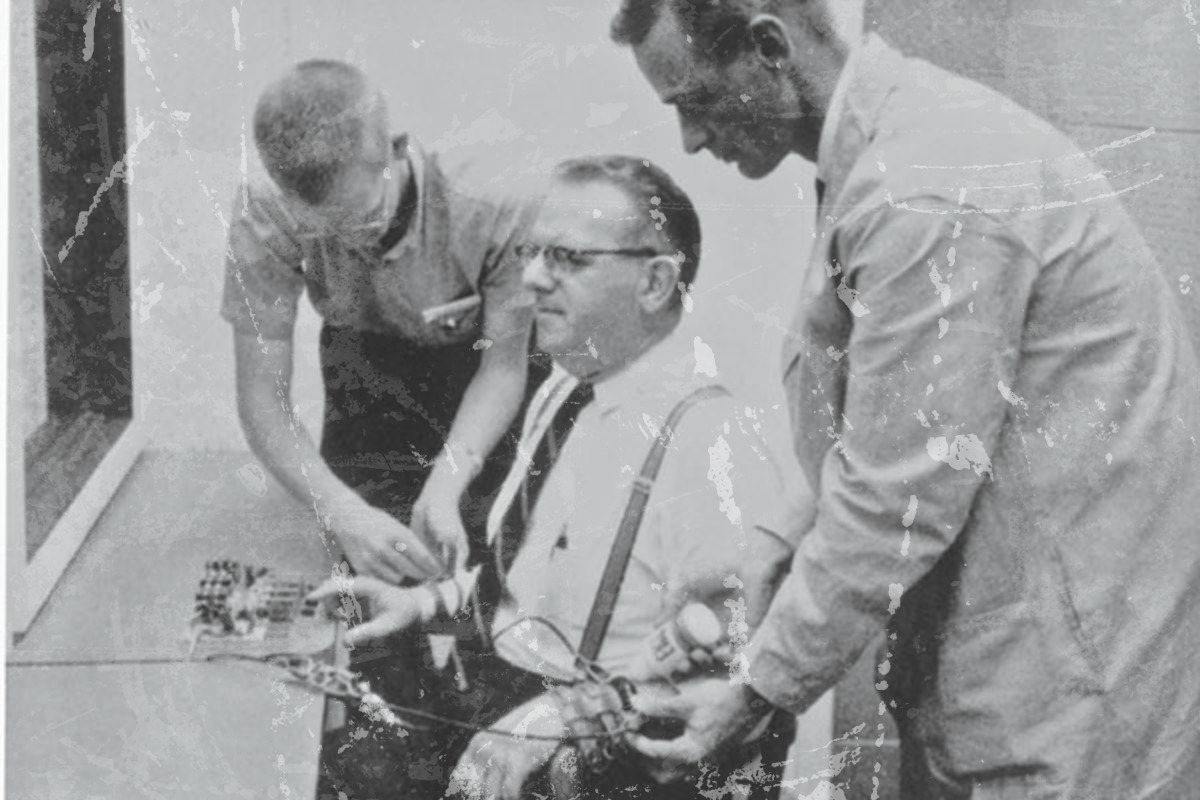
Image Source: Simply Psychology
The experiment proceeded as follows:
- The teacher asked the student memory questions and believed they were delivering an electric shock for every incorrect answer.
- The intensity of the shocks increased gradually with each wrong answer (starting at 15 volts and going up to 450 volts).
- In reality, no electricity was being delivered, but the actor playing the student would react as if they were in pain.
- As the “student” continued to give wrong answers, the teacher, under the instructor’s direction, continued to administer higher-voltage shocks.
The truly striking point of the experiment was that, despite the teacher’s own moral reservations, they continued this “torture” under the pressure of the experimenter. Even when participants thought the shocks might cause serious harm to the student’s health, they bowed to the authority of the researcher and kept going. Some participants even continued when the student pretended to faint. Let’s take a closer look at these high-pressure commands.

In this experiment, the researcher (the authority figure) used four main commands. These were used to force the participant to continue whenever they expressed a desire to stop. The commands were delivered in a progressively more coercive tone. Here are the four main commands given by the researcher:
-
- “Please continue.”
This first command was delivered in a gentle but authoritative tone, encouraging the participant to carry on without any sense of force. - “The experiment requires that you continue.”
The second command emphasized that the rules of the experiment necessitated continuing, implying that stopping wouldn’t be appropriate. - “It is absolutely essential that you continue.”
The third command used more definitive language to compel the participant. At this point, the pressure of authority began to feel like something beyond just experimental protocol. - “You have no other choice, you must go on.”
The fourth and final command left the participant feeling there was no alternative but to continue. This was the moment where the authority’s pressure was at its peak.
- “Please continue.”
These commands highlighted the conflict between the participant’s desire to stop and the pressure of the authority figure. The key takeaway of the experiment was that many participants obeyed these commands and continued to deliver shocks, even though it went against their own conscience.
Results of the Milgram Experiment

Milgram’s results were far more shocking than he had anticipated. 65% of participants continued to deliver the maximum 450-volt shock, even though the student (the actor) appeared to be in pain. One of the most telling results was that the participants who did stop obeying authority only did so after passing the 300-volt mark. No one in the experiment stopped before 300 volts. This goes to show how easily the majority of ordinary people can set aside their own conscience in order to follow the instructions of an authority figure.
Milgram interpreted these results this way: People are prone to crossing their own ethical boundaries when faced with an authority figure. An individual’s sense of moral and human responsibility can be overshadowed by the weight of authority.
Quite a shocking result, isn’t it? If you’d like, you can share this article with your friends and start a memory game of your own…
References and Further Reading
Eldridge, S. (2024, September 26). Milgram experiment | Description, Psychology, Procedure, Findings, Flaws, & Facts. Encyclopedia Britannica. https://www.britannica.com/science/Milgram-experiment
Yükselbaba, Ü. (2017). MILGRAM DENEYİ: OTORİTE VE İTAATE DAİR. İstanbul Üniversitesi Hukuk Fakültesi Mecmuası, 75(1), 227–270. https://app.trdizin.gov.tr/publication/paper/detail/TWpjMU1UZ3pNdz09
Originally published in Turkish at Doğa Filozofu.