


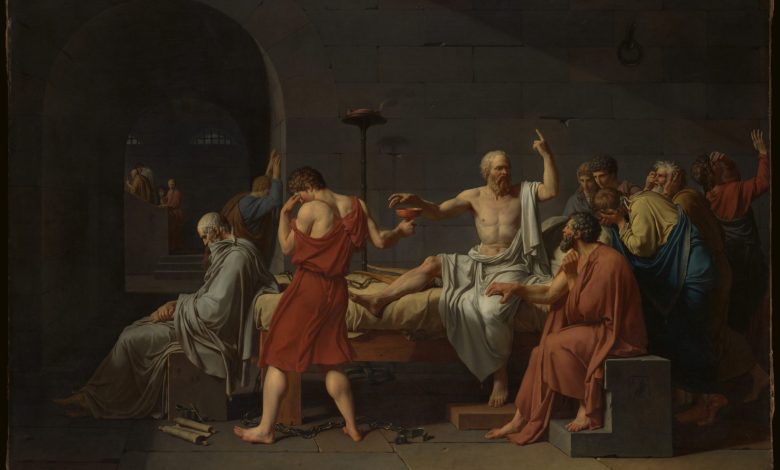
Whenever the word “philosophy” comes up in conversation, one name inevitably pops into everyone’s head: Socrates. He is the undisputed protagonist of this article. Most of us don’t really know *why* his name comes to mind so quickly and sharply. The reason, of course, is that everyone else thinks the same way, and when you were first introduced to the concept of philosophy, the people who introduced you did so through the lens of Socrates.
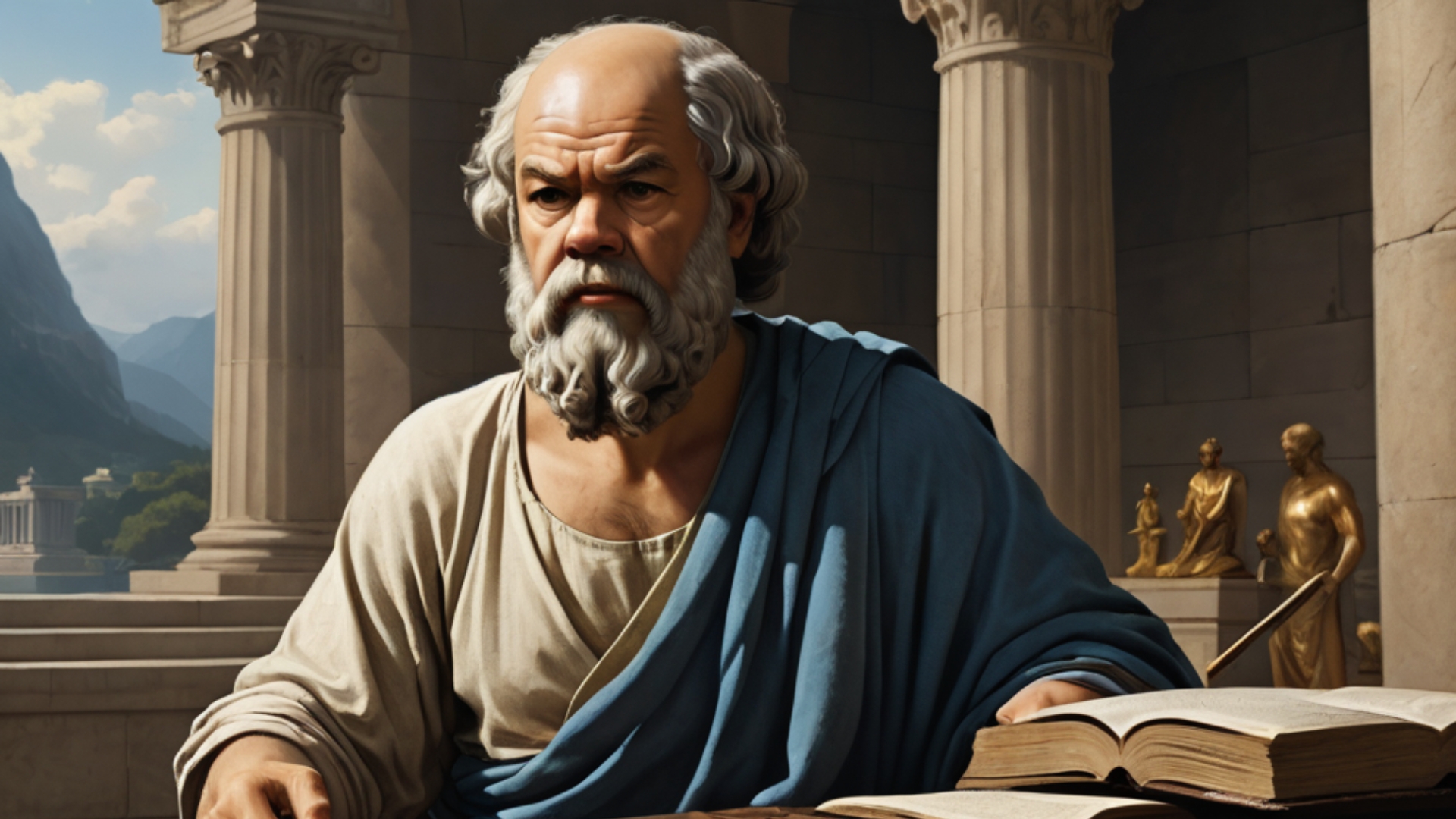
Ironically, many people aren’t actually familiar with Socrates’ narrative. Even though “The Apology of Socrates” is a cult classic, most people don’t really know what’s in it. In other words, Socrates is a name that has been etched directly into our collective consciousness. In this piece, we want to explore why he manages to jump to the front of our minds so effortlessly.
So, Who Was Socrates?
Socrates is one of the most prominent figures of Ancient Greece. But why? Was he a great general or a political leader? No. Socrates didn’t really “work” in the traditional sense. His job was to wander around and strike up conversations with the people he met. Socrates was known for walking through the public squares, asking people questions, and poking holes in their supposed knowledge. I’ll dive into this method of questioning in a moment. These conversations are crucial because, even though this man never wrote down a single word of his own philosophy, we have a clear grasp of his dialogues today precisely because he conducted them in the open, for everyone to see. “Wait,” you might be asking, “if Socrates didn’t write his own story, who did?” A fair question. His student, Plato, wrote down these conversations. Of course, he wasn’t the only one. Others like Xenophon, Aristophanes, and Plutarch also wrote about his life and his words, but each of these accounts had a different tone. How could the same conversation be retold in such different ways?
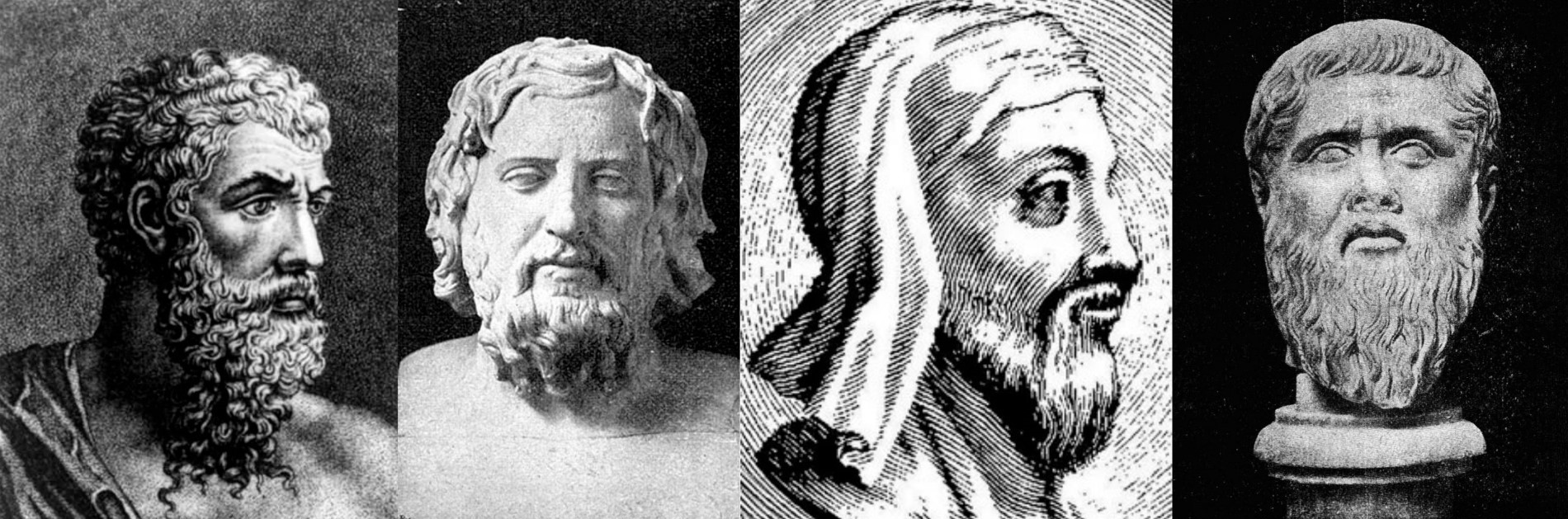
Aristophanes Xenophon Plutarch Plato
Here, we want to open a small but vital parenthesis: While Socrates undoubtedly existed as a historical figure, the “philosopher Socrates” is a bit of a question mark. The fact that he is described in such contradictory ways by so many different people has sparked some healthy skepticism. So the question is: Are these really Socrates’ own words, or did authors like Plato use his mouth to voice their own ideas? In other words, do these thoughts actually belong to him? There is no clear-cut answer, but one thing is certain: a man named Socrates lived, and he engaged in deeply philosophical conversations. For the rest of this article, we’ll set that doubt aside and focus on his narrative. Will you join us?
Life in Ancient Greece
To truly understand Socrates and the other philosophers of the Ancient Greek era, you need to know a little bit about where they lived and what the conditions were like. Let’s take a closer look at the society that is widely considered the birthplace of philosophy. First off, there was no single “country” called Ancient Greece; it was a collection of city-states. The most powerful among them were Athens and Sparta. Athens stood out in the fields of democracy, art, philosophy, and science, while Sparta—as you might know from movies—was a state that produced elite warriors. Since we’re focusing on Socrates, our city of interest is, of course, Athens.
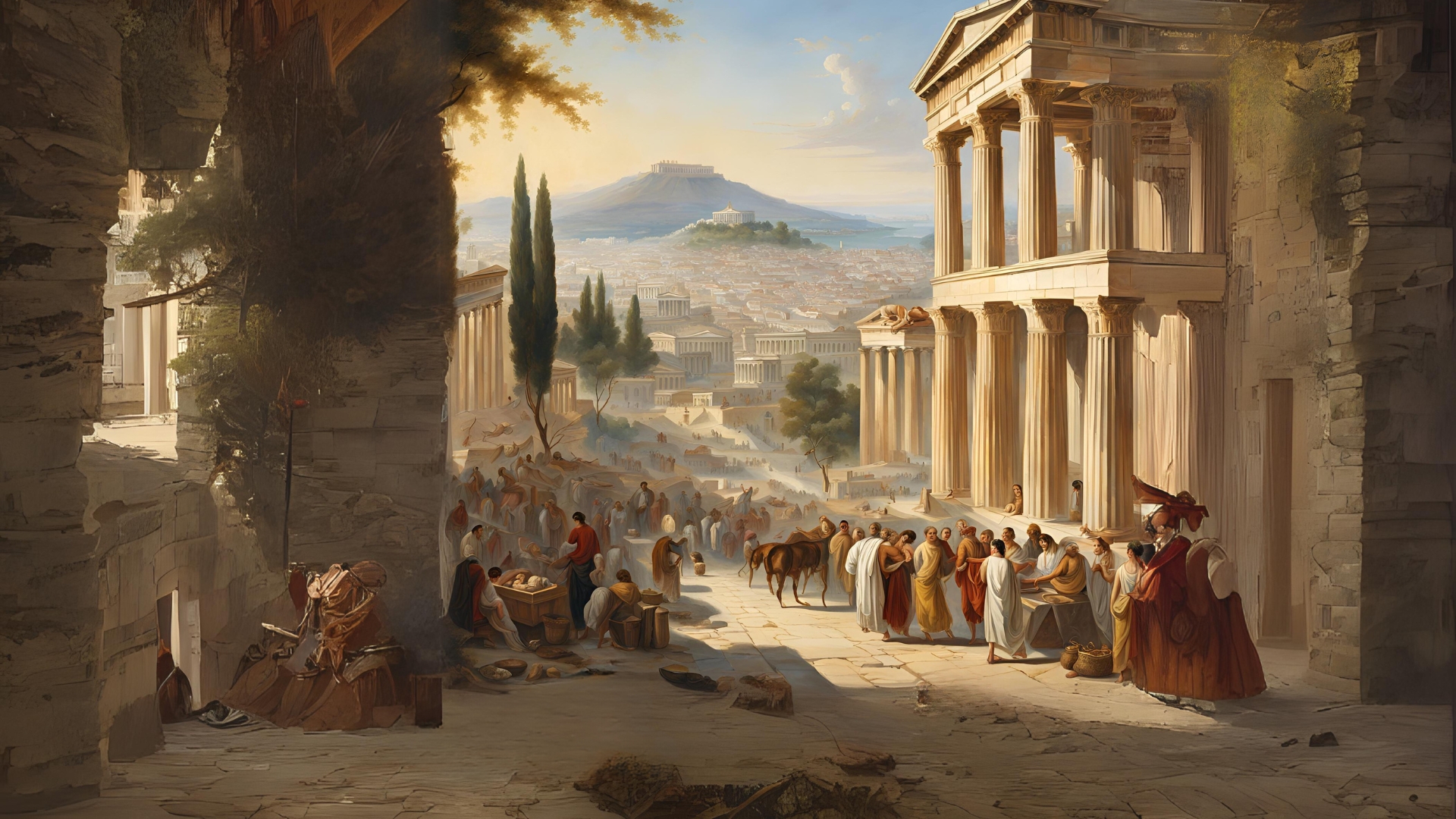
Greek society was divided into social classes: aristocrats, peasants, slaves, and craftsmen. Education in Ancient Greece was primarily reserved for the sons of the nobility. During this period, traveling teachers known as Sophists gave lessons to young men on rhetoric, philosophy, and politics. In the time Socrates lived, the Athenian democracy was at its peak, though it faced intermittent unrest due to events like the Peloponnesian War.
In Ancient Greece, adult men held all the power. Women, unfortunately, had no voting rights or political standing. Slavery was also quite common. It was perfectly normal to see slaves on the street. In fact, Socrates could easily run into slaves even while chatting with a friend. This actually led to one of the most famous conversations in his entire body of work.
The Socratic Method
One day, Socrates visits his friend Meno. His goal, as always, is to strike up a conversation that will push the other person to their limits—and a young slave present in the house has no idea he’s about to become the centerpiece of this experiment. Socrates calls the illiterate slave over and asks him a question about geometry. The slave has no formal training in geometry, but that’s exactly what Socrates wants. He has the slave draw a 2×2 square and asks for its area. The slave correctly identifies it as 4. Socrates then asks if it’s possible to double the area of that square. The slave suggests doubling the side length, but quickly realizes that doing so results in a square with an area of 16, not 8.
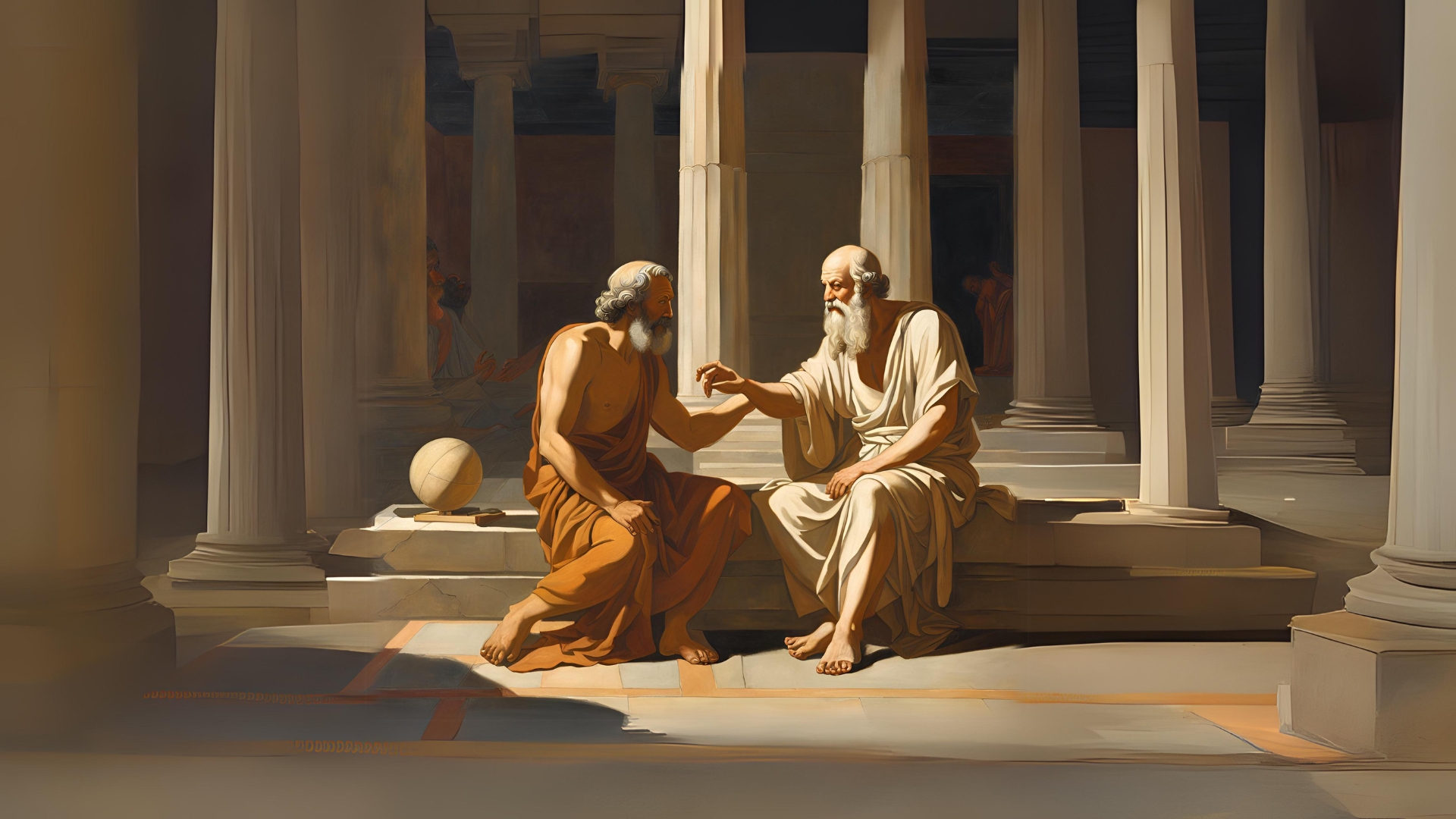
Socrates corrects the slave’s error, asks a few more probing questions, and guides him toward the right answer. It seems as though the slave finds the truth entirely on his own, without any direct instruction from Socrates.
Eventually, the slave reaches the correct answer. Socrates turns to Meno and slowly explains his intent. He points out that the slave had absolutely no prior knowledge of geometry, yet through the right questions, he was guided to the correct conclusion. Socrates argues that nothing comes from nothing. The knowledge wasn’t absent; it was just buried deep within. By asking the right questions, Socrates simply helped him “remember” it. He concludes: “To know is to remember.”
Of course, if we dig deeper, Socrates believed in the transmigration of souls—that we have lived before—and that this knowledge exists at the back of our consciousness, waiting to be unearthed by the right questions.
This method of “birthing” knowledge or guiding someone toward the truth is called the “Socratic Method.” It’s actually quite simple. Socrates tosses out a question—for example, “What is justice?” The person he’s talking to gives a definition that sounds correct at first glance. Socrates then either provides a counter-example or adds a new concept, asking, “Doesn’t this also fall under the definition of justice?” The other person’s defenses crumble, and they rush to provide a new definition. From that point on, every question Socrates asks pushes them to think more carefully. By the end of the dialogue, Socrates has helped them arrive at a much more refined and accurate definition than the one they started with.

His Thoughts
If you’re asking, “Okay, Socrates has this dialogue style, but does he have any thoughts of his own? Does he only ever ask questions?” the answer is clear. Of course, Socrates has his own ideas. He doesn’t always broadcast them, but they are there. Above all, Socrates wants a person to admit what they don’t know, and he is best known for the teaching, “Know thyself.” To him, wisdom begins with acknowledging one’s own ignorance. He argued that virtue is equivalent to knowledge and that evil stems from ignorance. “No one does evil knowingly” is the core of his moral philosophy. In other words, he viewed most people’s claims of “I know” as a display of profound ignorance, and he insisted that we must first say “I don’t know” to make room for actual learning.
This put Socrates at odds with the Sophists. The Sophists were traveling teachers who were influential in Athens during Socrates’ time. They believed that knowledge was relative, not absolute. Socrates criticized their approach, arguing that their teachings were superficial and driven by a pursuit of material gain.
In his debates with them, Socrates maintained that virtue and morality could not be taught for money. These clashes are a recurring theme in Plato’s dialogues.
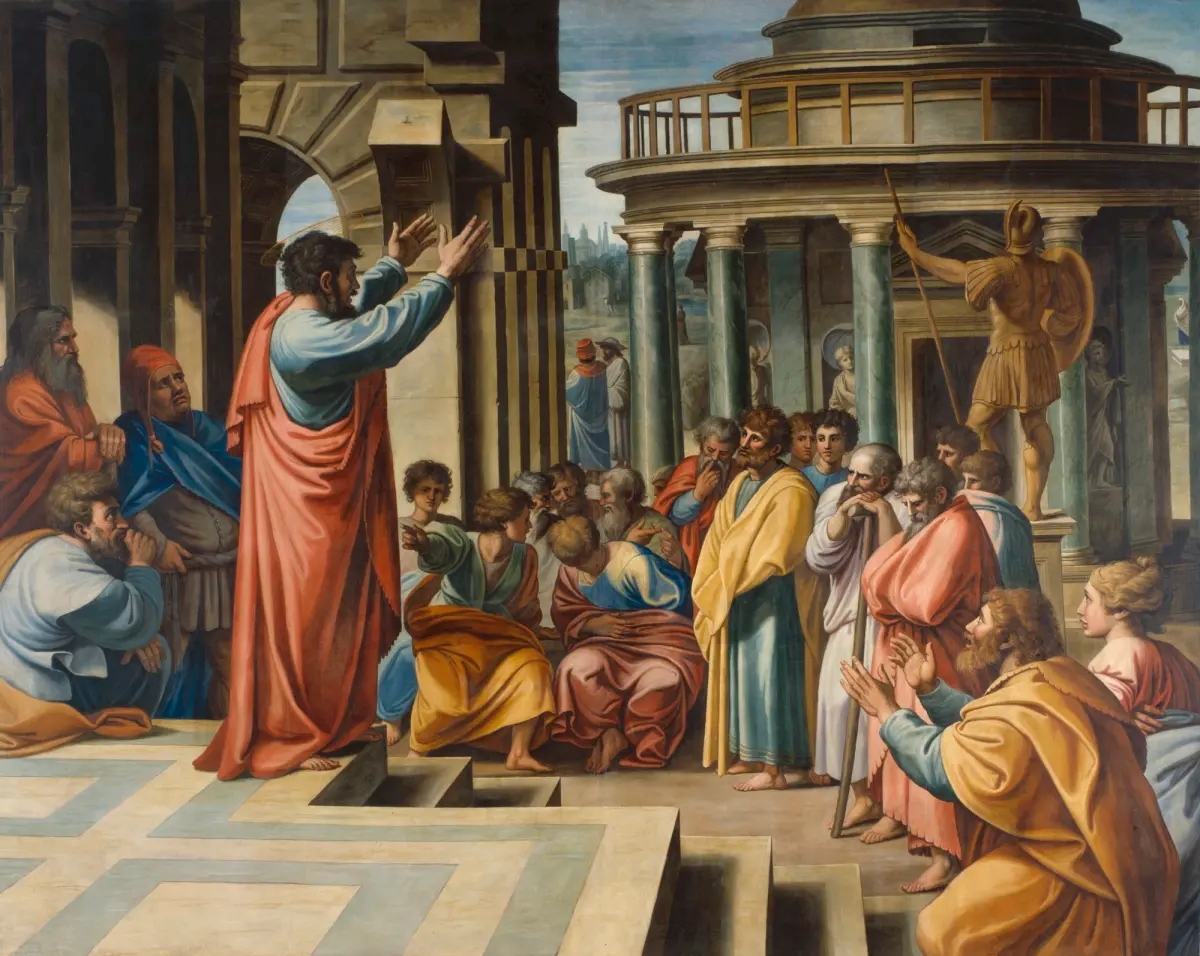
Image Source: Royal Academy
Socrates also questioned traditional beliefs about the gods and was accused of inciting the youth of Athens against these beliefs. However, Socrates did not deny the existence of the gods; he only criticized their superhuman traits and their relationships with humans. In essence, he challenged the mythological beliefs of his time. It was exactly this that led to the famous “Apology of Socrates.”
The Apology of Socrates
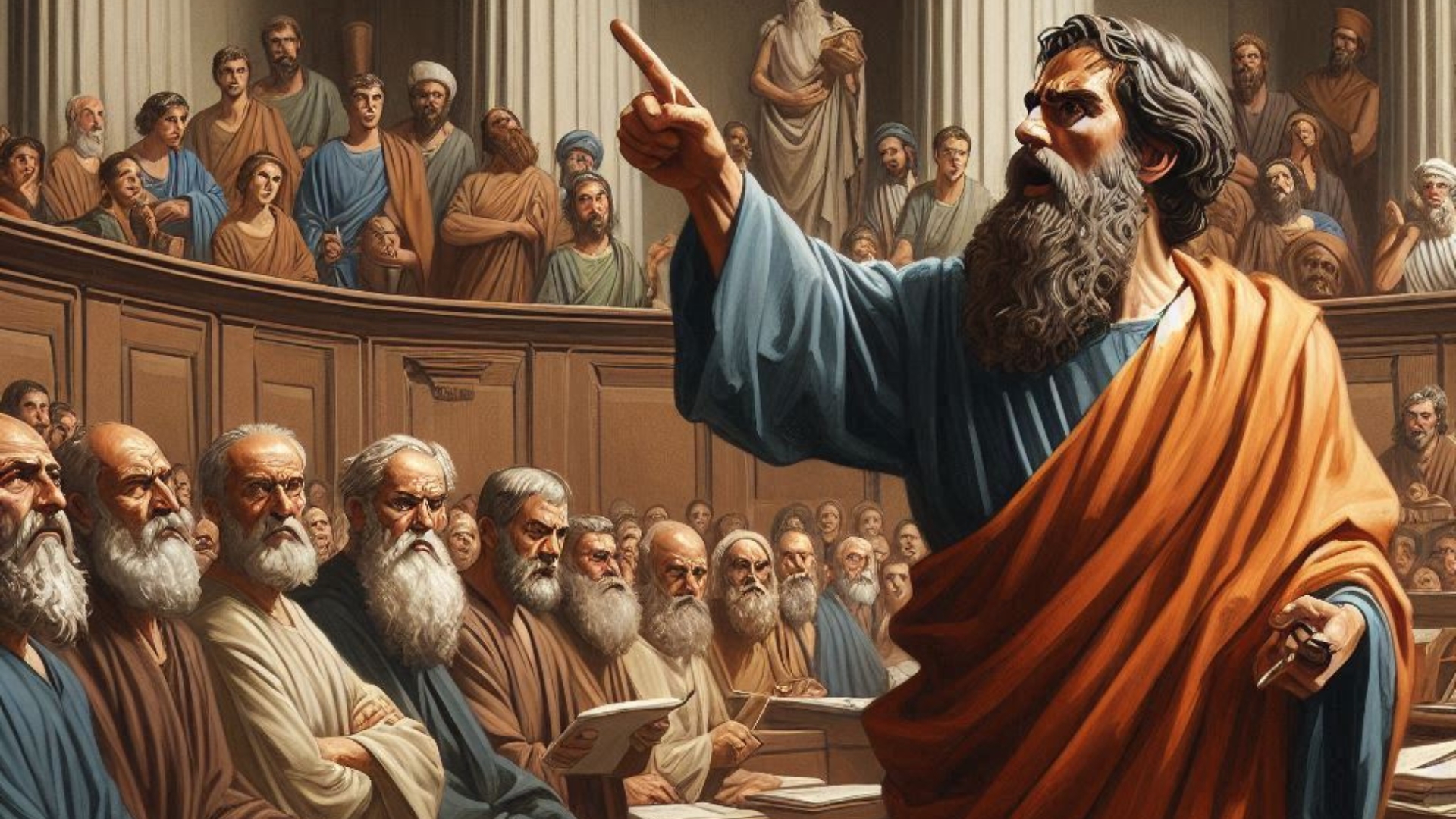
In 399 BC, Socrates was brought to trial on charges of “corrupting the youth” and “not believing in the gods of the state.” During his defense, he spoke defiantly, refusing to compromise his values. It was here that he uttered the famous line: “The only thing I know is that I know nothing.” He added, “Yet I am wiser than you. At least I know that I do not know. You don’t even know that you don’t know.” This statement cemented his place in the history of philosophy.
Unfortunately, his defense didn’t work. The court sentenced Socrates to death. He remained so calm that everyone was stunned. According to legend, on the night before his execution, his wife Xanthippe was crying in his cell. Socrates asked, “Why are you crying?” She replied, “Because they are condemning you unjustly!” To which Socrates calmly responded, “Would you rather they condemn me justly?” Of course, we can’t be sure if that conversation happened exactly that way, but it speaks volumes about his character. In the end, his execution was carried out.
He died by drinking hemlock. On the night before his death, his student Crito visited him in his cell. Crito offered him an escape plan, but Socrates refused. In that final conversation, he explained that one must respect the laws of Athens and that he would not flee. This conversation is detailed in Plato’s “Crito,” and it stands as a testament to Socrates’ unwavering commitment to justice and morality.
References and Further Reading
Jacques Louis David | The Death of Socrates | The Metropolitan Museum of Art. (1787). The Metropolitan Museum of Art. https://www.metmuseum.org/art/collection/search/436105
Kraut, R. (2024a, August 23). Socratic method | Definition, Socrates, Examples, & Facts. Encyclopedia Britannica. https://www.britannica.com/topic/Socratic-method
Kraut, R. (2024b, September 10). Socrates | Biography, Philosophy, Method, Death, & Facts. Encyclopedia Britannica. https://www.britannica.com/biography/Socrates
Socrates | Internet Encyclopedia of Philosophy. (n.d.). https://iep.utm.edu/socrates/
Socrates (Stanford Encyclopedia of Philosophy). (2022, May 26). https://plato.stanford.edu/entries/socrates/
The Editors of Encyclopaedia Britannica. (n.d.). Why did Athens condemn Socrates to death? | Britannica. Encyclopedia Britannica. https://www.britannica.com/question/Why-did-Athens-condemn-Socrates-to-death
Originally published in Turkish at Doğa Filozofu.