

In this piece, we’re diving into the story of Atlas—one of the primary leaders of the Titans, whom many of us recognize solely for the eternal punishment he was dealt. If you’d like to brush up on the origins of the Greek pantheon, you can check out our previous article, Greek Mythology: The Creation.
The Lineage of Atlas
Atlas was the son of Iapetus (a descendant of Uranus, the Sky, and Gaia, Mother Earth) and Clymene, the daughter of Oceanus.
His father, Iapetus, was one of the oldest Titans, often referred to as the Titan of Measurement and Lifespan. Beyond Atlas, Iapetus was also the father of Prometheus, Epimetheus, and Menoetius.
Atlas’s maternal grandfather, Oceanus, represented all water sources, the oceans included. During the power struggle where Cronus overthrew Uranus, Oceanus stood on the side of Cronus. Later, he married Tethys and became the father of all rivers, springs, and ocean nymphs (the Oceanids). Unlike his fellow Titans, however, Oceanus was portrayed as a more peaceful figure. During the Titanomachy, he refused to take up arms against the Olympian gods, opting instead to stay in the middle of the road.
Atlas: The Mighty Leader of the Titans
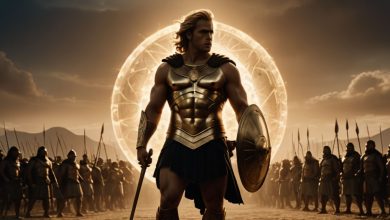
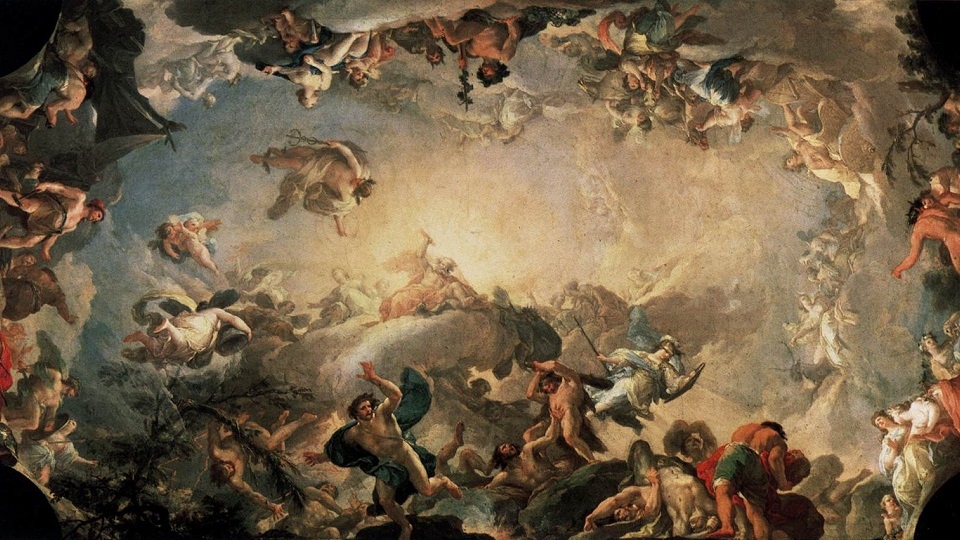
During the Titanomachy, Atlas emerged as a brave, resolute, and formidable figure, fighting on the front lines of the Titan forces. Because of this, some accounts identify him as one of the primary leaders of the Titan army.
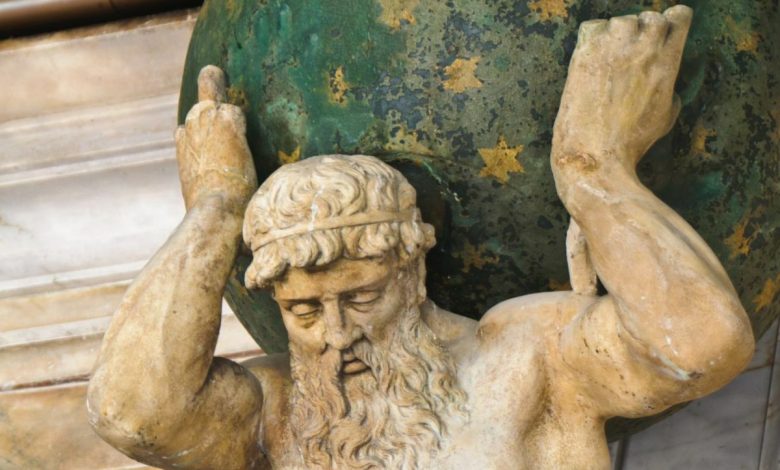
Atlas played a pivotal role in the war against Zeus. Once the dust settled, Zeus handed down an eternal sentence: He was to hold up the celestial sphere on his shoulders. This punishment wasn’t just a heavy burden; it was a testament to how seriously Zeus viewed Atlas as a threat, and a nod to the Titan’s immense power and endurance.
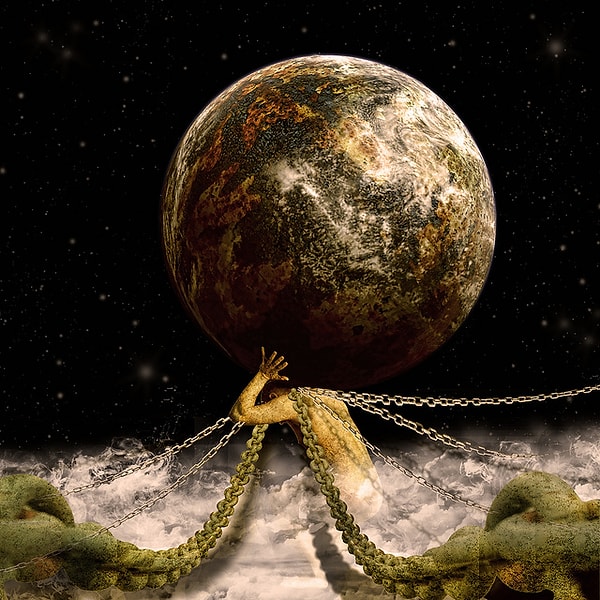
As a quick side note: while most people imagine Atlas holding up the Earth, in original mythology, he is tasked with carrying the celestial sphere—the star-filled dome of the sky that arches over the world. You can see this distinction clearly in Aristotle’s work, “On the Heavens.”
Zeus also handed out specific punishments to Atlas’s brothers—Prometheus, Epimetheus, and Menoetius:
- Prometheus, for gifting fire to humanity, was chained to the Caucasus Mountains, where an eagle would arrive daily to feast on his liver. Because he was immortal, his liver would regenerate every night, trapping him in an endless loop of agony.
- Epimetheus is tied to the opening of Pandora’s Box, which unleashed all the world’s evils. While his punishment isn’t always explicitly defined, it is generally associated with his lack of foresight and wisdom—you could think of it as a psychological burden.
- Menoetius was cast into Tartarus due to his hubris and defiance against Zeus.
Atlas in the Twelve Labors of Heracles
We see Atlas again during the Twelve Labors of Heracles.
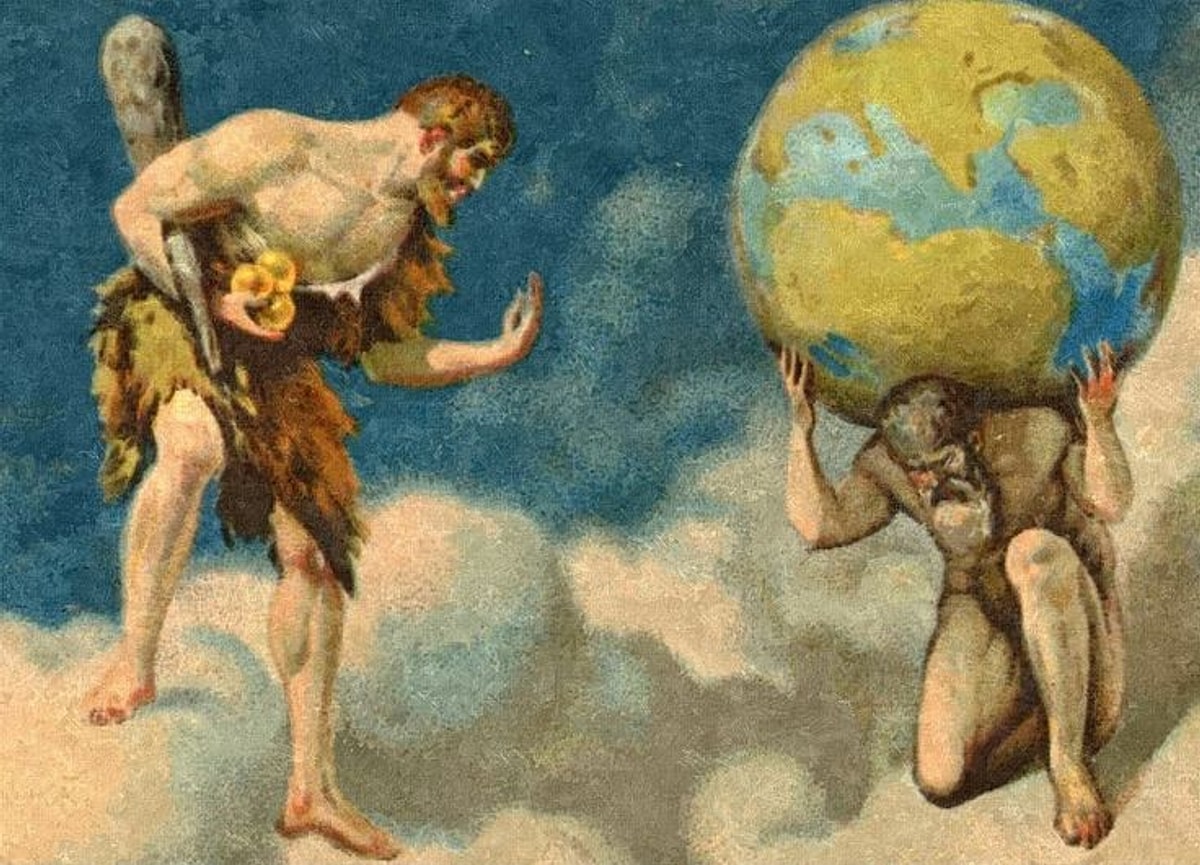
To summarize: for his eleventh labor, Heracles set out to retrieve the golden apples from the Hesperides (the Nymphs of the Evening). Upon meeting Atlas during his journey, Heracles realized that the Titan was weary and weakened by his eternal burden. They struck a deal: Atlas would retrieve the apples if Heracles took over holding the sky in the meantime. When Atlas returned with the apples, he told Heracles that anyone who willingly took on the burden was now responsible for it forever, and he refused to take it back. Heracles, playing to his own cunning, replied, “Could you hold the sky for just a moment? I need to adjust my cloak so I can use it as a cushion.” As soon as Atlas took the weight back, Heracles grabbed the apples and walked away, leaving the Titan behind. This myth beautifully illustrates the triumph of wit over brute strength.
The End of Atlas
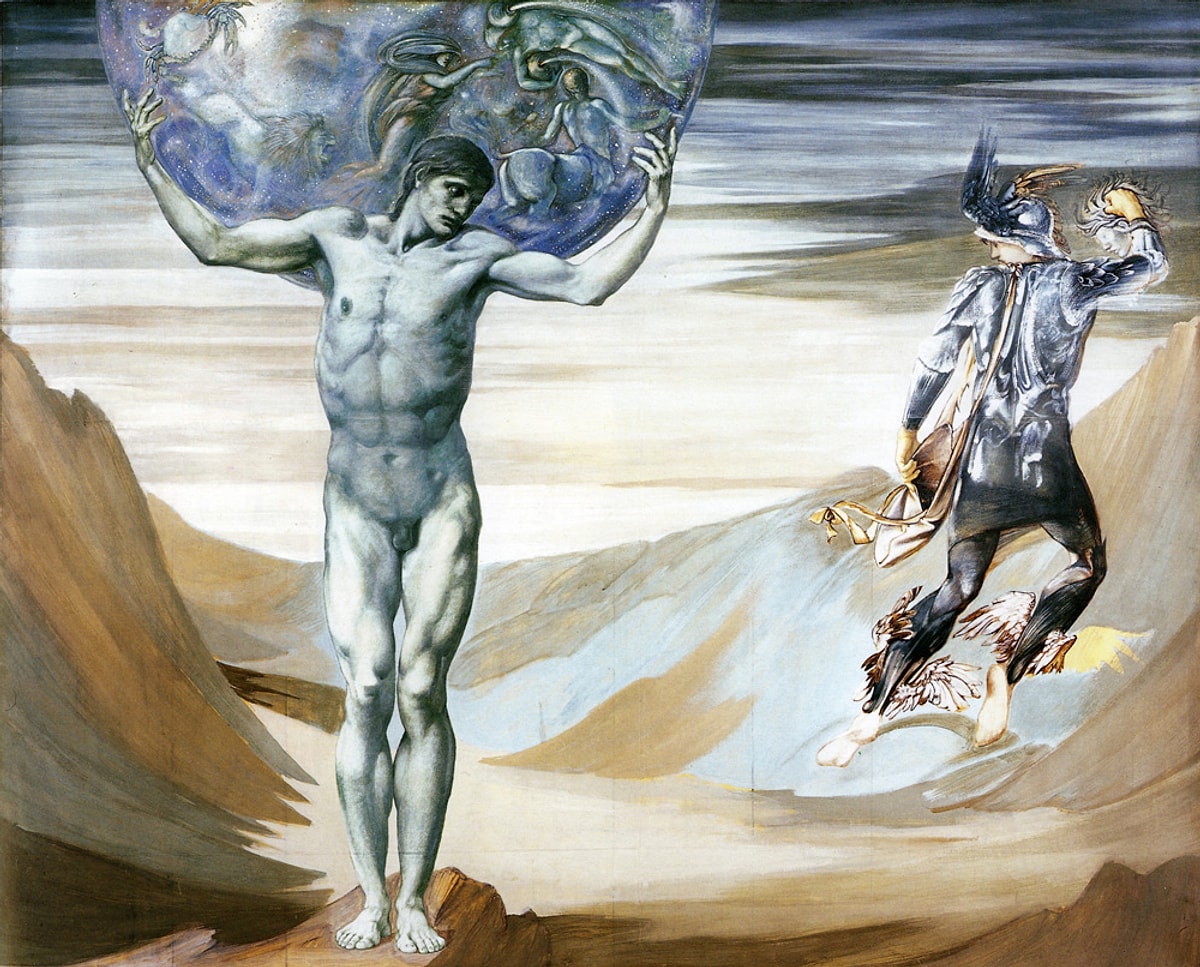
Another Greek hero who crossed paths with Atlas was Perseus, the son of Zeus and the slayer of Medusa.
As Perseus was passing through Atlas’s lands, he asked for the hospitality and safety that were customary for travelers. But Atlas, wary of being tricked again, refused him with anger and hostility. In response, Perseus pulled the head of Medusa from his bag and held it up to Atlas, turning him into stone. This myth is often cited as the origin story for the Atlas Mountains, which stretch across modern-day Morocco, Algeria, and Tunisia.
Etymology
The name “Atlas” may be derived from the Greek prefix a- (a strengthening prefix) and the verb “tlēnai” (to carry or endure). In ancient Greek literature, such as the Odyssey, he is described as the one holding up the pillars of the sky. Furthermore, in Hesiod’s Works and Days, his name is interpreted in a way that suggests “the carrier” or “the supporter.”
Another theory suggests that the name might be linked to the Atlas Mountains in North Africa and the Berber word adrar (mountain).
While the origin of the name remains a subject of debate, some researchers believe it may have roots in pre-Greek languages.
Atlas in Art and Culture
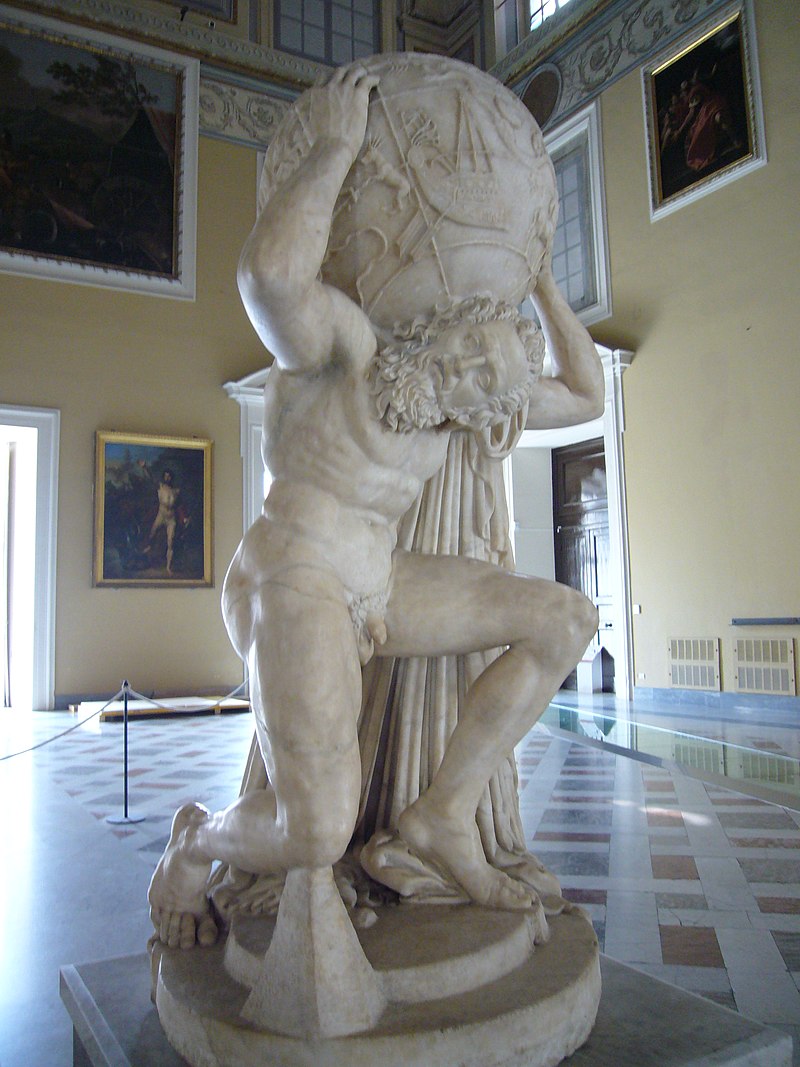
Beyond mythology, the character of Atlas has a massive presence in art and culture. We are most accustomed to seeing him in sculpture, typically portrayed as a figure bearing the weight of the celestial sphere or, more commonly in modern times, the Earth.
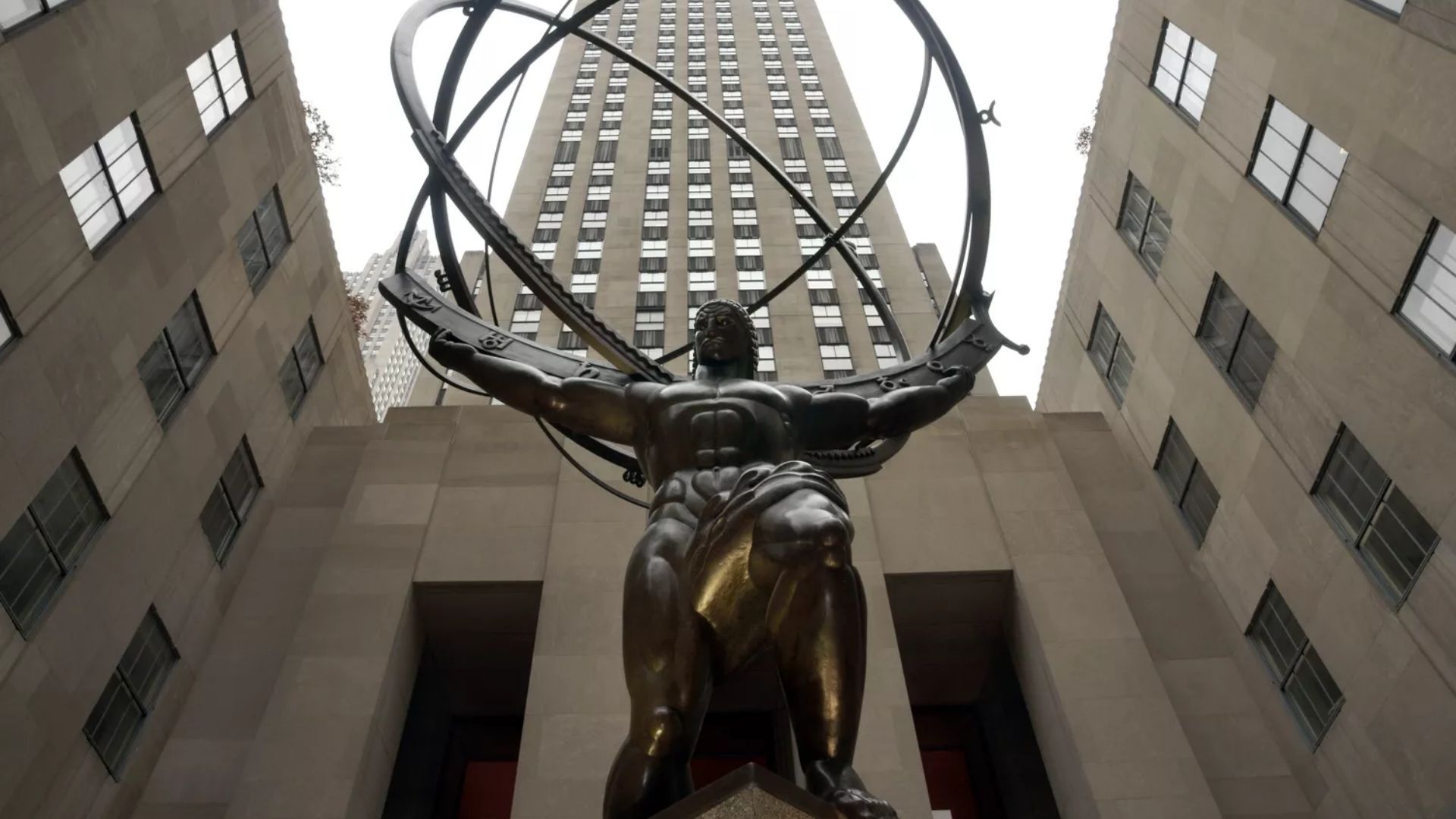
Additionally, the reason we call collections of maps an “atlas” is due to the Flemish geographer Gerardus Mercator. He titled his famous work after the Titan, largely because of the frontispiece illustration depicting Atlas holding up the heavens.
References and Further Reading
Atlas – Mythopedia. (n.d.). Mythopedia. https://mythopedia.com/topics/atlas
Gantz, T. (1993). Early Greek Myth: A Guide to Literary and Artistic Sources. Baltimore: Johns Hopkins University Press. ISBN 978-0-8018-4410-2. LCCN 92026010. OCLC 917033766.
Myths, T. (n.d.). Atlas. Timeless Myths. https://timelessmyths.com/gods/greek/atlas/
Robert S. P. Beekes, Etymological Dictionary of Greek (Leiden: Brill, 2009), 163.
Originally published in Turkish at Doğa Filozofu.