


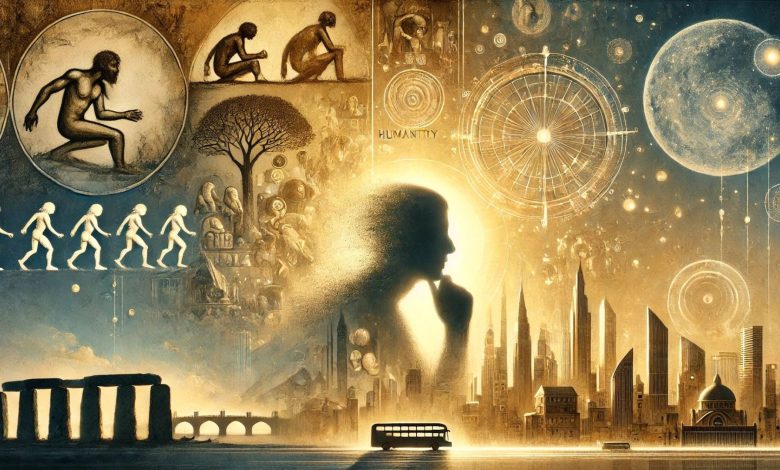
Human history is full of big questions, isn’t it? We’ve always been drawn together by the urge to retrace the steps of the past and ponder the future, all while trying to wrap our heads around who we are, where we came from, and where we’re going. We’re naturally curious about our earliest ancestors—what they did, how they survived, and how they laid the foundations for the civilizations we live in today. Naturally, writers who seek the answers to these questions have dedicated themselves to exploring human evolution, culture, and the modern world. One of the most prominent names among them is Yuval Noah Harari.
Harari’s books—Sapiens, Homo Deus, and 21 Lessons for the 21st Century—act as gateways to both our past and our future. His deep, analytical perspective allows us to question not just historical events, but how we, as a species, can steer our collective future. In this piece, we’ll get to know Harari a bit better and dive into these essential works.
Meet the Author: Yuval Noah Harari
Before we jump into the books, we believe it’s vital to understand who Harari is. Born in Israel on February 24, 1976, he is a historian and academic. Interestingly, contrary to the broad topics he writes about today, his doctoral studies were in military history. Perhaps that’s why he explores the inherent aggression in human behavior so effectively. So, what does he write about? His work focuses primarily on human history, evolution, technology, and philosophy. And when we say “he writes about,” we are, of course, referring to the very books we’re about to explore.
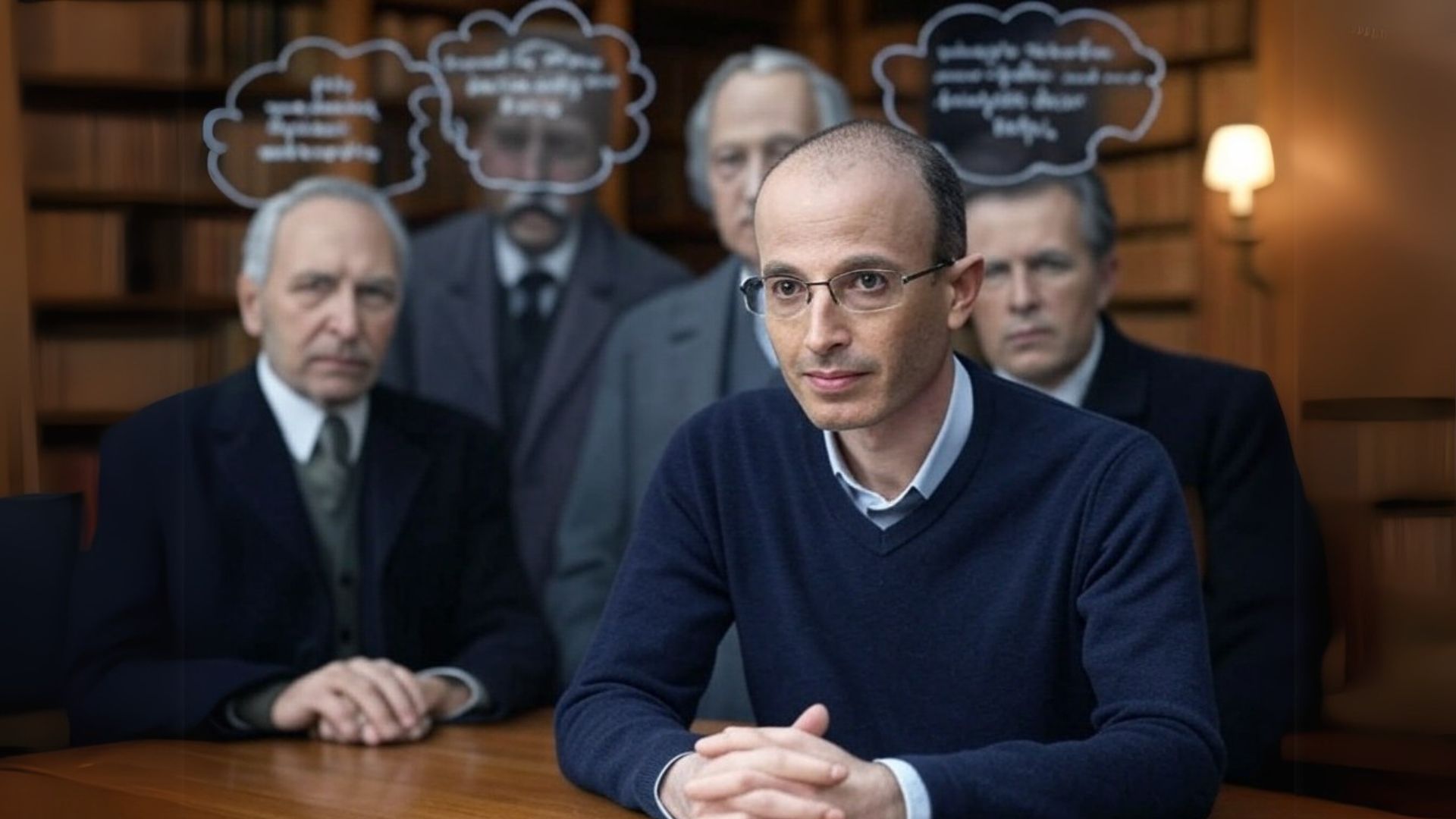
Harari has been influenced by many great thinkers—we could certainly count Nietzsche, Hegel, and Marx among those who left a mark on his worldview—but his narratives are rooted more in history than in pure philosophy. Harari’s goal has been to examine the past to understand the human condition and, ultimately, to forecast our future. The book that kicked off this endeavor was his 2011 masterpiece, Sapiens.
The History of Humanity: Sapiens
In 2011, Harari released “Sapiens: A Brief History of Humankind,” and so began a four-part saga. The book truly begins 2.5 million years ago with the emergence of Homo Sapiens—our species. Initially, Sapiens were middle-of-the-pack players in the food chain, physically vulnerable, and arguably lagging behind the Neanderthals. Then, about 70,000 years ago, Homo Sapiens hit the fast-forward button on history, vaulting ahead to dominate other species. What do we owe this transformation to?
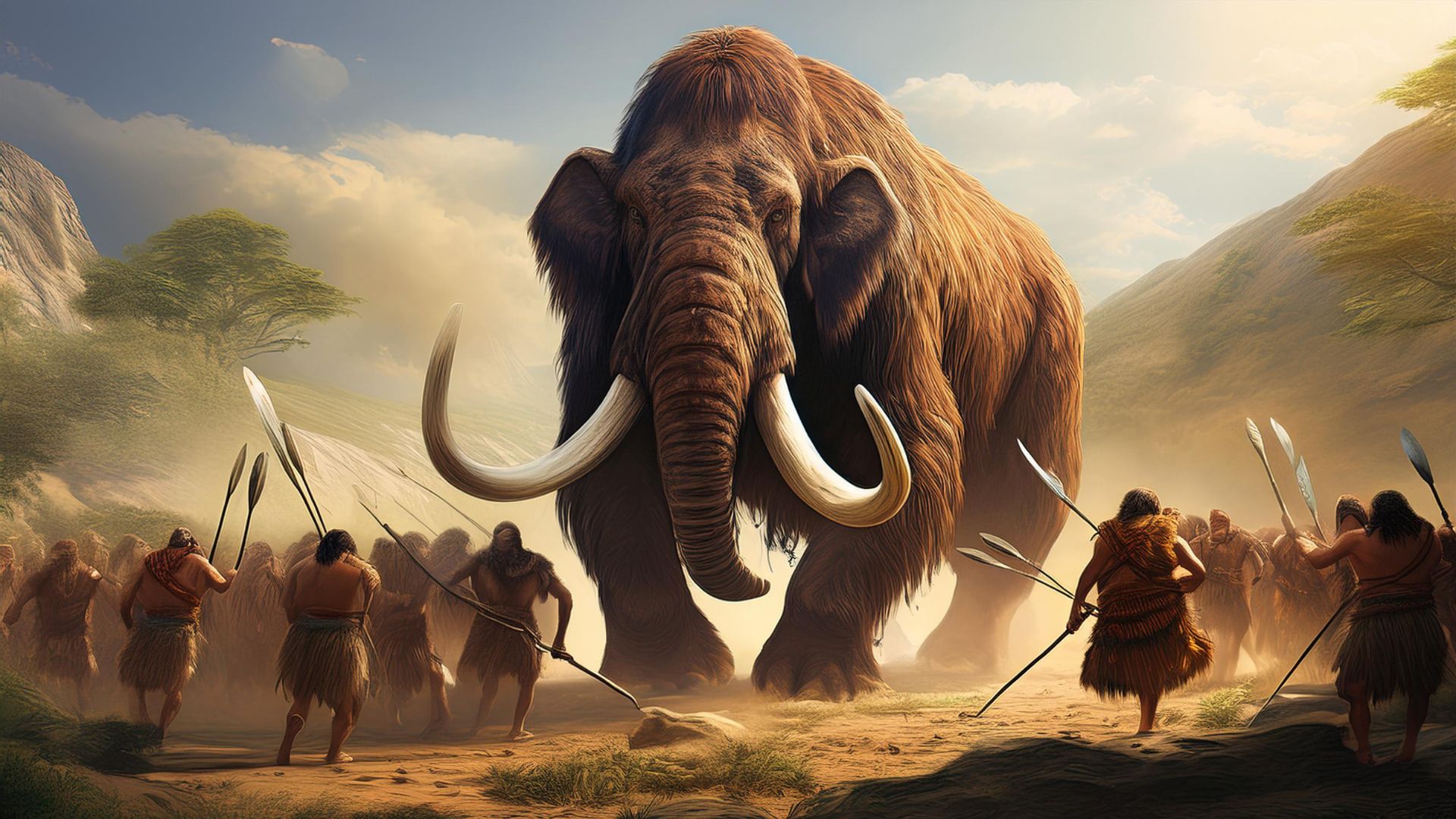
Harari credits this to the “Cognitive Revolution.” This wasn’t a singular event like the French Revolution; rather, it was the moment humans realized they needed to stick together and act in unison to survive. As they began living and traveling in groups, they were forced to communicate, which sparked the evolution of language. They needed to explain complex concepts and abstract thoughts to one another. This solidified a logical foundation in the human mind, allowing for the transmission of shared knowledge and ideas. Common religious beliefs and collective goals emerged, drawing the species closer together. They started hunting massive animals like mammoths—prey impossible to take down alone. Unlike the Neanderthals, they didn’t have the raw strength to do it with their bare hands, so they invented tools: spears, bows, and traps. This gave us a knack for tool-making and usage that other creatures lacked. Of course, Sapiens didn’t just interact with their own kind.
They eventually crossed paths with other humanoid species, like the Neanderthals, who were arguably physically superior. Homo Sapiens spread to every corner of the globe, driven by changing climates, the search for food, or the need to escape inhospitable environments. Wherever Sapiens went, they encountered other species. Curiously, the diversity of species in those regions plummeted after Sapiens arrived. It’s widely believed that many other species were either brutally hunted or driven to extinction. In short, Homo Sapiens won the competition through intellect, cooperation, and communication—but this victory came at the cost of other species gradually disappearing.
For Harari, the Cognitive Revolution made all of this possible, but it wasn’t the only revolution. Next up: the Agricultural Revolution.
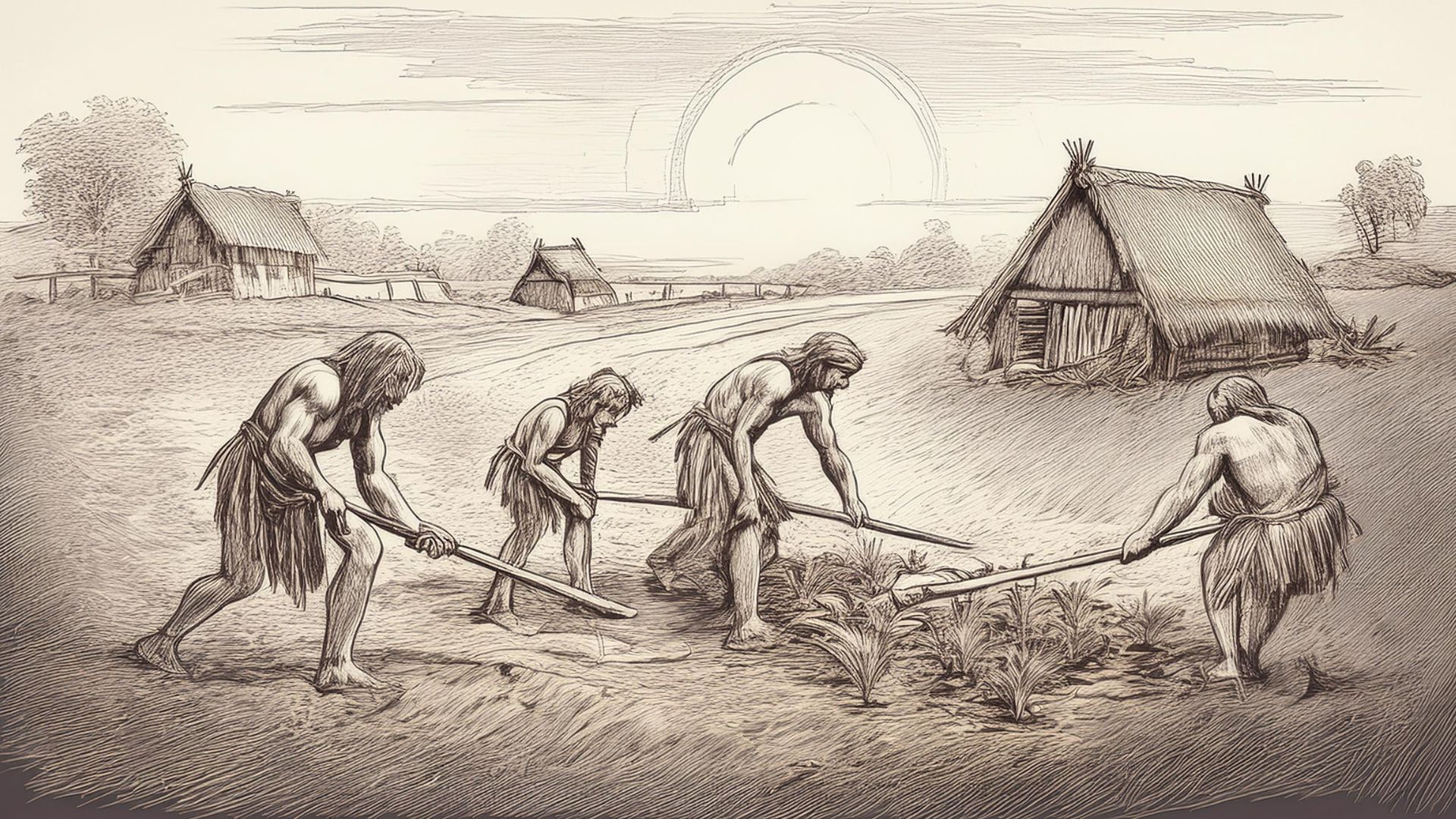
When Sapiens completed the Cognitive Revolution, they weren’t living in cities yet. There was no settled life; they were nomadic, constantly on the move in search of prey or greener pastures. Eventually, that changed. People realized they could use the land to grow food, domesticate the animals they once hunted, and build secure shelters. Since they couldn’t take the land with them, settled life began. Even more intriguingly, Harari argues that this “advantage” was actually a trap. Sapiens adopted a monotonous, repetitive lifestyle, diseases spread rapidly, and their freedom was curtailed. Settled life brought about the concept of property, and suddenly, humans were obsessed with defending their belongings and their tribal territory. Cooperation became more critical than ever, which required new, unifying concepts. Money and trade became the glue. A farmer could trade wheat for clothes from a cotton merchant, effectively tethering the farmer to the merchant and vice versa.
Of course, for this system to run smoothly, it needed an overseer. This led to the rise of kings, who derived their power from both religion and their own leadership prowess.
Harari ends the book with a question that leaves the reader hanging: Will Homo Sapiens eventually bring about its own end by giving rise to a new species?
The History of Tomorrow: Homo Deus
Of course, this is just a summary of an incredibly dense book. We highly recommend reading these titles in full after you’re done here. Let’s move on to the 2015 follow-up, Homo Deus.
If Sapiens was Harari showing us the past, Homo Deus is him pointing toward the future and asking the hard questions. Harari argues that when we look at human history, we see a constant struggle for survival. Our battle against the harsh conditions of nature carried us to the top of the world. Biologically ill-equipped, we started using tools and standing together, which propelled us far beyond our biological limitations. But is survival our only goal? Immortality, happiness, and even god-like powers—are these possible? That is the focus of this book.

Once upon a time, everything was about grappling with death. For most of human history, death was seen as an inevitable end. But as Harari points out, today, death is merely an “engineering problem.” With breakthroughs in biotechnology, medicine, and genetic engineering, humans are striving to live longer and even seeking immortality. But if a human were to become immortal, what would happen to the meaning of life? Would an endless life bring happiness, or would it become a burden?
A recurring theme in Homo Deus is humanity’s desire to attain “god-like” powers. Humans are no longer content with just changing the world; they want to change their own nature to achieve immortality. Through biotechnology, we can edit our genes; through artificial intelligence, we can surpass human intelligence. According to Harari, in this process, Homo Sapiens will cease to be just another human species and will evolve into Homo Deus. “Homo Deus” isn’t a biological term; it’s Harari’s way of saying “Human God” or “God-like Human.”
All these developments bring new problems. With the rise of AI, machines may replace human labor. Harari suggests this will lead to one of the greatest social transformations in history. If an algorithm can make better decisions than you, doesn’t that diminish your value as an individual? If humans become a species that has lost its functionality, what place will they have in the society of the future? With these questions, Harari highlights that endless technological progress could actually be quite dangerous.

Another critical issue is “data.” Harari argues that the future will be a data-driven world. Algorithms can guide human choices—or even control them directly. In this scenario, concepts like free will may lose their meaning. Considering the book is now over a decade old, we can say these predictions have largely hit the mark. With AI infiltrating almost every aspect of our lives and succeeding through data, one could say Harari was on to something. What do you think?
In this book, Harari poses new questions: What kind of world will humanity create with these new powers? Will they lead us to a happier, freer, and more meaningful life, or will they give birth to the greatest dangers in human history?
21 Lessons for the 21st Century
Our world is changing faster than ever, isn’t it? Technology, globalization, and an ever-increasing stream of information are creating brand-new challenges and opportunities. So, how should we navigate this complex world? What lessons should we take away? That is exactly what Harari answers in this book.
Harari begins by emphasizing how slippery the ground of “truth” really is. When we say slippery, we mean that truth is highly variable and that reaching a single, objective reality is increasingly difficult. In other words, Harari argues that we live in an era where even what we call “truth” can be manipulated. Fake news and information pollution are everywhere. We’ve seen this firsthand in our own country; for instance, after the February 6th earthquakes, an immense amount of misleading “information” was shared. So, how do we distinguish truth in this flood of data? Which sources can we trust? According to Harari, the answer is critical thinking. Since we can’t eliminate fake news and misinformation, our new path must be to install a mental filter for false information.

Another important lesson is the role of technology in our lives. AI is transforming everything from the economy to education. But this transformation doesn’t just bring convenience; it can also create massive inequalities. Harari argues that in a world where technology increasingly renders human labor obsolete, we must redefine the concept of work and the individual’s place in society. Think about it: when someone asks us who we are, most of us tend to define ourselves by our profession. “I’m a doctor,” “I’m an engineer,” “I’m a lawyer.” If those professions disappear, the importance of those definitions will inevitably diminish.
Harari also draws attention to global issues. The climate crisis, terrorism, cyber-security threats, and pandemics are not problems that any one country can solve alone. According to Harari, to cope with these challenges, we must think beyond nation-states and develop a model of global cooperation. Especially in the wake of the pandemic, it’s become clear just how vital this cooperation is, wouldn’t you agree?
The book also dives deep into the issue of identity. Today, people continue to define their identities within traditional contexts like nation, religion, or ethnicity. However, these contexts are becoming less and less inclusive. Harari argues that the identity crisis makes it difficult for individuals to find meaning. After all, states used to be a major part of people’s identity. The characteristics of people living in the Ottoman Empire were fairly similar, but that isn’t the case today.

In fact, Harari argues that with human diversity at an all-time high, our self-definitions should no longer be limited to these general characteristics.
Another topic Harari covers is the search for meaning. With the decline of traditional belief systems, people are struggling to find purpose. Is success, relationships, or something else the key to happiness? Where should we look for meaning? According to Harari, the answers to these questions will shape the life of the 21st-century individual. As you can see, in this book, Harari isn’t telling a historical story like he did in the first two. He takes on a tone that you could almost call self-help.
Harari in Three Books
Through these three books, Harari has explained the historical journey of Sapiens, our progression toward the future, and the differences this journey might create. Of course, Harari’s story doesn’t end here—his narrative continues, especially with his latest book, “Nexus”—but he has certainly defined the story of our species in a unique way. What do you think? Do you agree that our past, our future, and the problems this progression will create are exactly as Harari describes? Before you decide, we think you should read these books for yourself. After all, these are just short summaries. The most valuable interpretation will be the one you make. We’ll see you in our next installment as we explore another author and another work!
References and Further Reading
21 LESSONS FOR THE 21ST CENTURY | Kirkus Reviews. (n.d.). Kirkus Reviews. https://www.kirkusreviews.com/book-reviews/yuval-noah-harari/21-lessons-for-the-21st-century/
About – Yuval Noah Harari. (2025, April 24). Yuval Noah Harari. https://www.ynharari.com/about/
Harari, Y. N. (2015). Sapiens: a brief history of humankind. Choice Reviews Online, 52(11), 52–5967. https://doi.org/10.5860/choice.190494
Harari, Y. N. (2017). Homo Deus. https://doi.org/10.17104/9783406704024
Harari, Y. N. (2018). 21 lessons for the 21st century. http://ci.nii.ac.jp/ncid/BB2679939X
Yuval Noah Harari | Britannica. (n.d.). Encyclopedia Britannica. https://www.britannica.com/contributor/Yuval-Noah-Harari/12354625
Yuval Noah Harari – Vikipedi. (2016, October 2). https://tr.wikipedia.org/wiki/Yuval_Noah_Harari
Originally published in Turkish at Doğa Filozofu.

