
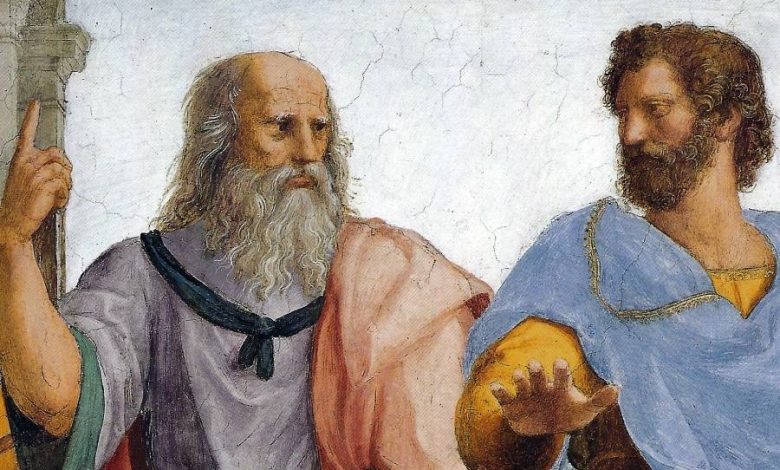
When we talk about philosophy, the first place that comes to mind is undoubtedly Ancient Greece. While the Asian geography of that era also flourished with its own great contemporary philosophers, the most famous names emerged from the Greek world—and among them, Plato stands tall. As a student of Socrates and Heraclitus, Plato remains incredibly relevant today and left an indelible mark on the world of philosophy. In fact, entire schools of thought branched out from his work. We’ll dive into how those ideas sprouted from Plato’s philosophy shortly, but first, let’s take a look at the world he lived in and the solutions he proposed to make it a better place.
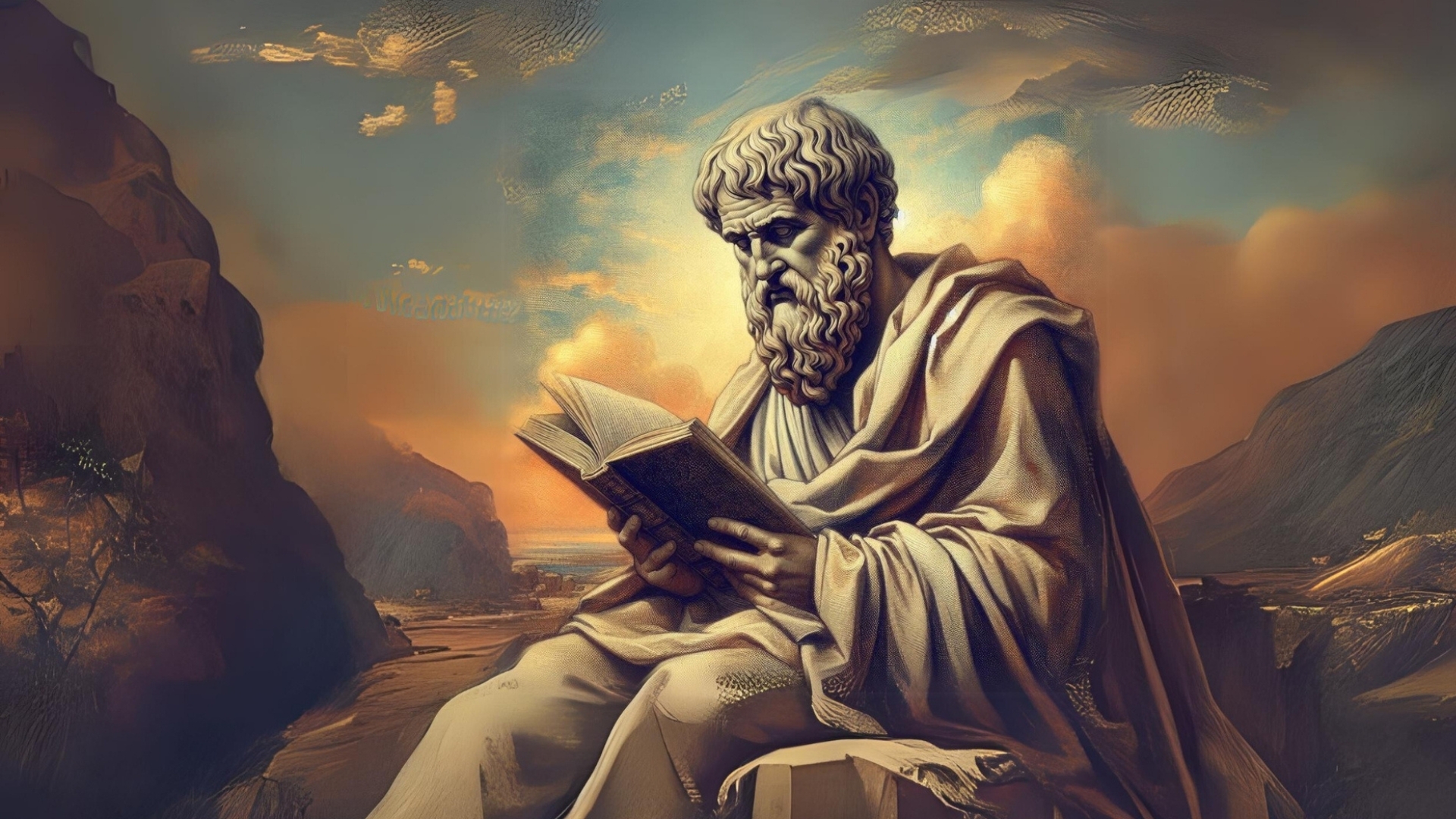
Plato and Political Philosophy
Both of Plato’s parents came from noble families. His ancestors were highly influential figures in the city’s administration. With the arrival of democracy in Athens, the number of eligible voters had increased. Of course, slaves, children, and women still couldn’t vote, but adult men could. For Plato and his family, this wasn’t necessarily a good thing. Because of his background, those around him expected him to enter politics and “fix” the situation. However, the Peloponnesian War—one of the most devastating conflicts of the era—and the resulting societal collapse soured him on the idea. The final nail in the coffin was the execution of his mentor, Socrates.
We tend to hold democracy in high regard today; it’s a cornerstone of our modern values. Looking back at that era, the existence of democracy might sound like a positive development, but for some, it was anything but. The concept of democracy—derived from the Greek words demos (the people) and kratos (power)—simply didn’t sit right with Socrates and Plato.
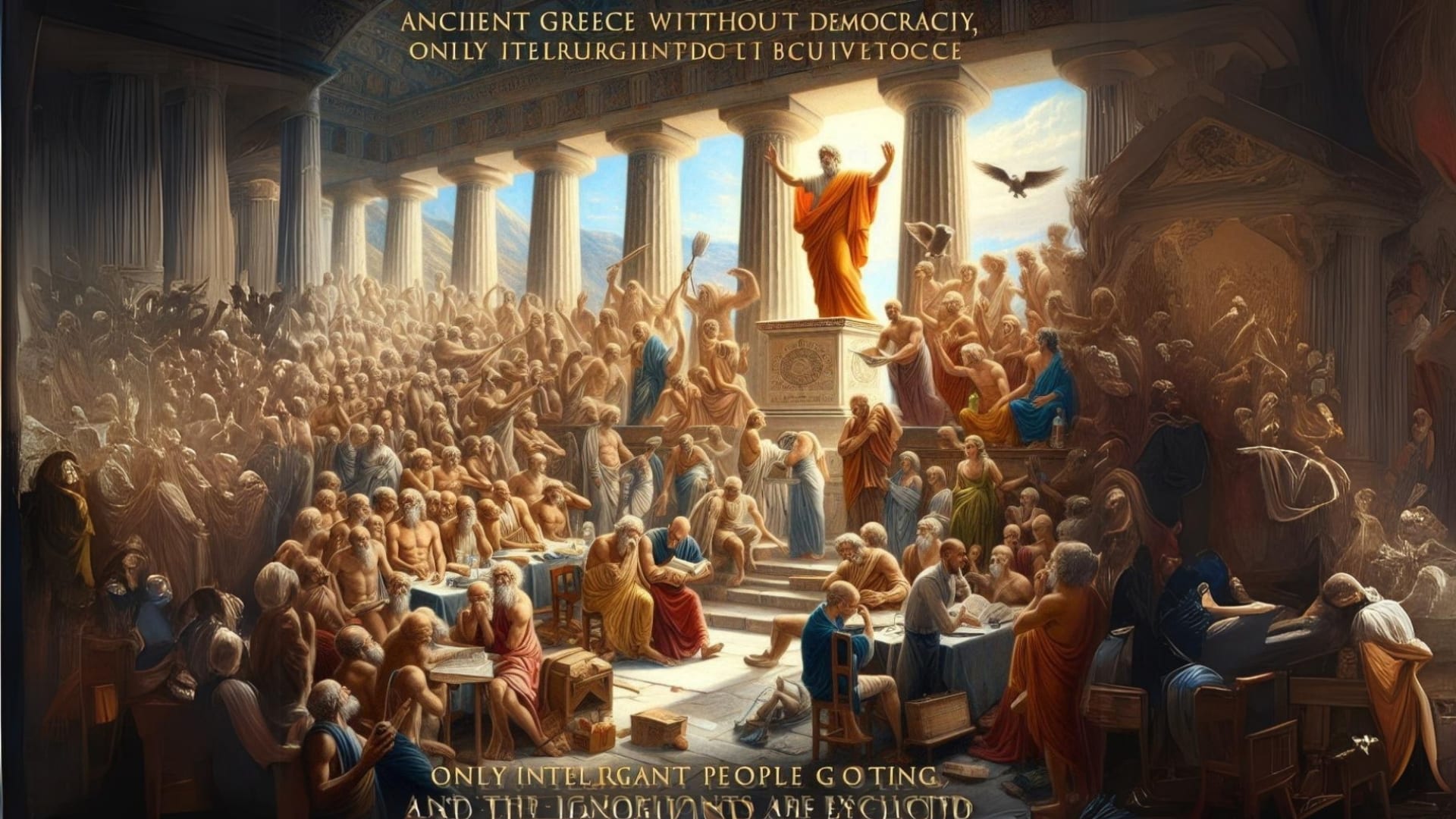
For years, Plato and Socrates opposed the idea of universal suffrage. In their view, those who lacked knowledge, were uninformed, or didn’t possess the necessary mental capacity shouldn’t be making decisions on critical issues. Contrary to popular belief, though, they weren’t elitists in the traditional sense. To them, this wasn’t about one’s job or financial status. They believed that those who voted should be selected based on their intellectual competence and knowledge. In today’s terms, they were advocating for something akin to a “license to vote.” Plato believed that the people who sentenced Socrates to death were precisely the type of people who lacked this intellectual competence. Consequently, he didn’t believe in absolute democracy; he didn’t think it was the path to true justice.
Plato used these ideas to outline how an ideal state should function. As you might remember from our article, “The Very Essence of Philosophy: Socrates,” Plato often used Socratic dialogues to convey his own thoughts, and many historians believe he shaped those dialogues to fit his own narrative. In his ten-volume work, The Republic, he detailed his vision for an ideal society and state structure. In doing so, he became a subject of both criticism and praise for future philosophers like Hobbes, Locke, and even J.J. Rousseau. There is no doubt he left his mark on political philosophy.
Of course, his work wasn’t just about politics—in fact, that isn’t even what he is most famous for. So, what was it that made him so special?
Plato and the World of Forms
When we talk about Plato, we have to mention his teachers: Heraclitus and Socrates. Having gained a foundation in virtue, the good life, and the nature of knowledge from Socrates, Plato learned about change from Heraclitus. After all, Heraclitus is famous for the saying, “The only constant is change.” He believed everything is in flux. It’s fair to say that Plato’s philosophy is a magnificent synthesis of these two thinkers. So, how did he shape his philosophy, and what did he argue for?
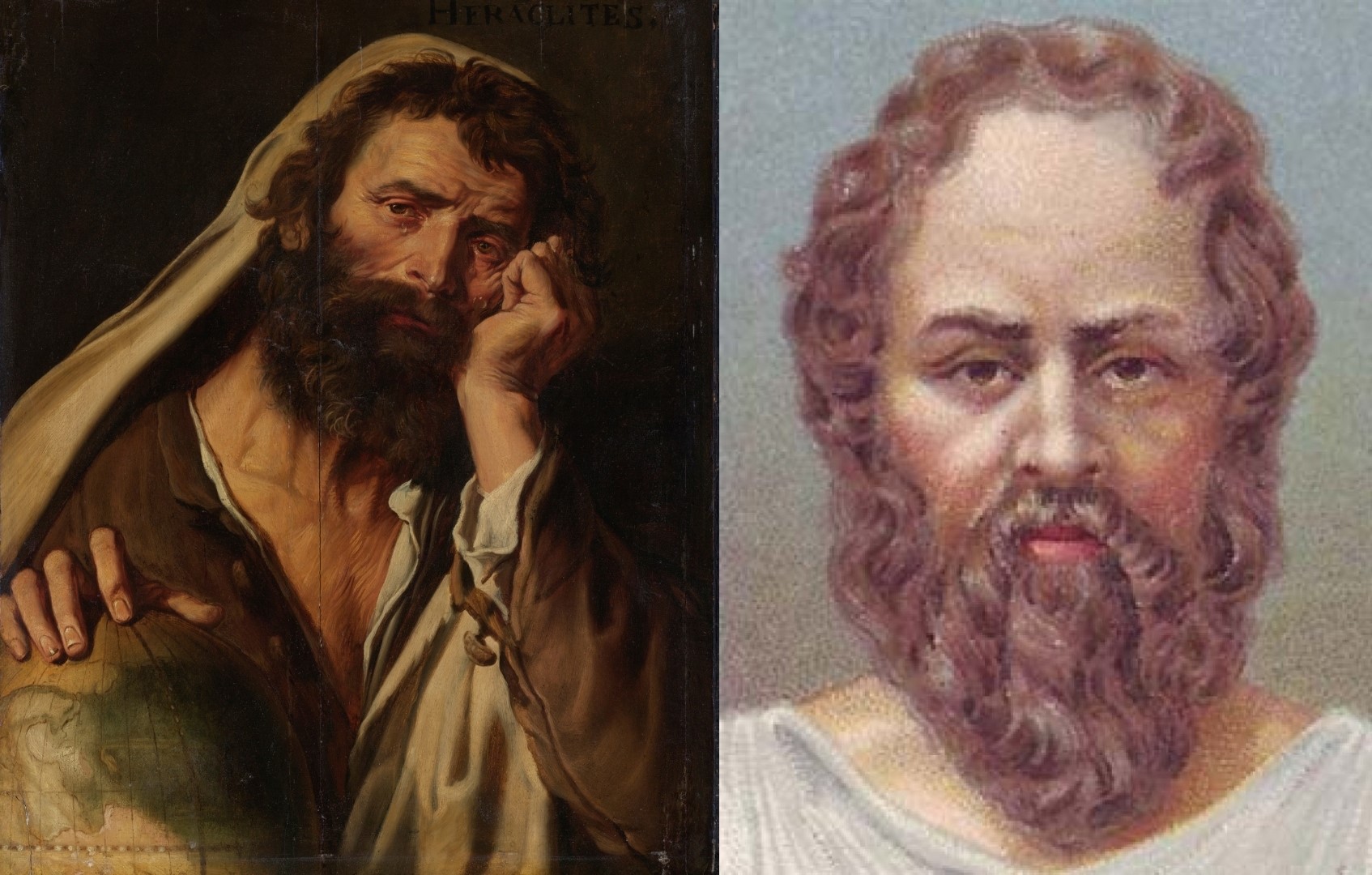
The “World of Forms” (or World of Ideas) is a concept everyone encounters when reading or hearing about Plato. While it’s often seen as intimidating or hard to grasp, we’re going to break it down together. We promise to move at a slow, steady, and conversational pace.
First off, Plato agrees with Heraclitus that “everything changes,” but he also learned from Socrates that true things are unchanging and absolute. Therefore, Plato reaches a conclusion: this world is not the ultimate reality. Everything here is an illusion, a reflection. But a reflection of what? It must be reflecting something, right? That “something” is the World of Forms.
In short, the World of Forms is an absolute reality where true essences exist and never change. The world we perceive is merely a reflection. Everything here changes; the World of Forms remains constant.
We hope we’re on the same page so far! Now, let’s walk through some examples. I want you to imagine a cat. You probably thought of something roughly like this:

Seems right, doesn’t it? That’s a cat. But what if this cat didn’t have a tail? What if it were orange? What if it were bigger? It’s still a cat, right? Or, if I asked you to think of a tree, maybe you thought of a pine or an oak. If we both thought of different trees—different colors or heights—we’d both still be thinking about the concept of a “tree,” wouldn’t we?
Plato identifies this as the result of living in a world of reflections. In this world, the same concept can manifest in different appearances. A cat’s sound, size, fur texture, color, and breed can all vary. Trees can differ in trunk width, leaf shape, and color—yet the concept of “tree” or “cat” remains unchanged. This unchanging concept belongs to the World of Forms. In that world, all concepts exist in an unalterable state. Furthermore, the World of Forms doesn’t need us to see or understand it to exist. According to Plato, what is truly real doesn’t need to be seen or spoken to be true. That is exactly what the World of Forms is.
To summarize: the World of Forms is a place where real, unchanging things exist, while our world—the world of reflections—is a place of endless change where true reality cannot be fully grasped. We’ll dig a little deeper in the next paragraph. If you’d prefer, you can skip straight to the Allegory of the Cave section, dear reader.
The World of Forms: A Closer Look
Normally, this kind of distinction is linked to how we use language. Many philosophers might argue with Plato, saying, “But that just depends on the label you give the cat,” or “We could have just as easily categorized it as an ‘orange cat’ or ‘brown cat’.” Plato’s response is very clear: Absolutely not! He argues that these forms exist independently of our naming conventions or how we use language.
Therefore, the concepts and beings in the World of Forms are entirely independent of time or individuals. It doesn’t matter what we choose to call them.

Okay, but then how do we learn about them? If they are in the World of Forms or just reflecting here, how do we access them? As you might remember from the Socrates article, the concept that “to know is to remember” applies here. These concepts exist in our minds from birth, perhaps from past lives or other reasons. Through philosophy and logic, we uncover these concepts and, seeing their reflections in our world, we are able to name them. That is how Plato saw it.
The Allegory of the Cave
This example, which essentially serves as a continuation of his theory on the World of Forms, was provided by Plato himself and sparked entirely new lines of thought for those who followed him.
The Allegory of the Cave is an analogy Plato used to make his philosophy easier to understand. Imagine a group of prisoners born and raised inside a cave. They have never seen the outside world. Their feet and hands are chained to the walls, facing the back of the cave. They never see their captors or the sunlight. All they see are the shadows cast on the wall when their captors carry objects past a fire behind them. Those shadows become their entire reality; they mistake them for the truth and believe the fire that creates them is the source of all light. Now, suppose one prisoner manages to break free. They see the fire and the objects, and eventually, they venture out of the cave. In terms of the World of Forms, this escaped prisoner has understood the reflection. They have begun to discover the World of Forms. Now, they must return to the cave to explain what they’ve seen to the friends still staring at the wall.
For Plato, this is the philosopher’s duty. With the help of philosophy, those chains will be broken, and we will emerge from the cave. That is how knowledge is attained: through the use of reason.
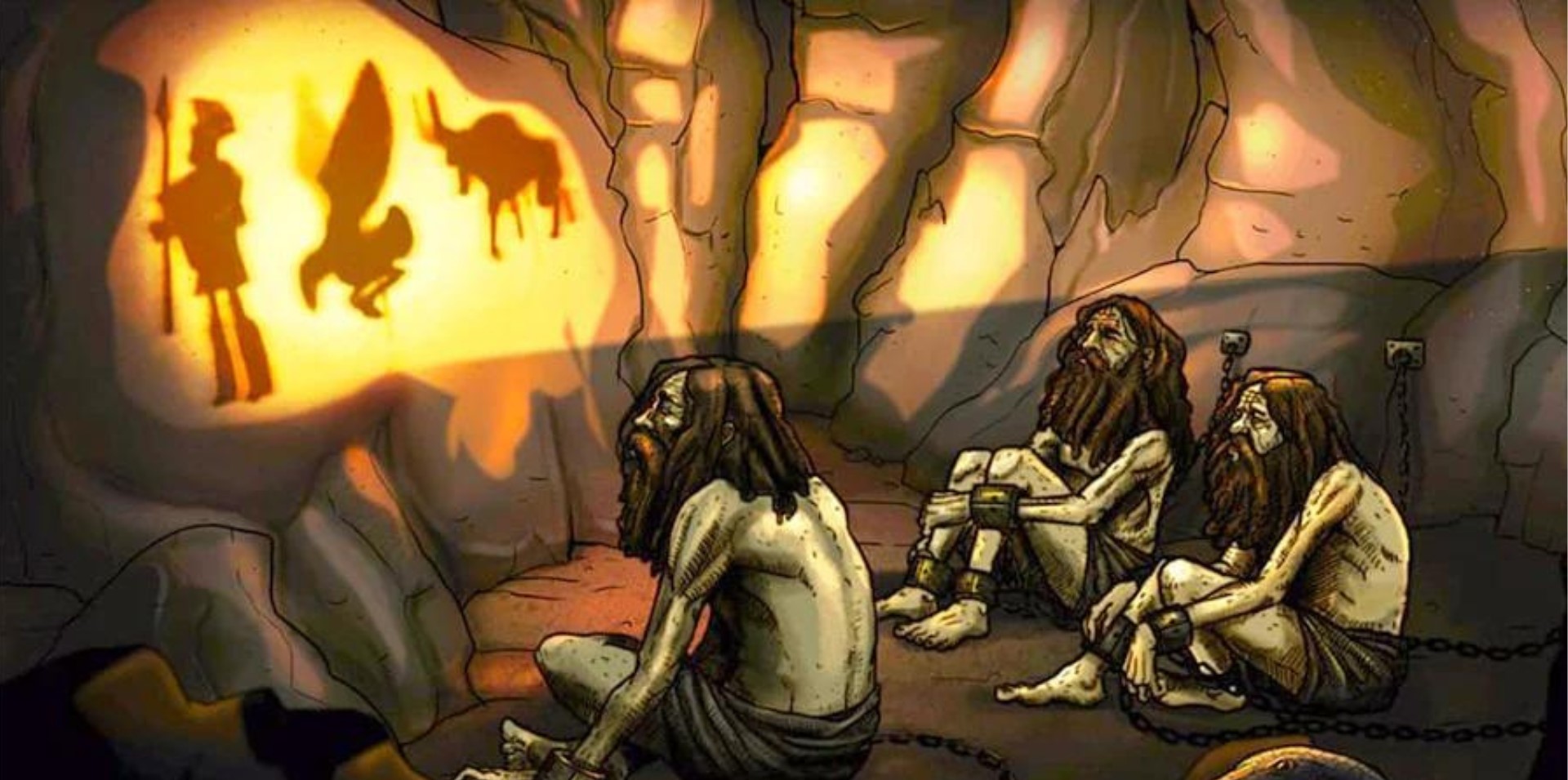
Whether they agree with this narrative or not, all philosophers have had to take a stance on it. This led to the emergence of two major schools of thought in the history of philosophy: Rationalists and Empiricists. Plato argues that we can reach the truth by correctly using the knowledge already within our minds, without needing to rely on experience as a prerequisite.
So, which side are you on? Do you think Plato is right? Remember, in philosophy, truth and error are defined by what you choose to believe!
References and Further Reading
Albayrak, H. (2024, May 23). Can We Learn About Plato’s Final Hours? ArtDog Istanbul. https://artdogistanbul.com/platonun-son-saatlerini-ogrenebilir-miyiz/
Meinwald, C. C. (2024, September 23). Plato | Life, Philosophy, & Works. Encyclopedia Britannica. https://www.britannica.com/biography/Plato
Philosophy Now. (n.d.). Plato: A Theory of Forms | Issue 90 | Philosophy Now. https://philosophynow.org/issues/90/Plato_A_Theory_of_Forms
Stroll, A., McLellan, D. T., Maurer, A., Wolin, R., Von Fritz, K., Chambre, H., & Levi, A. W. (2024, October 7). Western Philosophy | History, figures, schools, movements, books, beliefs, & Facts. Encyclopedia Britannica. https://www.britannica.com/topic/Western-philosophy/Plato
The Editors of Encyclopaedia Britannica. (2024, August 16). The Republic | Summary, Significance, & Facts. Encyclopedia Britannica. https://www.britannica.com/topic/The-Republic
Yildirim, Ö. (2023, October 24). Plato’s Theory of Forms, What is the World of Forms? Felsefe Hakkında Her Şey. . . https://www.felsefe.gen.tr/platonun-idealar-kurami-idealar-dunyasi-nedir/
Originally published in Turkish at Doğa Filozofu.