


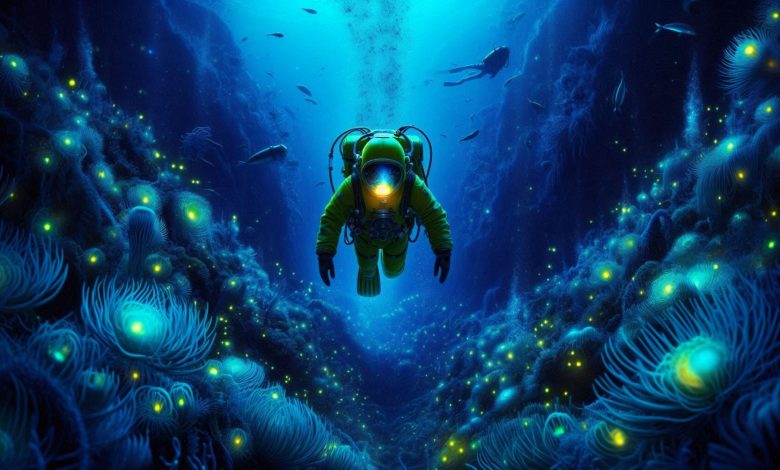
Imagine a place we know far less about than we do the Moon or Mars. As the deepest point on Earth, the Mariana Trench has captivated scientists and curious minds alike ever since its discovery, thanks to its mysterious structure and the secrets of the deep-sea life forms that dwell within. Let’s dive in and take a look at how this enigmatic trench was formed and what we’ve managed to learn about it so far.
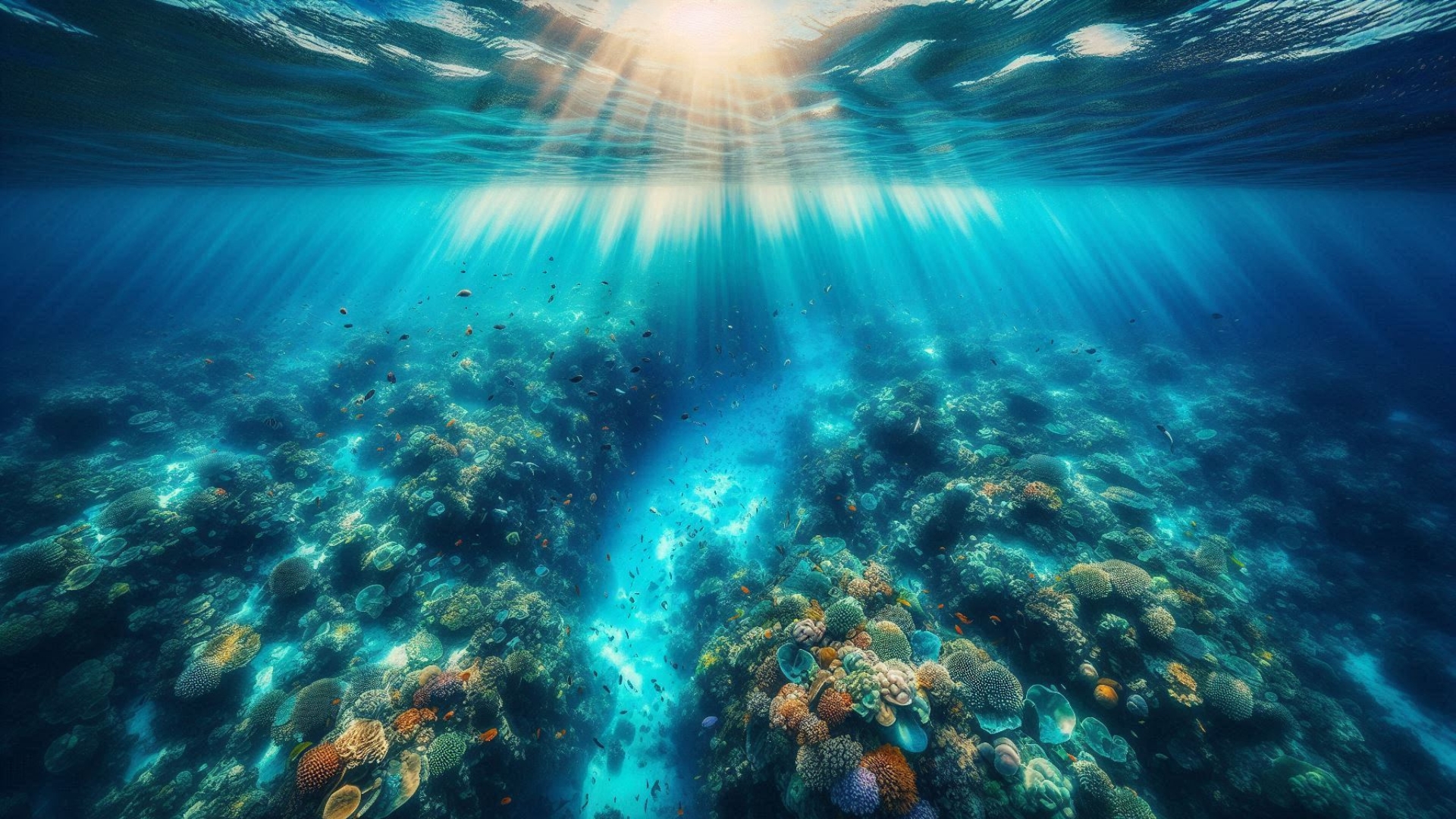
The Mariana Trench is an oceanic trench located in the western Pacific Ocean, about 200 kilometers east of the Mariana Islands. It’s crescent-shaped, roughly 2,550 km long and 69 km wide, with a known depth of 10,984 meters. To put that depth into perspective: if you were to take Mount Everest, flip it upside down, and drop it into the Mariana Trench, there would still be about 2 kilometers of water between the mountain’s peak and the ocean floor.
How Was the Mariana Trench Discovered?
It was first discovered in 1875 during an expedition by the British ship H.M.S. Challenger. In those days, measurements were typically taken by dropping a weighted rope or cable. Using this method, the initial depth of the Mariana Trench was estimated at around 8 kilometers. While not a bad effort for the time, it wasn’t particularly accurate. In 1951, the British ship H.M.S. Challenger II returned to the area with better technology, using newly developed sonar equipment to measure the trench at a depth of about 7 miles (11 kilometers).
How Did the Mariana Trench Form?
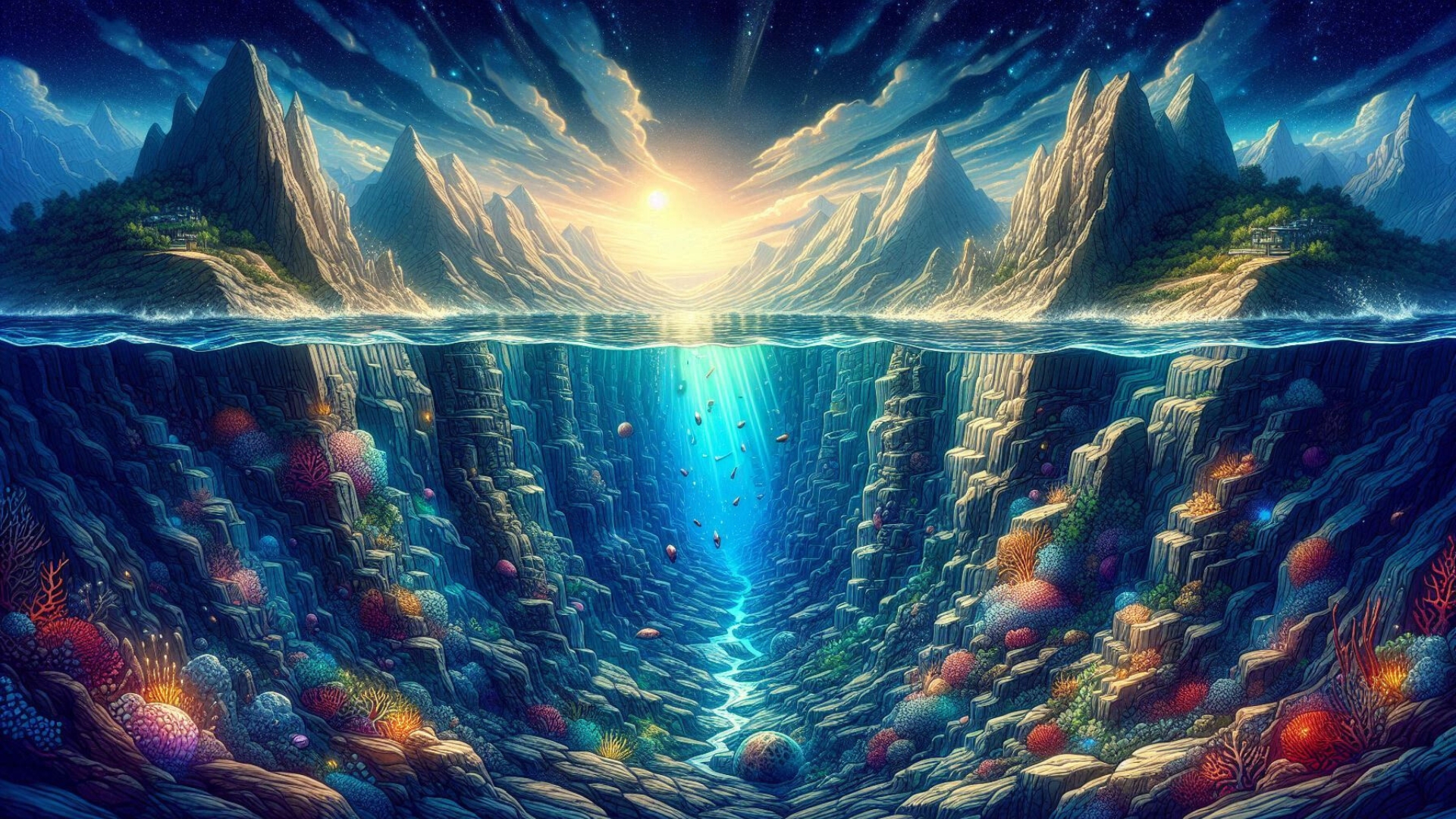
When two oceanic plates collide, the denser plate sinks deep into the mantle while the less dense one is pushed upward. This process, known as subduction, is what creates deep-sea trenches.
The Mariana Trench was formed by the collision of the Pacific Plate and the Philippine Plate. Because the Pacific Plate is older and carries older rocks, it is denser than the younger Philippine Plate. Consequently, during the collision, the Pacific Plate was forced downward, carving out this mysterious abyss.
Diving into the Mariana Trench
Human-piloted descents into the Mariana Trench have been incredibly rare. On January 23, 1960, scientist Jacques Piccard and Lieutenant Donald Walsh became the first humans to reach the trench’s deepest point, the Challenger Deep, inside the bathyscaphe Trieste. The water pressure near the bottom was a staggering 1,000 times greater than atmospheric pressure at sea level. This intense pressure caused one of the submarine’s windows to crack, limiting their stay at the bottom to just 20 minutes. Despite the short window, their discovery was a bombshell for the scientific community: there was life in the Mariana Trench! The pair documented the existence of microscopic organisms and reported seeing a pale, flatfish-like creature at the very bottom.
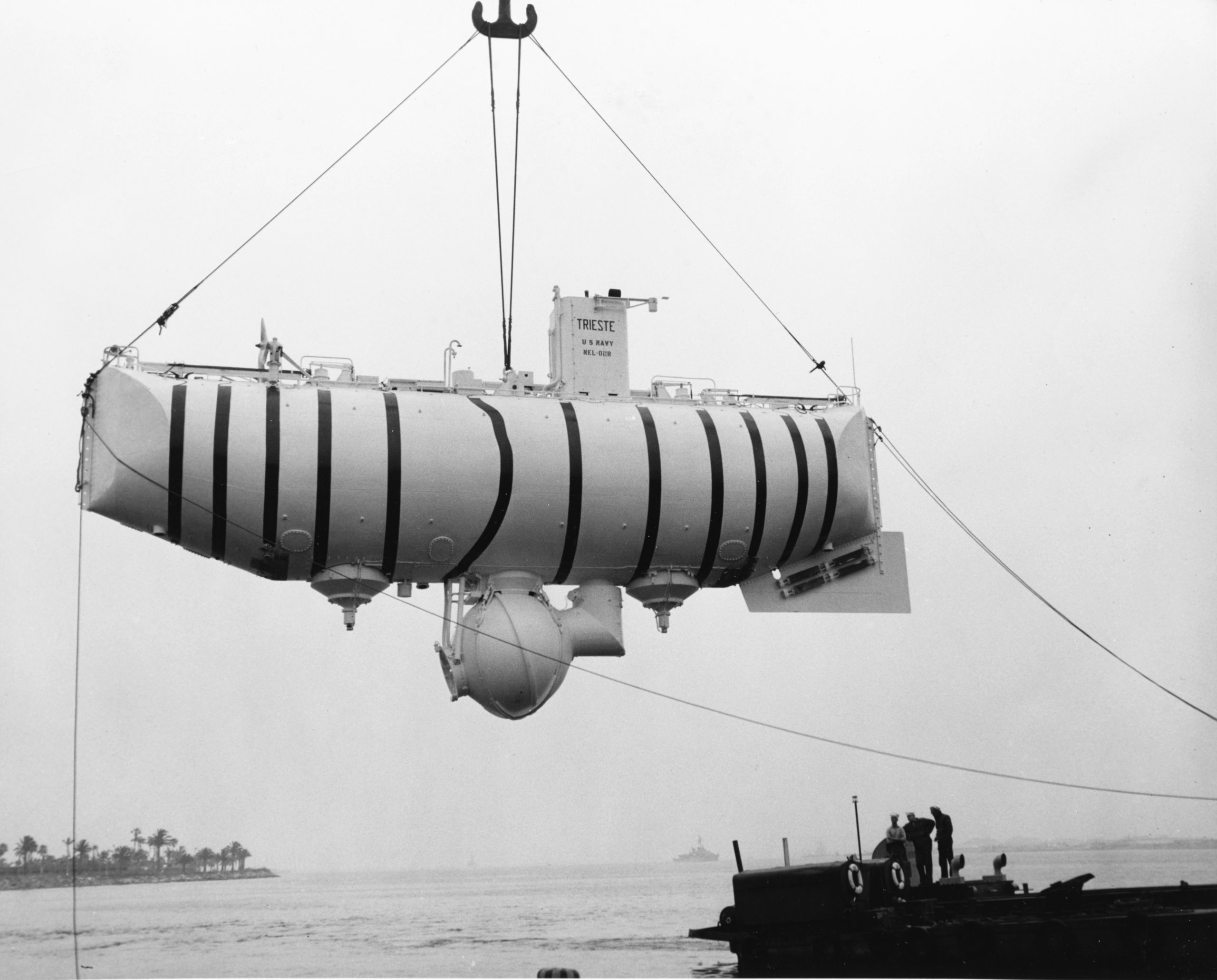
Image Source: Wikipedia
The second human-piloted dive didn’t happen until 52 years later, led by James Cameron. While best known as the filmmaker behind classics like “Titanic,” Cameron is also a deep-sea explorer. He made history by completing a solo dive to the bottom of the Mariana Trench. Spending about 3 hours on the floor, he discovered a significant type of microorganism. It was determined that these filamentous microbial mats survive by feeding on hydrogen and methane released through chemical reactions between seawater and the rocks.
In 2019 and 2020, entrepreneur and deep-sea explorer Victor Vescovo also conducted several dives into the Mariana Trench using a specialized submersible called Limiting Factor, carrying out various research projects at different depths.
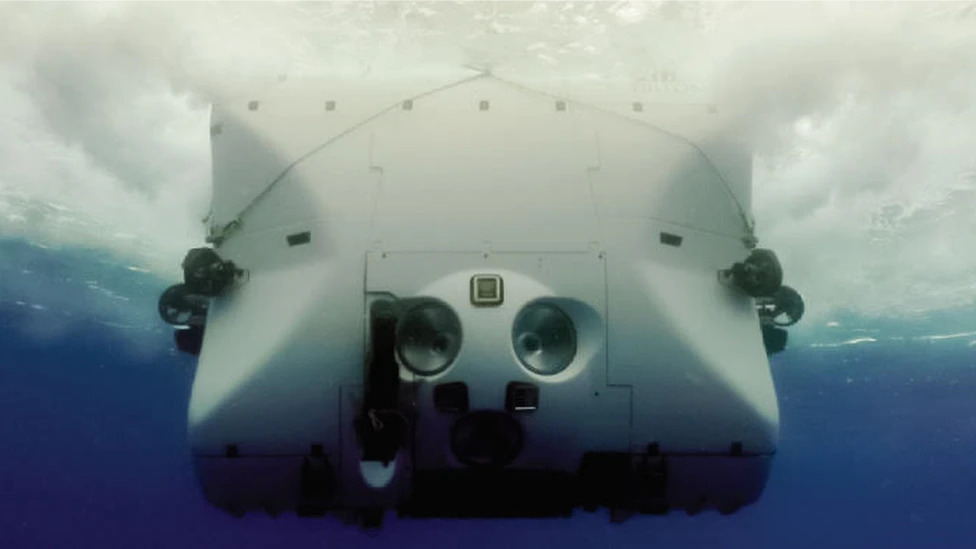
Image Source: BBC
Other Life Forms Discovered
With its crushing pressure and pitch-black conditions, the Mariana Trench is an incredibly hostile environment. Even so, research has uncovered various creatures alongside the microorganisms mentioned above.
The most commonly encountered residents of the deep Mariana Trench are xenophyophores, amphipods, and small sea cucumbers.
Single-celled xenophyophores resemble giant amoebas; they can grow up to 20 centimeters in diameter and feed by engulfing or absorbing their food. Amphipods are bright, shrimp-like scavengers commonly found in deep-sea trenches. At first, their survival was a mystery because amphipod shells should easily dissolve under the immense pressure of the Mariana Trench. However, in 2019, Japanese researchers discovered that these residents use aluminum extracted from seawater to reinforce their shells.
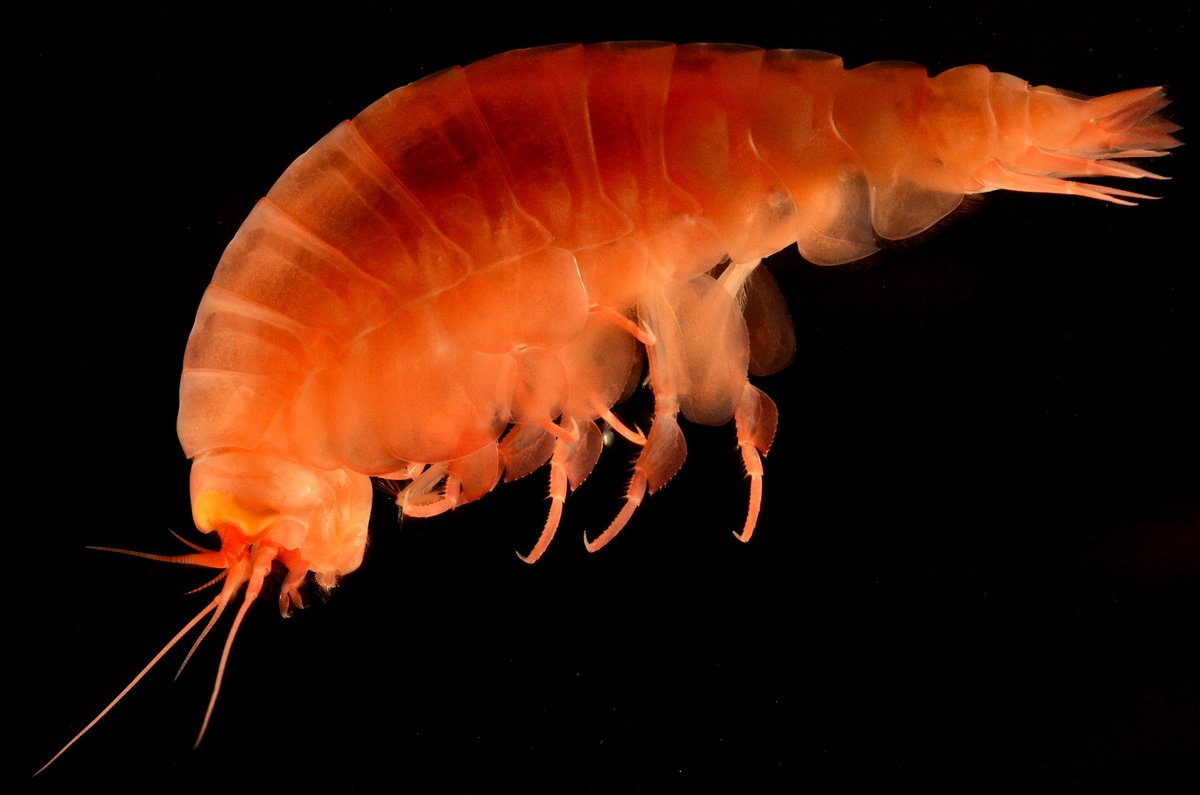
Image Source: Schmidt Ocean Institute
A 2017 study in the region uncovered one of its top predators: the Mariana snailfish (scientific name: Pseudoliparis swirei). Don’t let its seemingly fragile appearance fool you; research has shown that this animal is highly dominant in its ecosystem, capable of reaching even greater depths than other fish thanks to its pressure-resistant physiology. Living at depths of around 26,200 feet (8,000 meters), this small, pink, scaleless fish has been observed feeding on other invertebrate prey in the trench, taking full advantage of the lack of competition.
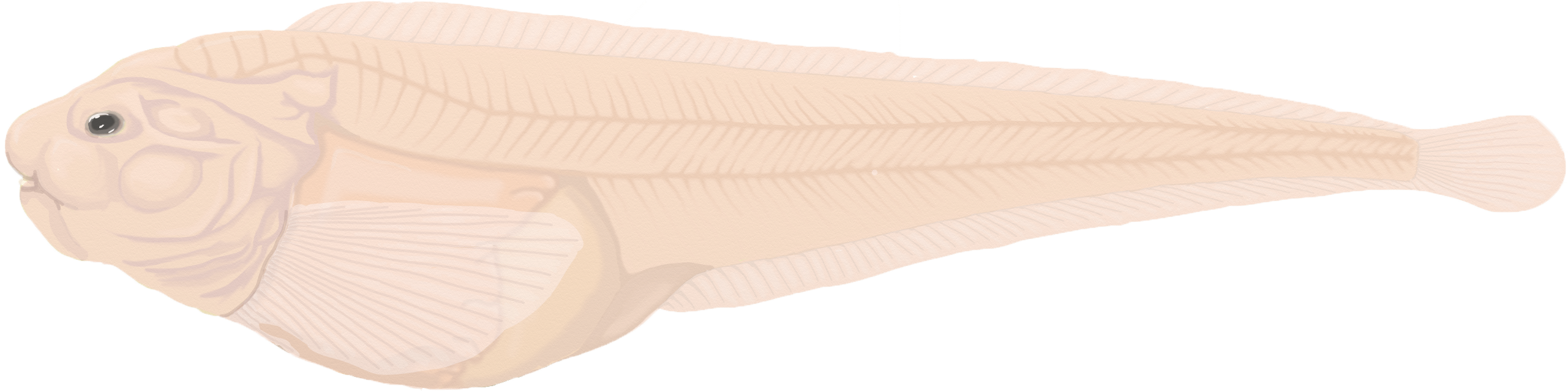
Image Source: Thomas Linley, Newcastle University
Conclusion
While we have made some significant and valuable discoveries regarding the Mariana Trench, our knowledge of this mysterious place remains incredibly limited. We hope that as technology continues to advance, we will gain much more insight into this deep-sea trench and the unknown species that likely call it home!
References and Further Reading
Fisheries, N. (n.d.). Mariana Trench Marine National Monument. NOAA. https://www.fisheries.noaa.gov/pacific-islands/habitat-conservation/mariana-trench-marine-national-monument#unique-features
Gerringer, M. E., Linley, T. D., Jamieson, A. J., Goetze, E., & Drazen, J. C. (2017). Pseudoliparis swirei sp. nov.: A newly-discovered hadal snailfish (Scorpaeniformes: Liparidae) from the Mariana Trench. Zootaxa, 4358(1). https://doi.org/10.11646/zootaxa.4358.1.7
Ma, M. (2018, April 25). World’s deepest fish named to 10 ‘remarkable new species’ list for 2017. UW News. https://www.washington.edu/news/2018/04/25/worlds-deepest-fish-named-to-10-remarkable-new-species-list-for-2017/
Oskin, B., Pappas, S., Pedersen, T., & Dohrer, E. (2022, May 16). Mariana Trench: The deepest depths. livescience.com. https://www.livescience.com/23387-mariana-trench.html
Planet Postcard: The Mariana Trench. (n.d.). National Centers for Environmental Information. https://www.ncei.noaa.gov/news/planet-postcard-mariana-trench#:~:text=The%20Mariana%20Trench%20was%20formed,sometimes%20even%20collide%20head%2Don.
The Mariana Trench, an adventure 11,000 metres under the sea. (2024, March 29). https://www.nausicaa.fr/en/the-ocean-magazine/mariana-trench-adventure-11000-metres-under-sea#:~:text=The%20Mariana%20Trench%2C%20like%20a,measurements%20were%20taken%20using%20ropes
Originally published in Turkish at Doğa Filozofu.