
Is there a God, and if so, does He look after us? What is a person’s true friend, or the thing that anchors them to life? We could go on asking these questions forever, and every answer would be subjective. Today, we’re going to dive into a film that invites you to do some serious soul-searching and takes you on a deep philosophical journey. Life of Pi, released in 2012, burst onto the screen with groundbreaking 3D technology. It made waves not just for its premise, but for its stunning visual effects and haunting score. In 2013, it deservedly took home 4 Academy Awards: Best Director (Ang Lee), Best Visual Effects, Best Cinematography (Claudio Miranda), and Best Original Score (Mychael Danna). Let’s take a closer look…
The film begins with an interview between a journalist and the protagonist, Pi. Pi recounts his life story, starting from his childhood—explaining how he learned to swim and even how he got his name from a swimming pool in France. Born in India, he spent his early years there, where his father owned a zoo. As Pi hit his teenage years, he began his quest for the divine. Growing up in India, a land of many faiths, he witnessed—and briefly embraced—several religions. At one point, he was practicing three different faiths simultaneously. His father, a staunch atheist, and his traditionally minded mother were often amused, if not perplexed, by his constant religious experimentation.
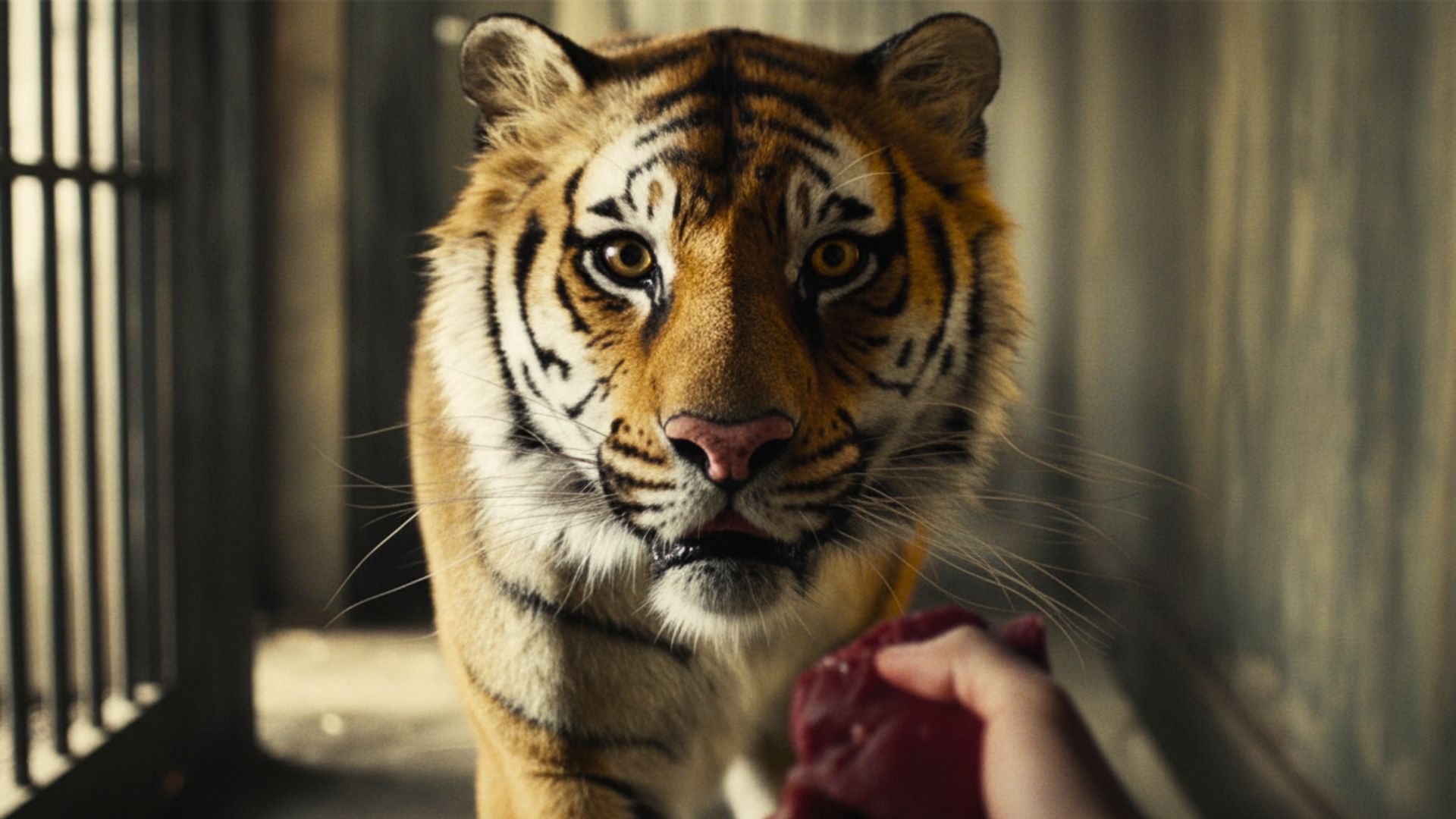
One day, Pi decides to enter the cage of Richard Parker, the zoo’s Bengal tiger, to feed him by hand. Just as the tiger approaches to sniff the meat, his father rushes in and warns Pi that he could easily become the tiger’s next meal. Even though Pi insists that animals have souls, his father refuses to listen and teaches him a lesson he will never forget.
Pi tells his father that animals have souls, that they can be friends, and that he has seen this connection in their eyes. His father retorts that animals have no souls, and that what Pi sees when he looks into their eyes is simply a reflection of his own emotions. He calls for the keeper to bring a goat, ties it in the cage, and they wait to watch the tiger claim its prey. As soon as the gate opens, Richard Parker strikes in one swift motion. The father has proven his point: a tiger cannot be friends with a human.
While searching for meaning in the void of his youth, Pi falls in love. But soon after, economic pressures force his family to sell their zoo animals and emigrate to Canada. Despite his protests, he is swept along on the journey. Pi and his family board a ship, animal cargo and all.
Four days into the voyage, while directly over the Mariana Trench, a storm breaks out in the dead of night. Pi wakes up to the roar of the tempest, but his brother stays fast asleep. When Pi climbs up to the deck, he hears the emergency sirens. By the time he races back to wake his family, the ship is already taking on water, and he cannot reach them. Back on deck, he sees the crew preparing to abandon ship. As he climbs into a lifeboat and tries to pull it up for others, a zebra escapes its stall and leaps onto the boat, sending the boat—and Pi—tumbling into the churning ocean. The battle against the giant waves is captured with breathtaking realism, highlighting Pi’s utter helplessness as he watches his world sink.
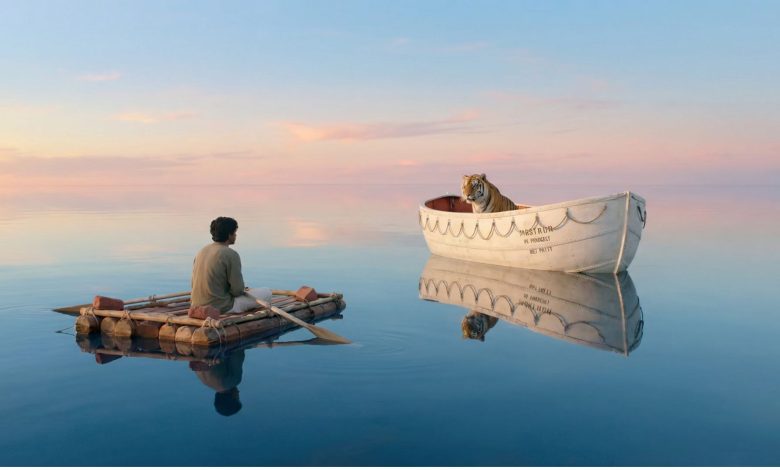
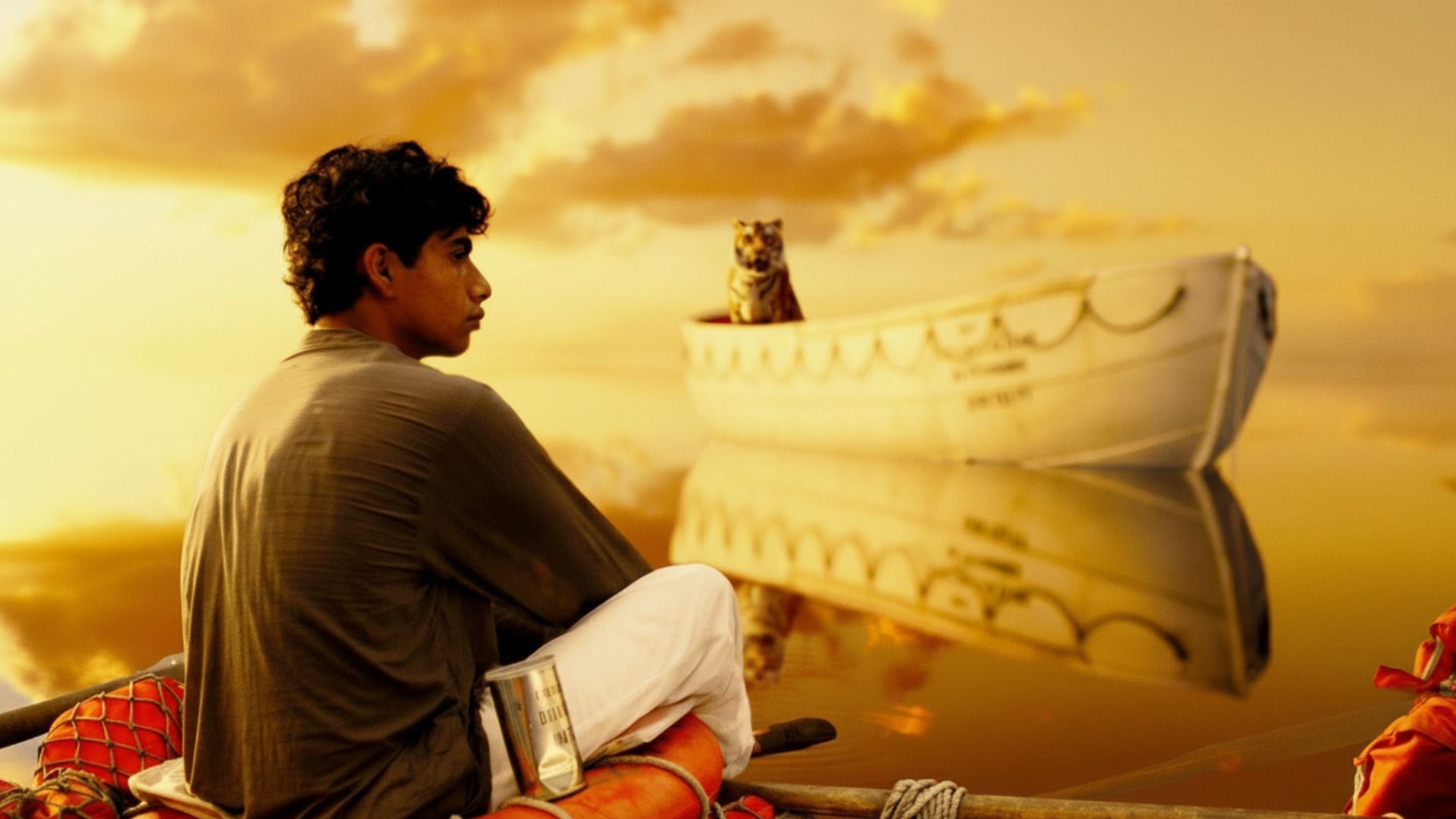
Pi spends the night desperately trying to save others, but to no avail. By morning, Pi finds himself alone in the middle of the ocean with three animals: a zebra, an orangutan, and a hyena. The zebra dies, and the hyena eventually kills the orangutan. Incensed, Pi screams from the top of the lifeboat’s canvas cover, at which point the tiger, Richard Parker, emerges from underneath and dispatches the hyena. Pi builds a small raft from life jackets, tethers it to the lifeboat, and begins living on the raft. He salvages what supplies he can and retreats to his makeshift vessel. There he is, adrift in the vast ocean, tethered to a lifeboat containing a tiger. Just Pi and Richard Parker, alone in the middle of nowhere.
Desperate, Pi prays to God for rescue. He turns to the survival manual found on the boat and begins to document his journey in a notebook, which serves as our narration throughout the film.
He tries to train the tiger but fails. He shares the desalinated water he collects with the tiger, realizing that if he doesn’t feed the beast, the small distance between them won’t be enough to keep him safe. While trying to fish for the starving tiger, he watches as the beast leaps into the water to catch a fish itself. Back on the boat, Pi has a chance to kill the tiger but chooses not to, instead helping him climb back into the lifeboat.
One day, he catches a large fish and kills it while weeping; despite being a vegetarian, he knows he must feed the tiger to survive. He prays to God through his tears and feeds the tiger.
On one occasion, while scavenging for supplies, a literal rain of fish falls into the boat, filling it with food. Pi eats his share on his makeshift raft.
Every trip back to the lifeboat is a gamble with his life. He knows he cannot tame Richard Parker, but perhaps he can train him. Yet, even that proves elusive; Richard Parker is set in his ways. Over time, Pi uses the supplies on hand to build a more functional raft for himself.
In one scene, he reflects that the presence of Richard Parker—a predator—is exactly what keeps him alive, as the fear and the responsibility of caring for the tiger anchor him to life.
During a massive storm, he arrogantly tells God he is ready to surrender. Soon after, as their supplies run dry, both Pi and the tiger grow dangerously thin.
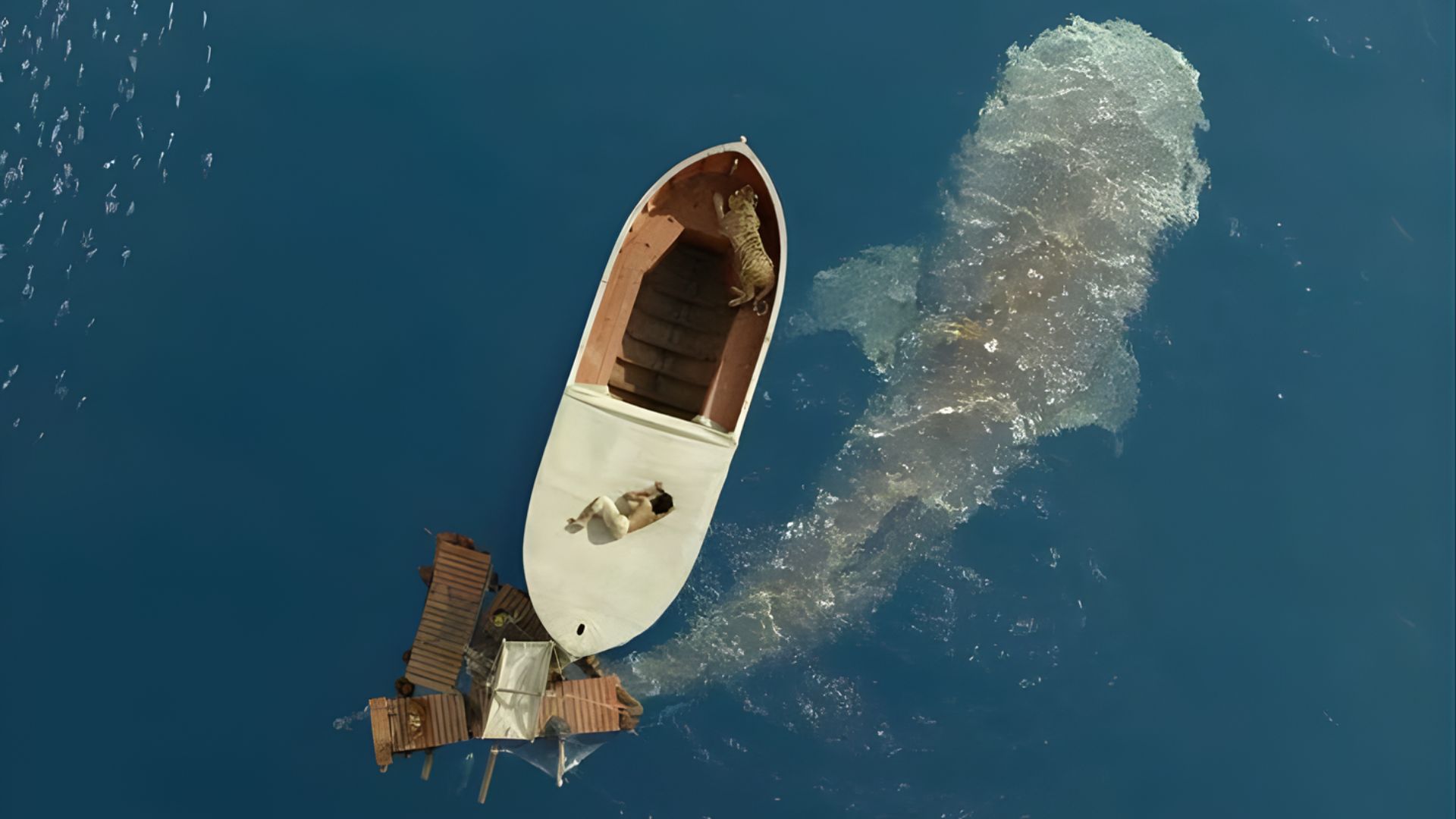
Just as they are on the brink of death, they reach an island. It is uninhabited by humans, populated only by meerkats. They replenish their water and food, but at night, the island reveals its true face. It is carnivorous—the same ground that provides fresh water by day turns into a chemical trap at night, digesting any living creature that touches it. Pi even finds human remains there. The next day, he stocks up on supplies and sets off back into the deep ocean with the tiger.
He mentions that no one else has ever found that island, adding, “At that moment, I realized that even when I thought God had abandoned me, He was watching over me.”
And then, the boat washes ashore…
His body is so weak he can barely move, let alone swim in a few inches of water. He describes the moment his face touches the sand as “like touching the cheek of God.”
Richard Parker is in better shape than Pi. He jumps from the boat and heads toward the jungle. As he reaches the edge of the trees, he stops. Pi expects him to turn, to look back, and to say goodbye—but it doesn’t happen. Richard Parker disappears into the depths of the jungle without a single look back. When rescuers find Pi, he is sitting on the beach, staring into the forest and sobbing like a baby.
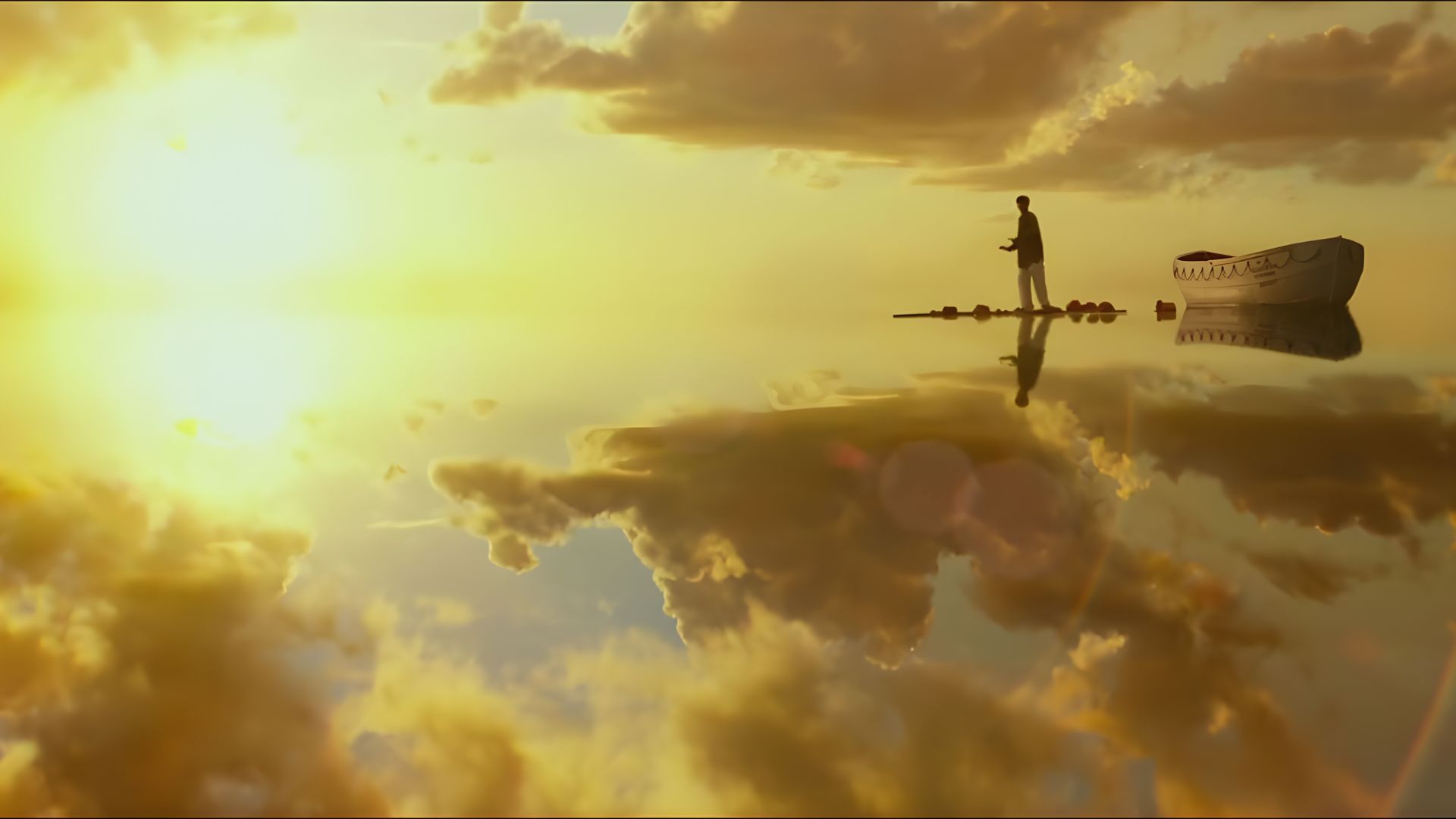
A group of insurance adjusters arrives to investigate the shipwreck, but they don’t believe Pi’s story. Pi then recounts his journey again, but this time, he tells it as if the figures on the boat were humans, not animals.
In the final scene, he asks the journalist: “I’ve told you two stories about what happened to the ship, and neither explains why it sank. In both stories, the ship sinks, my family dies, and I suffer. Which story do you prefer?” When the journalist admits the one with the tiger is the better story, Pi smiles and says, “And so it is with God.”
It is up to us to decide which story we believe…
In Life of Pi, the point isn’t who wrote the story, but how it was written. Pi spent one phase of his life in search, another in surrender, and the final one in resistance. His struggle was not rewarded with a tangible, glorious victory. Pi became a symbol of someone who constantly loses, yet always resists. He was uprooted from his home, lost his family, and was imprisoned in a void. Despite all this, he was kept alive by one thing: Richard Parker, the friend he thought he had. But even that friend left him in the end, and he lost the first truth he had ever believed—that animals have souls and can be our friends. And yet, this is a story that makes you realize “perhaps the true victory is the act of struggling despite everything.”
God’s design may not be about expanding His presence, but about revealing the limits and the meaning of our resistance. Everything we believe in and fight for might just be a part of our life’s trial. Who knows?
References and Further Reading
Dziemianowicz, J. (2023, January 20). Everything you need to know about “Life of Pi” on Broadway. New York Theatre Guide. https://www.newyorktheatreguide.com/theatre-news/news/everything-you-need-to-know-about-life-of-pi-on-broadway
Keşaplı, O. (2016, June 9). 11-time Oscar nominee, a hymn to faith: Life of Pi. Azizm Sanat Örgütü. https://www.azizmsanat.org/2016/06/09/11-dalda-oscar-adayi-inanc-guzellemesi-pinin-yasami-onur-kesapli/
Lee, A. (Director). (2012). Life of Pi [Film]. Fox 2000 Pictures; Haishang Films. https://www.imdb.com/title/tt0454876/
Originally published in Turkish at Doğa Filozofu.