

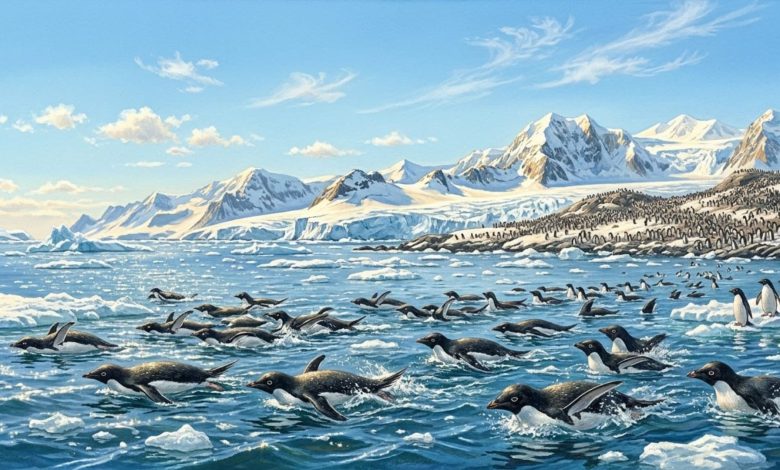
“Flightless seabirds” sounds like a bit of an oxymoron, doesn’t it? Yet, it’s the most fitting way to describe penguins. Despite being birds, they can’t fly—in fact, they are some of the most gifted swimmers you’ll find in our oceans. Let’s dive into the magical world of penguins.
Most penguin species actually live in the equatorial regions. While those living in Antarctica are in the minority, they’ve become the iconic face of the frozen continent. They’re generally short, wearing a sleek black-and-white suit with short, webbed feet and a sturdy beak. Beneath their dense, overlapping feathers lies a thick layer of fat—the perfect biological insulation for freezing temperatures. These physical traits make them natural-born swimmers.
Most birds have hollow, air-filled bones that make flight possible. Penguins, however, are the exact opposite: their bones are dense and heavy, perfectly adapted for life underwater. Some species can reach swimming speeds of up to 35 km/h.
Their coloring acts as clever camouflage; underwater, their dark backs blend into the deep shadows below, while their white bellies blend into the light from above, keeping them safe from predators. They usually hunt underwater and can swim up to 24 kilometers per hour. Genetic evidence suggests that penguins originated in the coastal regions of Australia, New Zealand, and the islands of the South Pacific, eventually spreading out to colonize various habitats.
When they’re on land, especially in the bitter cold, penguins huddle together in colonies. They typically form a giant circle, constantly shuffling so that those on the outside get a turn in the warmer center, helping everyone survive the elements.
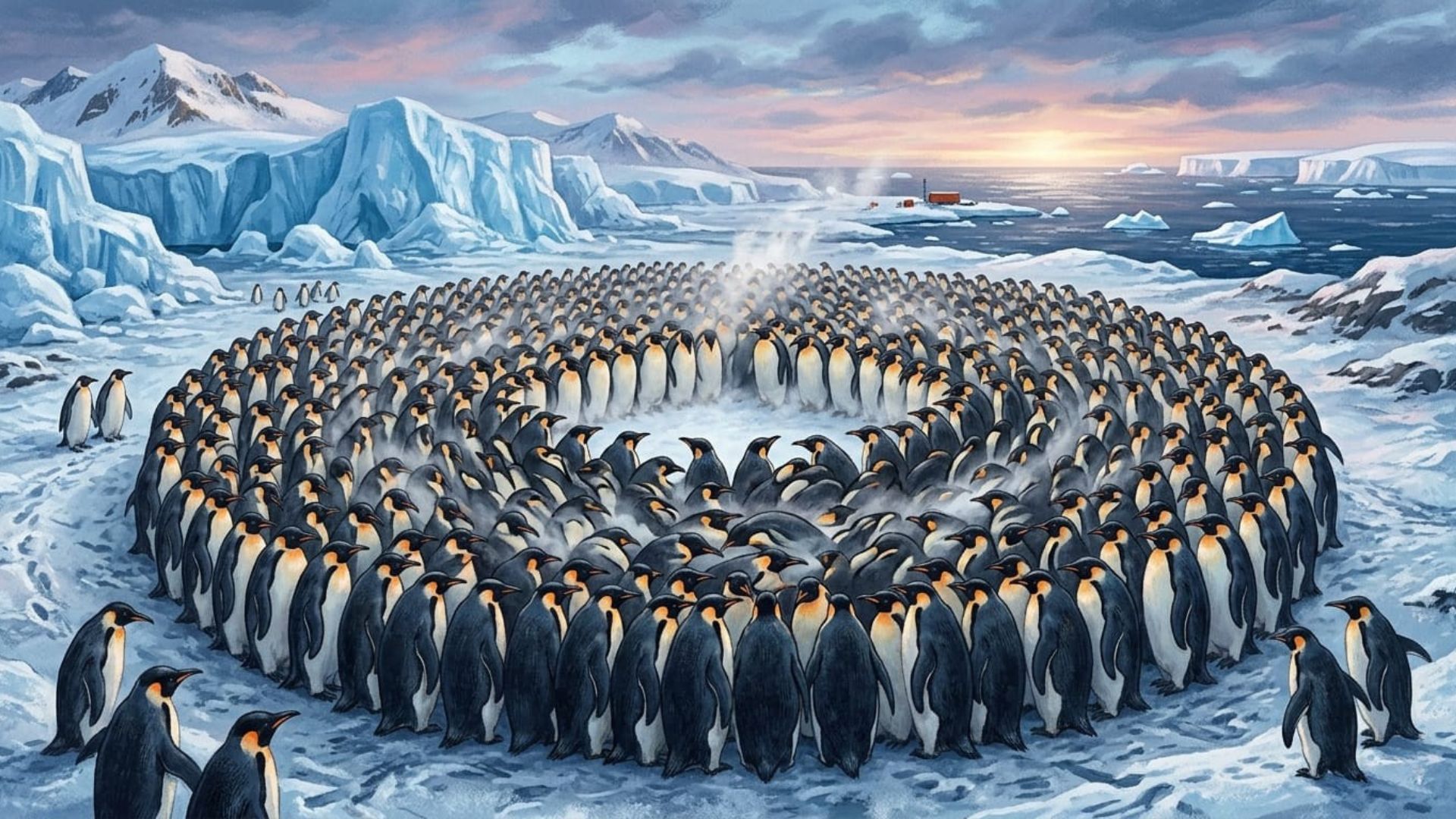
Penguins have evolved several clever ways to handle the cold. Their thick feathers and dense fat layer provide excellent protection, but their feet—which lack feathers and touch the ice directly—are a weak point. To manage this, different species have their own tricks. Emperor penguins, for instance, hunch over and shift their weight onto their heels, rocking back and forth to keep their feet from freezing to the ice.
Penguins have a specialized blood circulation system in their legs that acts as a heat exchanger. As blood travels from the body to the legs, the vessels constrict to cool the blood down, preventing heat loss; as it returns, it is warmed back up. This keeps their core temperature stable and protects their feet from frostbite.
Penguin Species
According to current sources, there are 18 recognized species of penguins. While some studies have classified crested penguins (genus Eudyptes) differently, potentially pushing the count to 20, the International Ornithologists’ Union (IOU) officially recognizes 18 species.
The Emperor penguin is the largest of them all, standing about 120 cm tall and weighing up to 40 kg. They are the only penguin species known to breed during the harsh Antarctic winter. They live in colonies where the males incubate the eggs by balancing them on their feet, tucked safely away from the brutal winter conditions.
The King penguin is the second-largest species. They have a long breeding cycle that lasts about 15 months, and they’re easily identified by the striking yellow and orange patches on their necks and chests.
The Gentoo penguin is recognized as the fastest swimmer of the bunch. Unlike many other species, their populations are actually increasing in some areas, suggesting they are better at tolerating climate shifts than their cousins.
Diet and Hunting
Penguins are carnivores, feeding primarily on marine life. Their main staples are krill and squid, though those living further north tend to eat more fish, which is why they often have thinner beaks. Penguins don’t have teeth; instead, their mouths are lined with stiff, backward-pointing barbs that help them grip their slippery prey and guide it down their throats.
Reproduction
While breeding habits vary slightly by species, the cycle is generally the same. Penguins are typically monogamous, often returning to the same mate year after year. Females lay eggs, and in the case of Emperor penguins, the male takes on the task of incubation. He keeps the egg tucked against his brood patch to keep it from freezing. During this time, the female heads off to feed, returning about 20 days later so the pair can take turns. Once the chick hatches, they enter a “crèche” period, where the young are fed by the adults. As colonies become more crowded, conflicts can arise between parents and “unemployed” penguins, leading to higher mortality rates for the chicks.
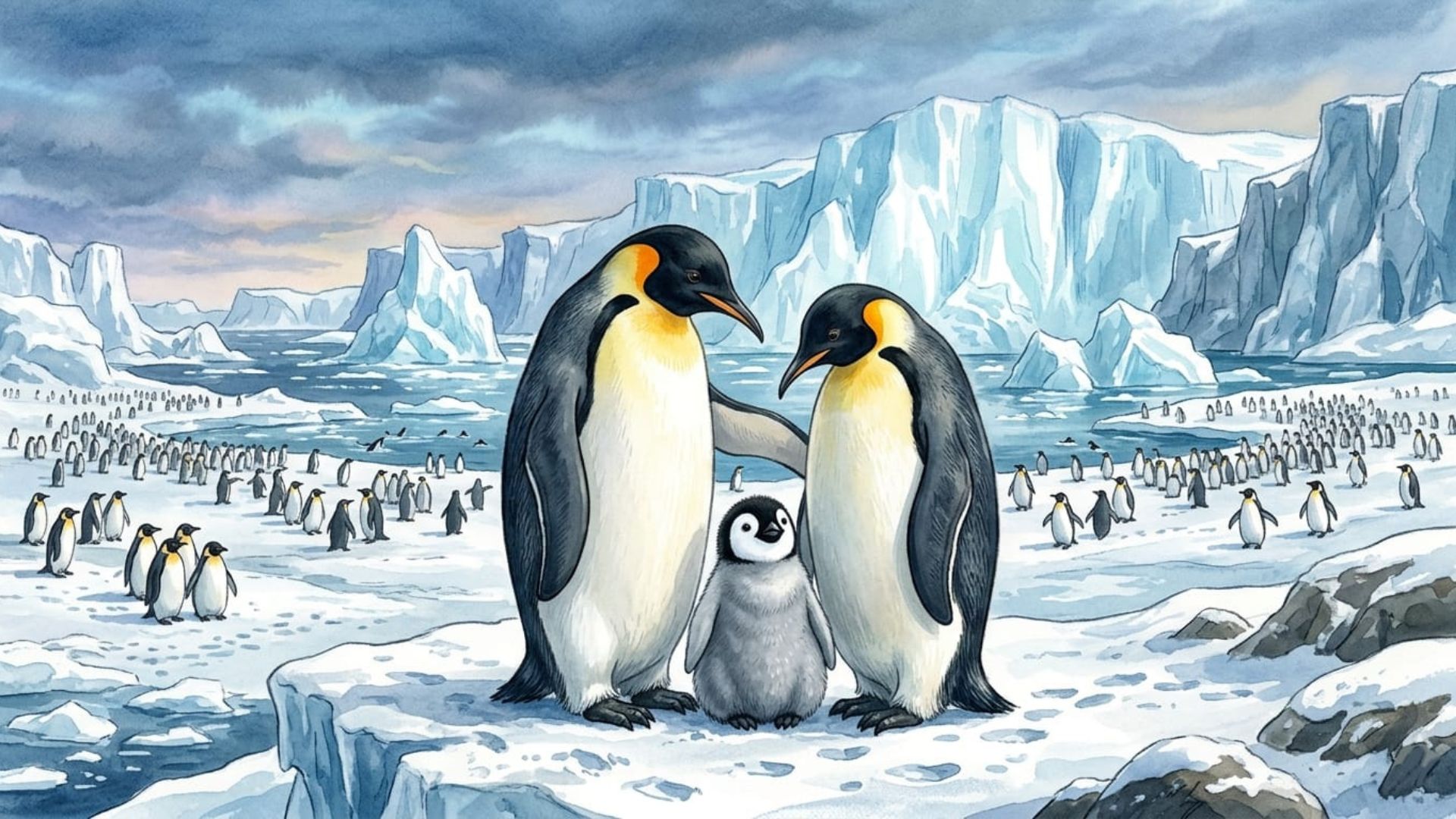
Today, like so many other species, penguins are at risk of extinction. Human activities—overfishing, pollution, and tourism—pose significant threats to their survival. Nearly two-thirds of all penguin species are listed on the IUCN Red List of Threatened Species, making them some of the most at-risk seabirds on the planet.
We must remember that this world belongs to all of us; respecting the right of every creature to live is our greatest responsibility for our shared future.
References and Further Reading
Bayram, L. Ç. (n.d.). Penguins. TÜBİTAK Popular Science Publications, Polar Encyclopedia. Available at: https://ansiklopedi.tubitak.gov.tr/kutup/ansiklopedi/penguenler
Gill, F., & Prevost, J. (Eds.). (2025, October 17). Penguin | Habitat, species, predators, & facts. In Encyclopaedia Britannica. Retrieved from https://www.britannica.com/animal/penguin
Borboroglu, P. G., & Boersma, P. D. (2013). Penguins: Natural history and conservation. University of Washington Press.
National Geographic Society. (n.d.). Penguins | Facts and photos. National Geographic. Available at: https://www.nationalgeographic.com/animals/birds/facts/penguins-1
Stonehouse, B. (1975). Penguins. David & Charles.
Williams, T. D. (1995). The penguins: Spheniscidae. Oxford University Press.
Zitterbart, D. P., Wienecke, B., Butler, J. P., & Fabry, B. (2011). Coordinated movements in Emperor penguin huddles. PLoS ONE, 6(6), e20260. https://doi.org/10.1371/journal.pone.0020260
Originally published in Turkish at Doğa Filozofu.