


The history of philosophy is paved with great debates. The clash between idealism, materialism, and realism; the age-old tug-of-war between theism and atheism; the quest to define the “good life”—and so many more. The philosophers who ignited these debates have cemented their names in history. Take Plato, for instance: by introducing his world of “Forms,” he forced us to question the reality of what we perceive as the material world—a debate that sparked centuries of discourse and continues to echo today. In that same vein, a philosopher who lived much closer to our own time presented a system that would become a battleground for generations to come: Karl Marx.

Who Was Karl Marx?
Marx was set to build a system that would offer a scathing critique of capitalism. But why, and how? Before we dive into those answers, let’s get to know the man himself a little better.
Karl Marx was born in 1818 in Trier, which was then part of Prussia and is now in Germany. His father, a prosperous lawyer, was a man of Enlightenment ideals and liberal values. After studying law at the University of Bonn, Marx moved to the University of Berlin, where his focus shifted toward philosophy and history. It was in Berlin that he joined a group known as the Young Hegelians, a formative experience that left a deep mark on his intellectual development.
Marx began a career in journalism and became politically active. However, his radical ideas forced him into a nomadic existence, moving from Germany to France, then Belgium, and finally, England. He spent the better part of his life in London, where, working in close collaboration with Friedrich Engels, he developed the tenets of communist ideology.
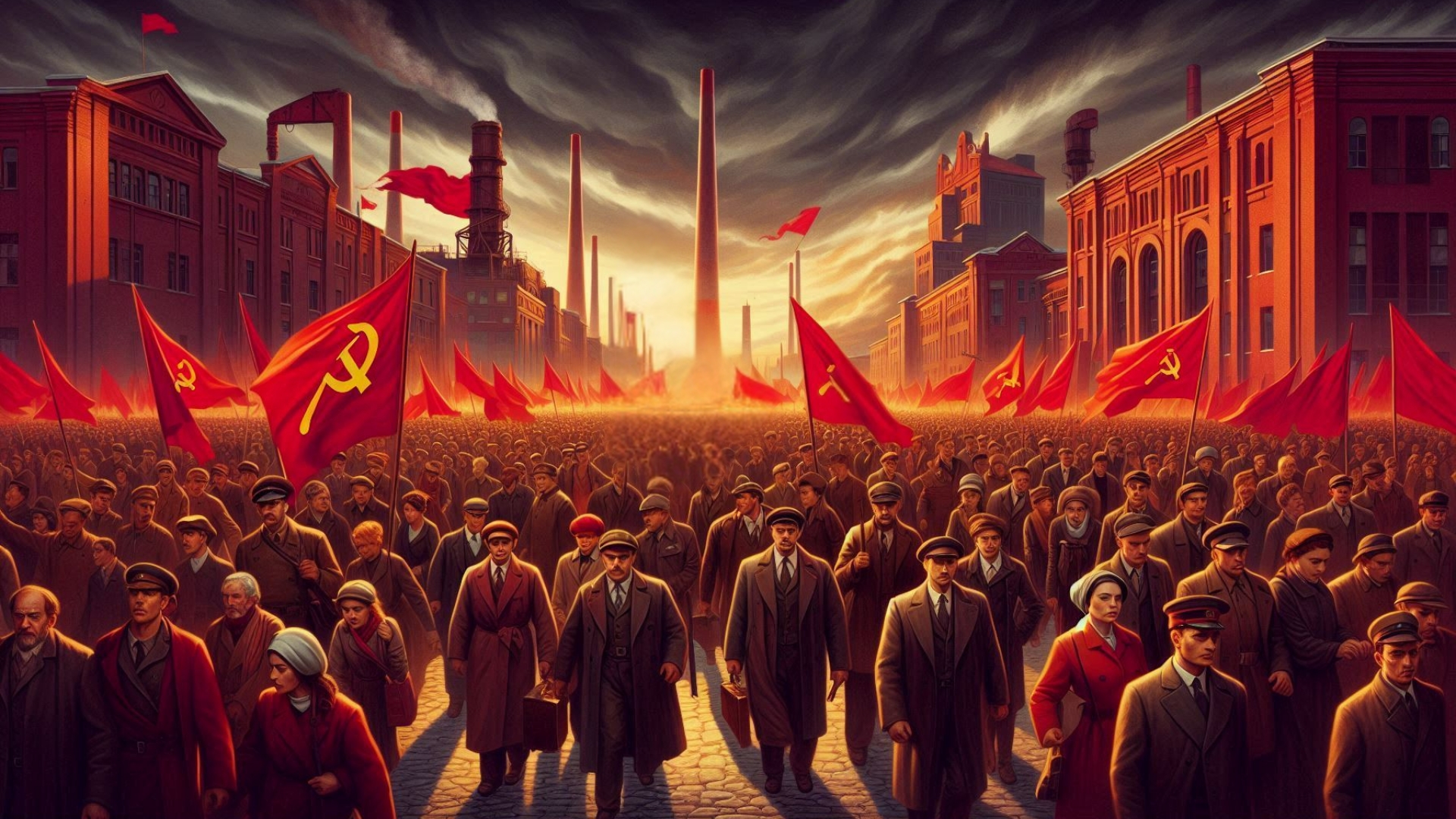
There are two key takeaways from this brief biography. First, Marx grew up in a very wealthy family. Despite his privileged upbringing, the ideology he would eventually champion was one that offered little comfort to those of his own social standing. More intriguingly, while the existing system benefited Marx, the ideas he would propose offered him no personal gain whatsoever. The second takeaway is his deep-rooted connection to philosophy, which would prove to be the backbone of the system he constructed.
Alright, we’ve got the foundation. But what about the outcome? What did Marx actually do to become “Marx”?
Das Kapital
Let’s start by unpacking what Das Kapital is actually about, shall we? Marx’s masterpiece, Capital (or Das Kapital), was an attempt to dissect the mechanics of the capitalist system. Marx set out to expose the inherent contradictions of capitalism, the mechanisms of exploitation, and how this system might eventually collapse. Consequently, he provided an incredibly long and detailed study of the flaws of capitalism, looking at them through both a moral and—more importantly—an economic lens. His motivation for writing this work was to provide a scientific explanation for the exploitation and injustice faced by the working class, thereby creating a foundation for changing the system. Marx aimed to demonstrate how the capitalist mode of production generates value, how capital accumulates, and why class struggle is inevitable. Did he succeed in his mission? Was it truly influential? Let’s take a look.
Das Kapital was planned as a three-volume work, but Marx only managed to complete and publish the first volume during his lifetime. The remaining two volumes were edited and published posthumously by Friedrich Engels. Engels was a long-time collaborator who shared Marx’s vision and had been working alongside him since long before Das Kapital. For that reason, we can safely assume a high level of consistency in their core values.
So, what does this book actually say?
We can break Das Kapital down into five main pillars:
- Commodity and Value Theory
- Surplus Value and Exploitation
- Mechanization
- Capital
- Critique of Capitalism
These five themes form the core of Das Kapital and summarize Marx’s project. Let’s break them down one by one.
Commodity and Value Theory: Marx defined the “commodity” as the fundamental unit of the capitalist economy. And no, he wasn’t talking about social media platforms. A commodity is simply any product made for consumption, and it possesses two primary values: use-value (a product’s ability to satisfy human needs) and exchange-value (the ability to trade a product for something else). These are the two values that define a product. The value theory is the cornerstone of Marx’s economic analysis. He argued that the value of a commodity is derived from the amount of “abstract labor” contained within it—essentially, the average amount of socially necessary labor required to produce it. This theory is critical for understanding how commodity production works in a capitalist society. If you’re thinking, “Speak plain English!”, I’m right there with you. It’s fair to say that the difficulty of this masterpiece stems not just from its length, but from this dense, complex framework. Let’s try an example:
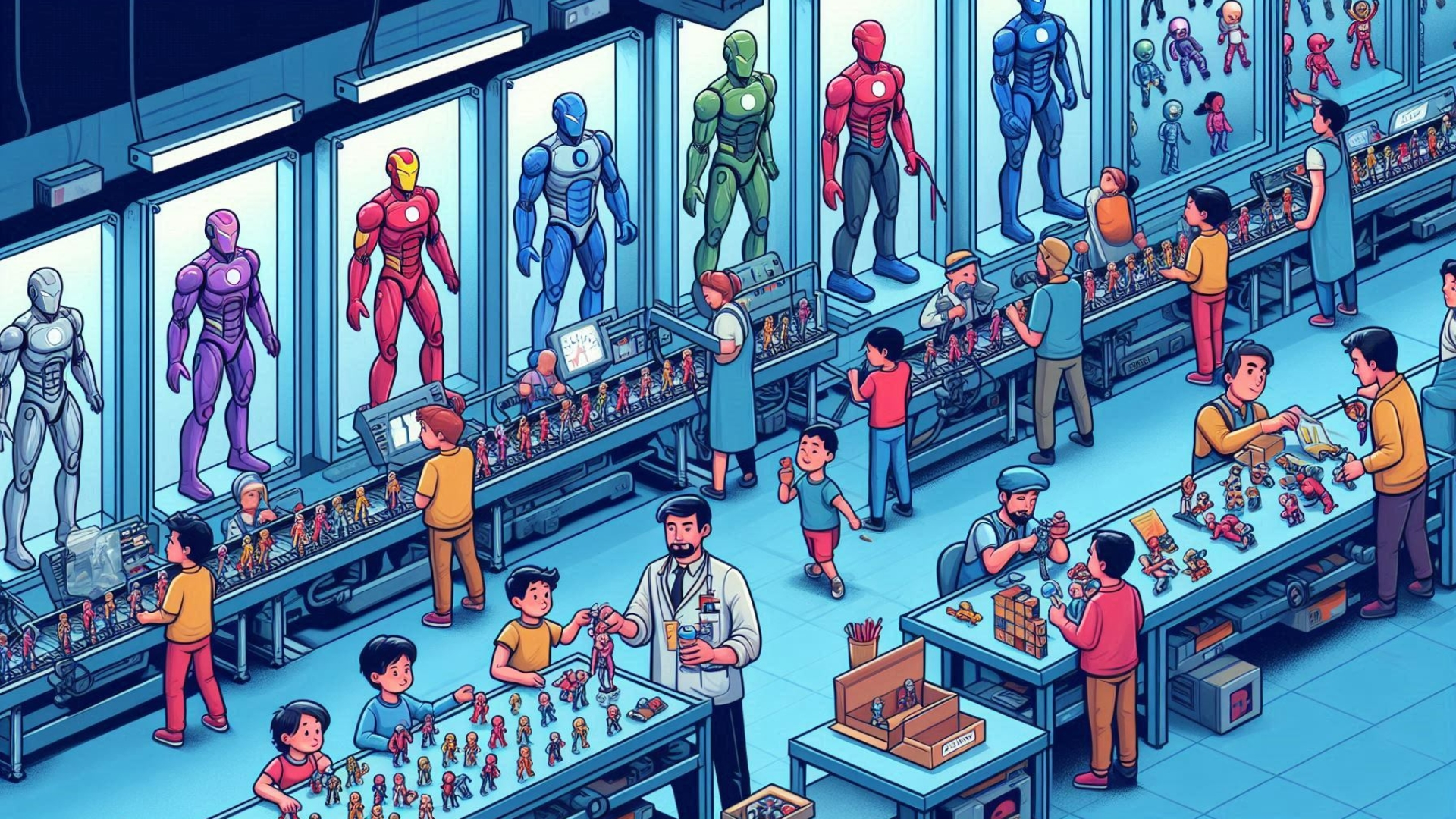
Imagine you own a toy factory. Toys are being produced, right? These toys have value in two ways:
A toy is valuable as long as we can play with it. If we stop playing with it, or if it loses the features that make it playable, it loses its value. That is its “use-value.” But that same toy can also be sold in a shop or traded for something else, right? You could trade an action figure for another product. Because it can be used as a bargaining chip in an exchange, that is its “exchange-value.”
Surplus Value and Exploitation: According to Marx, capitalism buys the worker’s labor and produces more value than what that labor cost. This excess is called “surplus value.” A capitalist’s profit is essentially the surplus value left over after paying the worker’s wages.
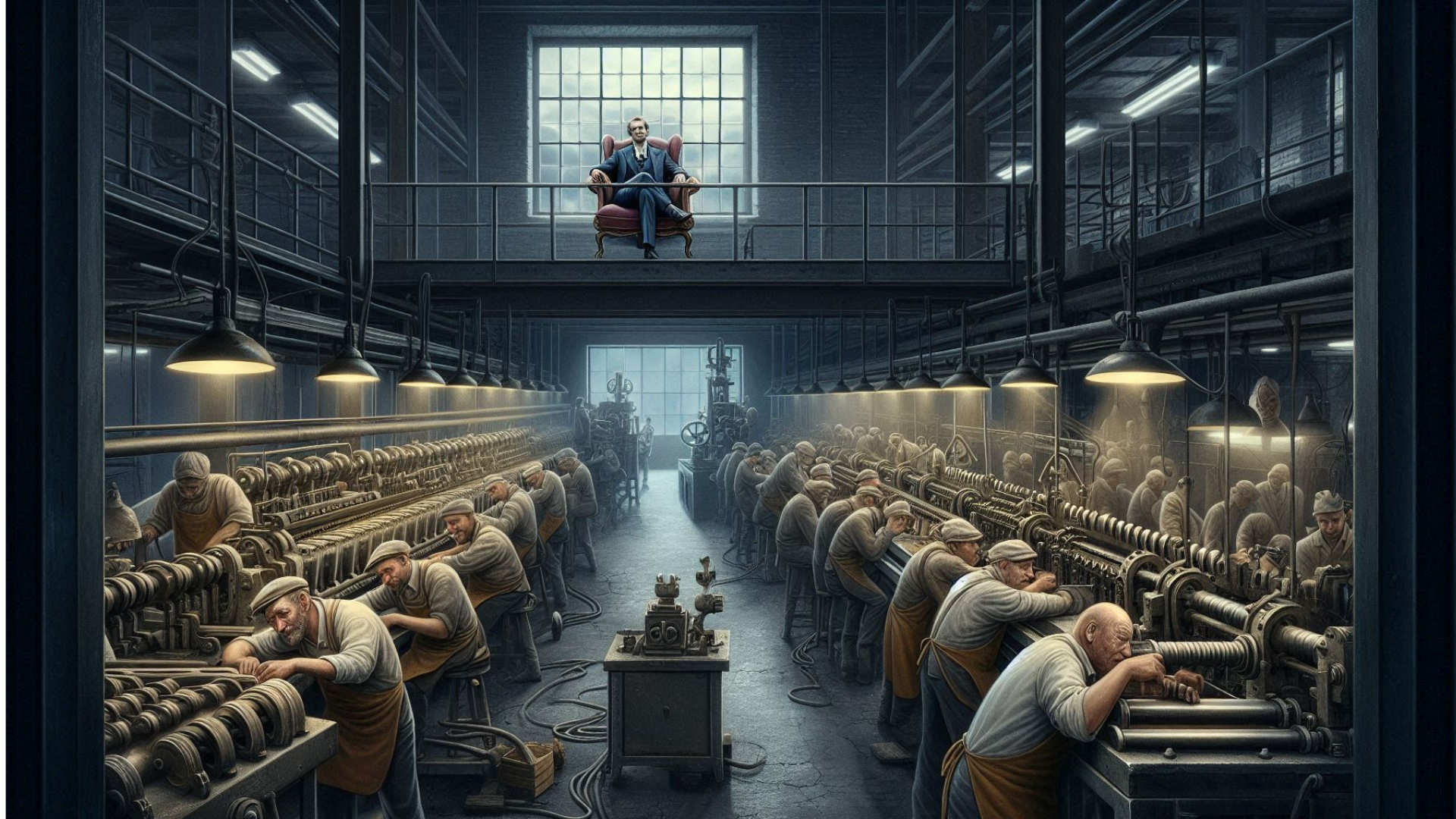
Exploitation occurs when workers don’t receive the full value of what they produce, and capitalists pocket that value as profit. This mechanism of exploitation is one of the fundamental contradictions of capitalism. Let’s look at an example: Suppose you’re a farmer growing cotton. A factory owner buys your harvest for 100 TL. They then turn it into a shirt and sell it for 1000 TL. While they’ve made 10X, you only made X. This inevitably creates an income disparity. To Marx, this gap isn’t just large; it’s fundamentally unfair.
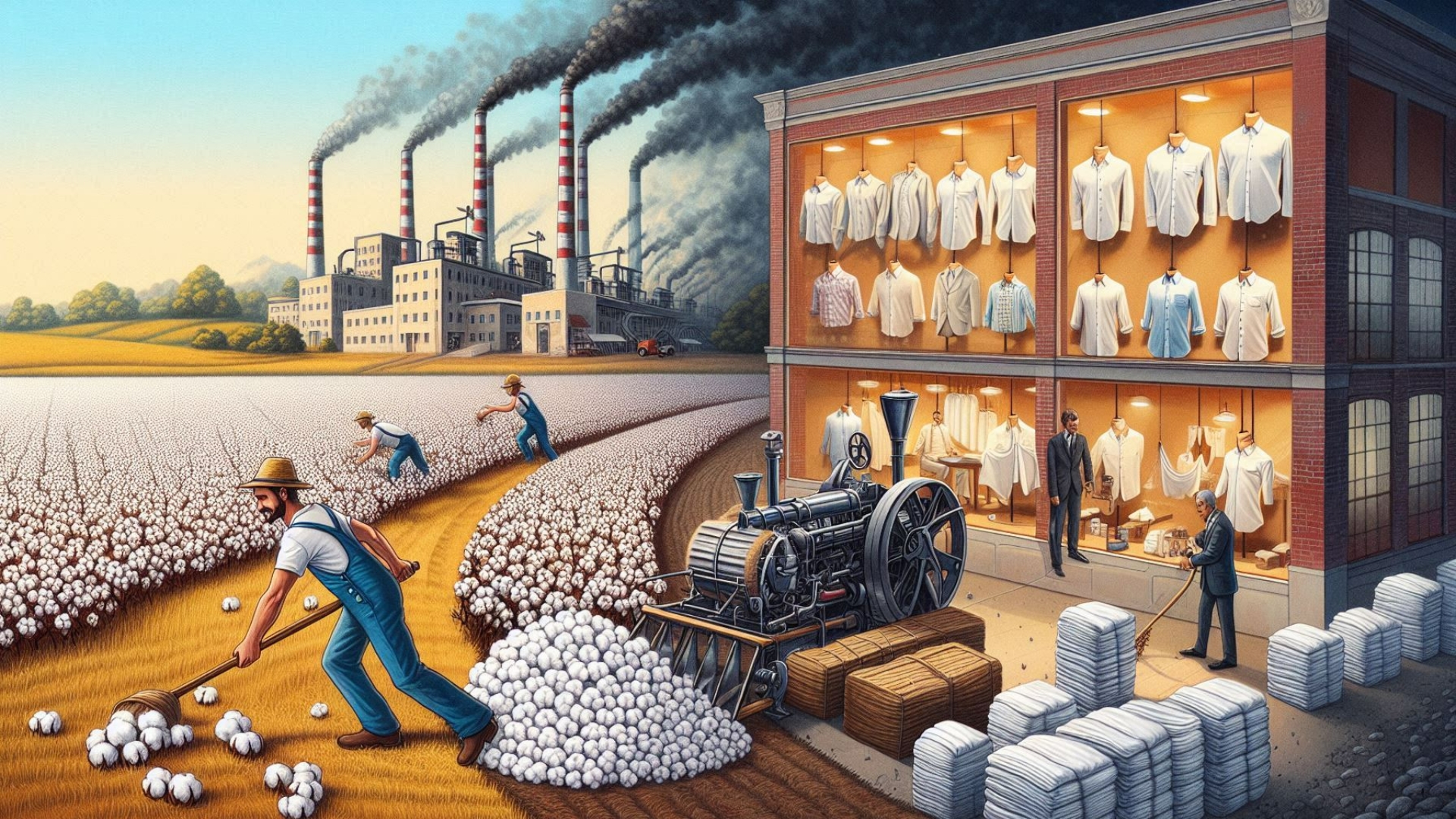
Mechanization and the Condition of the Worker: When did Marx live? Between 1818 and 1883. And when did the Industrial Revolution really take off? From 1760 onward. This means Das Kapital was written during the height of the revolution. Marx saw firsthand how the introduction of machinery affected the working class. He highlighted how machines displaced workers, devalued labor, and drove up unemployment. Using our shirt example, while that 9X gap might have existed in the past, mechanization pushed that gap even further to 20X.
Capital Accumulation: Marx identified capital accumulation as the driving engine of capitalism. Capital must constantly grow and be reinvested to multiply. However, this process inherently leads to massive inequality and class conflict within society. Accumulation causes the working class to grow poorer while capitalists become increasingly wealthy. When making money becomes the primary goal, the objective shifts to perpetual profit and keeping more cash in the vault. The exploitation and surplus value we mentioned earlier, when repeated on a massive scale, widen the gap until a chasm is formed. According to Marx, this is the greatest damage wrought by capitalism.
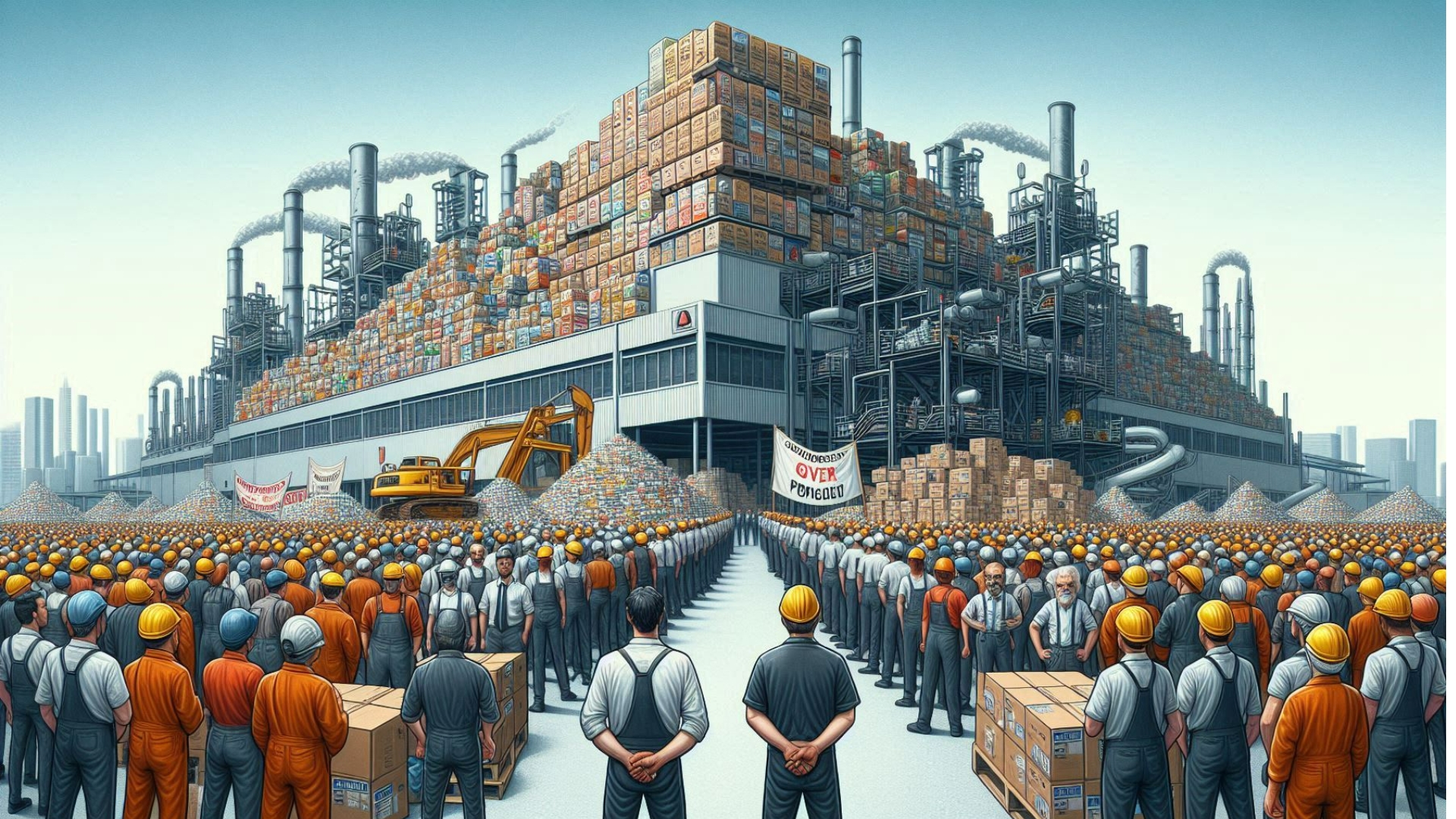
The Collapse of Capitalism: Marx argued that capitalism is inherently prone to crises—fueled by overproduction, insufficient demand, and imbalances in the accumulation process. In his view, these crises are born from the contradictions within capitalism itself; these contradictions accumulate until they trigger a revolution that will ultimately bring the entire system crashing down.
And that is how Das Kapital came to be. Marx didn’t destroy capitalism with this book, of course. It’s been over 150 years since he wrote it, and capitalism has only picked up speed. Still, his narratives shaped the generations and the individuals who have tried to keep capitalism on its tracks ever since. Whether communism is truly “practicable” remains a massive question mark. Which ideology will ultimately prove more viable in the real world is anyone’s guess, but it is undeniable that Marx broke new ground in the history of philosophy.
In short, Das Kapital has left a deep imprint not only on economic theory but also on sociology, political science, and philosophy. Marx’s work has been a defining force in shaping the ideologies of labor movements and socialist and communist parties. This theory, built on the critique of capitalism and the liberation of the working class, has served as a wellspring of inspiration for diverse social movements from the 19th century all the way to the 21st.
References and Further Reading
Feuer, L. S., & McLellan, D. T. (2024, September 23). Karl Marx | Books, Theory, Beliefs, Children, Communism, Sociology, Religion, & Facts. Encyclopedia Britannica. https://www.britannica.com/biography/Karl-Marx
Karl Marx (Stanford Encyclopedia of Philosophy). (2020, December 21). https://plato.stanford.edu/Entries/marx/
McLellan, D. T., & Chambre, H. (2024, September 25). Marxism | Definition, History, Ideology, Examples, & Facts. Encyclopedia Britannica. https://www.britannica.com/topic/Marxism
The School of Life. (2014, December 19). POLITICAL THEORY – Karl Marx [Video]. YouTube. https://www.youtube.com/watch?v=fSQgCy_iIcc
Originally published in Turkish at Doğa Filozofu.