


Known for his satirical wit and dark humor, Kurt Vonnegut stands as one of the most vital critical voices of the 20th century. In works where we get a front-row seat to the destructive nature of war, we frequently encounter dystopian themes and sci-fi elements. His ability to use irony to inject humor into tragic events makes his writing both deeply profound and remarkably entertaining. He earned widespread acclaim, most notably for his novel Slaughterhouse-Five, which was heavily influenced by his experiences during World War II.
Childhood and the Shadow of the Great Depression
Let’s dive into the life that shaped Vonnegut’s worldview and unique style. Born in 1922 in Indianapolis—a city with a large German-American population—Vonnegut’s childhood coincided with the Great Depression, a time when economic collapse and poverty gripped the entire country.
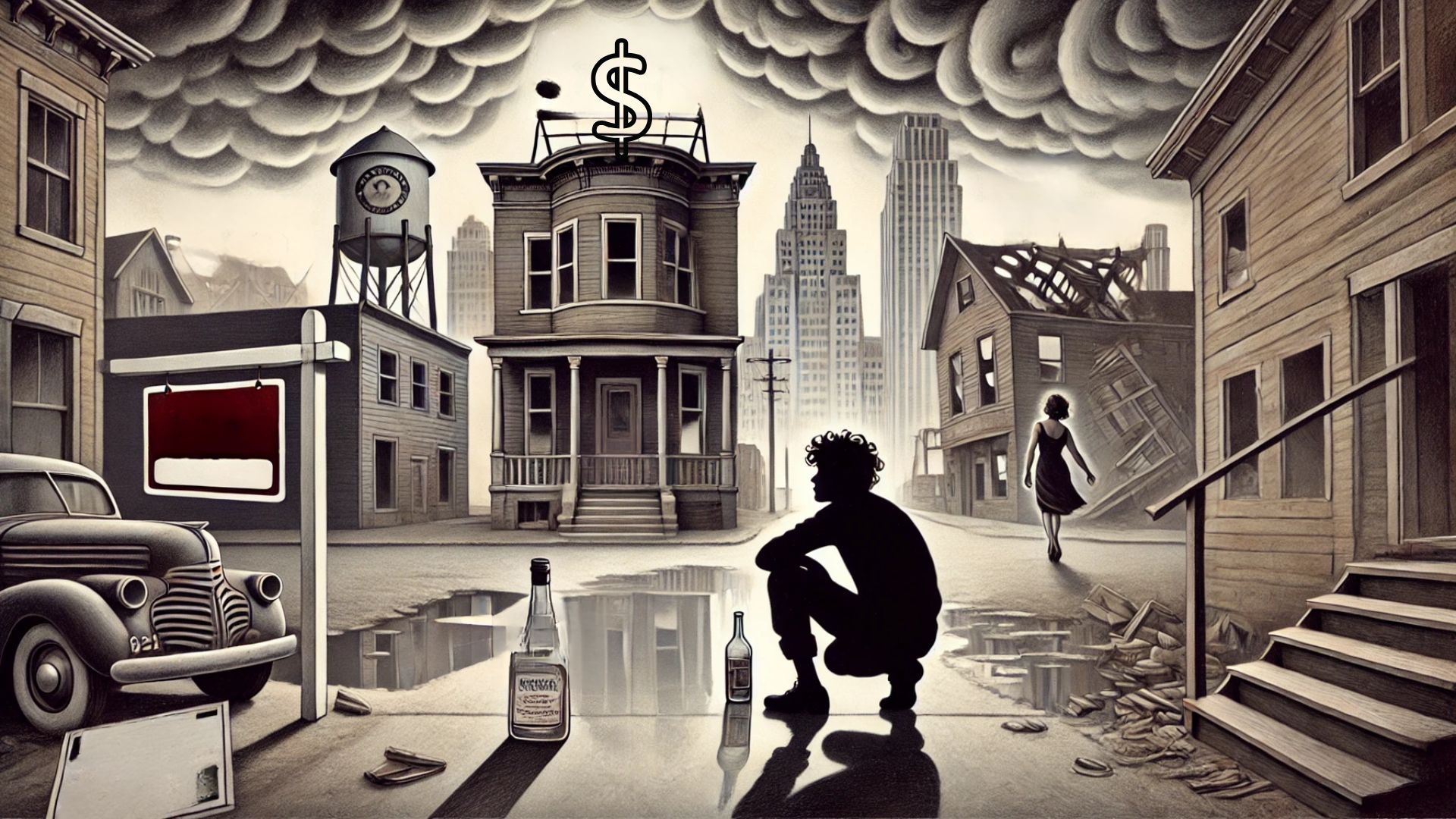
He grew up in a prosperous family; his father was a well-known architect, and his mother came from a wealthy background. However, the Great Depression hit them hard, forcing them to sell their home in Indianapolis and pull Vonnegut out of private school. This fall in status took a heavy psychological toll on the family. His father spiraled into a depression after losing his livelihood, while his mother turned to alcohol and medication. The impact of witnessing both a national catastrophe and growing up in a depressive environment would clearly manifest in his later work.
From Science to War: Education and Military Years
As for his education, we might assume he studied literature or at least something in the humanities, but Vonnegut actually studied biochemistry at Cornell University. During this time, he also served as an editor for the student newspaper. However, it is said that he left his biochemistry studies unfinished to volunteer for World War II. Even though his life hadn’t been smooth sailing up to that point, the true turning point for Vonnegut would be the tragic events he witnessed during the war.
Shortly after joining the army, his mother died by suicide, having taken an overdose of pills. Upon returning to the front, he was captured by the Germans and witnessed the bombing of Dresden—a city he once described as “the most beautiful in the world.” This bombing, one of the greatest traumas in European history, was effectively carried out as an experiment. Despite Germany having already surrendered, the British and American Air Forces leveled the entire city with incendiary bombs just to see how they would perform, leaving people to literally melt to death. Vonnegut and a few other soldiers survived the catastrophe by hiding in an underground slaughterhouse. It would take him 20 years before he could process those images and translate them into his novel, “Slaughterhouse-Five.”
The Beginning of a Writing Career
After the war, he married and worked various jobs, including in advertising, to support his family. He also continued writing short stories. His first novel, “Player Piano,” was published in 1952. In 1957, he lost his sister and took in her three children. Now responsible for a family of eight, Vonnegut focused on writing novels. His books, which explored disasters and strange occurrences with sharp, biting irony, began to gain traction; “Slaughterhouse-Five” was even adapted into a film. By the early 1970s, he had made a name for himself worldwide.

Personal Turmoil and Its Influence on His Work
Unfortunately, these were not bright years for his personal life; he and his wife separated. In the novels that followed, such as “Breakfast of Champions” and “I Am Alive,” he explored the theme of collapsing families.
Kurt Vonnegut, known for his deep and often dark commentary on war and human nature, wrote and thought frequently about loneliness and the weakening of human connections, likely influenced by the dissolution of his own marriage. In this way, loneliness became a recurring theme in his work, serving as both an individual experience and a societal problem.
Views on Society and Loneliness
As a writer who highlighted how social and individual bonds were vanishing—especially after the war—he offered a solution: living in villages of 50 people. In a speech critiquing the effects of globalization and capitalism, Vonnegut argued that to overcome the loneliness brought on by modern life and to build more meaningful social bonds, we need communities of fifty or more people. He famously said, “No matter how old we are, we are going to be bored and lonely for the rest of our lives. We are lonely because we don’t have enough friends and relatives. People need to live in stable, like-minded, extended families of fifty or more. Marriages are failing because our families are too small. A man cannot be an entire society for a woman, and a woman cannot be an entire society for a man. We try, but it’s no wonder so many of us fall apart. That’s why I suggest to everyone here that they join any organization—no matter how ridiculous—just to add more people to their lives.” These words highlight an inescapable reality of our existence in this age. Even though the fast pace of life and technological advancement push us toward a more individualistic and socially isolated lifestyle, Vonnegut’s words can serve as an inspiration.
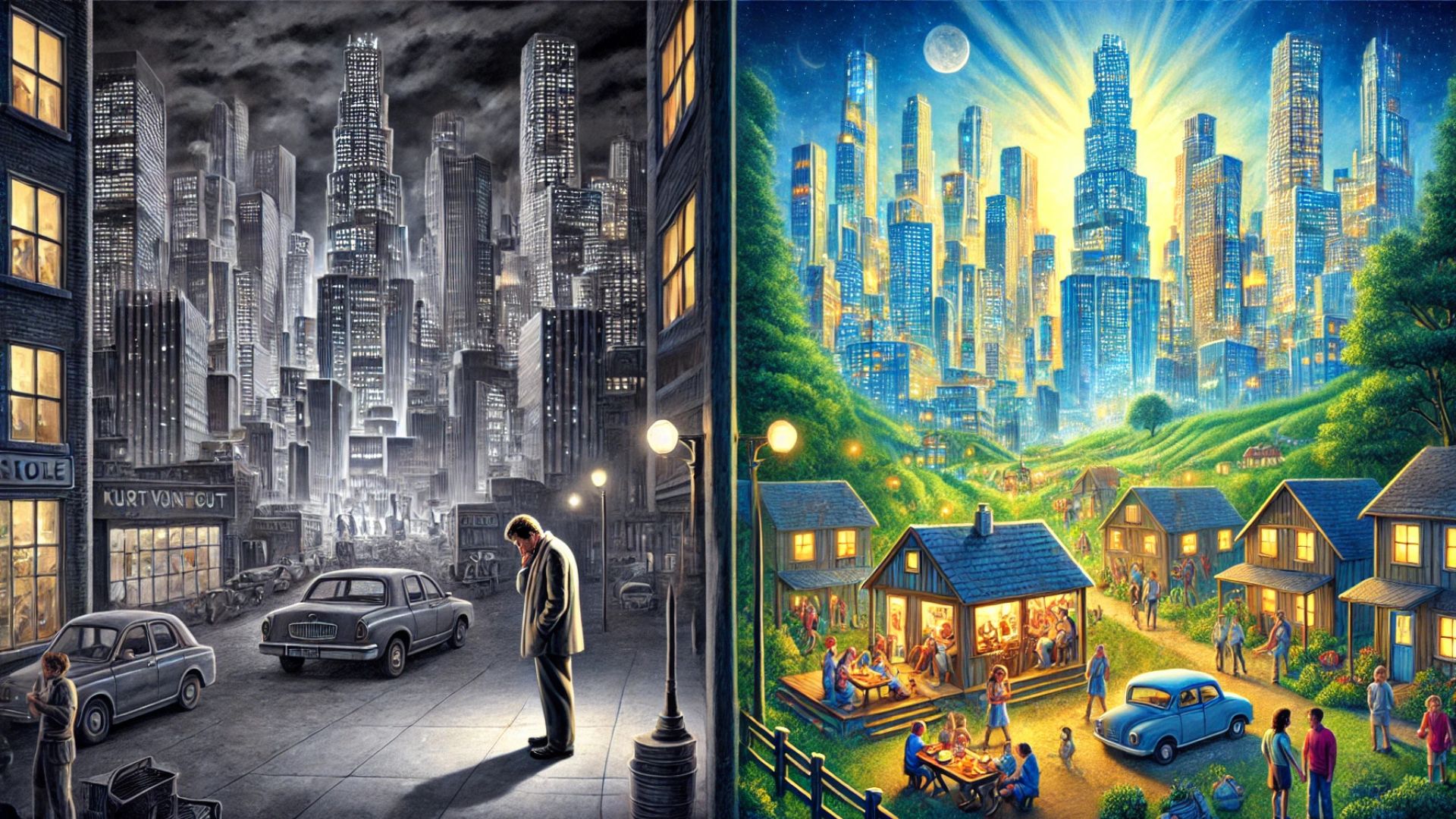
He also noted that women are generally more open to sharing thoughts, feelings, and events, while men tend to connect through shared hobbies or activities. The truth is, regardless of gender, we all have a need to form deeper, more meaningful, and wider connections. Our immediate family and close circle might not be enough for this. Why? As Vonnegut said, the handful of people around us cannot be an entire society. If we go in with that expectation, we’re likely the ones who will end up hurt, and our relationships will suffer. That’s why he suggests we should join any group or activity that interests us, even slightly, to expand our social network. Of course, we don’t need to be best friends with everyone—that’s not even possible! Finding common ground is enough.
Ultimately, while we may not be able to literally establish a ‘village of 50 people‘ in the way Vonnegut envisioned, instead of getting lost in the crowds of big cities and retreating into our own tiny bubbles, we can create communities where we both grow as individuals and build more meaningful interactions. So, what do you think? Are you one of those people who is perfectly happy in their own little world, or are you already starting to build your village?
Yes, our article began with a biography of an author and stretched all the way to today’s social issues. We can almost hear you asking, “How did we get here?” Well, Vonnegut—who used science fiction to escape the pain of reality and essentially said, “this world is a terrible place, let’s invent a new one”—has inspired us to try and escape loneliness by building a “village of 50.”
References and Further Reading
Popova, M. (2022, May 20). Kurt Vonnegut on Reading, Boredom, belonging, and our Human responsibility. The Marginalian. https://www.themarginalian.org/2014/05/12/kurt-vonnegut-if-this-isnt-nice-fredonia/
Kurt Vonnegut Museum and Library. (2022, January 20). Biography – Kurt Vonnegut Museum and Library. https://www.vonnegutlibrary.org/biography/
C, C. J. (2024, August 17). Kurt Vonnegut. The Creative Echo. https://thecreativeecho.com/kurt-vonnegut/
Originally published in Turkish at Doğa Filozofu.