


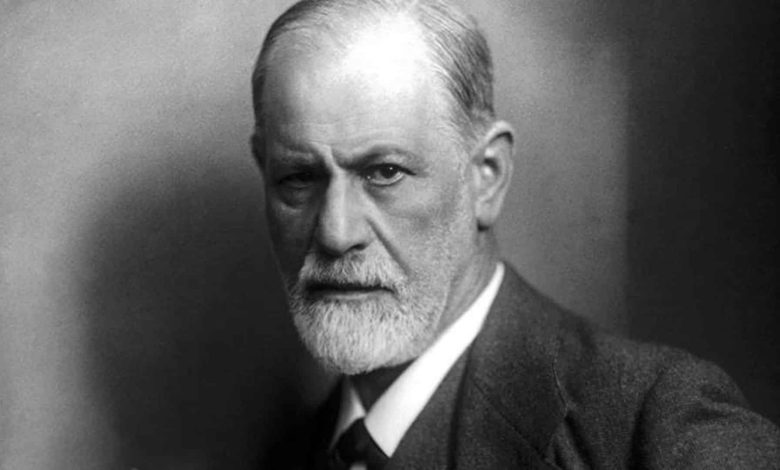
You are about to meet a man who wandered into the dark corners of the mind, descending into the most intimate layers of the self to decode human nature: Sigmund Freud. To label him merely as a psychiatrist or neurologist would be an understatement; he was an intellectual titan who steered the course of history. Perhaps that is why, when you hear the name “Freud,” your mind drifts not just to psychology, but to literature, philosophy, art, and gender studies. Freud was both a champion and a provocateur in the universal struggle to understand what makes us human. In this piece, we’ll embark on a journey through his life, his theories, and his relentless attempt to grasp the human psyche. Of course, we aren’t here to put him on a pedestal, are we? When we examine his work through a modern lens, it’s impossible to ignore the shadows he left behind and the deep cracks in his theories. So, we’ll be exploring both his monumental contributions and his significant shortcomings. If you’re ready, let’s get to know this controversial pioneer of modern psychology a little better.
A Portrait of the Scientist: Freud’s Life
To understand Freud’s psychology, it’s helpful to understand the man himself, don’t you think? So, let’s take a quick look at his biography and get a better sense of this legendary figure.
Sigmund Freud was born on May 6, 1856, in the town of Freiberg in the Austrian Empire (modern-day Příbor, Czech Republic). Born into a Jewish family, he moved to Vienna as a young child and spent the better part of his life there. His early intellectual brilliance was evident to his family, who made sure his education was a priority. In 1873, he began his medical studies at the University of Vienna, focusing heavily on the nervous system and specializing in neurology. This effectively debunks the claim that he started from nothing; in an era when “psychology” as a formal science didn’t exist, he dove deep into the closest available field: neuroscience. So, what pushed him toward his later work? The answer is Jean-Martin Charcot.
Charcot’s work on hypnosis and hysteria shaped Freud’s belief that mental illnesses could stem from psychological, rather than purely physiological, causes. After a short stint in Paris, Freud returned to Vienna to open his own practice, where he began treating nervous disorders. Among his most famous works is Studies on Hysteria (1895).
Throughout his life, he was a lightning rod for debate in academic and intellectual circles. In 1938, following the annexation of Austria by Nazi Germany, he was forced to flee to London. He spent his final years battling jaw cancer and passed away in London on September 23, 1939.
Of course, there is much more to his life than that, but we’ll save the details of his family life for later in the article to keep the suspense alive.
The Building Blocks of the Mind
Freud is widely recognized as the thinker who profoundly influenced the history of psychology and laid the foundations for modern psychotherapy. His most striking contribution was viewing the human mind as a layered structure consisting of the unconscious, preconscious, and conscious levels. According to Freud, a significant portion of our behavior is shaped by unconscious processes we aren’t even aware of. This approach revealed that our internal world cannot be understood merely through observable behavior; it requires a deep-dive analysis. The term “subconscious,” which everyone uses in conversation today, is a concept rooted in Freud’s theory. But that’s not his only contribution—there are also the innovations he brought to psychoanalysis. Freud’s psychoanalytic theory centers on three structural concepts: the id, the ego, and the superego. These structures were developed to explain our internal conflicts, impulses, and moral orientation. The id is the source of primitive impulses, driven by the pleasure principle—this is where our sexual urges and hunger originate. The ego operates on the reality principle, trying to balance those impulses with the constraints of the real world; if you’re trying to lose weight, the ego negotiates between your hunger and your goal. Finally, the superego represents our social and moral norms. For example, if a woman becomes a mother, the superego pushes her toward “acceptable” maternal behavior. We can say the superego exists in both conscious and unconscious processes.

Sexuality and Personality Development
Now, we arrive at Freud’s most provocative theories. Here, we will explore his views on how humans experience sexuality and how, from childhood through puberty, our personalities are molded by these forces.

One of the most radical suggestions Freud brought to psychology was that sexuality is a defining force from infancy. At the turn of the 20th century, in a world that idealized children as “innocent angels,” Freud’s introduction of the concept of “infantile sexuality” was shocking and ignited intense controversy. To him, the libido—our sexual energy—passes through various developmental stages from birth, and our personality is shaped by these phases. How? For instance, he categorized a child sucking their thumb as an early form of masturbation. He viewed the withholding and releasing of feces as a form of pleasure-seeking. For Freud, sexuality was not something that began at puberty; it was a process starting from birth, and as long as humans exist, sexuality will always be present. While this narrative was considered highly problematic at the time, variations of this idea remain prevalent in accepted psychological theories today. The real trouble, however, begins with personality development.
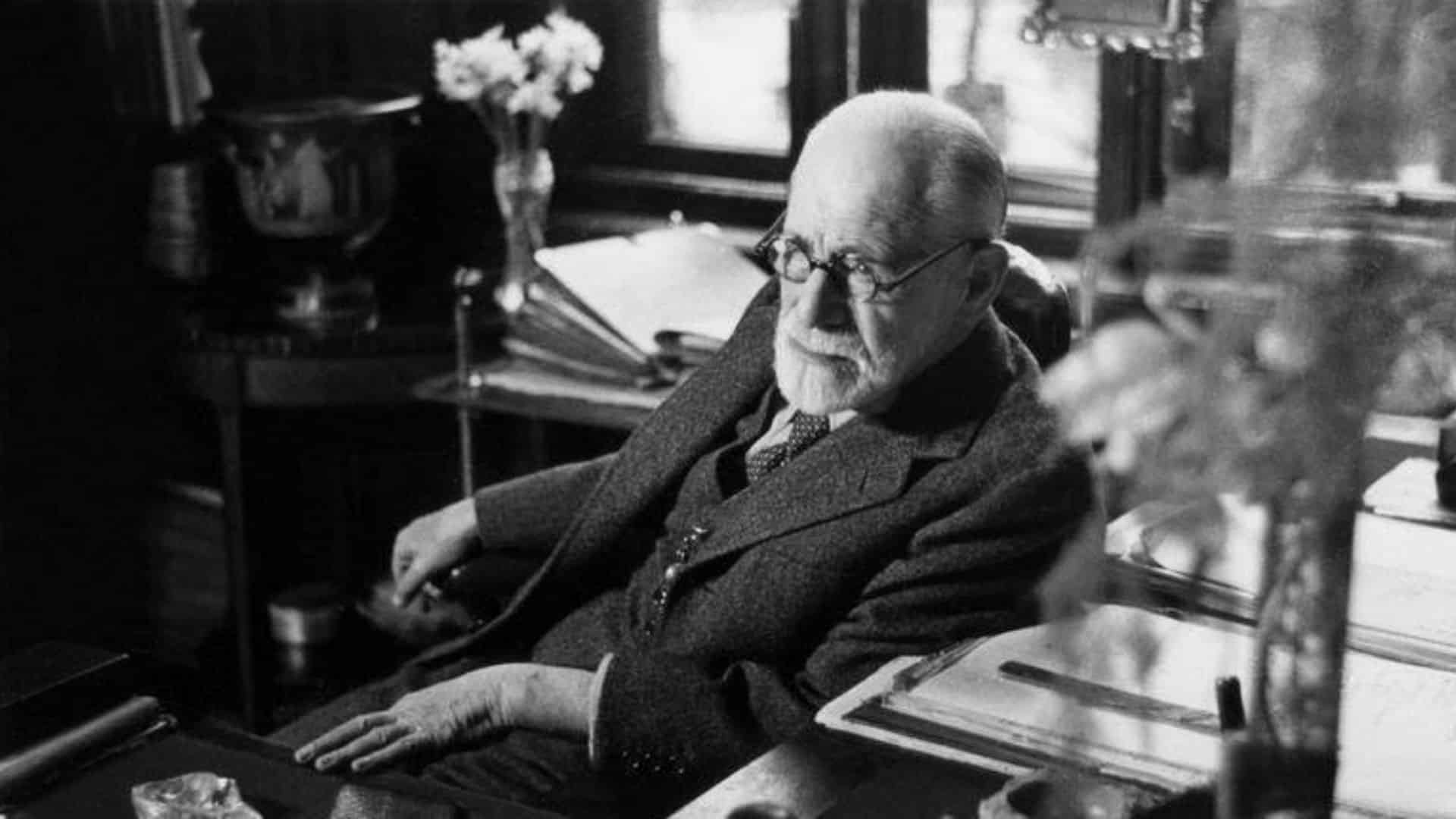
For Freud, sexuality and personality development are inseparable. He defined sexual development in five stages: oral, anal, phallic, latent, and genital. In each stage, the libido focuses on a specific part of the body. The phallic stage, in particular, gives rise to one of his most debated theories: the Oedipus Complex, where a child feels desire for the parent of the opposite sex and rivalry toward the parent of the same sex. According to this theory, a boy envies his father and desires his mother; if this conflict isn’t resolved, the individual cannot develop a healthy sexual identity. Freud believed this conflict often remains unresolved, meaning many people never truly achieve a healthy sexual identity. In Freud’s view, the summary of a man’s psychological and physiological development is this: he begins by falling in love with his mother and wanting her as his partner. Because there is another man (the father) in the way, he wants to defeat and surpass him—but since he is just a child, he sees how the father defeats him. The father is taller, stronger, has a deeper voice and thicker beard. So, the child wants to become like that father to win the love of the mother he desires. That, according to Freud, is how a man begins his sexual development. If he can break free from this complex, great—but Freud believed the chances of that were slim.

A woman’s journey is different. Freud centered his model of development on the male experience, defining the female as an “absence” or “lack” outside that center. He argued that young girls experience “penis envy,” that their attachment to their mother shifts to the father, and if this isn’t resolved, neurotic structures form around the ideal of the “unattainable father.” This approach naturally drew massive backlash because it failed to treat women as individuals in their own right, viewing them entirely through a male lens. While Freud was criticized for this during his time, he persisted regardless. According to him, a healthy individual reaches the genital stage, develops a heterosexual orientation, and channels their libido into social productivity. Of course, this approach isn’t fully accepted today, as it defines both gender identity and sexual orientation within a narrow, heteronormative, and biological framework.
Criticisms and Freud
Throughout this article, we’ve discussed how Freud’s theory was ahead of its time and how it remains a cornerstone of modern psychology. Ultimately, everyone who followed him was influenced by his work—some supported it, and others… well, they criticized it. Let’s look closer at those criticisms. We’ve already touched on the first one: his tendency to homogenize individuals and center everything on the male experience. Then there is the scientific critique: Freud’s theories aren’t easily proven or disproven. Because they aren’t based on controlled experiments but rather intuitive observation, philosophers of science like Karl Popper called them “unfalsifiable” and dismissed them as pseudoscience. Because of this, psychoanalysis has often been treated more as an art of interpretation or a philosophical system than a hard science. Another issue is the reliance on a single, monolithic narrative. Freud’s theories are largely based on the mental structures of middle-class Europeans in late 19th-century Vienna. This has sparked significant debate about the universality of his work. It’s been observed that the experiences of individuals from different cultural contexts don’t perfectly align with Freud’s psychosexual model, and structural assumptions like the Oedipus Complex aren’t observed in every society. This has led to the criticism that Freud ignored cultural context. Finally, as you’ve likely gathered from our focus on sexuality, he is criticized for explaining human nature primarily through instinctual drives like sex and aggression, while neglecting the cognitive, social, and ethical aspects of the individual. By defining the human experience through internal conflict, he arguably pushed meaningful relationships with the outside world into the background.

Interestingly, after theorizing so much about sexual development, looking at Freud’s life through his own lens reveals that he was very much a product of the dynamics he described. Freud generally held a skeptical view of women’s intellectual capacity, often referring to them in his writing as a “dark continent.” This view seeped into how he treated his own daughters. It was observed that he kept a distance from his daughters’ attempts to act with full independence in academic or professional spheres.
Because Freud defined women largely through the lens of lack or deficiency, it led his daughters to develop in a way that remained subservient to the “idealized father figure.” His daughter Anna followed in his footsteps, dedicating her life to the science of psychology. Anna Freud never married and lived a life where her sexuality was largely suppressed. Some historians and psychoanalytic researchers suggest that Freud hindered Anna’s ability to form an individual identity, consciously or unconsciously limiting her liberation. In particular, interpretations regarding Anna’s romantic feelings toward other women led to the criticism that Freud, under the guise of “psychoanalytic resolution,” turned into a controlling father figure.

Freud’s attempt to fit his daughter’s sexuality into “normative” heterosexual schemas—both theoretically and practically—is seen as a factor that cast a shadow over her personal autonomy. In these respects, Freud can be viewed as a figure who was trapped by the very boundaries of his own theories, both in his work and his personal life. The attitude he displayed toward his daughters requires us to understand him not just as a theorist, but as a product of his era and his own unconscious.

After all we’ve covered, when you look at Freud’s life and thoughts, you realize he wasn’t just a theorist; he was a figure who embodied the spirit of an entire age. His theories contain the traces of patriarchal structures and scientific limitations just as much as they contain ideas about sexuality, repression, and internal conflict. Viewed through today’s eyes, some of his opinions might seem outdated or even harmful, but we shouldn’t forget that Freud made one of the first great attempts to translate the inner human world into a scientific language. With his theories, he laid the groundwork for modern psychology, psychotherapy, and even artistic analysis. To simply criticize or glorify him would be to miss the intellectual momentum he represents. And that is where you come in. How far do you think he was right, and where do you think he went wrong?
References and Further Reading
Çankaya, T. (2023, December 13). Who is Sigmund Freud? The Contributions of Psychoanalysis Founder Freud to Psychology. Hiwell. https://www.hiwellapp.com/blog/sigmund-freud-kimdir
Güçlü Psikoloji. (2020, November 30). 5 Extraordinary Theories About Sexuality That Caused an Uproar When Freud First Said Them [Video]. YouTube. http://www.youtube.com/watch?v=4d4U9cMBjcw
Jay, M. E. (2025, December 31). Sigmund Freud. Encyclopedia Britannica. https://www.britannica.com/biography/Sigmund-Freud
Originally published in Turkish at Doğa Filozofu.