


What is Existentialism?
To put it roughly, existentialism tries to understand the essence of our existence, but more than that, it explores how that existence shapes us. While branches like ontology and epistemology lean toward highly analytical efforts, existentialism puts a premium on common sense. In other words, it’s less concerned with *why* we exist and more focused on how to best manifest our presence here. For existentialists, the state of being alive is what directly forms our essence, creating either a sense of meaning or a profound lack thereof.
Existentialists argue that a human life is an ongoing search for meaning. They contend that we are thrown into this world and left to swim in a sea of meaninglessness. Yet, through our freedom, our intellect, and our common sense, we create meaning within this absurd world—or, at the very least, we aspire to.
Starting to sound a bit complicated? Let’s dive in and clear things up by looking at some key thinkers. We’ll start with the man who essentially kicked off the existentialist tradition: Søren Kierkegaard.
Søren Kierkegaard: Fear and Trembling
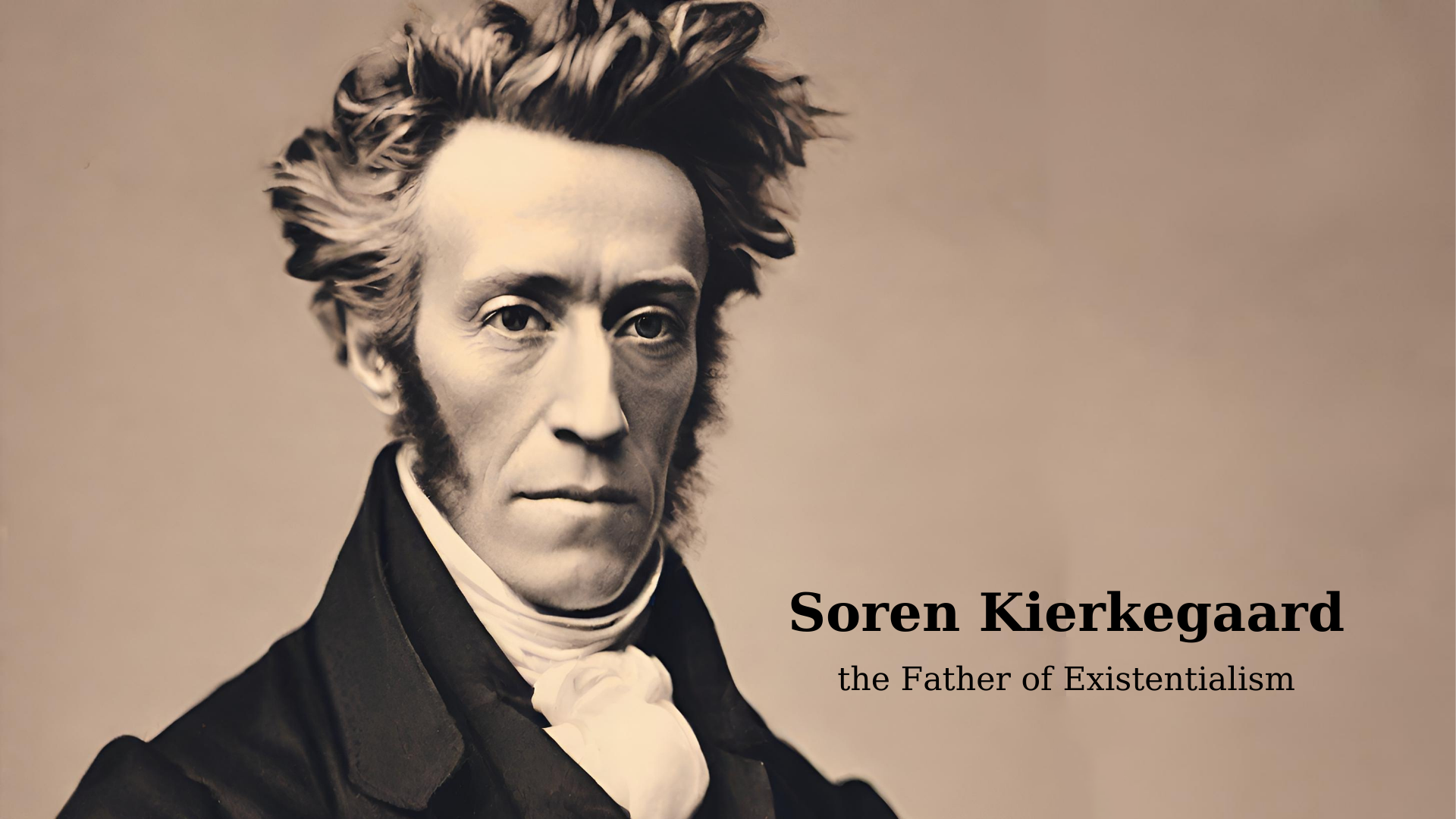
Truth be told, Kierkegaard isn’t an easy philosopher to digest. While much of existentialism leans toward an atheistic view—finding absurdity in a silent universe—Kierkegaard remained a deeply religious Christian who still saw the world as fundamentally absurd. He believed we must strive to understand why God placed us here, but he acknowledged that this reason is far from obvious. Unlike general Christian dogma, which suggests our purpose is pre-ordained, Kierkegaard emphasizes the individual’s role in self-creation. We are here, and our boundaries are real. There are rules to follow, but in Kierkegaard’s view, these are few. Our primary goal is to understand our existence, achieving this through the very paths of existential struggle we’ve discussed. Later, Nietzsche would take this concept of freedom and self-creation much further.
Friedrich Nietzsche: From Camel to Child
When it came to finding meaning, Nietzsche didn’t take the gentle approach Kierkegaard did. To him, God was dead. The only thing that makes us who we are is ourselves. We live in a state of infinite freedom, and nothing imposed upon us from the outside can ever make us truly free or authentic. It’s impossible to cover all of Nietzsche’s philosophy here, but he left us a brilliant metaphor for this transformation. According to this story, we start out as camels. We are loaded up with burdens, others ride upon our backs, and our path is chosen for us. This represents the systems—schools, politicians, and yes, even religion—where we are given orders and taught to submit. Nietzsche argues that by believing in these authorities, people surrender their freedom and invite the weight of the world onto their shoulders. Eventually, however, they transform into lions. In this phase, they engage in a fierce battle with the dragon of authority. This fight isn’t easy; you risk being cast out and losing the comforts that the authorities once provided. If you win, you’re left scarred, but finally free. In the end, you are reborn as a child: unburdened, playful, and truly liberated.

Nietzsche’s stark narrative was meant to show that shedding the weight of external authority is the only path to true freedom. Later, Sartre and Camus would express similar ideas with a softer, more nuanced touch.
To learn more about Nietzsche, you can read our piece, “Friedrich Nietzsche and Philosophy.”
Softened Freedom
Jean-Paul Sartre, a titan of existentialism, emphasized human freedom and personal responsibility. With his famous phrase, “Existence precedes essence,” he argued that human nature isn’t something pre-determined, but rather something shaped by our own choices and actions. In doing so, he echoed Nietzsche’s call to break free from external necessities and take ownership of our lives. Camus, meanwhile, focused heavily on the absurdity of life, yet he argued that this meaninglessness shouldn’t make us turn away from life—it should be the very reason we cling to it all the more tightly. After all, what else do we have? What could be more important than your own life?
To better understand Sartre, check out our article, “Jean-Paul Sartre: Existence Precedes Essence,” and for more on Camus, see our piece, “Albert Camus: The Most Valuable Thing is Living.”
As we can see, all existentialists place life and freedom at the center of their work. They believe that all the external baggage we carry prevents us from truly being ourselves. Only by striving to find our own existence and living this life to the fullest can we become truly free and authentic individuals.
But, were there those who criticized this pursuit of freedom and meaning? Let’s take a look at those critiques together.
Criticisms of Existentialism
Excessive Pessimism and Meaninglessness: Existentialism suggests that the universe is fundamentally devoid of meaning and that the search for such meaning is inherently futile. This focus on the void can lead to a sense of crushing pessimism.
Ignoring Collective Issues: Critics often argue that because existentialism is so laser-focused on individual existence and personal search, it turns a blind eye to social and political realities. This way of thinking is frequently criticized for being ill-equipped to solve collective problems. Sartre, in particular, was often accused of being apolitical.
The Balance of Freedom and Responsibility: While existentialists emphasize the link between freedom and responsibility, critics argue that they prioritize personal liberty at the expense of social duty. In the works of philosophers like Nietzsche, the concept of responsibility toward the community often takes a backseat.
The Burden of Meaning and Lack of Happiness: Existentialism demands that we create our own meaning. However, this process often happens in a painful, indifferent world. Because of this, some argue that existentialism neglects the importance of human happiness and contentment.

References and Further Reading
Abbagnano, N. (2024, June 19). Existentialism | Definition, History, Characteristics, Examples, Types, & Facts. Encyclopedia Britannica. https://www.britannica.com/topic/existentialism
BBC Ideas. (2019, May 30). What is existentialism? | A-Z of ISMs Episode 5 – BBC Ideas [Video]. YouTube. https://www.youtube.com/watch?v=H_tgqj9MU8M
Eternalised. (2021, February 12). Existentialism in 10 minutes [Video]. YouTube. https://www.youtube.com/watch?v=zAQYtolfB4g
Existentialism | Internet Encyclopedia of Philosophy. (n.d.). https://iep.utm.edu/existent/
Existentialism (Stanford Encyclopedia of Philosophy). (2023, January 6). https://plato.stanford.edu/entries/existentialism/
Sartre, Jean Paul: Existentialism | Internet Encyclopedia of Philosophy. (n.d.). https://iep.utm.edu/sartre-ex/
Originally published in Turkish at Doğa Filozofu.