


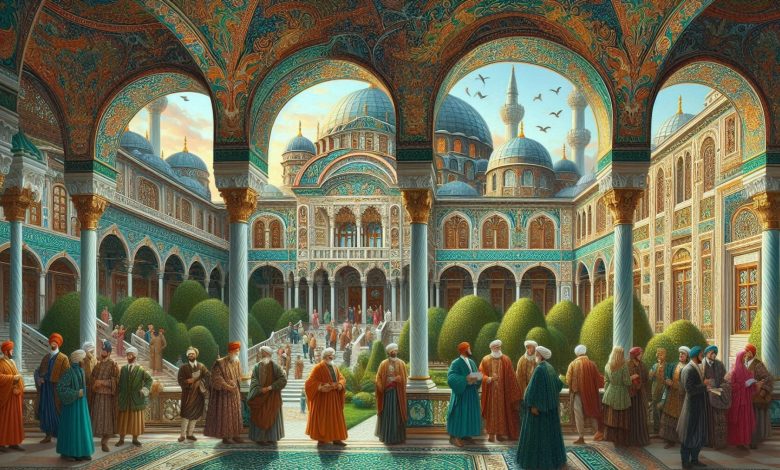
Who is the most dominant power in Turkish history? Turkish history is packed with military triumphs, and while many states have met the criteria of being a “power,” none possessed a structure as organized and stable as the Ottoman Empire. In this series, we’ll examine the Ottoman Empire from its founding to the day it gave way to the Republic of Türkiye. Of course, it’s worth noting from the very first post that it would be impossible to fit every detail of an empire about which historians like Halil İnalcık, İlber Ortaylı, and so many others have written volumes—and could write as many again—into these articles. Still, we want to provide a detailed summary to give you a foundational understanding of the Ottomans. Let’s dive in!
Anatolia Before the Ottomans
Before the Ottomans, Anatolia was under the pressure of the Byzantine Empire as well as the Mongol Empire. The Seljuks were weakened by Mongol influence and eventually disintegrated due to Byzantine intrigue and coups. As a result, many small principalities, or *beyliks*, emerged in Anatolia. These principalities controlled various regions, and the Ottoman Beylik was one of them. The region where the Ottomans were founded, Bithynia (modern-day Bilecik and Bursa), was a strategic area between the Byzantine Empire and the Seljuks. The military weakness of the Byzantines in this region and the general chaos of the time set the stage for the rise of the Ottoman Beylik.
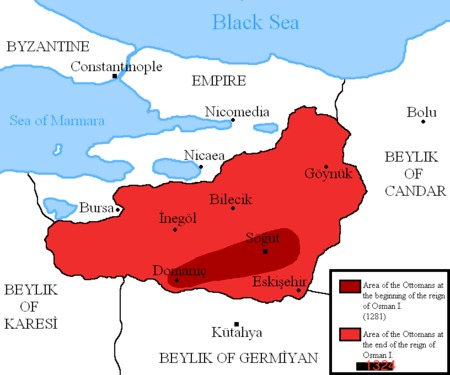
The House of Osman, organized in the red region you see on the map above, was the initial form of the Ottoman Empire. Osman Bey, the founder of this principality, hailed from the Kayı tribe of the Oghuz Turks. After the death of his father, Ertuğrul Gazi, Osman Bey took the lead in 1281. The center of the principality was around present-day Bilecik and Söğüt. Osman Bey maintained his existence as a small frontier principality on the Byzantine border, but he expanded his territory thanks to the weakness of the Byzantines and his own military talent. The year 1299 is generally accepted as the founding date of the Ottoman State. And just like that, a state that would endure for over 600 years was born! Its founder, Osman Bey, ruled the state he built from 1281 to 1326. During this period, the Ottoman Beylik remained a small frontier principality. Even so, several events occurred during this time that would prove critical for the Ottoman State.
The first of these was the Battle of Bapheus in 1302. In this battle, Osman Bey won a significant victory against the Byzantine Empire. This victory demonstrated that Byzantine authority in the region was seriously weakening while the Ottomans were gaining strength. In other words, even though the state had only just been founded during Osman Bey’s reign, it was able to triumph over its greatest threat: the Byzantine Empire. Naturally, these victories would only increase as time went on.
Building the State
With the death of Osman Bey in 1326, his son Orhan Bey took the helm. Orhan Bey’s reign was a crucial period in transforming the principality into a state. Orhan Bey expanded the legacy he inherited from his father, securing territorial gains in both Anatolia and Rumelia. One of the most important steps in the Ottoman Beylik’s military campaigns against the Byzantine Empire was the conquest of Bursa. In 1326, Ottoman forces led by Orhan Bey besieged and captured Bursa, which was held by the Byzantines. With this conquest, the Ottoman State gained a permanent and strategic capital. Bursa became the political and economic heart of the Ottomans. By constructing numerous mosques, madrasas, and social complexes, the city was transformed into a vital center of culture and commerce. The conquest of Bursa was also a turning point where the Ottomans began to gain the upper hand against the Byzantines.
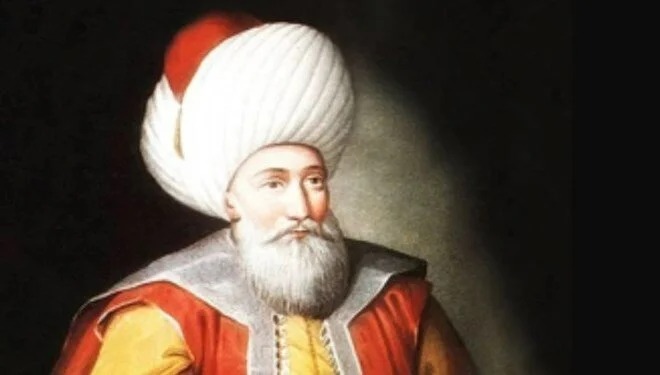
After the conquest of Bursa, the state’s territory expanded further during Orhan Bey’s reign with the capture of İznik and İzmit. Simultaneously, with the conquest of Gallipoli, the Ottomans had finally set foot in Rumelia.
To ensure the continuity of these victories and to solidify the state, Orhan Bey took two major steps. The first was the establishment of the *Yaya* and *Müsellem*, the first regular army. In addition, Orhan Bey minted the first Ottoman coin, both strengthening the economy and legitimizing the state he had established.
Orhan Bey also aimed to unify the other *beyliks* under the Ottoman banner. Over time, this goal bore fruit, and in 1345, the Karesioğulları Beylik, one of the significant Turkish principalities in Anatolia, joined the Ottoman State during Orhan Bey’s reign. This incorporation allowed the Ottomans to consolidate their political unity in Anatolia and engage in maritime activities. The Karesioğulları provided the Ottomans with a powerful navy, boosting their naval strength. Furthermore, this event brought talented commanders like Süleyman Pasha, who played a key role in the Ottoman crossing into Rumelia, into the Ottoman army.
Conqueror of the Balkans: Murad I
Orhan Bey, who ruled the state for 36 years, died in 1362. Thus, Murad I, who would carry the Ottomans into the Balkans, ascended the throne. Upon his accession, he made the newly conquered city of Edirne the capital of the country. This was, in effect, a way for the new Sultan to show where his interests lay. The Ottomans were now facing the Byzantine and Bulgarian Kingdoms. After Murad I began operating in the Balkans, unease grew in Christian Europe. Following calls from Byzantium, Christian forces united to form a Crusader army. Their goal was to halt the Ottoman conquests in the Balkans. Thus, the Battle of Maritsa (Sırpsındığı) took place in 1364, where the Crusader army and Ottoman forces clashed.
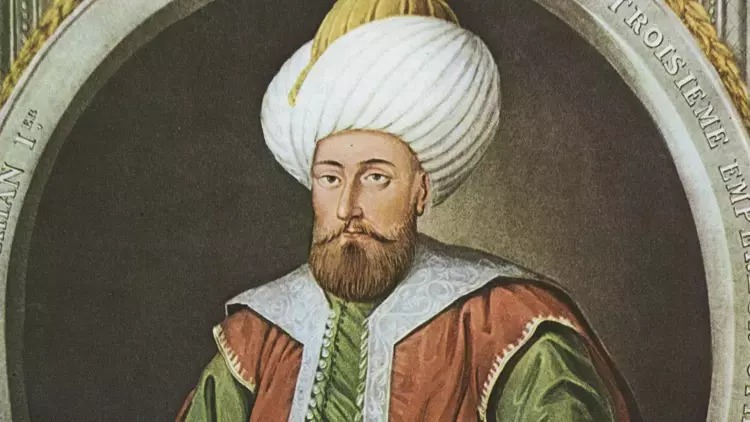
The Battle of Maritsa began with intense clashes between the Ottoman army under the leadership of Murad I and the Crusader forces. The Ottomans had arrived at the battle with sound strategy and discipline. Analyzing the enemy forces, Murad I developed an effective counter-tactic. The Ottoman army managed to break the enemy’s resistance with its disciplined units and innovative war tactics.
During the battle, the Ottomans effectively utilized their archers and cavalry units to surround the enemy. The Crusader units weakened under the unexpected attacks and rapid maneuvers of the Ottomans. The Battle of Maritsa was won, and Murad I demonstrated that the Ottomans, even on their own, could defeat a Crusader army.
Also during the reign of Murad I, a recruitment tradition known as the “Pençik” system began. This system would later contribute to the establishment of the Janissary Corps.
Murad I was remembered for both his strategic intelligence and his focus on the West. As his name (the first “Murad”) suggests, he would be the subject of another “first” for the Ottomans, though unfortunately, this one would not be a happy occasion.
After winning the Crusade, Murad I faced the Serbian Kingdom—one of the architects of that war—in 1389. Although the Ottomans won this battle, Murad I was struck down by a dagger held by a wounded soldier after the fighting ended, thus becoming the first Sultan to be martyred on the battlefield.
Like a Thunderbolt!
Following the death of Murad I, Bayezid I ascended the throne. However, he was better known by his nickname than his name: Yıldırım (The Thunderbolt)!
He earned this moniker due to the rapid and risky conquest attempts he carried out one after another.
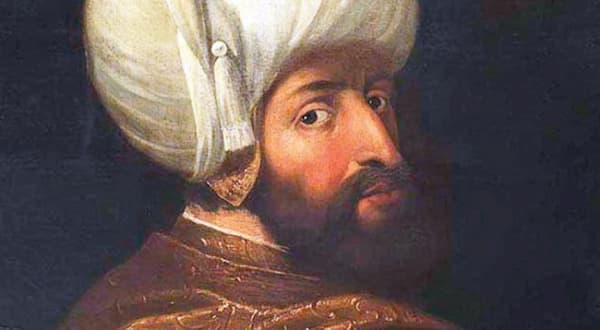
In 1391, while Bayezid was on a campaign in Kastamonu in Anatolia, Wallachian forces suddenly crossed the Danube River and advanced as far as Karinabad. Bayezid I immediately turned his forces toward Karinabad and confronted the Wallachian army. The Ottoman army won the battle and captured the Wallachian leader. As a result, Wallachia offered full submission to the Ottomans.
Just two years later, in 1393, he captured Tarnovo, the capital of the Bulgarians. He brought the Danube fortresses of Silistra, Nicopolis, and Vidin—which had been occupied by a joint Hungarian-Bulgarian force—back under Ottoman rule. Bulgarian King Shishman and his son Alexander, who had barricaded themselves in Nicopolis, fell captive to Bayezid I after a short siege.
In 1394, after taking Thessaloniki and Yenişehir (the Peloponnese), Ottoman armies pushed as far as Thessaly and Albania. Looking at these developments alone, you can see why Bayezid moved like a thunderbolt.
Naturally, these conquests by Bayezid spurred the Crusader forces into action once more, and a new coalition met the Ottomans at Nicopolis in 1396. The Ottomans defeated the Crusader forces again in the Battle of Nicopolis, clearly demonstrating Ottoman power in the Balkans. During these same years, Bayezid unified the Anatolian *beyliks* under the Ottoman banner, gaining strength in both Anatolia and the Balkans. Just as everything was going smoothly, the only power capable of defeating the “Thunderbolt” appeared on the horizon: Timur.
Timur was a Turkish ruler who wanted to turn his forces toward Asia. This Asian campaign was to be a massive undertaking, and Timur did not want any state to attack him during his absence. Therefore, he was making agreements with his neighbors, but these agreements could not be reached with Bayezid. Insult-laden correspondence and challenges were exchanged between the two rulers, which brought Timur and Bayezid into conflict even before the campaign began.
Ultimately, the Timurid State and the Ottoman State clashed, and the Battle of Ankara broke out in 1402. The Timurid State won the battle, and Yıldırım Bayezid was taken prisoner. Refusing to accept his captivity, Bayezid committed suicide using poison he carried in his ring, leaving the Ottomans without a Sultan. Normally, this period without a leader would have ended with one of his sons taking the throne, but that is not what happened. The country entered an 11-year period known today as the Ottoman Interregnum due to the struggle between his sons.
The Interregnum (1402-1413)
During these years, Bayezid’s sons entered a struggle for the throne. The four brothers built their own supporting power bases and fought amongst themselves, which led to the state remaining without a monarch for 11 years.
In the end, Mehmed I, or Çelebi Mehmed, took control of the state, and the Interregnum came to an end. As soon as he took the throne, Çelebi restored the order that had been disrupted during those 11 years and worked to bring the *beyliks* back under the Ottoman umbrella. Though his reign lasted only 8 years—cut short by the 11-year Interregnum—Çelebi Mehmed passed away in 1421. Nevertheless, in those 8 years, he saved the Ottoman State from the brink of collapse.
Restoration and Rise (1421-1453)
Following the death of Çelebi Mehmed, his son Murad II ascended the throne. Following in the footsteps of Murad I, he turned his focus toward the Balkans. When Murad II took the throne, the state was facing both internal and external threats; however, he managed to handle this process well and overcome the difficulties. First, he attempted to besiege Constantinople, the capital of the Byzantine Empire, in 1422, though he was unsuccessful. Following this, he launched campaigns against Serbian, Hungarian, and other Christian states in the Balkans, expanding Ottoman territory by capturing Thessaloniki in 1430. Beyond his military successes, Murad II carried out important reforms in state administration, strengthening the effectiveness of the Ottoman army by regulating the tax system and increasing military discipline. Although he abdicated the throne in 1444 in favor of his son Mehmed II, he returned to power in 1446 and held the reins of the state. Murad II participated in the Battle of Varna (1444), one of the most important events of his era. This battle ended in victory for the Ottoman army against Christian forces and solidified Murad II’s military leadership. Dying in 1451, Murad II made a massive contribution to the strengthening of the Ottoman Empire, most notably setting the stage for Mehmed II to conquer Istanbul.
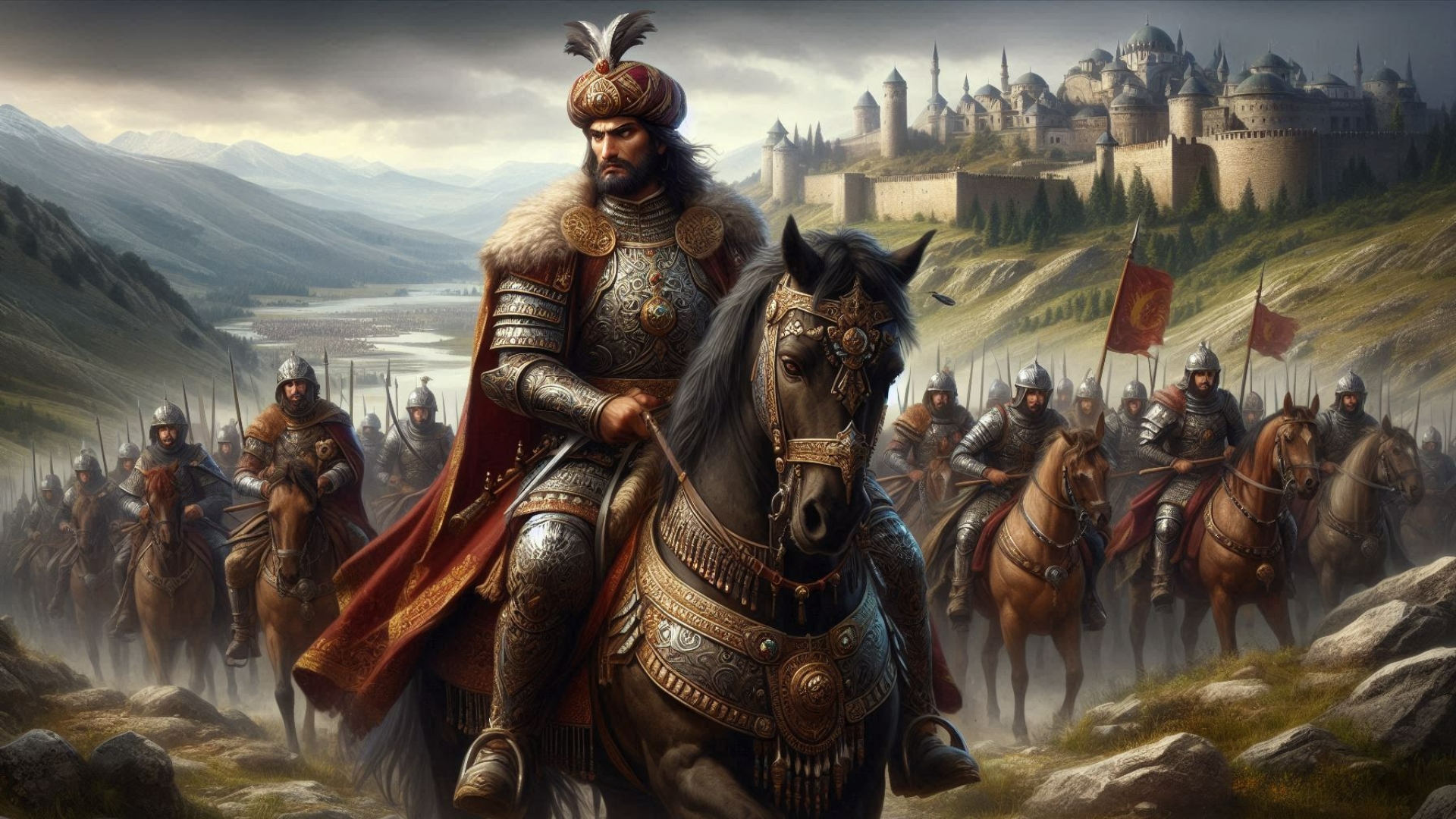
Everything that followed would be the reign of Mehmed II, whom we know today by his title “Fatih” (The Conqueror). With Mehmed II, the rise period would begin. Thus, the Ottomans would enter the era and reach the geographies for which they are truly renowned today.
Bibliography and Further Reading
Cate, P. H. H. T., Collon, D. P., Easton, D. F., Lloyd, S. H., Woods, J. E., & Haldon, J. F. (2024, September 13). Anatolia | Definition, History, Map, people, & Facts. Encyclopedia Britannica. https://www.britannica.com/place/Anatolia/Late-Byzantine-rule#ref44367
The Editors of Encyclopaedia Britannica. (1998a, July 20). Bayezid I | Conqueror, Expansion & Legacy. Encyclopedia Britannica. https://www.britannica.com/biography/Bayezid-I
The Editors of Encyclopaedia Britannica. (1998b, July 20). Murad I | Ottoman Sultan & Conqueror of Constantinople. Encyclopedia Britannica. https://www.britannica.com/biography/Murad-I
The Editors of Encyclopaedia Britannica. (1998c, July 20). Murad II | Ottoman Sultan & Conqueror of Constantinople. Encyclopedia Britannica. https://www.britannica.com/biography/Murad-II
Yapp, M. E., & Shaw, S. J. (2024, October 5). Ottoman Empire | Facts, History, & Map. Encyclopedia Britannica. https://www.britannica.com/place/Ottoman-Empire
Originally published in Turkish at Doğa Filozofu.