



Throughout your life—especially if you’ve spent any time in universities—you’ve undoubtedly run into two ideas that are constantly butting heads: Capitalism and Socialism.
Before we dive into the heart of the matter, let’s get a better sense of these two ideologies:
- Capitalism: Capitalism is an economic system where capital is controlled through private ownership. In this system, the means of production (factories, land, machinery, etc.) generally belong to private individuals or corporations. Decisions are typically driven by market forces and the balance of supply and demand. Because of the intense competition it fosters, it’s a system where one group often prospers while another falls behind. You can certainly achieve success through hard work and a bit of luck, but it often operates like a wheel—inevitably leaving a group of people at the bottom.
- Socialism: Socialism, on the other hand, is an economic system where the means of production (factories, land, machinery, etc.) are under the collective control of society or managed by the state. Socialism emerges with goals like economic equality, social welfare, and the reduction of class distinctions. Decisions are usually made based on social needs and central planning. Here, the concept of labor takes center stage, and the general approach is to bring everyone up to the same standard.
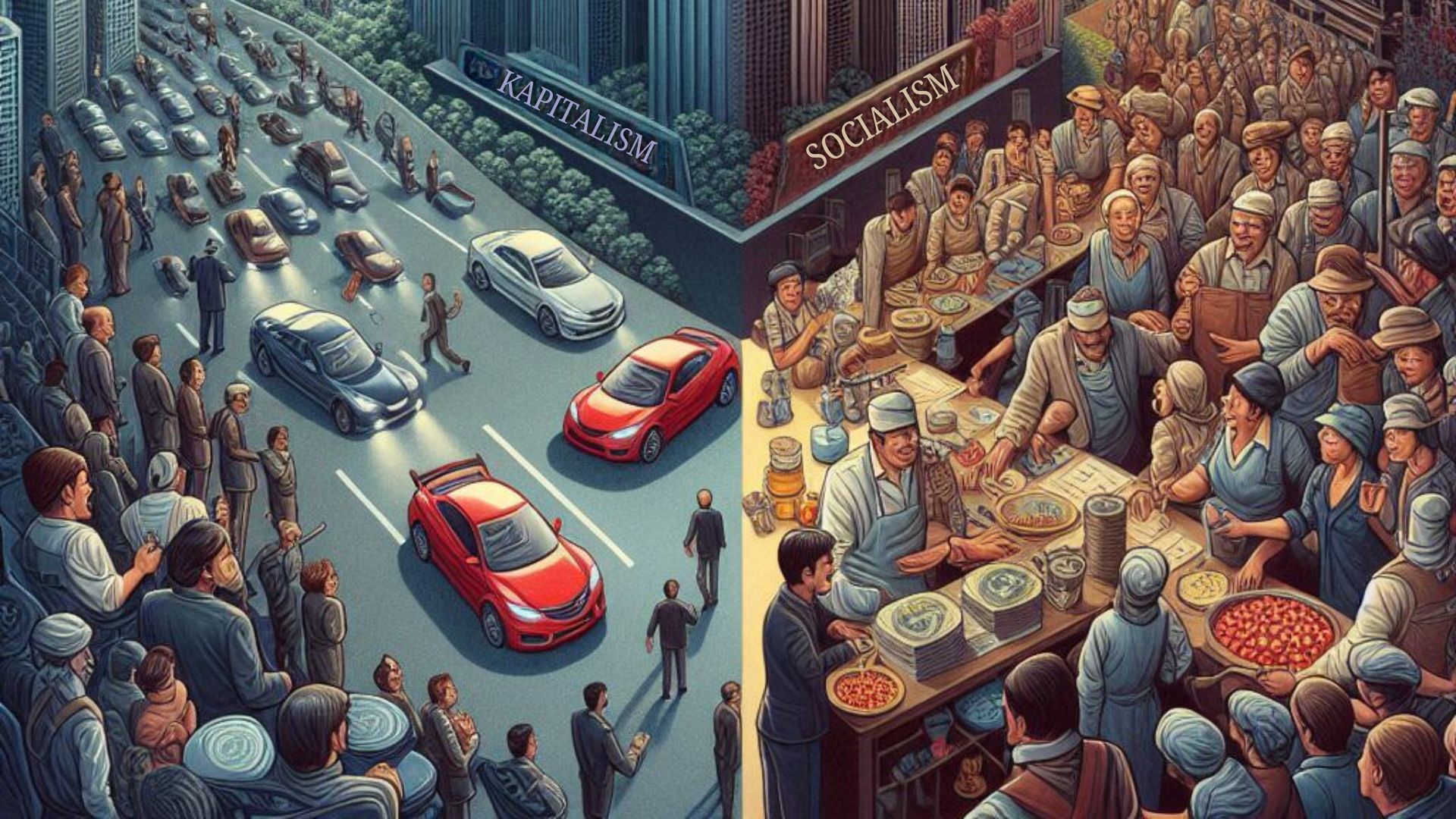
These two ideas have always been locked in a massive contradiction. It seems that for one to fully exist, the other must cease. Of course, we’ve only provided a very brief sketch here. It’s worth remembering that both concepts are far too vast to be captured in a few sentences; entire libraries have been written about them. Furthermore, keep in mind that both socialism and capitalism have variations that reach far beyond these basic definitions. For instance, Marxism is one such example within the socialist tradition. But for now, let’s set those complexities aside and listen to John Rawls, who aimed to bridge the gap between these two ideologies.
John Rawls
John Rawls (1921–2002) is widely considered one of the most influential political philosophers of the 20th century. He is best known for his masterpiece, “A Theory of Justice.” This book is a landmark work that questions the foundations of social and political order and explores what a truly just society should look like.

In “A Theory of Justice,” Rawls sought to provide a framework for understanding how the basic principles and institutions of a society should be determined. The book focuses heavily on the “fair distribution of rights” and delves deep into the principles of justice that define a society’s core structure. Rawls anchors his theory in two main principles: First, the principle of “granting every individual an equal right to basic liberties,” and second, the principle of “ensuring social and economic equality to the benefit of all.”
In short, Rawls wanted to offer a middle path for the income inequality and the plight of the oppressed. But how did he do it?
Softened Capitalism
When addressing the question of how a society should be fairly organized, Rawls employs a thought experiment he calls “The Veil of Ignorance.” This experiment simulates a situation where individuals are completely unaware of the advantages or disadvantages they were born with. According to Rawls, when evaluating whether a society is fair, we can use this experiment to think about justice from a truly impartial perspective. Let’s turn this into a story to make it clearer:
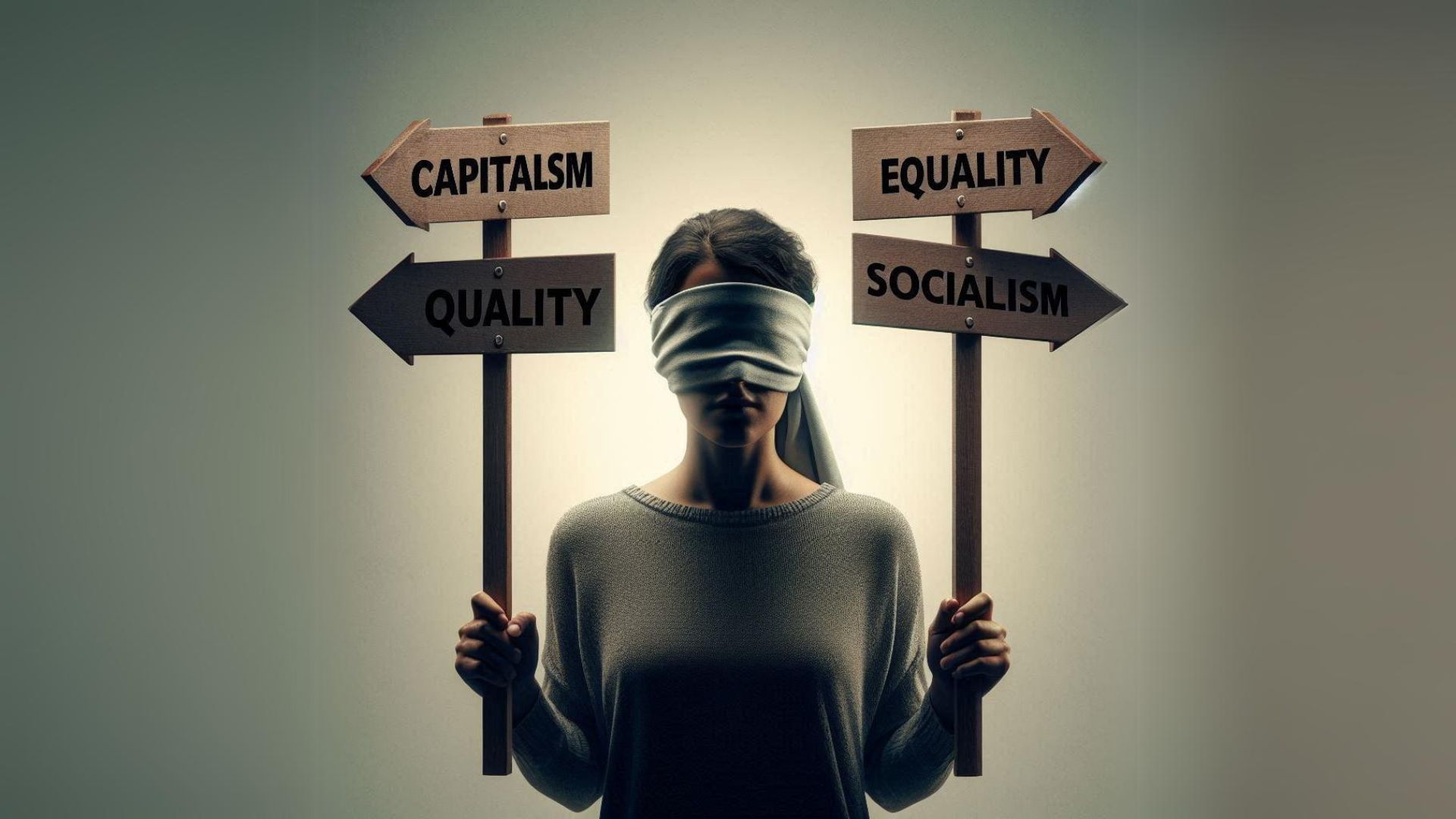
Imagine you wake up, and there’s a veil over your head. You can’t see yourself, and you don’t remember who you are. You have no memories, no country, no acquaintances. It’s as if your memory has been wiped clean. You don’t know what society considers beautiful, or even which society you’re in. You have no idea what era you’re living in. Rawls asks: in this state, if someone spoke to you from behind the veil and offered you a choice between two systems, which would you pick? Capitalism or Socialism?
Here’s the catch: you don’t know your own attributes. Maybe you have a physical trait that society marginalizes. Maybe you’re a minority in a racist geography. Maybe you’re unemployed in a purely capitalist universe. Maybe you’re a woman in a country where women are excluded. You don’t know any of this until that veil is lifted. In this situation, rather than risking your life and potentially ending up in misery, you would choose socialism. That is the core of this understanding. Rawls’s goal here is to force you to look at those in vulnerable positions and realize how capitalism can inflict fear and harm on certain groups.

You’re probably thinking: “Wait a minute, isn’t Rawls just a socialist? Where’s the ‘softened capitalism’ part?” You’re right—it hasn’t quite appeared yet. Bear with me a little longer, and we’ll get to it.
Rawls’s Principles of Justice
According to Rawls, justice rests on two main principles:
The Principle of Equal Basic Liberties: This principle defines the limits of each individual’s rights in relation to others. It is accepted that everyone has equal rights to basic liberties. In other words, everyone must have equal access to fundamental rights like freedom of speech, religion, and thought.
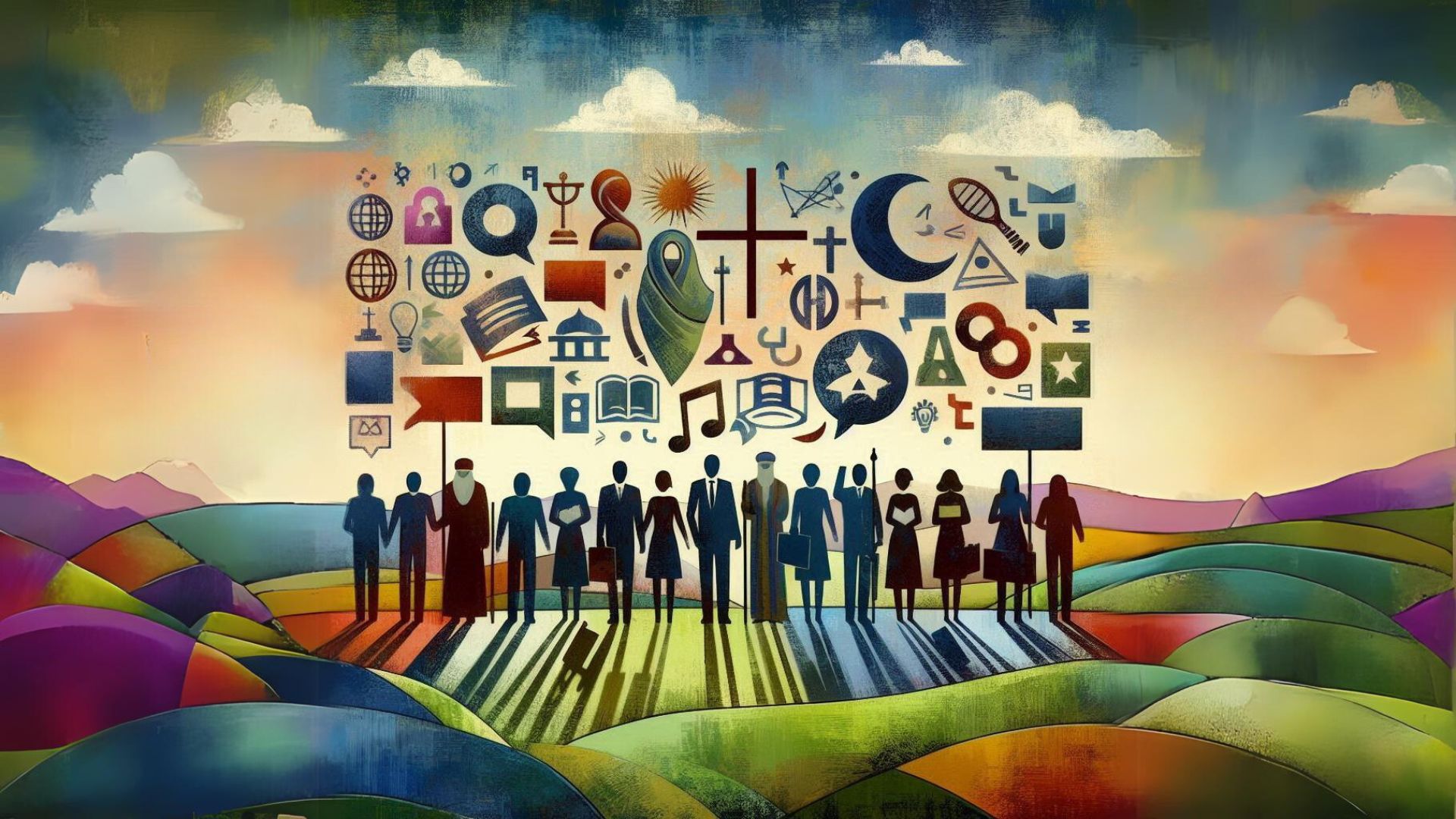
The Principle of Equality of Opportunity and Fair Income Distribution: This principle aims to ensure social and economic equality. According to Rawls, it is impossible to speak of justice in a society without equality of opportunity and fair distribution. However, this does not mean that everyone must have the exact same amount of resources or income. Rawls argues that economic and social inequalities are acceptable only if they work to improve the situation of the most disadvantaged, noting that these inequalities must be to the benefit of everyone.
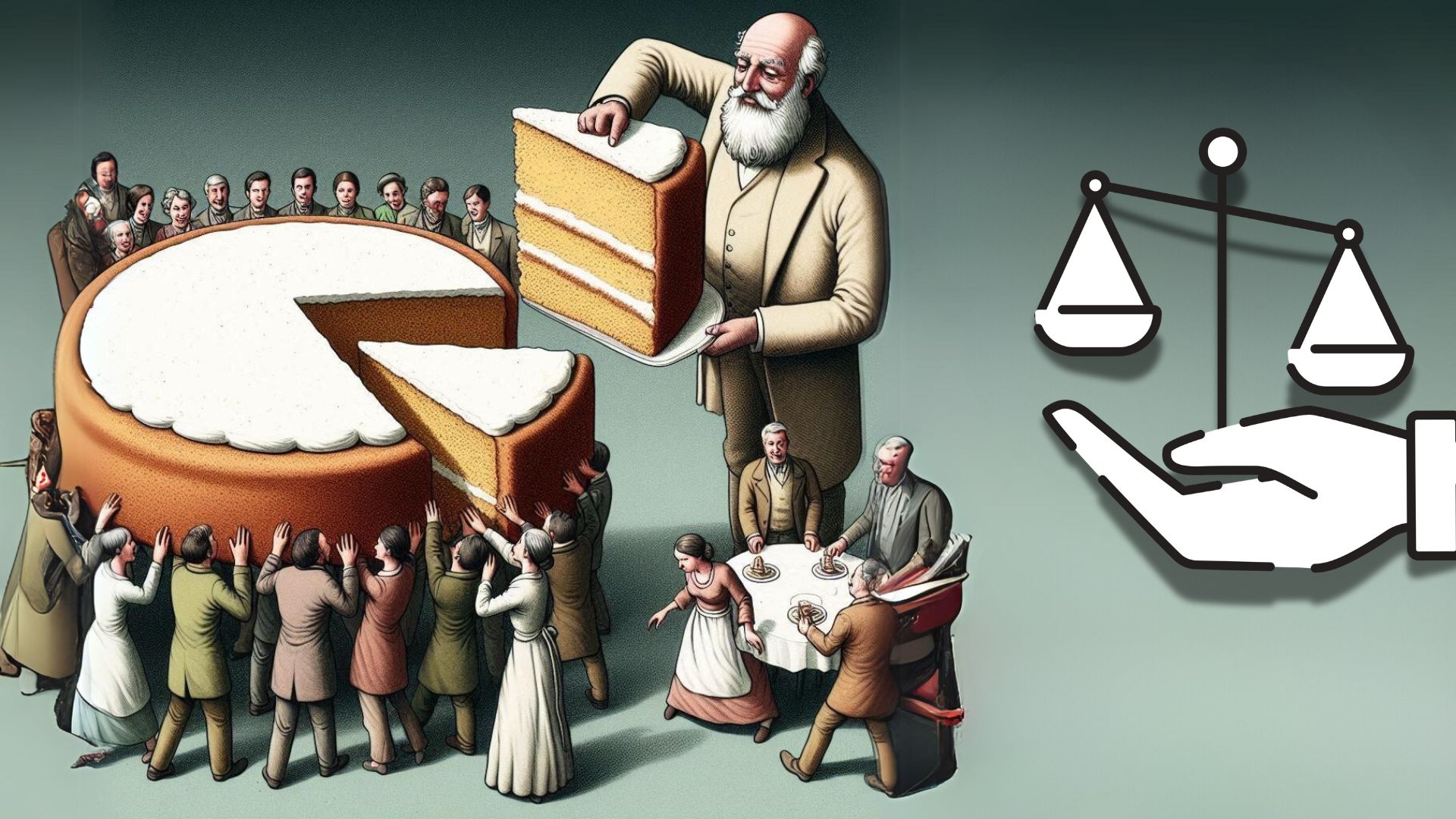
In short, Rawls doesn’t suggest that everyone should earn the same salary. He simply aims to remove the injustice created by the unbridled nature of capitalism. He wants to do this by improving the conditions of disadvantaged groups. To achieve this, he proposes taxing the wealthy heavily—keeping them rich, certainly, but perhaps ensuring their wealth lasts for two generations instead of five, and helping a family that might have been poor for ten generations to finally make ends meet. He prefers that money reach the disadvantaged rather than just funneling into the state. Of course, while Rawls’s ideas hold humanism in high regard, they weren’t exactly embraced by every capitalist. After all, Rawls is essentially asking the wealthy, who take 9 out of 10 slices of the pie, to give up 2 or 3 more slices for the poor. That doesn’t exactly sit well with those doing the giving. Ultimately, Rawls argues that the two principles I’ve introduced form the foundation of a just society, creating a balance that respects the diverse needs and liberties of different individuals. What do you think? Is Rawls’s proposal more logical than a strict choice between capitalism and socialism?
References and Further Reading
Britannica money. (2024a, May 28). https://www.britannica.com/money/capitalism
Britannica money. (2024b, June 26). https://www.britannica.com/money/socialism
John Rawls (Stanford Encyclopedia of Philosophy). (2021, April 12). https://plato.stanford.edu/entries/rawls/
Original position (Stanford Encyclopedia of Philosophy). (2023, October 24). https://plato.stanford.edu/entries/original-position/
Rawls, John | Internet Encyclopedia of Philosophy. (n.d.). https://iep.utm.edu/rawls/
Originally published in Turkish at Doğa Filozofu.