
If you only know Tevfik Fikret from school textbooks and a few scattered lines, you’ve likely pegged him as a bit too stern, a bit too distant. But as we’ll see in this piece, Fikret wasn’t just a man staring into the darkness and complaining about it; he was a man who tried to turn his pen into a light to dispel that very darkness. You can’t decode his poetry without understanding his life. So let’s trace the footsteps of a teacher, a father, a dissident, a man of profound disappointment, and, above all, a man whose hope never truly flickered out. Because there are some poets who, once you get to know them, help you understand not just literature, but the society you live in and your own place within it. Fikret is exactly that kind of poet.
Before we dive into his literary life, let’s get a little closer to the man at the heart of our story, as we always do!

Tevfik Fikret in a Nutshell
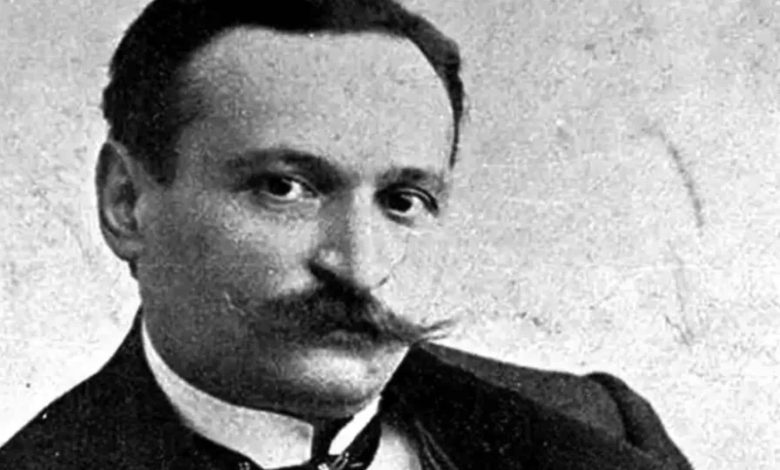
Tevfik Fikret was born in Istanbul on December 24, 1867. His given name was Mehmed Tevfik. His father, Hüseyin Efendi, was a lawyer, but his forced exile for political reasons turned the young Fikret’s family life upside down. After losing his mother, Refia Hanım, at a young age, his childhood was defined by withdrawal and deep loneliness. These early traumas formed the bedrock of a soul that would grow dark while contemplating humanity and society, yet always remain in search of a glimmer of hope.
Fikret graduated top of his class from Galatasaray High School, where he studied under two polar opposites of the era: Muallim Naci and Recaizade Mahmut Ekrem. His bond with Recaizade Mahmut Ekrem, in particular, would shape his literary destiny. Although he held various brief government and teaching posts after graduation, the real turning point came when, at his mentor Recaizade’s urging, he took the helm of the magazine Servet-i Fünun. He juggled administrative duties while mentoring the young poets of the day. Yet, his path was never smooth; clashes over ideology, struggles with authority, and his refusal to compromise his principles made for a turbulent career. He faced some of his most difficult years while serving as the principal of Galatasaray High School. The declaration of the Second Constitutional Era, followed by waves of disappointment and political pressure, left him drained both physically and mentally.
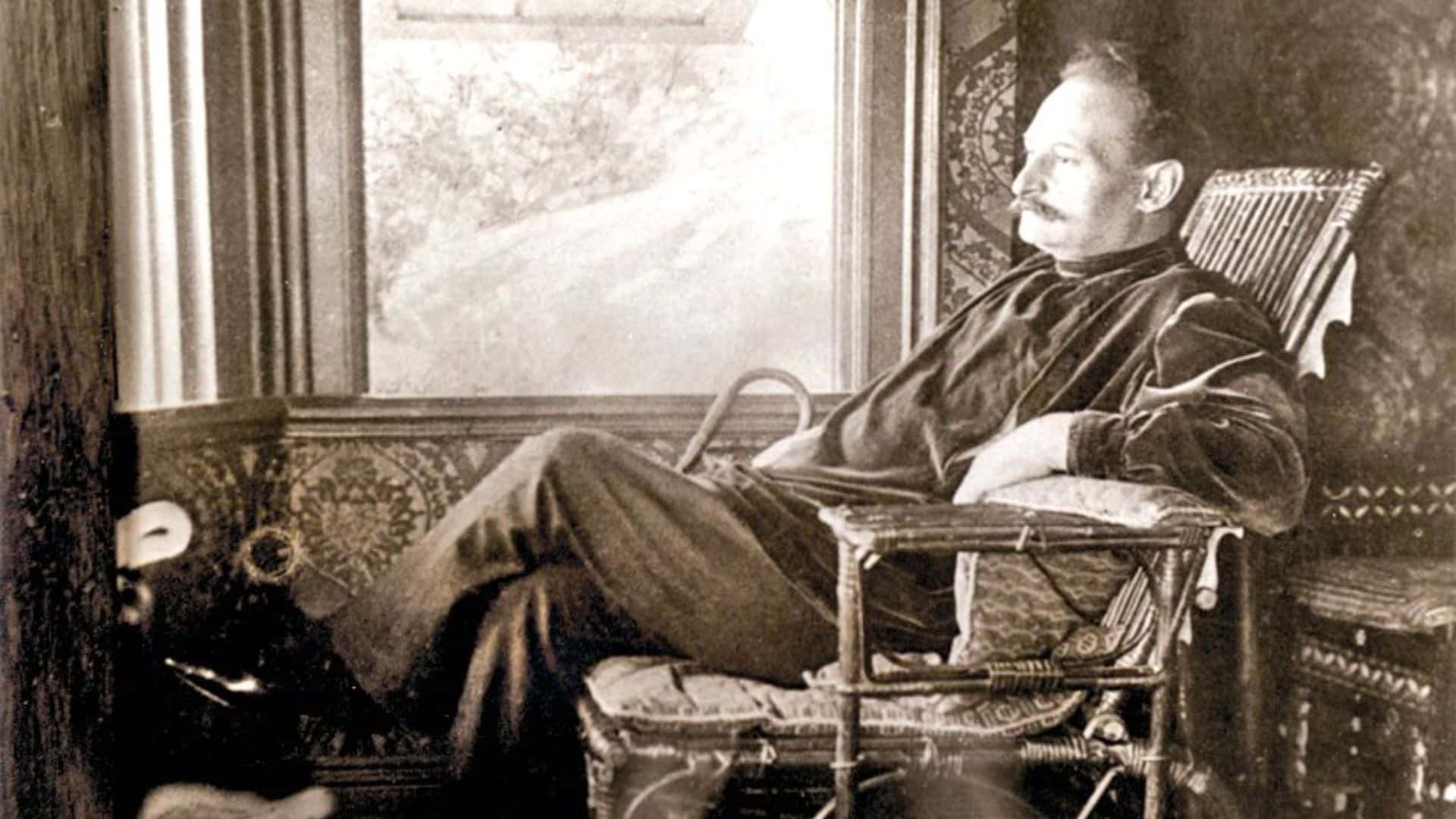
His wife, Nazime Hanım, and his son, Haluk, were the two most important figures in his life. The fact that Haluk was sent to Europe and didn’t return as the man Fikret had envisioned remained a quiet, burning ache until the very end. It was an ache so profound that many believe it triggered the deep depression that eventually led to his death, and it even became the subject of a famous literary correspondence. Despite living a life full of intensity, he certainly didn’t get enough of life; he passed away in 1915 at the age of 48 due to a brain hemorrhage. He may not have been fully understood while he was alive, but after his death, the literary world felt his absence deeply.
“How good it is to move on every day,
How beautiful to settle in a new place every day.”
Tevfik Fikret: The Literary Perspective
Tevfik Fikret’s literature is far too complex to be reduced to superficial labels like “a leading poet of the Servet-i Fünun” or “Haluk’s father.” To truly grasp him, we have to move beyond his poems and analyze him as an intellectual, within the philosophical and historical context of his work. And that’s exactly what we’re going to do! First, we need to understand his era. The Servet-i Fünun period was a time of heavy censorship where art had to be veiled, and politics was forced out of the creative space. This weighed on every poet and novelist of the time, yet one man still dared to write exactly what was on his mind.

In contrast to the insular nature of classical poetry, Fikret’s work was rooted in social responsibility—a responsibility built on an individual-centered ethic. In Fikret’s poems, we see a concept of justice that is more civic, more individualistic, and more modern than that of his contemporaries. This stems from his deep sense of duty toward society. It’s for this same reason that conscience is the cornerstone of his poetics. His poetry is less an “aesthetic object” and more of a “moral testimony.” He didn’t use poetry to decorate; he used it to hold up a mirror to society. But he didn’t smash that mirror in our faces; he filtered it through emotions, imagery, and internal storms. Had he smashed it directly, he likely wouldn’t have remained free—he surely would have been exiled or imprisoned. More interestingly, Fikret didn’t just rebel against a single era, person, or situation. The rage in poems like “Sis” (The Fog), “Tarih-i Kadim” (Ancient History), and “Han-ı Yağma” (The Feast of Plunder) was a rage against the humiliation, deception, and passive subjugation of human beings. Perhaps that is why he is, above all, the poet of conscience.
“Nations become your children, children become a nation,
But what is a nation? It is a cataclysm that awakens.”
Influenced by his background as an educator, Fikret’s language was distinct from the ornate, flowery style common to the Servet-i Fünun era. It was systematic, serious, and possessed a depth often found in prose. His poems were conceived, planned, and written almost like essays. In this sense, his work is less akin to the abstract poetry of the French Symbolists and closer to the moral and intellectual stance of Victor Hugo or Lamartine.
When Poetry Meets Reality: The Departure of Haluk
Tevfik Fikret spent years as an educator and placed immense value on the youth, but no student could ever hold the place his son did in his life. For Fikret, Haluk wasn’t just a child; he was a symbol of an ideal, a future, and a model for humanity. Fikret saw Haluk as the flesh-and-blood embodiment of his own intellectual world. From birth, he raised him with Western values and a spirit of liberal education.
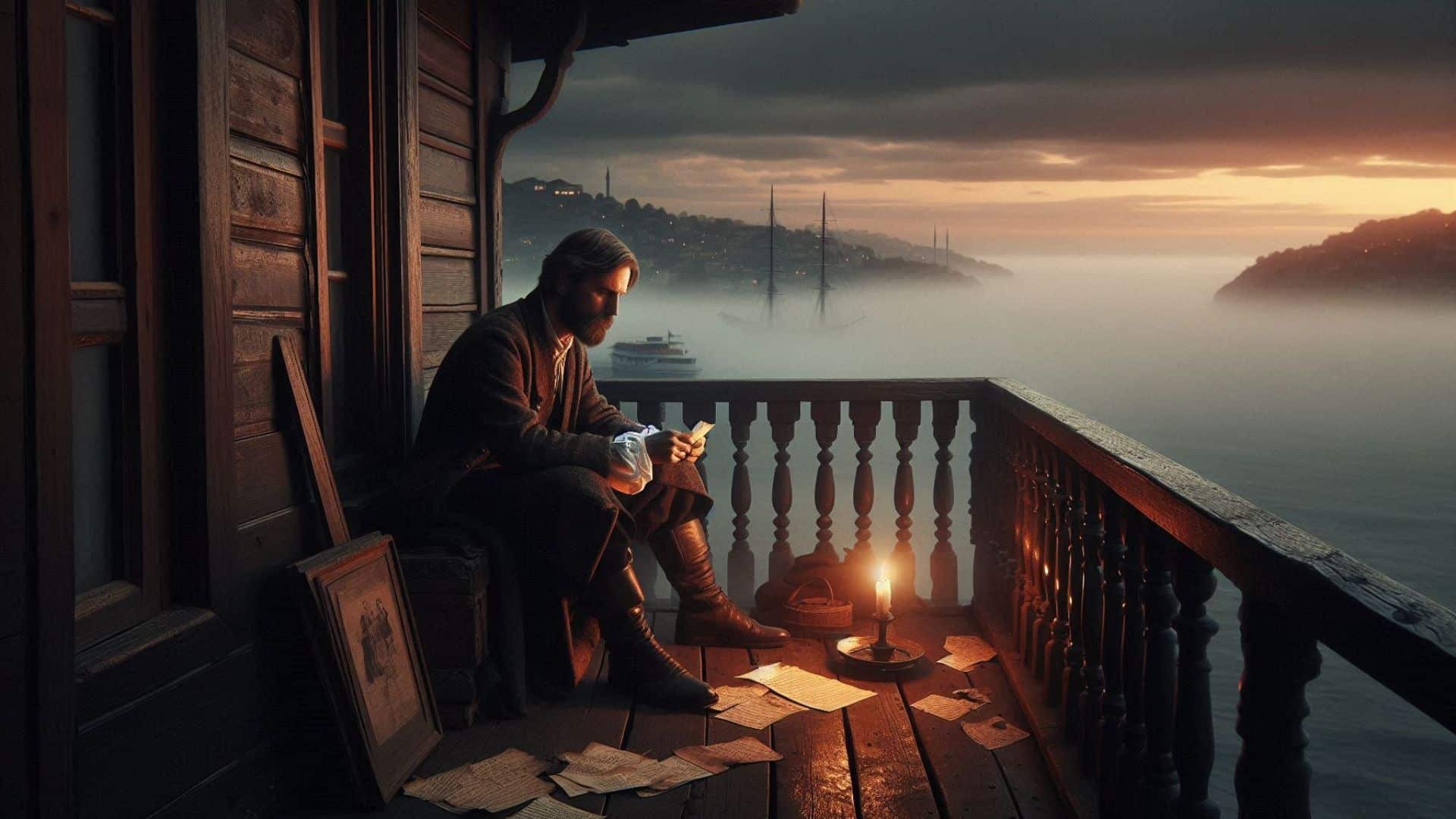
His poetry collection, “Haluk’un Defteri” (Haluk’s Notebook), consists of verses written to his son, but in truth, these aren’t just for a child; they are letters to the “new human” of the future. In this sense, Haluk transcends being a mere child and becomes an enlightenment project. However, in Fikret’s eyes, this project never quite reached fruition. He sent Haluk to Europe to see the world and be enlightened—a process Fikret considered sacred. But Haluk didn’t meet those expectations. After finishing his education in England, he fell under the influence of Protestant missionaries, converted to Christianity, became a clergyman, and never returned to Turkey. For Tevfik Fikret, who placed secularism above all else, this shattered his worldview and left him convinced he was a failure as a father. He eventually critiqued his own approach, lamenting, “I realized over time that I had been chasing an impossible dream.” Fikret didn’t chase after his son. He didn’t abandon his ideals, nor did he completely disown him. But he was broken; he withdrew into himself and isolated his life in his home, Aşiyan. Haluk’s departure marked a final, painful turning point in both his poetry and his life.
Even though things didn’t work out with Haluk as he had hoped, Tevfik Fikret managed to leave behind the legacy he sought through his poetry; by documenting the failings of his time, he was essentially holding up a mirror for those of us who came after. Perhaps his words still sound a bit too early for our ears. Now, you might ask yourself, just as he did: “Where do I stand in this age?” Perhaps, in seeking the answer to that question, you will find yourself continuing to trace the footsteps of Tevfik Fikret.
References and Further Reading
Enginün, İ. (2016). Modern Turkish Literature: From the Tanzimat to the Republic. Dergâh Publications.
TRT Archive. (2019, August 19). Tevfik Fikret | TRT Archive [Video]. YouTube. https://www.youtube.com/watch?v=AfwMQCKWIpU
Uçman, A. (2012). Tevfik Fikret. TDV Encyclopedia of Islam. https://islamansiklopedisi.org.tr/tevfik-fikret
Originally published in Turkish at Doğa Filozofu.