

The telephone is, without a doubt, a revolutionary invention that changed the course of human history. It bridged vast distances and made instant communication a reality, eventually evolving into the indispensable tool we all carry in our pockets today.
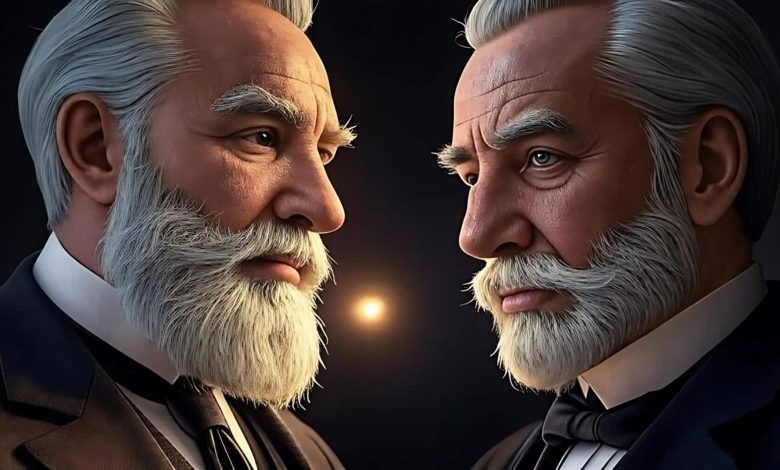
Naturally, being the person behind an invention with such monumental impact meant etching your name into history in gold letters. We all know that name: Alexander Graham Bell, the man who seized that opportunity. But let’s imagine for a second… What if you had missed out on this history-altering invention by a mere few hours? That is exactly the story of this man: Elisha Gray.
Who Was Elisha Gray?
Before we dive into this tragic tale, let’s get to know our protagonist a little better. While Elisha Gray is remembered today mostly by tech historians and those obsessed with the “who really invented the telephone” debate, he was one of the most prolific inventors of the 19th century. Born in Ohio in 1835, he grew up on a farm and started out as a carpenter, but he had a particular fascination with electricity. He eventually enrolled at Western Reserve College (now Hiram College), but financial struggles forced him to drop out. Thankfully, his passion for science kept him learning regardless of tuition fees.
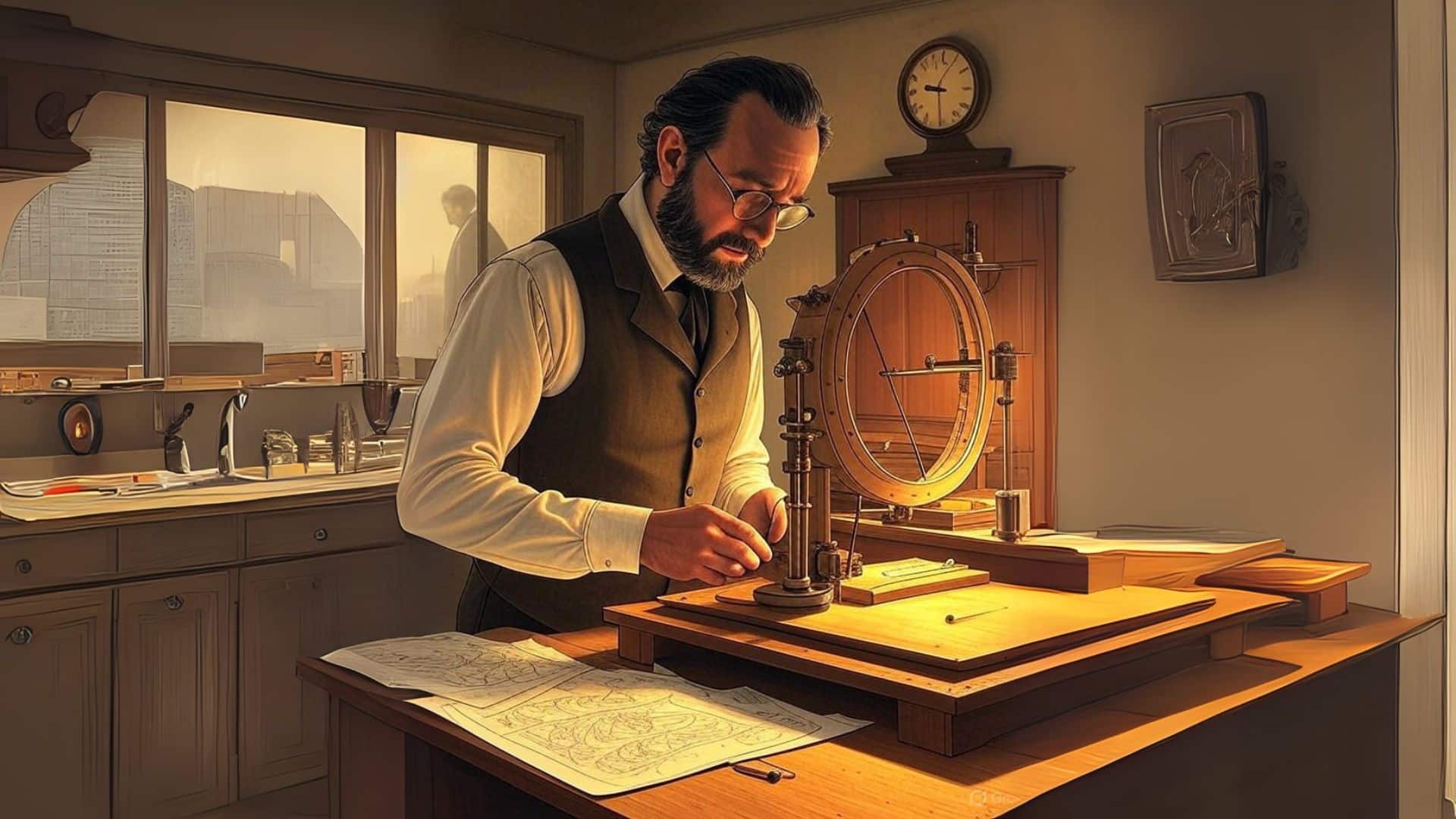
Gray didn’t treat electricity like a toy; he saw it as a serious, powerful tool. One of his first major inventions was a harmonic telegraph system, which allowed for multiple messages to be sent simultaneously. This success led him to co-found the Western Electric Manufacturing Company—a firm that would eventually become the backbone of Bell’s AT&T. Over his lifetime, Gray secured more than 70 patents. Like Bell, he was working on multiple telegraph systems and had developed liquid-based methods for transmitting sound. In short, Elisha Gray was a quintessential 19th-century inventor: full of entrepreneurial spirit and constantly juggling multiple breakthroughs.
Now that we’ve met Elisha Gray, let’s head to that tragic Valentine’s Day.
A Valentine’s Day Spent in Despair Over a Telephone Patent
Yes, the calendar read February 14, 1876. What seemed like an ordinary day turned out to be a massive breaking point in the history of science. On this day filled with romance, while many were busy wooing their sweethearts, Alexander Graham Bell’s lawyers were rushing to the patent office in Washington. Elisha Gray’s unlucky lawyers arrived at the office just two hours later.

In reality, Gray’s filing was different from Bell’s: He hadn’t submitted a full patent application, but rather a “caveat”—a formal notice of intent. This was the official way to say, “I am working on this invention and intend to file for a patent,” which granted inventors a 90-day grace period.
However, Gray’s filing was logged 39th at the patent office, while Bell’s was 5th. That difference in filing time would end up dictating the course of history.
The Remarkable Similarity in the First Phone Call
Just three weeks after his patent filing, on March 10, 1876, Bell made the first successful telephone call to his assistant, Watson, with the now-legendary words:
“Mr. Watson, come here; I want to see you.”
But there was a curious detail: the “liquid transmitter” used in this experiment bore a striking resemblance to the design described in Gray’s caveat. So much so that some researchers have alleged that Bell may have bribed the patent examiner to catch a glimpse of Gray’s drawings.
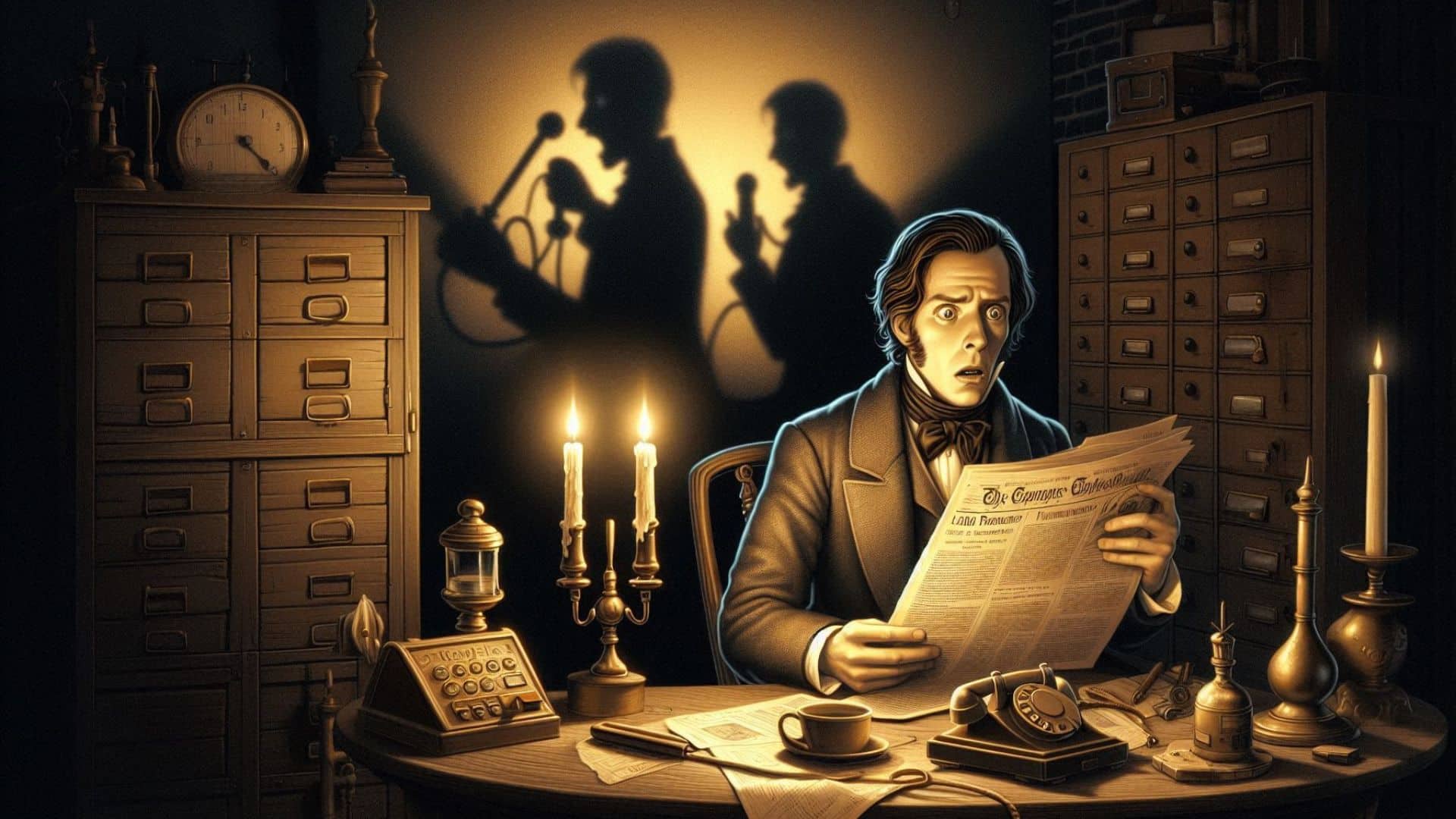
Gray claimed that Bell had somehow seen his filing, copied the idea, and quickly applied it to his own experiment. Bell, for his part, maintained that they had been experimenting with liquid transmitters for years and that the system they ultimately used was not the same as Gray’s.
Years later, a scandal erupted. Zenas Wilbur, an official at the patent office, claimed in a sworn statement that Bell had given him $100 and shown him Gray’s application. However, these claims were organized by a rival telephone company and never gained traction in official records.
Of course, Gray didn’t give up easily. He filed over 600 lawsuits against Bell. However, every single one of them was decided in Bell’s favor. Eventually, Bell secured the patent for the telephone, founded the Bell Telephone Company, and laid the foundations for AT&T, one of the communication giants we know today.
So, Who Really Invented the Telephone?
That isn’t an easy question to answer. In truth, the invention of the telephone wasn’t limited to just these two men. Figures like Philipp Reis in Germany, Antonio Meucci in Italy—who was even recognized as the “true inventor of the telephone” by the U.S. Congress in 2002—were all part of this journey.
However, the patent system rewards the first to register an idea. And that reward went to Bell. That is why history books record Alexander Graham Bell as the inventor of the telephone.
Right Time, Right Place
Until the end of his life, Gray remained convinced that Bell had stolen his idea. When he passed away in 1901, some newspapers wrote, “He will be remembered as the true inventor of the telephone in the future.” But that day never quite arrived.
A few hours… maybe a coffee break, maybe a delayed train… and the direction of history changes forever.
Perhaps great inventions require more than just intelligence and perseverance; they also require being in the right place at the right time.
References and Further Reading
Bellis, M. (2019, July 3). Elisha Gray and the race to patent the telephone. ThoughtCo. https://www.thoughtco.com/elisha-gray-race-to-patent-telephone-1991863
Did Alexander Graham Bell steal the telephone patent? (n.d.). American Heritage. https://www.americanheritage.com/did-alexander-graham-bell-steal-telephone-patent
Hochfelder, D. (2025, May 19). Alexander Graham Bell: Biography, education, family, telephone, inventions, & facts. Encyclopedia Britannica. https://www.britannica.com/biography/Alexander-Graham-Bell
Hounshell, D. A. (1975). Elisha Gray and the telephone: On the disadvantages of being an expert. Technology and Culture, 16(2), 133–161. https://doi.org/10.2307/3103488
Hughes, A. (2025, April 10). February 14, 1876: Alexander Graham Bell files his patent for a telephone. Constituting America. https://constitutingamerica.org/february-14-1876-alexander-graham-bell-files-his-patent-for-a-telephone
The Editors of Encyclopaedia Britannica. (1998, July 20). Elisha Gray: Telephone, telegraph & electrical engineering. Encyclopedia Britannica. https://www.britannica.com/biography/Elisha-Gray
Wikipedia contributors. (2025, February 20). Elisha Gray and Alexander Bell telephone controversy. Wikipedia. https://en.wikipedia.org/wiki/Elisha_Gray_and_Alexander_Bell_telephone_controversy
Originally published in Turkish at Doğa Filozofu.