
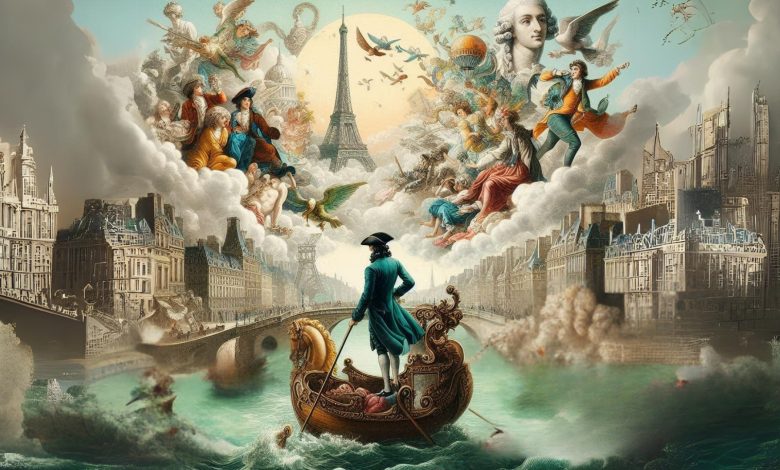
Today, concepts like republics, democracy, and individual liberty are no longer up for debate. Whether a society embraces them or rejects them, the truth of their value is clear—but there was a time when these truths were anything but obvious. There was a time when monarchies and dictatorships were the norm, and the idea that every single individual mattered was considered radical. So, how did the absolute certainties of today emerge? They were born, of course, thanks to those who stood up and shouted about freedom, democracy, and the inherent worth of human beings. One of those voices is someone whose name we all know today: Jean-Jacques Rousseau.
The Life of Jean-Jacques Rousseau
Rousseau lost his mother at a young age and was raised by his father. At 16, he left Geneva and led a nomadic life across Europe. By the 1740s, he had settled in Paris, where he became a fixture in the intellectual circles of the era. His works, “The Social Contract” and “Emile,” published in 1762, turned heads with their revolutionary ideas. These books were banned in France and Geneva, forcing Rousseau to spend the rest of his life in a state of near-constant exile. He passed away in France in 1778.
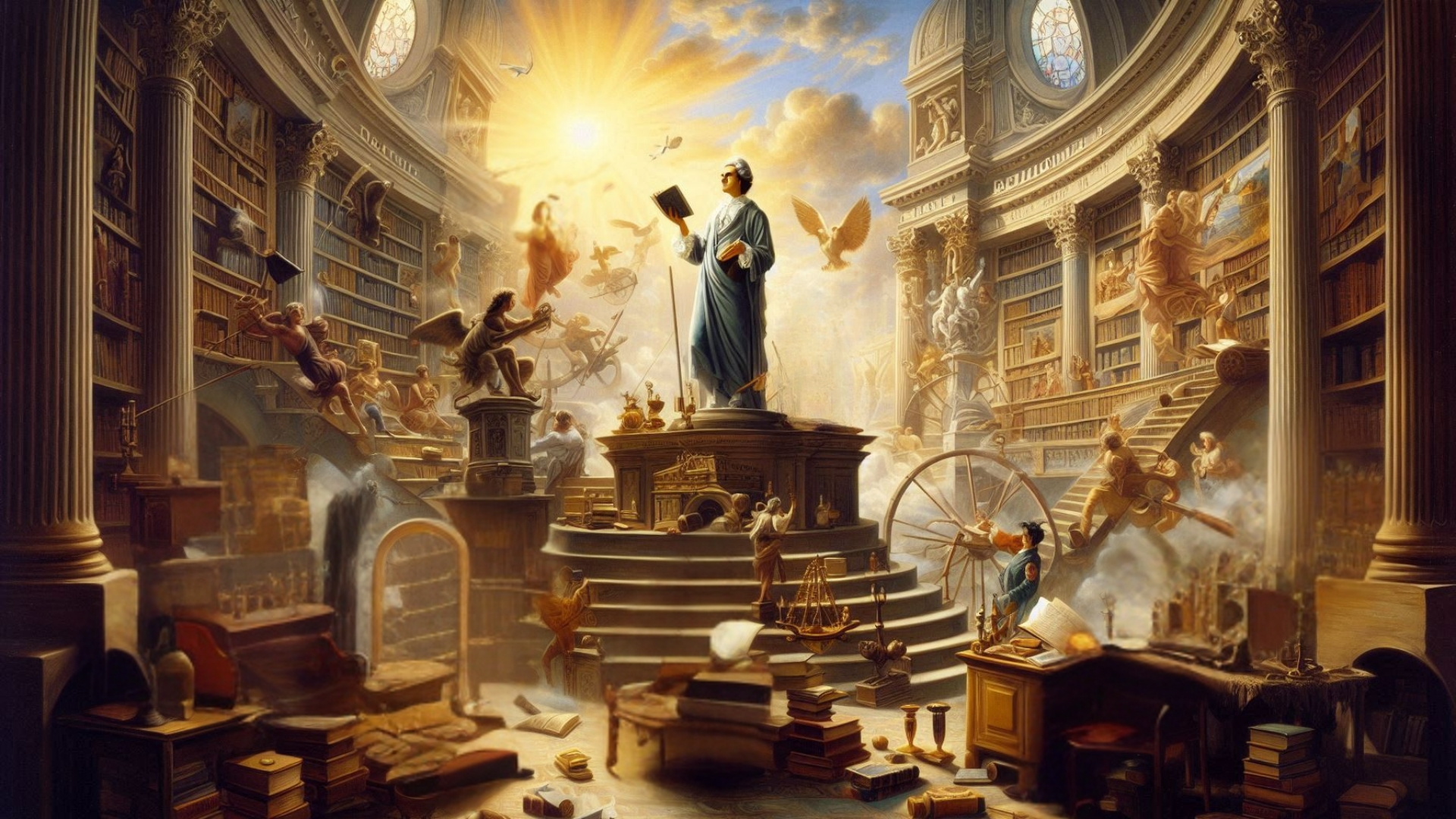
It seems like the life of this freedom-fighting philosopher fits neatly into those few lines, doesn’t it? But what about his ideas? As you read this, you won’t encounter concepts that make you stop and say, “No way, that’s impossible.” That’s not because Rousseau’s narrative is simple; it’s because the world has since followed his lead and accepted his core arguments as common sense. If you had presented Rousseau’s ideas in the 1400s, people wouldn’t have just said, “No way!”—they would have likely branded anyone suggesting them a traitor. So, what exactly was Rousseau saying that so deeply unsettled the defenders of monarchy?
The State of Nature
We’re going to revisit a concept we touched on in our piece about Thomas Hobbes: The State of Nature.
Rousseau believed that human nature was essentially pure and good at its core. Humans were born as good, free, and equal beings. There was virtually no malice in us. If left uncorrupted, a human being would naturally live in peace. Of course, that’s not how his story plays out. He argued that as society and civilization developed, this innate purity was eroded. Civilization drags people into artificial inequalities and corruption. Rousseau claimed that as society formed, inequality slowly took root and humanity began to degrade.
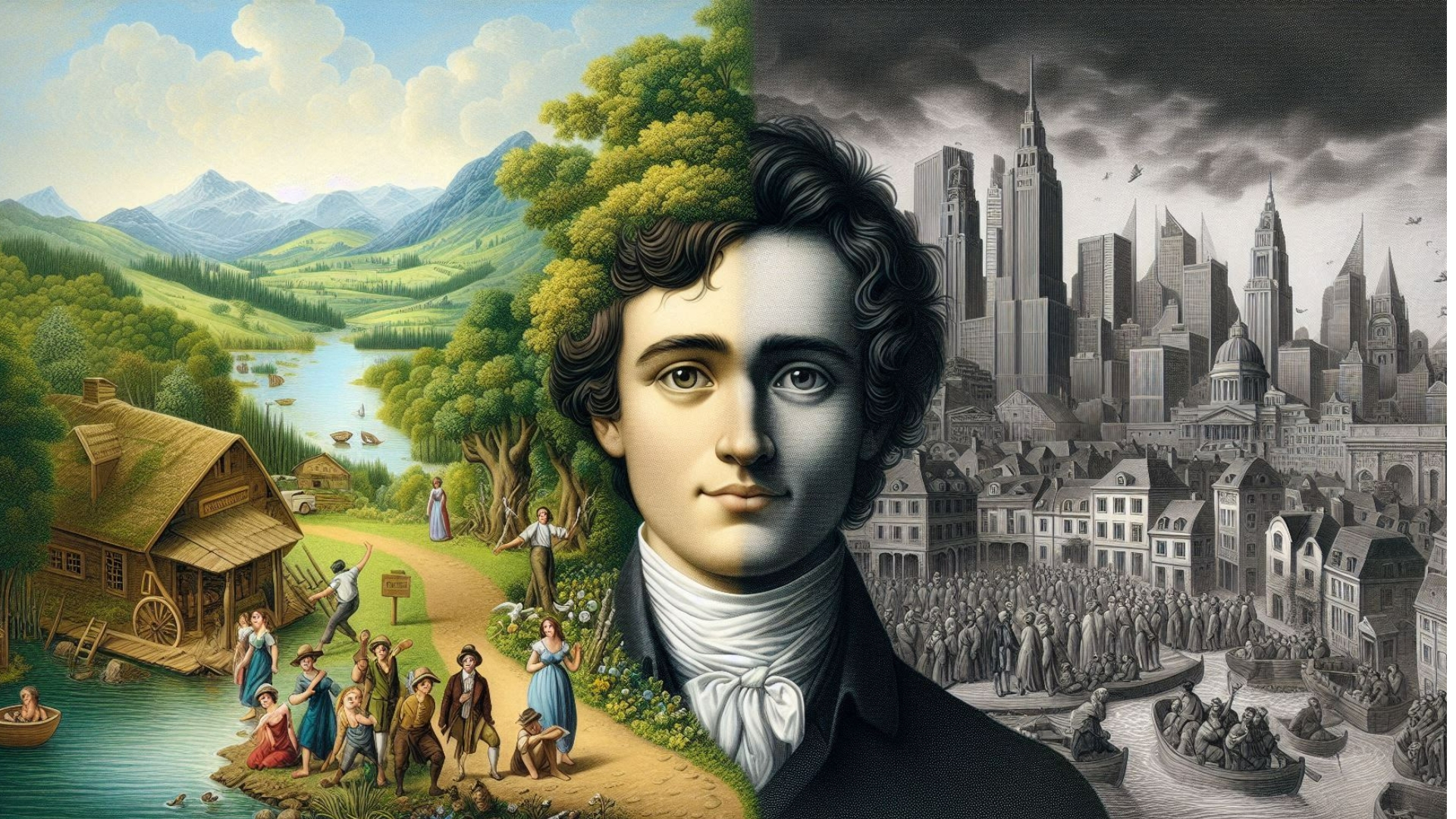
The catalyst for this corruption, he argued, was those who placed themselves above others. Rousseau called this the noble savage. He believed that the monarchy was the primary driver of this division and that we needed to move away from such regimes. In his view, private property is the root of inequality. While people are born equal, the emergence of property created social classes and the divide between the rich and the poor. Private property destroys our natural equality by fueling competition and conflict. So, does Rousseau reject the state entirely? Certainly not.
The Social Contract
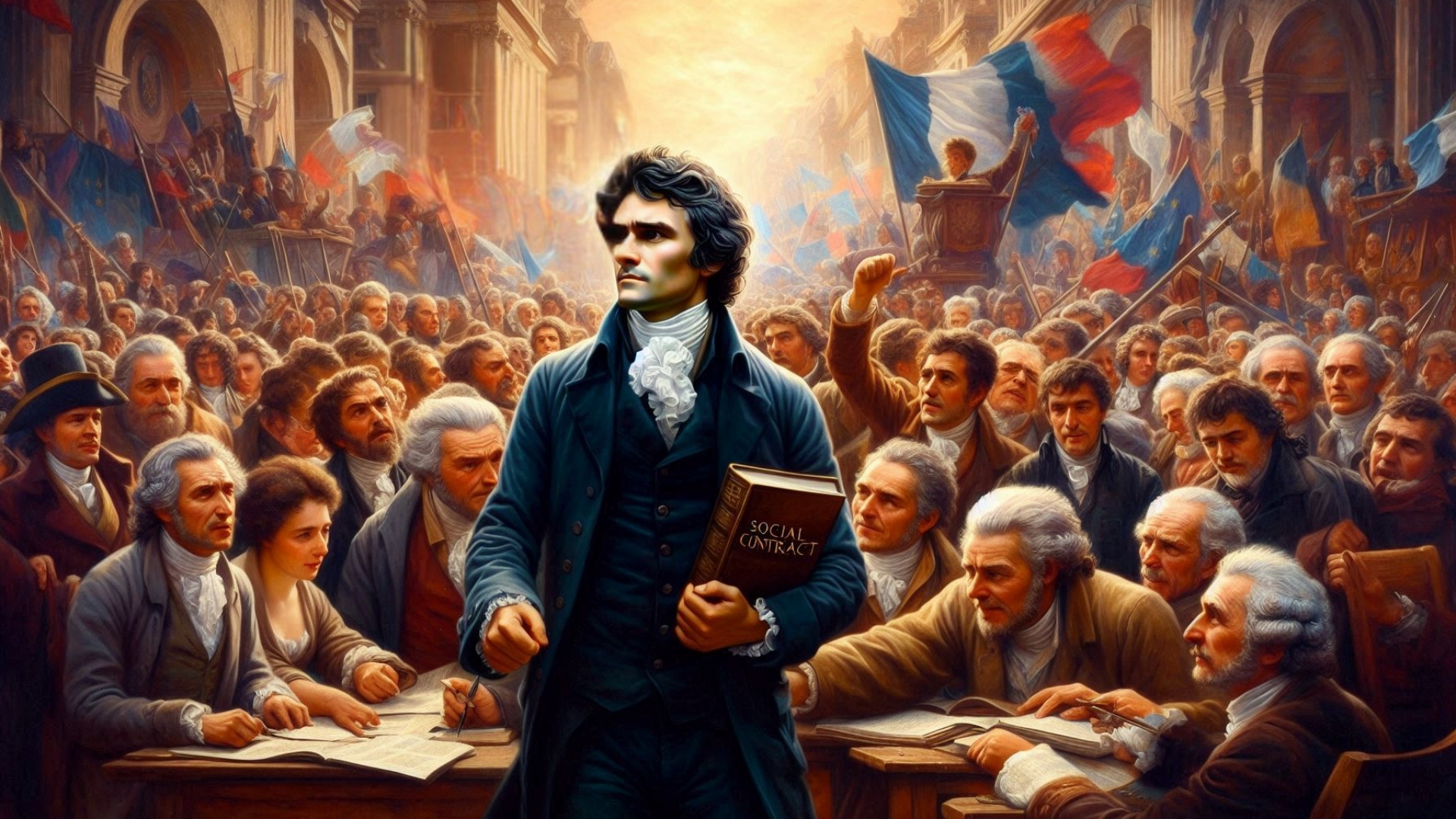
Rousseau argued that a state is necessary for peace, but that this state must not be based on a single-ruler regime or a monarchy. He championed the idea that the legitimacy of a state must rest on the “general will” of the people. To Rousseau, individuals come together freely to form a collective will that governs society. This general will looks beyond individual desires to prioritize the common good. He argued that if a government stops acting in accordance with this general will, the people have a natural right to revolt. This idea had a seismic impact on revolutionary and democratic movements. That phrase “right to revolt” caught your attention, didn’t it? Exactly! Rousseau believed that uprising was a right and that the people themselves were the ones who could—and should—end injustice. It is for this reason that just 27 years after he published *The Social Contract* (1762), the French people, seeing that their government was not acting in the interest of the general will, rose up and dismantled the regime. From that point on, the concepts of republic and democracy took hold, and within 200 years, they would topple the monarchies that had defined the entirety of human history before them.
Civil Religion
But what should our shared values actually be? After all, we are all different, right? We’re all unique. Our desires, needs, and ways of life differ. How can we continue toward a common goal? Rousseau’s answer is “civil religion.” But what is this civil religion? Is it a belief in God?
Not exactly. Rousseau believed that people needed a shared spiritual commitment, but he argued that this commitment shouldn’t come from individual, sectarian religions—rather, it should come from a “civil religion.” This civil religion aims to provide a core set of moral values and rules that hold society together. Rousseau, a proponent of religious tolerance, also stood firmly against the influence of the church on political power. In other words, he was a defender of secularism.
This civil religion is essentially a concept based on finding unity, solidarity, and the common good. Rousseau suggests that, much like the rules we follow in organized religions, we should follow a way of life that is beneficial to all of humanity.
In short, when the concepts of republic, democracy, and individual rights were either unknown or widely suppressed, Rousseau championed their importance. Thanks to philosophers like him—and the figures who followed their lead—the republics we live in today were built. Mustafa Kemal Atatürk, our leader who refused to become a “sultan” despite constant pressure, and who instead ensured we became free individuals who defend our own rights, was a great defender of these republican values. The Republic of Turkey was founded under the leadership of a leader who was willing to sacrifice his own life to secure the rights and freedoms of his people. Other countries that followed suit have, over time, continued down that same path.
References and Further Reading
Cranston, M., & Duignan, B. (2024, August 20). Jean-Jacques Rousseau | Biography, Education, Philosophy, Achievements, Beliefs, Social Contract, & Facts. Encyclopedia Britannica. https://www.britannica.com/biography/Jean-Jacques-Rousseau
Munro, A. (2024, August 20). State of nature | Definition, Hobbes, Locke, Rousseau, & Social Contract. Encyclopedia Britannica. https://www.britannica.com/topic/state-of-nature-political-theory
Swaine, L. (2014, November 25). Civil religion | Definition, Examples & Rousseau. Encyclopedia Britannica. https://www.britannica.com/topic/civil-religion
Originally published in Turkish at Doğa Filozofu.