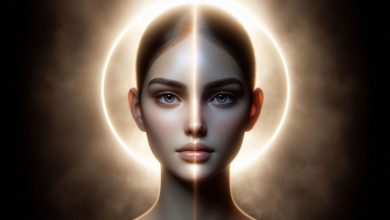


Love—a curious thing, isn’t it? It’s the sort of force that has launched wars, inspired countless poems, and gifted us with an endless supply of unforgettable song lyrics. But what is love, really? We’re going to try to answer that through the lens of philosophy. Let’s be honest: science could take a crack at it too, but since this article is going live on Valentine’s Day, a strictly scientific answer might feel a bit cold. So, today, let’s explore the subject with some help from the philosophers.
What is Love?
When we talk about love, we’re faced with a concept that defies a precise definition or clear boundaries. Is it a single emotion, or a fusion of many? More importantly, is it even real? Perhaps it’s just a passionate obsession. Regardless, there are those distinct moments when individuals feel it and decide they are “in love.” From that point on, even if the definitions shift, the power of that feeling is undeniable. But is this feeling biological? Could it be cultural? And to go a step further: is love a product of free will, or is it inevitable? We hate to break it to you, but this article won’t give us a definitive answer either—but by looking at the philosophers who shaped history, we might arrive at a conclusion that makes sense. For that, our first guest will be Plato.

Although Plato is best known for his work in politics and epistemology, he had quite a bit to say about love. In his work Symposium, he describes love as a spiritual force that elevates humans toward the world of Ideas—a concept you can explore in more detail in our article on Plato. According to Plato, love is divided into Eros (sensual love) and Agape (unconditional love). While he categorized it into these two types, his definition of love as a feeling that lifts us toward the realm of ideals remains one of the most romantic in all of philosophy. His student, Aristotle, on the other hand, associated love with friendship and virtue. The version of love we’re familiar with isn’t quite present in his work.
Moving ahead to the 4th century AD, Augustine would divide love into divine love (caritas) and earthly love (cupiditas). So far, apart from Plato, our philosophers haven’t been very romantic, have they? You might be thinking, “What’s with all these dry definitions?” This is where Spinoza comes to our rescue. Typically the voice of pure logic, Spinoza treats love as one of the fundamental emotions of existence. In other words, according to Spinoza, love is a basic emotion—just like joy, anger, or sadness. That might not sound particularly romantic, but it actually shows Spinoza’s belief in love and his refusal to dismiss the feeling as trivial.
We’ve speed-run through quite a few philosophers, but there is one whose arrival means it’s time for the rhythm of our article to pick up: Sartre.
The Paradox of Love
As we remember from our previous articles, Sartre placed great importance on the individual realizing their own existence and becoming the subject of their own life. Love, however, often gets in the way of this process. According to Sartre, humans possess immense freedom. An individual must create their own meaning and identity, yet love is an experience that challenges this freedom because we want to both possess the person we love and have them love us of their own free will. We love the person because they are free, after all. We want them to love us not because they have to, but because they choose to—yet Sartre points out that once love takes hold of two hearts, a state of restriction inevitably follows.

It doesn’t end there. According to Sartre, the lover wants to be valued in the eyes of their beloved, but this desire for validation makes the individual dependent on someone else’s judgment. Is that it? No! Sartre continues. To him, love also brings along jealousy and insecurity. As long as the loved one remains free, they possess the power to withdraw their love at any moment. That power creates a subtle, underlying fear in the lover. Because of all this, Sartre views love as an unsolvable contradiction. For Sartre, love is an inherently conflict-ridden relationship that can never be fully satisfied in an ideal sense. You’re feeling a bit down now, aren’t you? We have to admit, even if some of our writers whose names start with ‘T’ love Sartre, this particular view is enough to bring anyone down. I can hear you saying, “Is this really the mood for Valentine’s Day?” You’re right…
To escape Sartre’s shadow, let’s look at some intriguing questions and see how our philosophers answer them!
Questions About Love
Our first question is: “Does love necessarily bring happiness?” It’s useful to look at this through the eyes of a few philosophers. According to Aristotle, happiness (eudaimonia) is directly linked to a virtuous life, and love can bring happiness only to the extent that it supports both individuals in living virtuously; however, a pleasure-focused, immoderate love—and you can see the importance Aristotle places on moderation in our article “If You’re Unhappy, You’re Immoral: Virtue Ethics”—leads to chaos and pain rather than happiness. Schopenhauer, meanwhile, explained love through biological drives, viewing it not as a source of happiness but as a painful illusion that hijacks the individual’s will to ensure the survival of the species. Simone de Beauvoir approaches love as a phenomenon tied to social and gender roles; she argues that women viewing love as the sole source of happiness is a result of the patriarchal system, and that true happiness is only possible between free and equal individuals.
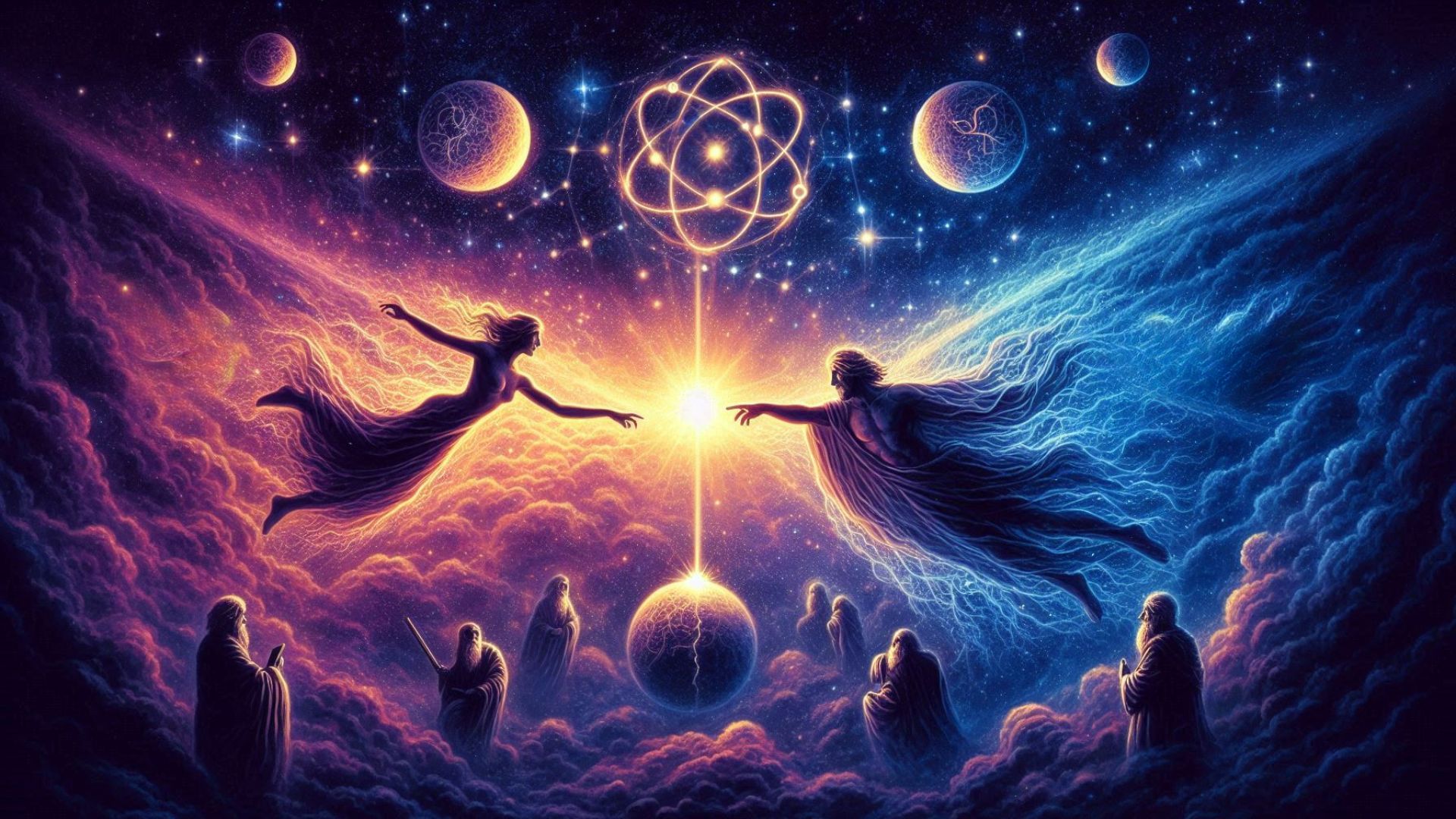
Another question is: “Can love be eternal?” Perhaps we could answer this through many philosophers, but let’s look at Hegel, who doesn’t usually offer very romantic explanations. Hegel treats love as the individual transcending themselves and achieving a dialectical integration. Love is the synthesis of two souls, and if a completed union is achieved, it can be permanent. Actually, that’s a beautiful explanation, isn’t it? When two souls are synthesized, love emerges. In other words, love brings with it the binding of souls to one another.
Our third question is: “Does love arise from free will?” We can start with Spinoza here. To him, love is a result of necessity and the laws of nature. Therefore, it does not arise from free will, but from necessity. Sartre, on the other hand, suggests that we fall in love through free will—consistent with his paradox mentioned earlier—but that it subsequently creates a paradox of freedom.
Finally, let’s address what we think holds the most poetic answers: “Do soulmates exist?” For this, we’d like to find that romantic tone that has flickered throughout our article. In Symposium, Plato tells a mythological story. According to this tale, humans were originally spherical beings. Each sphere was bisexual. The gods, feeling threatened by the power of these spheres, split them in two and cast them to different corners of the world. Even though they were divided, these halves always feel the presence of the other. Thus, the two halves begin to search for one another. When they finally find each other, they achieve the form of “true love.” In other words, love is the desire to find the other half we have lost.
A similar answer to Plato’s comes from Plotinus, another Ancient Greek philosopher. Going beyond a mere mythological story, Plotinus puts forward a conviction he truly believed in. According to him, souls were once whole but became separated and scattered across the world. True love is born from the desire of these halves to return to their original source. That is, the halves we call soulmates are searching for the other half they feel internally within this world. In other words, every Layla has a Majnun, every Sima has a Tufan.

And what about you? Do you believe in love? To take it a step further, do you believe your soulmate is just a street away, or in a different city? Who knows, perhaps you and your soulmate, currently in different cities, will bump into each other at a coffee shop in a few months or years, and the cosmic bond between you will lock you together. At the very least, according to Plotinus’s story, it’s possible, right? If you’re even luckier, perhaps you are already with the soulmate you keep thinking about as you read this. Regardless, as the Nature Philosopher, we hope you find your soulmate and your love—and if you’ve already found them, we wish for your love to endure!
References and Further Reading
Abukhadra, H., & Ak, H. (2023, April 23). Sartre on Love: Paradoxical and Impossible |that-which | Philosophy | Philosophemes | Philosophers. https://that-which.com/sartre-on-love-paradoxical-and-impossible/
Love (Stanford Encyclopedia of Philosophy). (2021, September 1). https://plato.stanford.edu/entries/love/
Philosophy of Love | Internet Encyclopedia of Philosophy. (n.d.). https://iep.utm.edu/love/
Plato on Friendship and Eros (Stanford Encyclopedia of Philosophy). (2023, June 14). https://plato.stanford.edu/entries/plato-friendship/
Originally published in Turkish at Doğa Filozofu.