

Throughout history, philosophy has wrestled with some massive questions. Some of these aim at truth, reality, and existence; others target the state of non-existence—death. So, while we are naturally curious about what things are and how they come to be, the sense of nothingness that death stirs up has profoundly shaped the history of human thought. But why exactly does death have such a grip on our minds?
Since ancient times, death has been the primary motivation behind our questioning of life’s meaning and purpose. This is because we constantly wonder if a finite life is worth living; if everything eventually ends, could our life’s work simply be a futile effort? On the flip side, many argue that for human life to have any real value, it must be finite—it must have the possibility of “ending.”

But the “death” theme we’re diving into today goes beyond existential anxiety and looks at the very nature of death itself. If everything eventually comes to an end, we are left with two concrete options: Either death is a tragedy, as contemporary American philosopher Thomas Nagel argues—a thief that robs us of our unique lives and denies us the irreplaceable pleasure of existing—or, as the Ancient Greek philosopher Epicurus suggested, it is a state of nothingness, a lack of sensation that exists entirely outside our normative moral judgments of “good” or “bad.” In short, we are asking: Is death a finality to be feared?
In this piece, we’ll explore Thomas Nagel’s thoughts on death and why he views it as such a profound misfortune for the person who dies. Of course, that’s assuming the Epicurean view doesn’t already shield you from all those negative thoughts about the end. So, let’s start by getting a handle on Epicurus and the philosophy that has held sway for thousands of years, then shift our focus to how Nagel challenges that very perspective. (For those interested, you can also check out our previously published article, “Epicurus and Death.”)
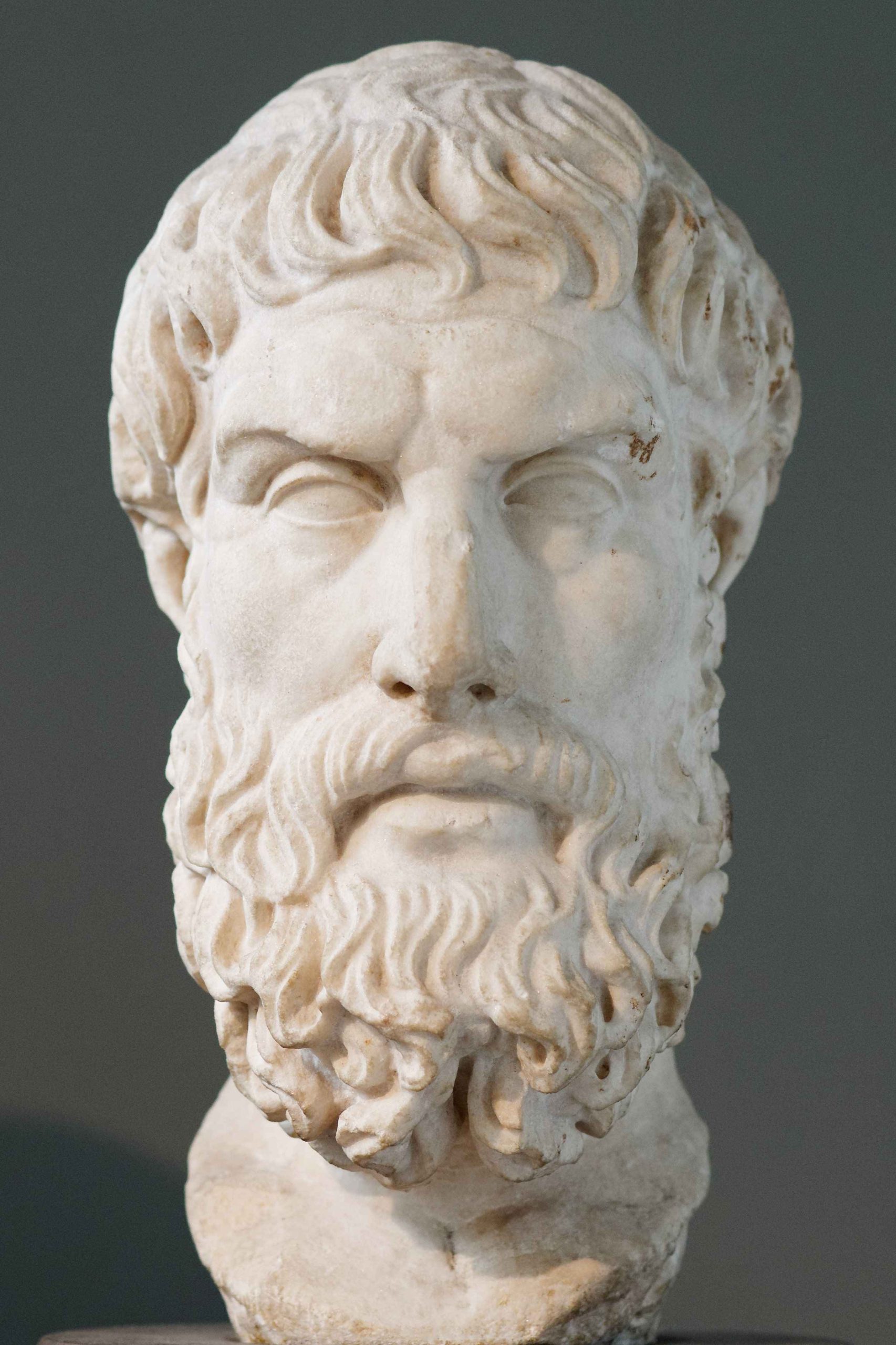
Who was Epicurus?
Epicurus was an Ancient Greek philosopher who lived from 341 to 270 B.C. He is one of the most significant figures in hedonistic philosophy. To put it briefly, Epicurean hedonism is built on this foundation: The goal of life is happiness, and happiness is achieved through a state of tranquility (ataraxia), free from pain. While hedonism is often confused with chasing physical pleasures, philosophical hedonism is actually about reaching spiritual and mental contentment. For example, the “pleasure” we’re talking about isn’t just the fleeting enjoyment of a delicious meal or a hot shower after a long day; it’s the deep, passionate fulfillment that comes from the hard work of, say, grinding away in a physics lab. It’s exactly at this point—where the phenomenon of death naturally puts an end to human life and our desire for pleasure—that Epicurus, like the rest of us, was driven to deep reflection.
So, what is this Epicurean philosophy of death?
The Epicurean Philosophy of Death
Epicurus argues that death can be neither good nor bad. His main reason for this is the assumption that death is a state of nothingness and, therefore, has no relationship to life or vitality. In other words, Epicurus contends that we cannot evaluate death from the perspective of the life we currently possess; death can only be judged by its own standards. For Epicurus, the fact that humans are both living and dying doesn’t mean we can place “death” in the same ontological category as “life.”
Because of the massive divide between life and death, Epicurus concludes that death should be of no concern to us and certainly shouldn’t be feared. He then coined the famous phrase that would guide the philosophy of death for centuries: “Death is nothing to us; when we exist, death is not, and when death exists, we are no more.” Following this logic, death cannot harm us or frighten us—it isn’t “bad”—because when death arrives, there is no subject left to experience its misfortune. One of the strongest pillars of this argument for Epicurus is the similarity between the nothingness before our birth and the nothingness after our death. If we don’t view the state of non-existence before we were born as a bad thing, he argues, we shouldn’t view the nothingness after death as bad either.
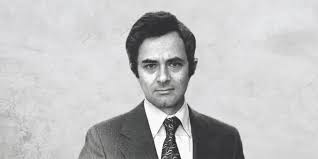
Thomas Nagel
Thomas Nagel is an American philosopher born in Belgrade, Serbia, in 1937. After serving as a professor of philosophy and law at New York University for 36 years, he retired in 2016. His primary fields of study include ethics, political philosophy, and the philosophy of mind. While he has contributed numerous significant works to contemporary philosophical literature, the piece that truly earned him his reputation is his 1974 essay, “What Is It Like to Be a Bat?”
In short, Nagel argues in that essay that the subjective nature of human consciousness cannot be fully grasped by observing it from the outside; it can only be understood by actually being that creature. We can’t fully know what it’s like to be a bat because only a bat can truly know what it’s like to be a bat. This emphasis Nagel places on the subjective dimension of existence has profoundly influenced his thoughts on death. Nagel asserts that death ruins a person’s life by robbing them of the potential for more life.
The Deprivation Account
The main reason Nagel views death as bad or harmful is that he considers life itself, in all its conditions, to be a good thing. In this view, life is inherently valuable; conversely, death is an evil because it strips us of our unique, one-time lives. In short, death is not considered bad because “being dead” is scary, but because it deprives us of our current lives and all the moments we might have lived had we continued. In other words, with death, fundamental human values like perception, desire, action, and thought are doomed to vanish, and that is why death is an evil for us.
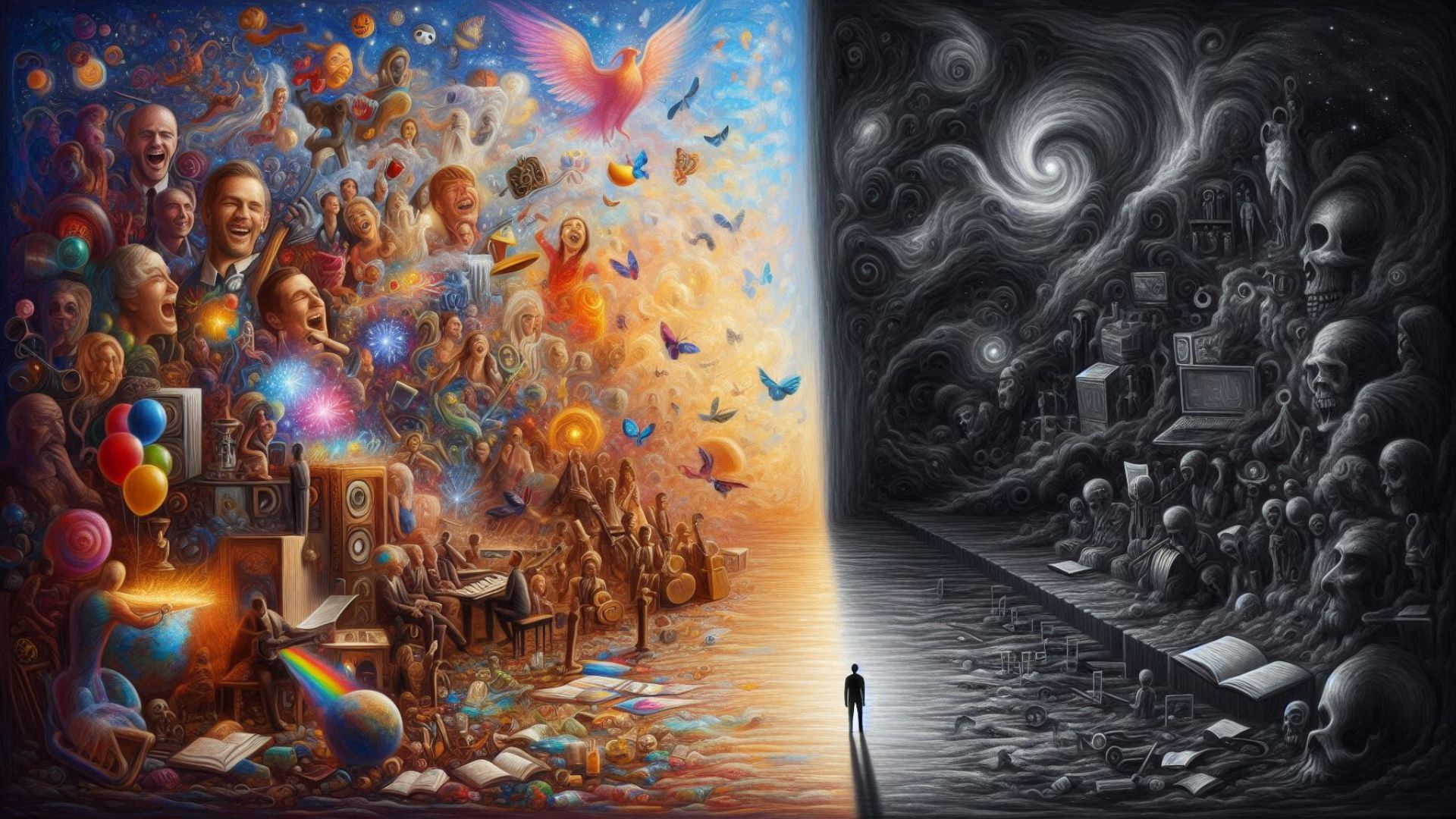
Beyond all this, Nagel seeks the value of life in the subject’s physical and conscious integrity, presenting this as the primary condition for the beauty of living. He strengthens this claim with a simple example: He argues that there is no real difference between being in a coma for twenty years and then dying, versus simply dying outright—a life spent for twenty years without consciousness or experience has no value. If it were you, would you prefer death over a twenty-year coma where no state of consciousness is active?
On the other hand, Nagel argues that in a scenario where all faculties are intact, the value and advantage of living longer are clear. For example, regarding Bach, who lived longer than Schubert, we can say not only that he was graced with the beauties of life for longer, but that he was able to enjoy the music—which was irresistible to both of them—even more. For Nagel, this is a perfect indicator of the pure goodness of life, because all desired activities and objects are specific to life and disappear with death.

However, none of the arguments Nagel puts forward seem to effectively counter the Epicurean view, because Epicurus emphasized that since there is no subject present in death to experience it, death cannot be bad. Therefore, Nagel’s view that death deprives us of life’s beauty appears, at first glance, to be a baseless claim—after all, there is no subject there to feel the deprivation.
But is it really?
An Answer to Epicurus
Nagel’s “deprivation” theory suggests that for something to be bad or harmful, it doesn’t necessarily require active experience or awareness. If something is inherently bad, we can sense its badness even without directly experiencing the event itself. Nagel treats death as this kind of evil. In other words, even if a living being can never experience the “fearfulness” of death from the perspective of “life,” one can still claim that death is a bad thing.
We can see Nagel strengthening this claim with the example of “betrayal.” When one partner discovers they have been cheated on, the act of betrayal causes clear psychological and even sociological harm. Nagel uses this to argue that the act of betrayal is bad in itself. Therefore, it is the fact of being betrayed that makes us unhappy, not just the discovery of it. Consequently, just as we cannot claim there was no problem simply because we hadn’t yet realized we were being betrayed, the fact that being dead is closed to experience does not mean death isn’t a bad thing. For this reason, Nagel argues that unlike a mole born blind that doesn’t know what it’s missing, we are creatures who know exactly what we are missing when we die; and that is precisely why death is a genuine loss and deprivation for us.
References and Further Reading
Konstan, David. “Epicurus.” In The Stanford Encyclopedia of Philosophy, edited by Edward N. Zalta. Summer 2022 Edition. Accessed June 24, 2025. https://plato.stanford.edu/entries/epicurus/.
Nagel, Thomas. “Death.” In The Metaphysics of Death, edited by John Martin Fisher, 61-69. Oxford: Oxford University Press, 1993.
Pitcher, George. “The Misfortunes of Death.” In The Metaphysics of Death, edited by John Martin Fisher, 159-168. Oxford: Oxford University Press, 1993.
“Thomas Nagel.” Wikipedia. Last modified June 26, 2025. Accessed June 27, 2025. https://en.wikipedia.org/wiki/Thomas_Nagel.
Originally published in Turkish at Doğa Filozofu.