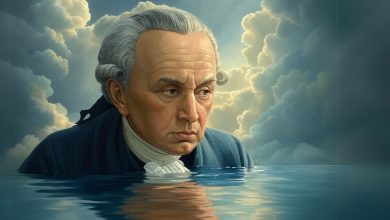



Let’s kick things off today with a question: What is the ideal form of government? Which system best guarantees justice, good governance, and prosperity? As you might expect, plenty of philosophers have taken a crack at this. One of the most famous is Thomas Hobbes. But who was he, exactly? And what was his answer? Let’s dive in and get to know him better.
Thomas Hobbes in a Nutshell
Thomas Hobbes was born in 1588 in Malmesbury, England. He studied at the University of Oxford, where he immersed himself in the classics. Throughout his education, he was drawn to both scientific and political inquiry. Hobbes even spent time working as a secretary for Francis Bacon; the empiricist approach Bacon championed had a massive impact on the way Hobbes thought. He was primarily obsessed with two big areas: political philosophy and the nature of consciousness.
Before we get into the weeds of his theories, here’s a quick summary of his narrative:
According to Hobbes, humans are inherently selfish and driven by self-interest. Because of this, our “natural state”—the world before government—is essentially a “war of all against all.” It’s a chaotic landscape where safety is non-existent and fear is the only constant. To escape this madness, Hobbes argues that people must enter into a contract, handing over a portion of their individual liberty to a sovereign ruler. This idea of a “social contract” is a cornerstone of political philosophy. Thinkers who subscribe to this view argue that states were born because people collectively agreed to surrender some autonomy in exchange for protection and order. This “contract” results in the emergence of a leader with absolute power, tasked with keeping the peace and organizing society.
For Hobbes, authorities—or “Leviathans”—are the structures built by this human contract, and they are essential for keeping society orderly and safe. The leader must hold absolute power, and their authority should never be challenged, because the alternative is sliding right back into chaos. In this sense, Hobbes was proposing a society built on total obedience.
Okay, but why does he think this? Let’s break down his logic from the very beginning.
The Never-Ending War
Hobbes argues that in our natural state, we are wired for conflict and chaos. Before states and laws existed, he suggests that people were constantly killing each other, stealing property, and committing acts of violence, all because of an inherent human aggression. Naturally, this aggression only breeds bigger conflicts, leaving humanity trapped in a perpetual state of war. This isn’t good for anyone—not even the strongest person, who could still be killed in their sleep. That’s why, according to Hobbes, we made a deal to end the fighting, and that’s how the state was born.
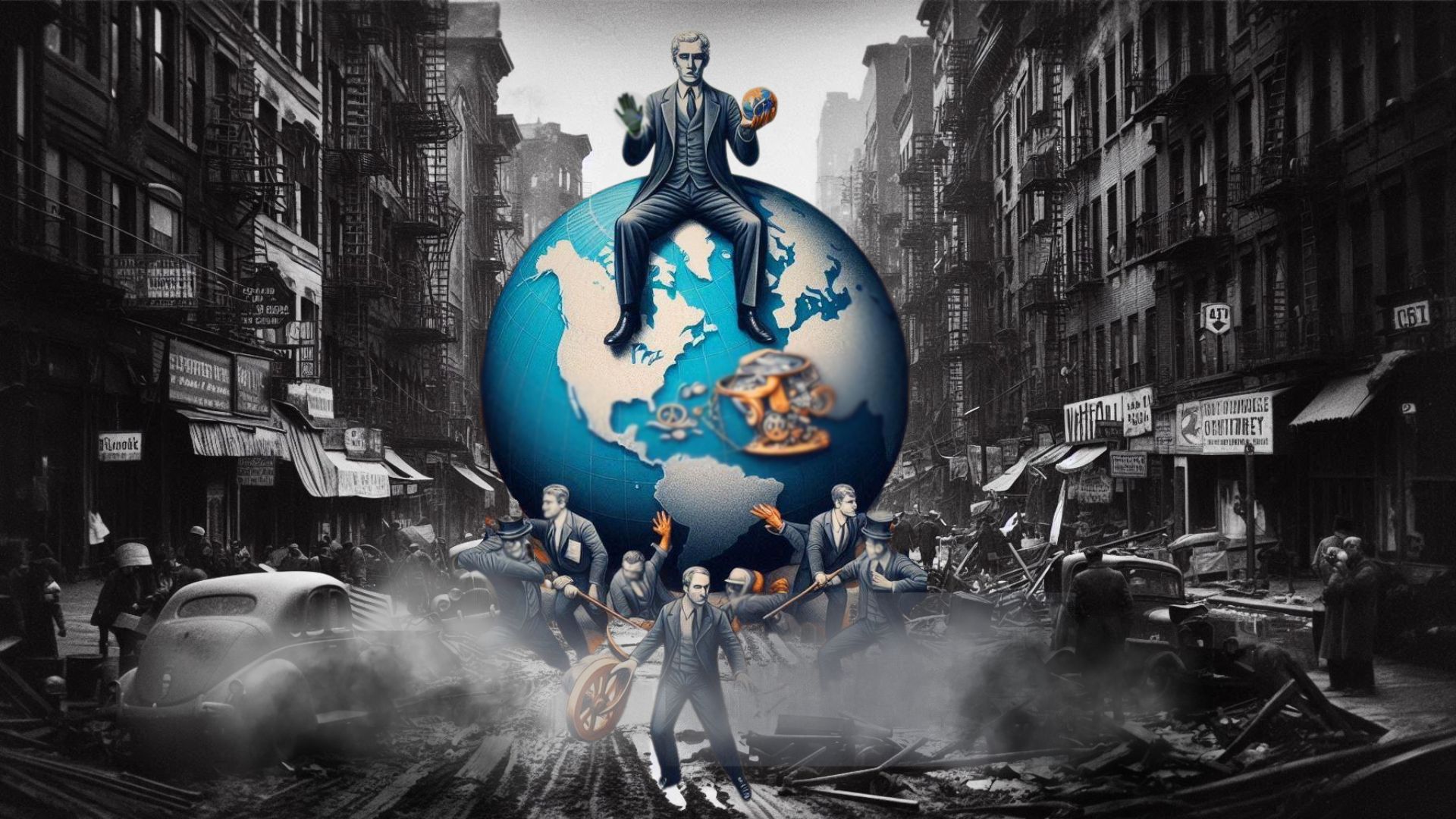
This agreement is known in the history of philosophy as the “Social Contract,” and it’s a concept that other giants like Locke and Rousseau also explored in their own work.
The Social Contract
To escape the constant chaos and insecurity of the state of nature, people seek a solution. For Hobbes, that solution is a contract between individuals. It means people willingly renounce certain rights and hand them over to a sovereign. People agree to trade a bit of their freedom for the guarantee of their own safety. But what exactly are they giving up?
The “rights and freedoms” Hobbes describes in the state of nature include all sorts of things we’d consider morally or legally unacceptable today. But Hobbes argues that because there is no external authority or moral code in that natural state to stop you, everything is technically a “right.”
So, the contract is essentially the trade-off: giving up some of those “rights” to ensure peace.
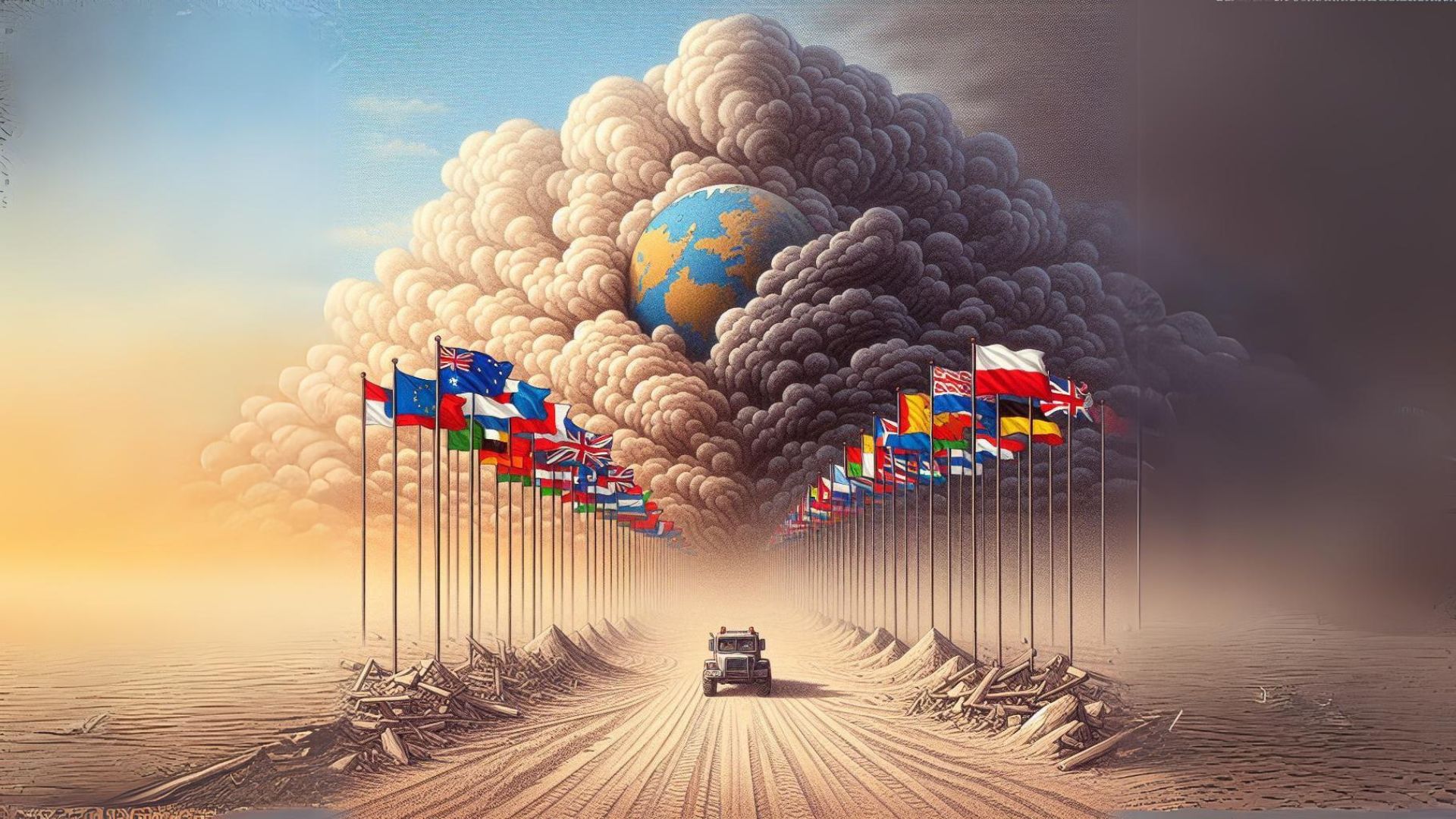
Hobbes’s social contract is built on mutual interest. Individuals sign up to protect their own interests and stay safe. But this contract requires accepting the absolute authority of the sovereign, because that is the only way to climb out of the pit of chaos.
If someone under this contract breaks the rules—by stealing, killing, or harming others—they face punishment, just like a breach of contract today. They might lose their freedom or even their life. This is the origin story of the state, according to Hobbes. From there, legal systems, police, and modern governance evolved. But what does this “ideal state” actually look like?
Hobbes’s Ideal State
Because of this contract, we need a leader or ruler to keep everyone in line, maintain safety, and uphold justice. The ruler’s job is to ensure order for everyone who signed the deal. Hobbes argues that to do this, the ruler must have absolute authority. In other words, Hobbes is a defender of monarchy. He believes that a single sovereign with absolute power is the most reliable way to maintain social order and peace.
Hobbes also stands out for a unique twist on this monarchical view. While many defenders of monarchy insisted the king should have power over both state and church, Hobbes separates the two and advocates for a secular administration. This isn’t for the reasons you might think, though. It’s not that he thinks the king shouldn’t interfere with religion—it’s that he doesn’t want religion interfering with the king. He wants to ensure the church has no sway over state governance.

Hobbes’s most famous work, “Leviathan,” dives deep into this. He envisions the state as the result of the social contract, named after the massive biblical sea monster. He depicts the state as a powerful, absolute authority because only a giant, unyielding structure can protect society from falling back into the abyss of chaos.
Even though Hobbes’s narrative praises a system like monarchy—which seems outdated to us now—it was a total game-changer for philosophy. He and the thinkers who followed him opened up the debate on the context of authority, the formation of the state, and the nature of humanity. Almost every philosopher who has touched this topic since has had to engage with Hobbes—either to build upon his ideas or to tear them down.
What do you think? Is the state really the product of a contract? Or did tribes simply start working together and, over time, scale up into the states we know today?
References and Further Reading
Sorell, T. (2024a, August 23). Leviathan | Thomas Hobbes, Summary, Social Contract, Sovereign Authority, & Facts. Encyclopedia Britannica. https://www.britannica.com/topic/Leviathan-by-Hobbes
Sorell, T. (2024b, September 12). Thomas Hobbes | Biography, Philosophy, Beliefs, Leviathan, Legacy, & Facts. Encyclopedia Britannica. https://www.britannica.com/biography/Thomas-Hobbes
Sorell, T. (2024c, September 12). Thomas Hobbes | Biography, Philosophy, Beliefs, Leviathan, Legacy, & Facts. Encyclopedia Britannica. https://www.britannica.com/biography/Thomas-Hobbes/Political-philosophy
Thomas Hobbes (Stanford Encyclopedia of Philosophy). (2021, February 12). https://plato.stanford.edu/entries/hobbes/
Originally published in Turkish at Doğa Filozofu.