


As regular readers of this series know, we’ve spent our time so far exploring brilliant, inquisitive philosophers who were primarily concerned with how we acquire knowledge. Most of them lived long before the 20th century. In this piece, we’re going to pivot to a philosopher who breaks the mold—both in terms of when he lived and the subjects he tackled: Robert Nozick.

You might find this piece a bit more grounded and relatable than our previous entries. After all, the question of “how do we know what we know?” can feel a bit detached from our daily grind, but concepts like justice and property? Those are things we brush up against every single day. In that spirit, we also recommend checking out our piece on John Rawls, a previous subject in this series.
But let’s turn our attention to Nozick. First things first: let’s get to know the man behind the philosophy, shall we?
A Brief Biography of Nozick
Robert Nozick (1938–2002) was one of the most influential American philosophers of the 20th century. Born in New York, Nozick developed a deep interest in politics early on, which naturally pulled him toward political philosophy—the field that would define his entire academic career.
He is best known for his landmark work, Anarchy, State, and Utopia (1974). In it, he mounts a robust defense of liberalism, arguing for a state that keeps its hands off our lives as much as possible. We’ll get into the weeds of that in a moment.
For Nozick, the protection of individual liberty is the ultimate ethical principle. In his view, the individual comes first. He argued that the ideal government is a “minimal state”—one that limits itself strictly to providing basic security and justice, and nothing more. Essentially, he wanted a government that doesn’t meddle, performing only its essential functions. Nozick famously called this the “night-watchman state.” Just like a night watchman, the state’s sole job is to keep watch and protect the rights of the citizens.

Nozick argued that state taxation is, in effect, a violation of individual rights and should be avoided. To him, mandatory taxation is tantamount to forced labor—a direct infringement on personal freedom. Needless to say, this isn’t a view held by any major modern state. Yet, for Nozick, this point was non-negotiable. He believed the state shouldn’t ask anything of its citizens, leaving individuals free to act as they please.
For those of you thinking, “You mentioned property at the beginning—does this connect?” The answer is a resounding “Yes!” Nozick aimed to resolve the question of property through the lens of justice, developing what he called his “Entitlement Theory.”
The Entitlement Theory
Nozick’s “Entitlement Theory” is a framework built on how property is acquired, transferred, and how justice is maintained throughout those processes. Let’s break down the core concepts and then look at some examples.
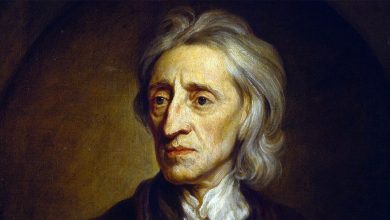
The Principle of Justice in Acquisition: Nozick argues that individuals can legitimately claim ownership of natural resources by mixing their labor with them. This is rooted in John Locke’s labor theory of property: if you put your own effort into something, it rightfully becomes yours. Nozick adopts this but adds a vital caveat: acquisition must not harm others. You can’t claim a resource if doing so violates someone else’s right to access it. In other words, theft, exploitation, or zero-sum conflicts don’t count as legitimate acquisition.
The Principle of Justice in Transfer: Nozick asserts that if you acquire property legitimately, you have the right to hand it over to someone else voluntarily. Property rights can change hands through transactions where both parties agree. This principle is a cornerstone of the free-market economy. Naturally, this transfer shouldn’t be the result of fraud or coercion.
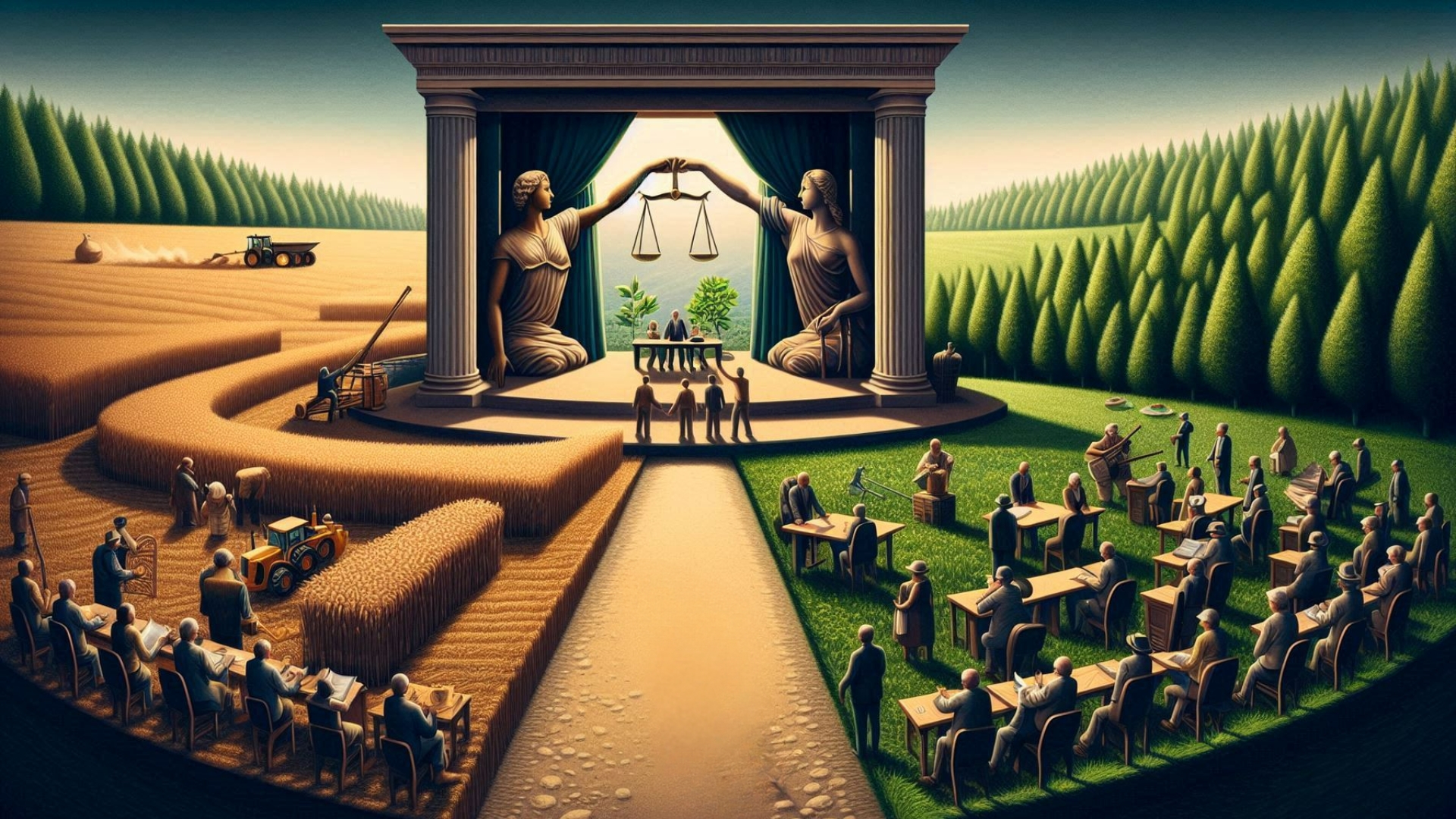
The Principle of Rectification: Nozick acknowledges that property rights are sometimes violated, and when they are, those wrongs must be righted. Justice demands that unfairly acquired or transferred property be returned or compensated for. This principle provides a mechanism to fix historical injustices and helps maintain a fair distribution of property.
Let’s look at these in action:
Example of Acquisition: Imagine Ahmet, who lives by the edge of a forest and finds an unclaimed patch of land. He clears the brush, tills the soil, plants trees, and turns it into an orchard. By investing his own labor into that land, Ahmet has legitimately acquired it. He owns the land—and the fruit it produces—because he put in the work.
Ahmet’s ownership is legitimate because he didn’t trample on anyone else’s rights to get it. Furthermore, adhering to Nozick’s “Lockean proviso,” there are still plenty of resources left for others to meet their own needs.
Example of Transfer: Think about the income Ahmet makes from selling his fruit. He sells a batch to Mehmet, who pays him for it. Here, Ahmet has voluntarily transferred his legitimately owned fruit to Mehmet through a fair agreement. Mehmet’s ownership is now legitimate because both parties consented to the exchange.
Example of Rectification: Now, imagine someone named Ali breaks into Ahmet’s orchard, steals some fruit, and sells it to someone else. In this case, Ali’s claim to that property is illegitimate because he acquired it by violating Ahmet’s rights. The state’s role here is to step in, rectify the situation, and restore what rightfully belongs to Ahmet.

For Nozick, these three principles are the bedrock of a just society where everyone’s rights are protected. And, of course, he never misses a chance to critique the state while explaining this.
Nozick argues that state-led wealth redistribution is a violation of individual rights. To him, redistributing wealth is essentially the state forcibly seizing what people have rightfully earned, which is an assault on individual liberty. This is why he opposes the welfare state and social justice policies. He believes justice should be evaluated based on how property was originally acquired and transferred, not by how the state decides to divvy it up after the fact. In short: unless there’s a clear case of injustice (like theft), the state has no business interfering with property.
At first glance, Nozick seems like a die-hard capitalist, but that’s not really the heart of his project. He was deeply concerned with protecting those who are crushed or treated unfairly by the system. Through his principle of rectification, he demands that past wrongs be made right.
Because of this, it’s hard to slap a simple label on Nozick. Looking at the system he describes, he’s certainly not a socialist or a Marxist. He describes a system that fits perfectly with capitalism, but—much like Rawls—he proposes a version that aims to curb the predatory nature of capitalism by placing justice at the very center.
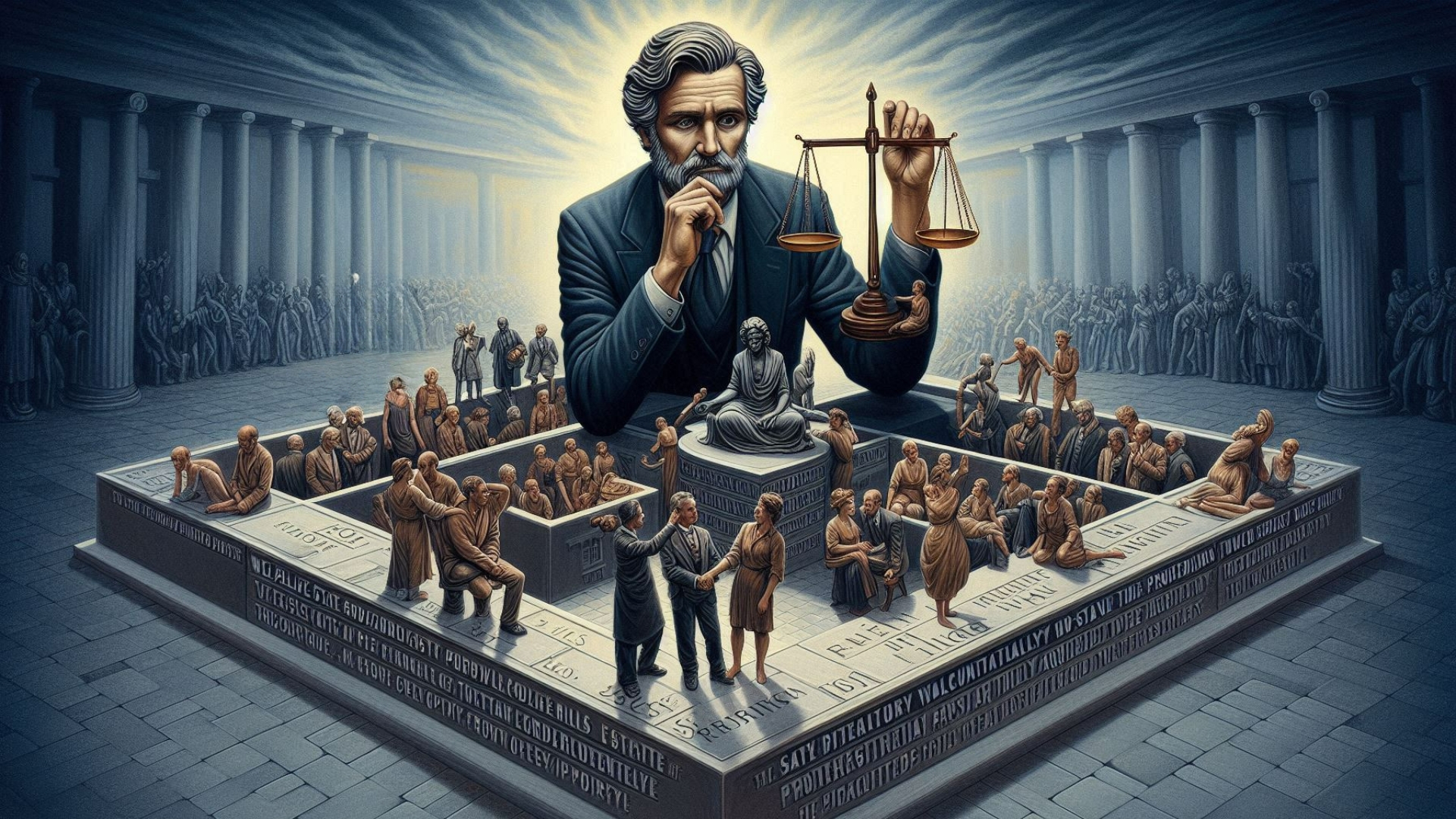
What do you think? Is Nozick’s vision the ideal way to organize society, or is there a better path to justice? As we always say at the end of every piece: the answer lies with you. The “right” and “wrong” of it all are shaped by your own perspective.
References and Further Reading
Duignan, B. (2005a, March 10). Robert Nozick | Libertarian philosopher, Harvard professor & author. Encyclopedia Britannica. https://www.britannica.com/biography/Robert-Nozick
Duignan, B. (2005b, March 10). Robert Nozick | Libertarian philosopher, Harvard professor & author. Encyclopedia Britannica. https://www.britannica.com/biography/Robert-Nozick/The-entitlement-theory-of-justice
Robert Nozick’s Political Philosophy (Stanford Encyclopedia of Philosophy). (2022, April 21). https://plato.stanford.edu/entries/nozick-political/
Originally published in Turkish at Doğa Filozofu.