

We often think of philosophy as a collection of abstract concepts born from pure intellect. But in reality, philosophy starts with a curious gaze at the secrets of the world around us and a deep inquiry into what it means to “live well.” Even the smallest questions in our daily lives harbor a philosophical core: Why can’t we find happiness? What should we expect from life? These curiosities are fueled by the very passion that drives philosophy forward. Ancient philosophers didn’t consider their education complete just by reading; they completed it by applying those lessons to their lives. Pierre Hadot is a vital thinker who brought this tradition into our modern era. Hadot, treated ancient Greek philosophy not as a dusty subject, but as a “way of life.” According to his perspective, philosophy isn’t just a lecture topic; it’s a collection of practices woven into the fabric of our daily existence.
While highlighting this side of ancient philosophy, Pierre Hadot argued that much of contemporary academic philosophy has devolved into a jargon-filled realm detached from real life. So, as a reader curious about philosophy, keep this in mind: philosophy should never be separated from lived experience. In Hadot’s words, the ancient philosophers offered humanity “an art of living.” Throughout this piece, we’ll get to know him and his philosophy more closely, and we hope that by the end, you’ll be even more eager to embrace philosophy yourself.

Pierre Hadot in a Nutshell
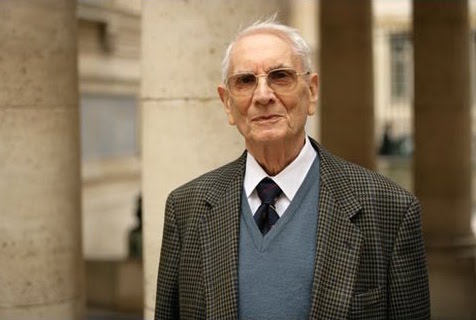
Pierre Hadot was a philosopher and historian of philosophy born in France in 1922. He initially received a Catholic education and was ordained as a priest in 1944, but he left the clergy in the early 1950s to continue his studies at the Sorbonne in Paris. In 1964, he began his work at the EPHE (École Pratique des Hautes Études), and in 1983, he became a professor of Ancient Greek and Roman thought at the Collège de France. Until the end of his life, he continued to translate and interpret the texts of ancient philosophers, focusing especially on figures like Porphyry, Plotinus, Saint Ambrose, and Marcus Aurelius. As you can see, Hadot had a deep love for ancient philosophy, and he dedicated his entire career to it. In short, despite being raised in an academic environment, he didn’t subscribe to all the norms of academic life. He was a philosopher who preferred to internalize classical texts and prioritize practical living. He cared not just about the transmission of knowledge, but about the process of transforming into a “sage.” You might be thinking, “What does that even mean?” Simply put, Hadot cared as much about the journey as the destination. This approach separated him from academic traditions focused solely on theoretical knowledge and positioned philosophy as a life practice. He loved the “being on the path” nature of philosophy. Ultimately, Pierre Hadot suggested that we view ancient philosophy as a “lifestyle” that transcends the centuries and can still touch our lives today. Let’s look at why and how he proposed this.
A Philosophical Journey
According to Hadot, all philosophical schools in antiquity were driven by a desire for wisdom and a good life. With great admiration, Hadot once noted, “Since Socrates, the choice of a way of life in ancient philosophy occurs at the beginning of the process, not at the end.” This alone shows how deeply he embraced the ancient Greek understanding of philosophy. For Hadot, philosophy begins with the question of how one should live; it is not merely a textbook, but life itself.
Hadot believed that man’s ultimate goal is to attain inner tranquility. If we think about it, this isn’t exactly an empty perspective. Aren’t the sports we play, the careers we build, and everything we bring into our lives ultimately aimed at this? Of course, sometimes we bring the wrong elements into our lives while trying to achieve it. The ancient philosophers used to say that most people in daily life suffer from unnecessary pain. The source of this, they argued, is our inability to control our passions and our unconscious adherence to false beliefs about what constitutes true happiness. Hadot built upon this, stating, “The real cause of human suffering is our passions.” So, how do we fix these pains and errors? For Hadot, the answer is simple: Philosophy.

Like the philosophers of old, Hadot saw philosophy as a therapy for mental health. He believed that philosophy must first offer us transformation; otherwise, engaging solely in writing or theory is not being a philosopher in the ancient sense, but rather a “sophist.” That is, instead of just teaching the history and theories of philosophy like a lecturer, one must use philosophy to change and improve individuals. Hadot felt that in today’s world, this aspect of philosophy is rarely shown and largely forgotten. In other words, this understanding of philosophy as a way of life has become quite rare in our era. Through this, Hadot aimed to make philosophy a lifestyle rather than basing it solely on philosophical data. He believed it was more important to live than to learn, and more important to help others live than to simply teach them. Of course, to do this, one thing was necessary: spiritual exercises.
Spiritual Exercises
So, what are these “spiritual exercises”? In truth, they are exactly what is needed to establish the connection with philosophy that Hadot envisioned. Hadot defined these exercises as “practices aimed at creating change and transformation in the person practicing them.” In other words, he developed this idea based on the notion that philosophers don’t just listen to lectures; they achieve an inner transformation by applying what they learn to their own lives. Ancient sources are full of countless examples of such mental training. Hadot found the examples in Stoicism and Epicureanism particularly essential. For instance, the Stoics frequently repeated Epictetus’s quote: “It is not things that disturb people, but their judgments about things.” When they encountered a problem, they would bring this quote to mind to control their reactions. We can think of this as a kind of affirmation exercise in today’s world. Another Stoic, Marcus Aurelius, had a similar approach, which Hadot also championed.

Aurelius spoke of the practice of turning obstacles into opportunities. In the examples Hadot provides, Marcus describes the awareness that every obstacle “ceases to be an obstacle and becomes an object that satisfies the urge to act.” According to Hadot, we should pull ourselves together with this approach in every difficulty. Through exercises like this, a person can truly become closer to philosophy.
We used the phrase “truly become closer to philosophy” because Hadot criticized today’s philosophy as being, more than anything else, an “expert’s game.” He believed that true philosophy lies in the values we’ve explored throughout this post. For Hadot, moving toward this path would also grant us another critical value: “wisdom.” According to him—and the literal etymology of the word—’philosophy’ (philo-sophia) means “love of wisdom.” Since a philosopher can never be entirely wise, they are a traveler in a lifelong state of learning. He expressed this view most succinctly: “To know oneself is to recognize oneself as a being who is ‘not wise’; that is, to accept that we are a lover of wisdom (philo-sophos).”
In other words, the true philosopher does not declare themselves wise; instead, they say, “I must always strive to be wise.”
To summarize Hadot, the philosopher’s goal is to chase wisdom, but they must do so knowing they will never fully catch it and never truly be “wise.” They will not be a sage, but they will be a friend to wisdom. That is the exact goal. And the way to do this isn’t through boring philosophy lectures or memorizing different theories, but through the spiritual exercises he described.
His approach to philosophy allows the reader to embark not just on a mental journey, but a spiritual and moral one as well. Hadot reminds us that the philosophers of the ancient world didn’t just think—they lived as they thought. This reminder is a profound call in our modern world, which is so heavily based on consumption and superficial information: to make room for philosophy within our lives, our daily behaviors, our relationships with others, and the dialogue we hold with our own inner selves. Whether it’s turning difficulties into opportunities for wisdom with the thought that “the obstacle itself becomes the way,” as Marcus Aurelius wrote in his diary; disciplining our emotions by reviewing our judgments, as Epictetus suggested; or rediscovering the peace found in a simple life, as Epicurus did… for Hadot, all these practices are measured not by knowledge, but by transformation. Philosophy, then, is the answer not just to “what we think,” but to “how we live.” Understanding Hadot’s texts is not just about getting to know a thinker; it’s about rebuilding our own inner potential as human beings. Perhaps the truest form of philosophy, just as he suggested, emerges when tested through daily practice within the flow of life. Today, remembering Hadot’s legacy—turning philosophy into a way of life and placing wisdom at the center of our thoughts and emotions—is not only possible, but it is an invitation that is never too late to accept.
References and Further Reading
Sharpe, M. (n.d.). Pierre Hadot (1922—2010). Internet Encyclopedia of Philosophy. https://iep.utm.edu/hadot/
Yıldırım, Ö. (n.d.). Pierre Hadot. Felsefe.gen.tr. https://www.felsefe.gen.tr/pierre-hadot/
Originally published in Turkish at Doğa Filozofu.