


The title says it all, doesn’t it? There might not be a better way to describe dogs. These animals are so inherently gentle and filled with love that, ages ago, their ancestors chose to step out of the wild and embrace us as their closest companions. In this piece, we’re going to get to know our most loyal and intimate friends a little better. We’ll take a closer look at their sacrifices, the meaning behind their quirks, and just how much we truly need them.
Origins and Evolution
To understand them, we first have to look at their evolution. The story of the dog goes back millions of years. They are descendants of the gray wolf, known as Canis lupus. Their initial transition from wolf to a wild canine form began roughly 30,000 to 40,000 years ago. We see that dogs primarily evolved from wolves in Eurasia.
Later on, we observe a gradual domestication. According to the fossil record, our friendship with them dates back about 14,000 years. So, how did this domestication process actually begin?
It likely started when humans began living in closer proximity to wolves, leading to a mutualistic relationship. Of course, this part is based on educated guesses. During this era, humans fed wolves and provided shelter, and in return, the wolves naturally began to guard the areas where humans lived. Over time, the wolves that were more willing to interact with humans stayed near them. Wolf pups became easier to socialize. There were friction points between aggressive wolves and humans; as those aggressive wolves died out, the gentler ones continued to live alongside us. Eventually, having grown accustomed to the comfort of living with humans, these wolves no longer needed the traits required for survival in the wild. Those instincts faded, and these wolves diverged from their wild counterparts. By the time of the agricultural revolution, the dog as we know it today had fully taken shape.
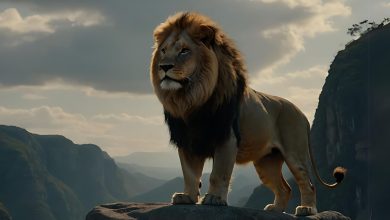
They didn’t jump straight to the cute Yorkshire Terriers we keep in our homes today, but they did begin to take on the form of the sturdier street dogs we see. And so, the domestication process was complete. It’s hard to find another animal that has undergone this transformation. For instance, it’s not accurate to say that cats are “domesticated.” Because they are social by nature, they simply utilize the shelter we provide; they aren’t all that different from wild cats. They’ve simply adapted their structure to city life. You could almost say the only real difference between them and the lions prowling the savanna is their size.
The Skills of Dogs
Our loyal friends possess some truly unique talents, led by their incredible senses of smell and hearing. While we can’t say they are more successful than every wild animal, they have remarkably sensitive instincts. They hear sounds we can’t perceive and catch scents we couldn’t possibly detect. It has been proven that their sense of smell is roughly 10,000 times more developed than our own.
In addition to this, dogs are more adept at training than most other animals. They can learn complex tasks, which is exactly why they can serve as search-and-rescue animals during disasters. Finally, perhaps their most important trait is their ability to form deep bonds.

When it comes to communication, dogs are absolute gems. They make their owners the entire focus of their lives, and by looking deep into your eyes, they can easily read your emotions and react to them. It’s not just “conditioning.” While conditioning is a part of their training, the core motivation for a dog is the desire to please their owner.
Our Companions for Life
Now, let’s imagine you’ve adopted a dog. Picture a tiny, three-month-old puppy. You scoop up their tiny body and hold them close. They need their shots, right? They’re completely vulnerable and waiting to learn about life. After their vaccines, you take them home and show them that this is their space now. They look into your eyes as if they understand. They explore the house, learn the layout, and want to get to know you. They sniff everything, as if they’re memorizing it for the last time. You get them a little bed, a water bowl, a leash, and maybe a chew toy. Whether they’re a tiny pup or a big Golden Retriever, it doesn’t matter, does it? They’ve bonded with you like a baby. You head off to work, school, or to meet friends, and they wait for you at home. The moment you walk through the door, they pounce on you with all the enthusiasm of someone who hasn’t seen you in years. Because for them, there is no concept of time… To them, there is no difference between 30 minutes and 8 hours. At the end of the day, every time you leave, they wait for the person who gives their life meaning. While you’re gone, they might curl up with your pillow or your clothes, breathing in your scent. That’s how much they love you…

Then there are the walks. That pure joy is something else, isn’t it? They run back and forth, savoring the green space because you’re there with them. And let’s be honest, they’re total gluttons. They’d give anything for a treat—well, maybe not you, but everything else! Years pass like this. They stop being a baby or a puppy and grow into adulthood. Their playfulness might settle into a more dignified grace, but one thing never changes: the way they look at you. It’s a gaze so intense that even the legendary poets couldn’t describe it. They lock onto you, and nothing else matters. They develop ways to communicate with you, and they come to love your daily routines. And then one day, their life comes to an end. While for you, a 15-year friendship has passed, for them, their entire life was spent with you. You were their whole world. When they go, it feels like a piece of you goes with them. You might have to endure people saying, “It’s just a dog,” but what does that matter? You’ve lost a friend. As you move on with your life, the things they loved will stay in your heart. And really, this friendship doesn’t end; it’s a bond that transcends a lifetime.
Interestingly, this isn’t just true for house dogs. It’s exactly the same for the street dog you see and feed every day. They have their own circle of friends and familiar faces they see throughout the day.
No dog has an inherent desire to attack, right? They might become irritable or aggressive due to the mistreatment they receive from others or the desperation of hunger. Ultimately, a dog’s behavior is defined by how they are raised. It’s heartbreaking, isn’t it? They don’t know what’s coming. So much depends on our authority. When people take them in, care for them for three months, and then get bored and dump them in the woods, the dog doesn’t understand why. The feeling of abandonment consumes their entire being. It’s painful to see how we can’t make sacrifices for them when they have dedicated their entire lives to us. Laws they don’t understand and didn’t create are imposed upon them without them ever having a say. Yet, in the end, they still wag those tails for the next human they see. We hope those tails never stop wagging. We hope that ideas meant to take our age-old friends away from us never take hold…

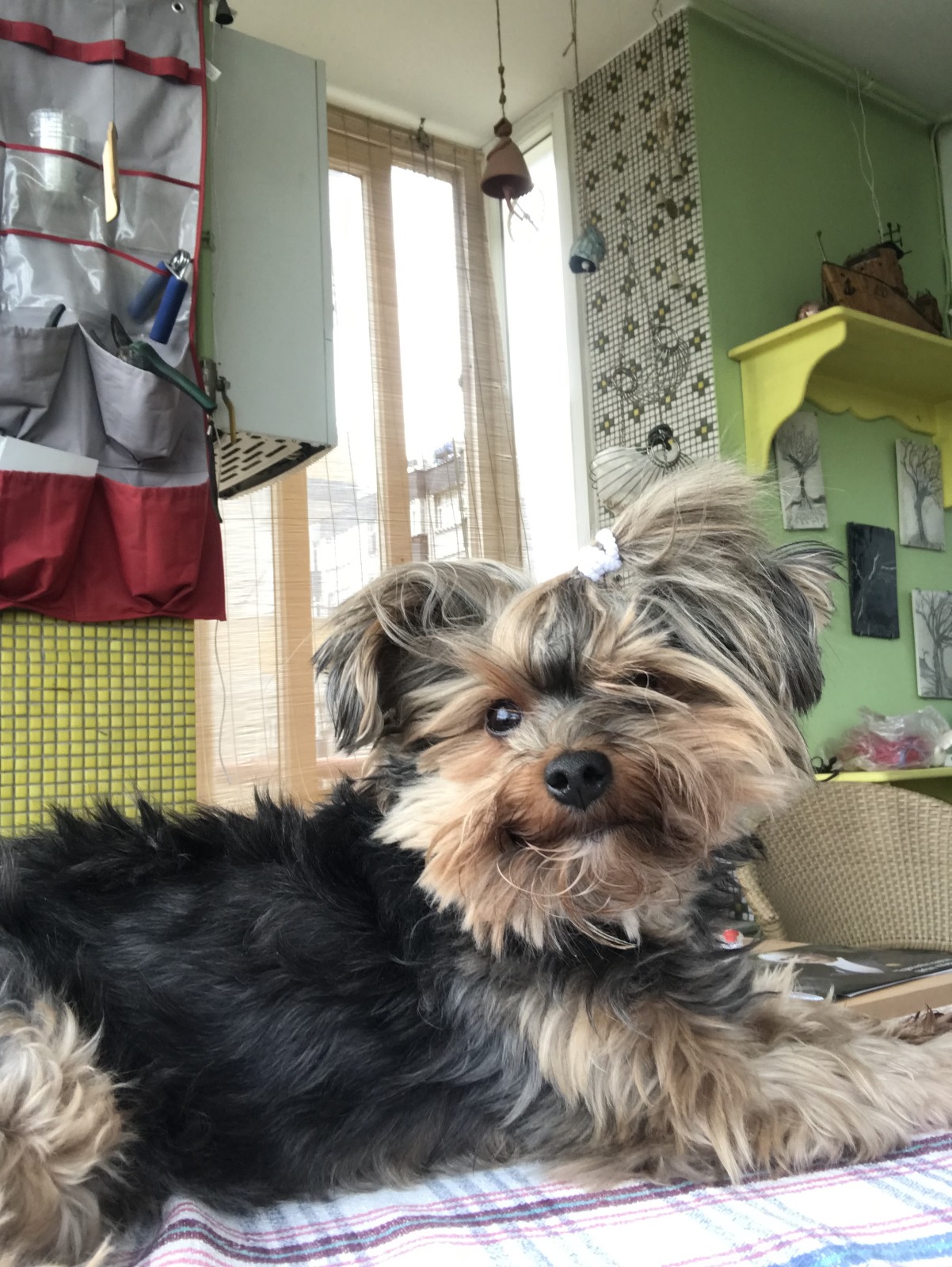
Author’s Note: I would be remiss if I didn’t introduce the main character of this series. The dog you’ve seen in the photos throughout this piece is Loki, the inspiration for this and all the animal-focused articles to follow. Just as he brought this series to life, he was a close friend to me, the author of these words. Sadly, Loki passed away on July 18, 2024. I wanted the deep wound he left behind to transform into something useful and to keep his memory alive. That is why, together with my fellow writers, I wanted to launch a series to introduce you to these beautiful souls. I hope Loki’s memory will live on this way. I hope my longing for him can translate into content that is helpful to you all.
References and Further Reading
Canis lupus familiaris (dog). (n.d.). Animal Diversity Web. https://animaldiversity.org/accounts/Canis_lupus_familiaris/
Department of Jobs, Precincts and Regions. (2024, July 10). Dogs. Agriculture Victoria. https://agriculture.vic.gov.au/livestock-and-animals/animal-welfare-victoria/dogs
Vanacore, C. B. (2024, August 10). Dog | History, domestication, physical traits, breeds, & Facts. Encyclopedia Britannica. https://www.britannica.com/animal/dog
Originally published in Turkish at Doğa Filozofu.