

Have you ever looked at a total stranger and just *known* they were brilliant, or decided they were trustworthy based on nothing but their vibe? Or perhaps you’ve bought a product on impulse simply because the packaging looked so slick? Don’t worry, you’re not alone. Our brains love taking shortcuts, and we often define the entirety of a person or object based on a single trait. This is what psychologists call the “halo effect,” or as we like to call it, magical prejudice. But how much do these magical judgments actually shape our lives? In this piece, we’re going to dive into the uncomfortable truth behind that question.
What Exactly is the Halo Effect?
First, let’s get a better handle on this psychological phenomenon. Simply put, the halo effect is a cognitive bias where our positive impression of a person, object, or organization in one specific area spills over to influence our opinion of their entire character. The term was coined by psychologist Edward Thorndike in a 1920s study. Thorndike observed that officers tended to rate soldiers who looked physically fit as having higher intelligence and leadership skills, and he dubbed this tendency the “halo effect.”
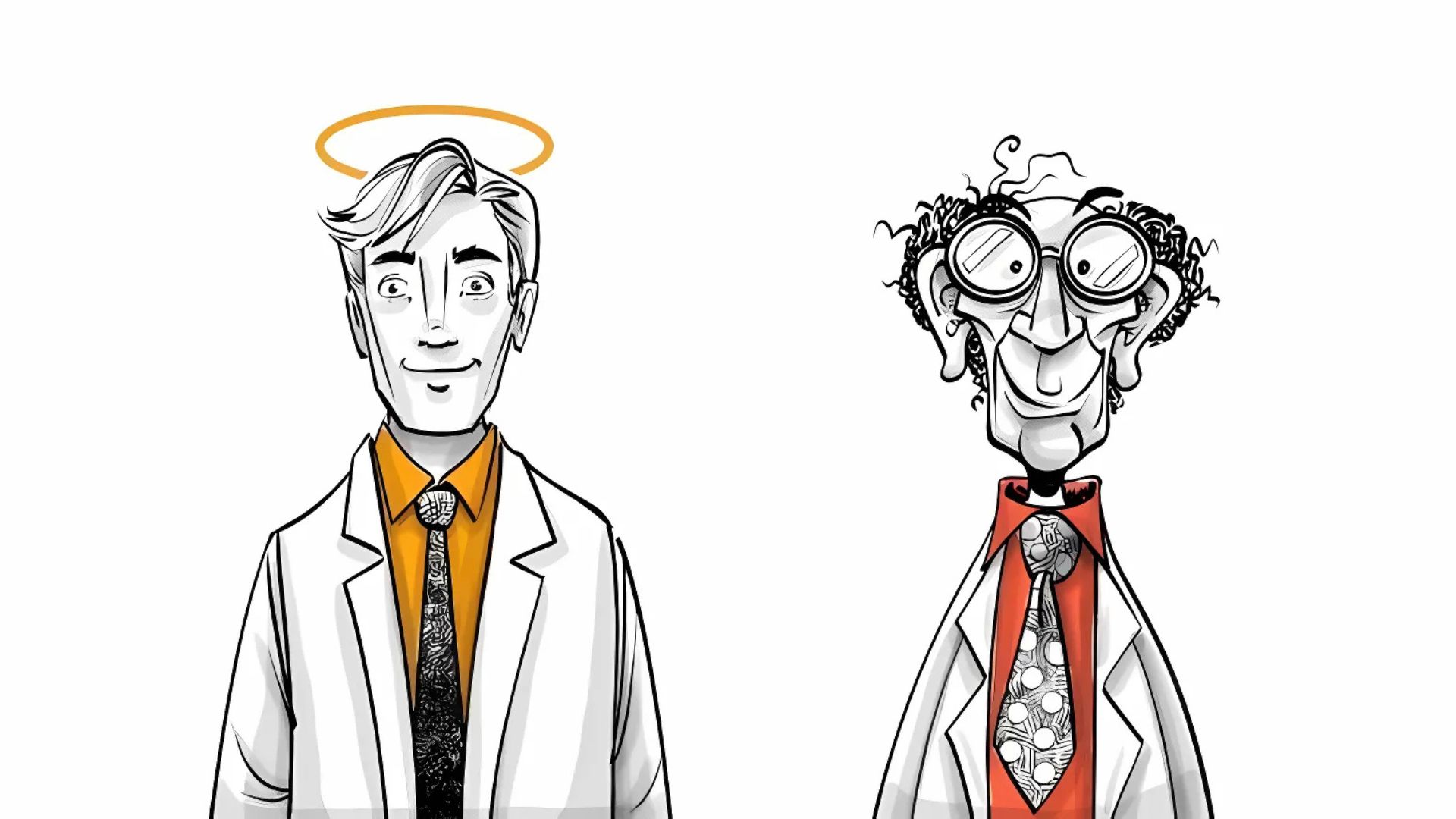
The fun part about the halo effect is in the name itself. A “halo” represents a ring of light, suggesting how one bright, standout feature can make everything else around it seem to glow. Interesting, right? We’re sure some of you are already mentally auditing your own lives to see where this has played out. Don’t worry; we’ll explore it with some very concrete examples. And don’t be afraid—just because you see the halo effect in your own life doesn’t mean you’re a biased person. It just means you’re human.
A Quick Note on “Thinking Fast and Slow”
This is an instinctual reflex we all share. It’s not a deep, analytical choice; it’s a decision-making process rooted in what you might remember from our article “A Reading Guide: Thinking, Fast and Slow” as System 1. For those of you who aren’t in the mood to jump between tabs, here’s a quick recap:
In his book Thinking, Fast and Slow, Daniel Kahneman explains that the brain operates on two systems: System 1 and System 2.
The first, System 1, is responsible for decisions we make without thinking. It’s the part of your brain that shouts “4” the moment someone asks “2+2.” System 2, on the other hand, kicks in when you’re doing something that requires conscious, deliberate thought. The halo effect is purely a System 1 operation; it’s an automatic, instinctual mechanism.
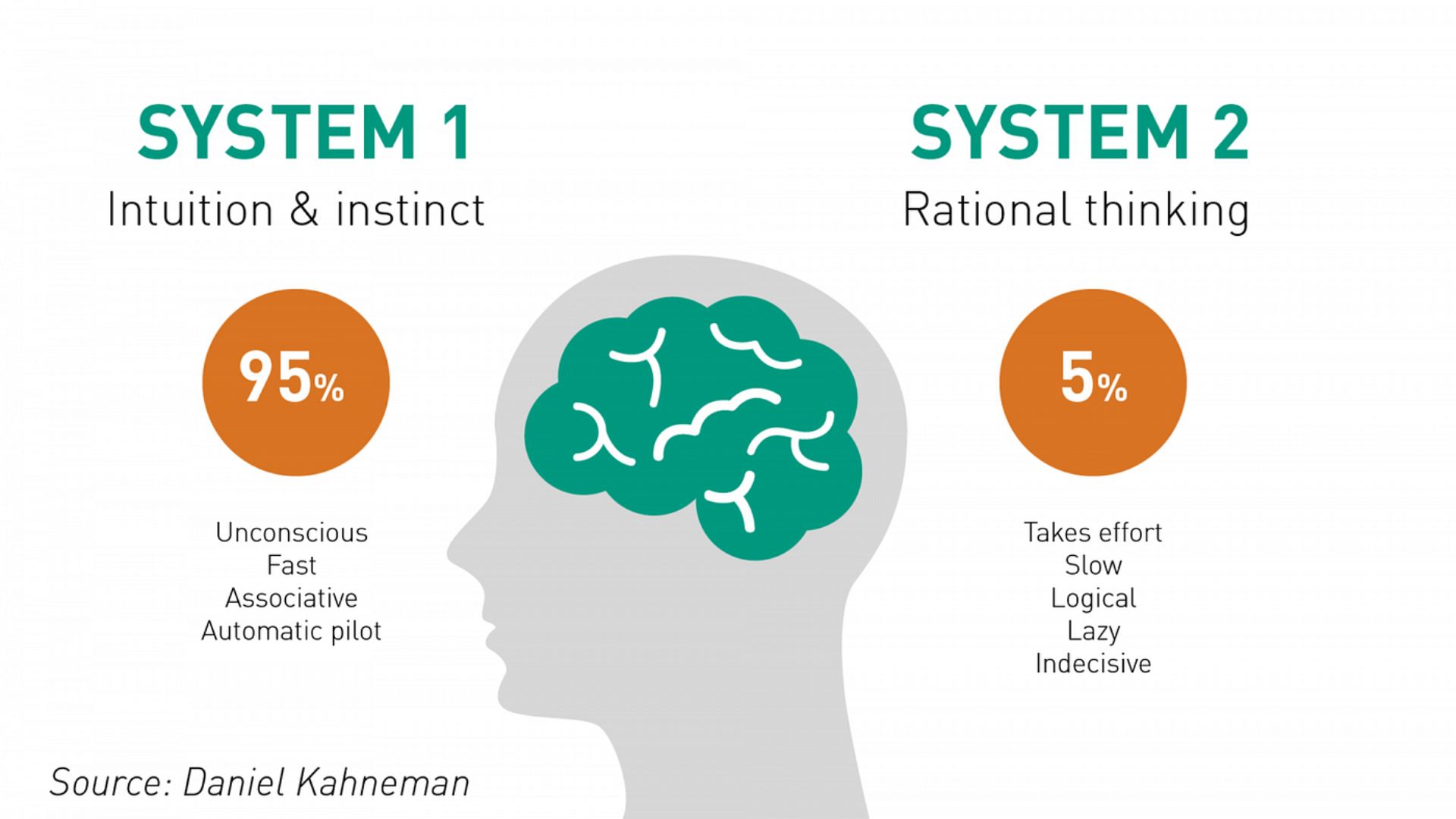
System 1 is all about keeping us alive, and it’s fueled by prejudices and patterns. Imagine you’re a prehistoric human wandering through a forest. Danger could be lurking anywhere. Suddenly, you run into someone with a spear, a wild beard, and minimal clothing. Your System 1 doesn’t wait for a background check; it tells you to run, which is a life-saving move. If System 2 had to step in and analyze the situation, you might end up on the wrong end of that spear. Conversely, if you ran into someone who looked clean-cut and was smiling, your System 1 might flag them as an ally. That is the halo effect in action. It’s a mechanism that saves us time and often protects us from danger. But, of course, it doesn’t always work. Why?
The Illusion
The problem is that in the ancient world, the halo effect was a reliable survival tool because life was fairly simple. People weren’t so diverse, individuality was less pronounced, and social systems were basic. In that context, a quick inference was incredibly useful. But in today’s complex world, things have changed.
The human brain tries to assign meaning to information so it can make decisions quickly and effectively. Because of this, a single trait of a person or object can lead to broad generalizations about everything else. This is where the halo effect leads us astray, resulting in judgments like these:
- Attractive individuals are often perceived as smarter or more successful.
- The aesthetic design of a product can create the perception that its quality is equally high.
- An organization’s involvement in a socially beneficial project can reinforce the impression that the entire company operates with a high ethical standard.

Think about it: Does being attractive actually make someone smart? Quite the opposite—many scientists and philosophers aren’t exactly beauty icons. Did you experience a mini halo effect while reading that? It’s okay! In reality, there is no necessary connection between a person’s intelligence or professional path and their physical attractiveness.
Let’s think about the supermarket. You see rows of chocolates with shiny, gorgeous wrappers. If the design is beautiful, it nudges you to buy it because you subconsciously trust the taste. But is the taste actually better? Probably not—there is no real connection between a wrapper and flavor.
This doesn’t just happen in the grocery store; the halo effect is rampant in the workplace, too. During hiring and performance reviews, it’s everywhere. A physically attractive candidate might be perceived as more talented or intelligent, causing the employer to stray from objective criteria. Similarly, a single success on a project can lead to an inflated assessment of an employee’s overall performance. Even the way someone dresses—a sharp suit versus casual clothes—can trigger this bias.

It’s no surprise this bleeds into our professional lives. In a world where brands are constantly pushing us to fall for the halo effect, prejudices are inevitable. How do brands do it? It’s simple: If your favorite celebrity endorses a product you know nothing about, what happens? You’re suddenly hit with the urge to buy it, right?
All of this is perfectly normal. It’s just how our brains work. Being naive or biased is just part of being human. No matter how “woke” or aware you are, you can’t completely eliminate the halo effect.
The Halo Effect in Our Daily Lives
While we’ve touched on professional and consumer areas, we can’t overlook where it shows up most: our daily social lives. We feel it the most when meeting someone new.
When we know nothing about a person, their clothing, their smile, their beard, their aesthetic, or even their scent gives us data. If someone wears a sweater over a collared shirt, our brain might jump to the conclusion that they’re highly intelligent. If they’re muscular, our brain might assume they’re brave.
This shows just how quickly our brains generalize. Of course, we’ve mostly talked about the brain leaning toward the positive. But what about the negative? This is simply called the “reverse halo effect,” and it works in the exact opposite way. Like the man with the spear in the forest—maybe he was actually trying to protect us, but we ignored that possibility because of our initial negative judgment. We just ran. That is how the halo effect can swing into the negative.

“So, Is the Halo Effect Harmful?”
There are two answers: Yes and No.
The “yes” is for the reasons we’ve already discussed. The system’s prejudice can lead to terrible outcomes. That guy we trusted in the forest might turn out to be a dangerous criminal, or the guy with the spear might have had a heart of gold. In this sense, the halo effect can cause us to miss out on real opportunities or land us in trouble.
Then there’s the other side. The reason this effect is hardwired into our brains is that it’s usually beneficial. The harmful parts likely account for only 5% of the decisions your brain makes. Your brain makes thousands of decisions every day, and most of them turn out just fine. This effect is likely what’s kept you safe and helped you get to where you are today. In that sense, it’s not harmful—it’s a survival tool.
After reading this, maybe at your next meeting, instead of thinking, “This person is a great speaker, they must be a natural-born leader,” you’ll pause and think, “Let’s dig a little deeper,” to find their true talents. Who knows? Maybe first impressions are the biggest illusions of all, and if you’re a little more careful with your next decision, you might just discover a surprising truth behind that ring of light!
References and Further Reading
Halo effect – The Decision Lab. (n.d.). The Decision Lab. https://thedecisionlab.com/biases/halo-effect
Neugaard, & Britta. (2025, April 5). Halo effect | Attribution, Perception, Bias. Encyclopedia Britannica. https://www.britannica.com/science/halo-effect
Perera, A. (2023). Halo Effect in Psychology: Definition and Examples. Simply Psychology. https://www.simplypsychology.org/halo-effect.html
Sprouts. (2022, September 1). The halo effect [Pretty privilege] [Video]. YouTube. https://www.youtube.com/watch?v=kpjeMaOirvg
Originally published in Turkish at Doğa Filozofu.