
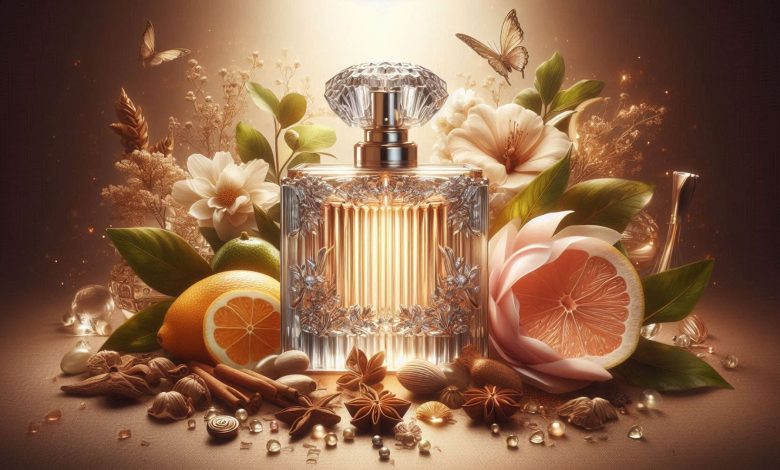
Every home, every person, and even every passing moment has its own signature scent and presence. The smell of a freshly baked cake can make your mouth water even when you’re full, while a crisp, refreshing perfume can put the finishing touch on your outfit and give you a boost of confidence. All of these feelings are tucked away in a single breath. In our daily lives, we often overlook the profound impact scent has on our emotions and thoughts. In this piece, I invite you to take a closer look at the world of fragrances and discover their magical influence!
How Is Perfume Made?
It all starts with deciding what kind of scent we want to trap in a bottle. Once the ingredients are set, our first step is to extract the compound we call “essence.” There isn’t just one way to do this; the method depends entirely on the material we’re using. For floral and fruity scents, we typically use a process called distillation.
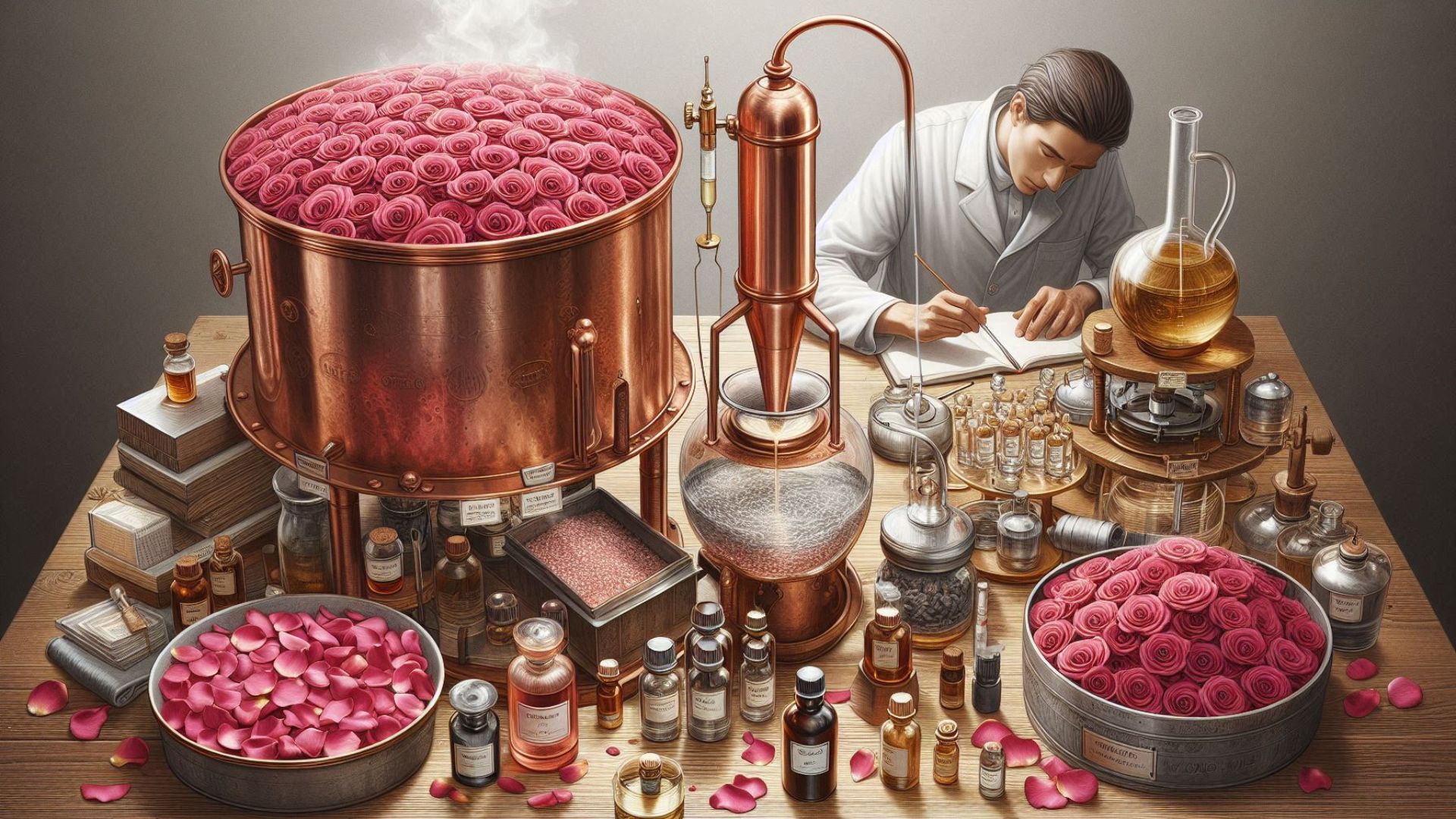
By exposing our chosen botanicals to steam in a distillation unit, we coax the plant to release its essence. The reason essences—and by extension, perfumes—are so expensive is the sheer volume of flowers required to produce just a single drop. For example, it takes 4 tons of rose petals to produce just 1 liter of rose oil. That is why every drop we distill is handled with extreme care. In the second phase, the perfumer meticulously blends these essences in precise proportions. Even a single drop too many or too few can completely shift the tone of the final scent. And here is where it gets interesting: much like a fine wine or a batch of pickles, perfumes are left to rest, essentially “marinating” to develop their character. After this long waiting period, the final step is dilution. The ratio of essence determines the final product. For instance, when you ask for a long-lasting perfume at a shop, they will recommend an “Eau de Parfum.” These contain 15-20% essence, while “Eau de Toilette” contains 5-15% fragrance oil, making it less persistent. Colognes and body sprays, on the other hand, contain only 2-5% essence.
The Perfume You Smell Isn’t the One You Take Home!
Let’s say you fell in love with a friend’s scent and asked them what they were wearing. You rushed to the store, asked for that fancy name, and the clerk handed you a bottle. You opened the cap, took a sniff, and thought, “Yes! That’s it!” But once you bought it and sprayed it on your own skin, it didn’t smell the same. You’ve probably been there. You might think the shop assistant gave you the wrong bottle, but that’s not it at all!
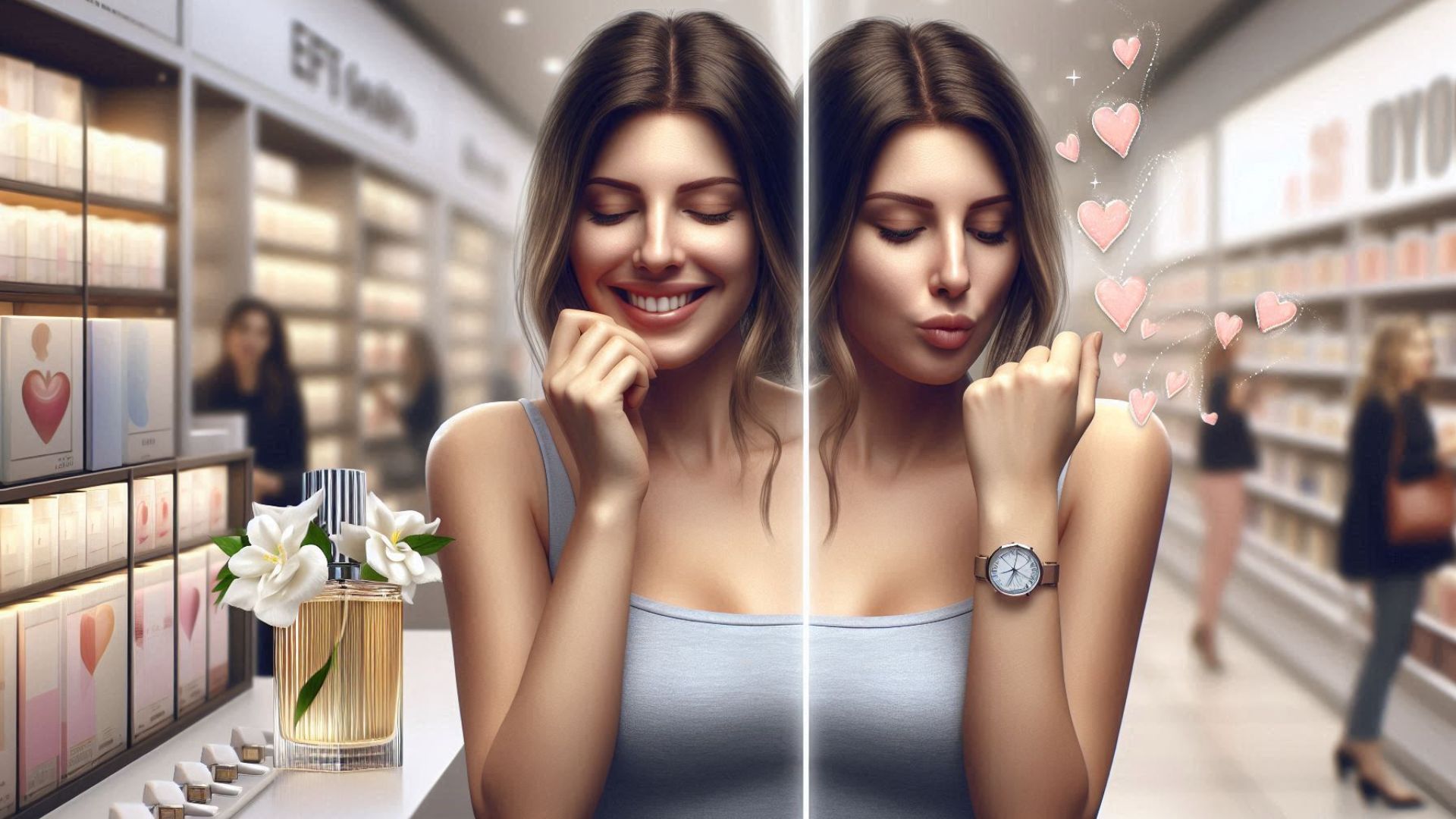
Fragrances have many nuances, much like the different notes in a musical composition. The scent you catch the moment you spray a perfume is the top note, which fades away 5 to 10 minutes after application. To truly know if a perfume is right for you, you need to be a bit more patient. You have to wait to reach the “heart” of the fragrance, properly known as the middle note. This is the scent that emerges after the perfume has blended with your own unique skin chemistry. It usually takes about 20 minutes for the middle note to fully develop. Remember, everyone’s skin type is different. That’s why the same perfume can smell completely different on different people. So, rather than rushing to buy a scent you liked on someone else, check how it works with your own skin—that’s how you make the right choice.
How Does the Perfume Industry Create Endless Scents Without Running Out?
The infinite combinations of natural and synthetic ingredients used in perfume making offer the potential to create unique, original scents. Natural ingredients are derived from essences found in plants, flowers, fruits, wood, resins, and animal products. For example, floral scents like lavender, rose, and jasmine, or woody scents like sandalwood and cedar, are common favorites. However, because these natural sources are finite, there is a constant need to expand production each year. This is where synthetic ingredients come in. These man-made essences, created through chemical compounds, offer endless potential for innovation. These synthetic substances, which often have molecular structures not found in nature, can mimic natural scents or create entirely new ones.
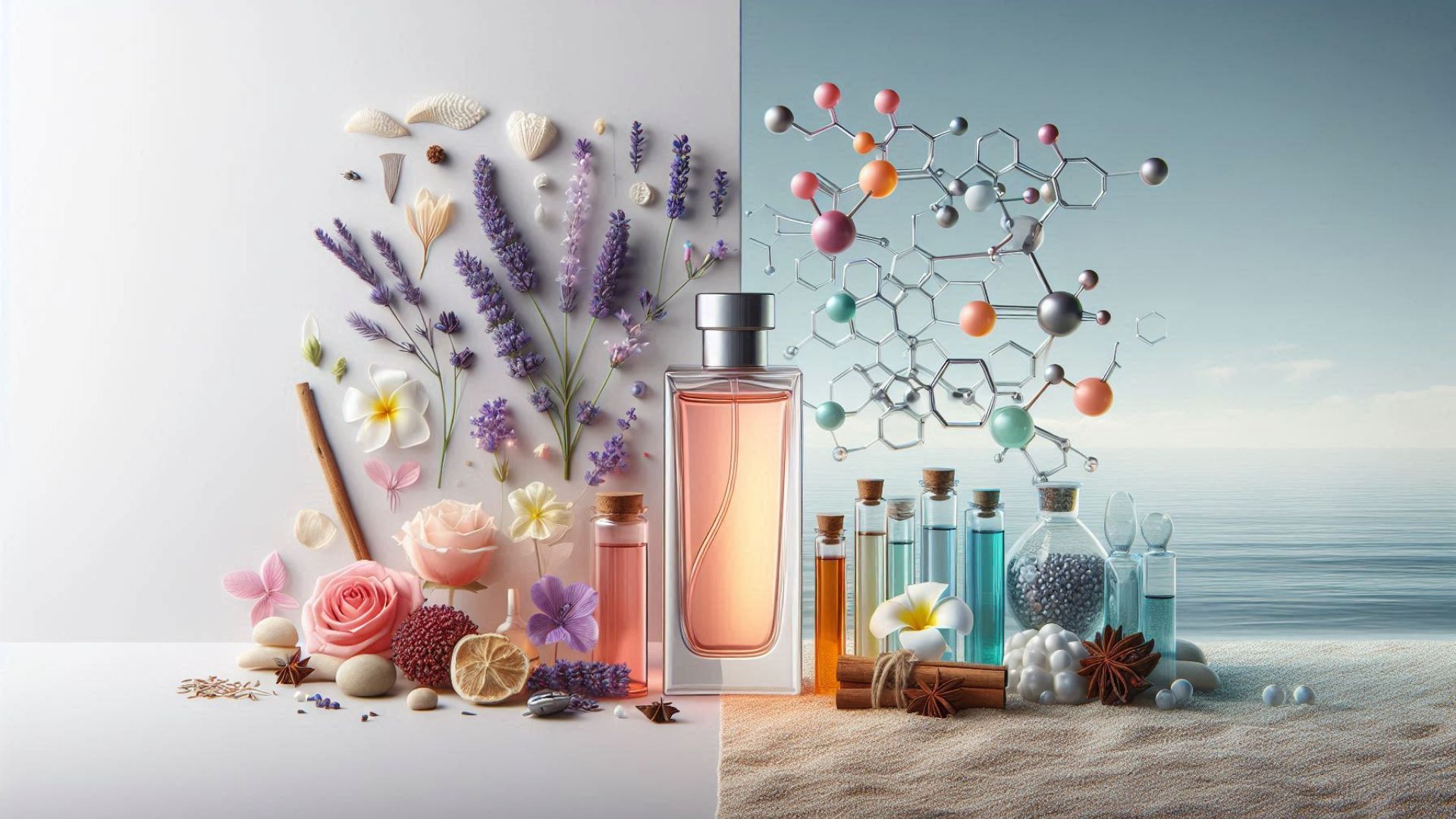
Synthetic scents also help us capture aromas we encounter in our environment but cannot extract from raw materials. For example, that fresh, breezy scent you smell by the seaside cannot be distilled from the water or the air itself. In this case, a synthetic compound called Calone allows us to recreate that specific experience.
Scent and Psychology
Scents don’t just beautify our surroundings; they can also profoundly influence our minds and emotional states. Every fragrance evokes different feelings. For instance, while lavender reduces anxiety and calms the mind, peppermint oil has an energizing effect. Rose oil evokes feelings of love and romance, while jasmine is associated with elegance and sophistication. The impact of these scents is backed by scientific research. A study by the Olfactory Research Fund in New York, for example, showed that when vanilla scent was pumped into the air, patients undergoing MRI scans experienced a 63% reduction in stress. This finding highlights just how powerful the connection between scent and our mental and emotional state truly is.
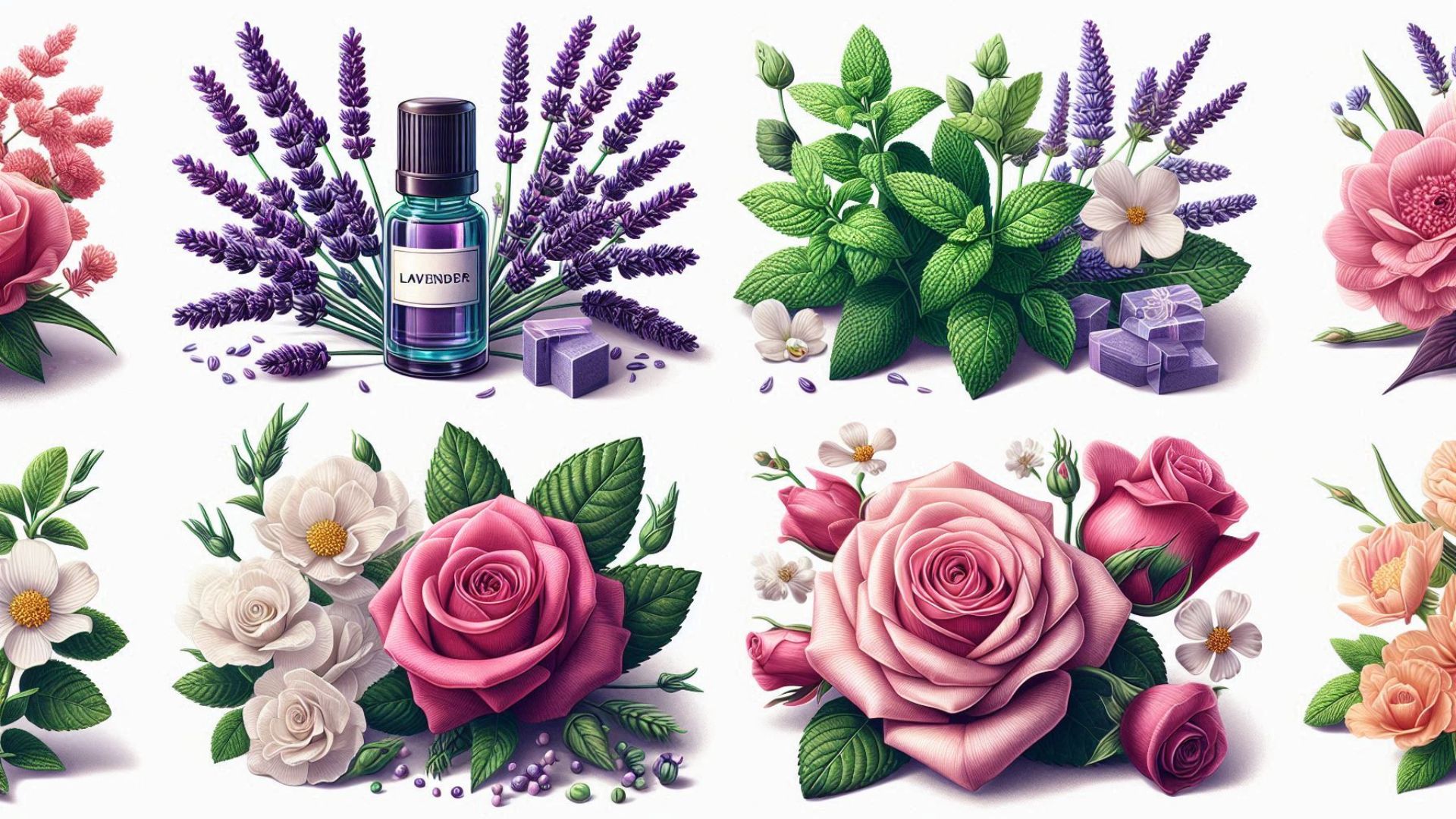
Because scents produce such potent results, they have become an effective tool in alternative medicine. Aromatherapy is a practice that uses essential oils and other aromatic compounds to improve a person’s mind, mood, cognitive function, or general well-being, aiming to provide both emotional and physical benefits.
Furthermore, the link between scent and psychology is frequently used in sales techniques. For example, luxury brand stores use signature scents to present a brand image that feels elegant enough to justify their price tags. Similarly, home decor stores use cozy, warm scents to make customers feel right at home. These types of scents not only make the shopping experience more intimate and relaxing but can also psychologically influence a consumer’s purchasing decisions.
How Does Scent Memory Work?
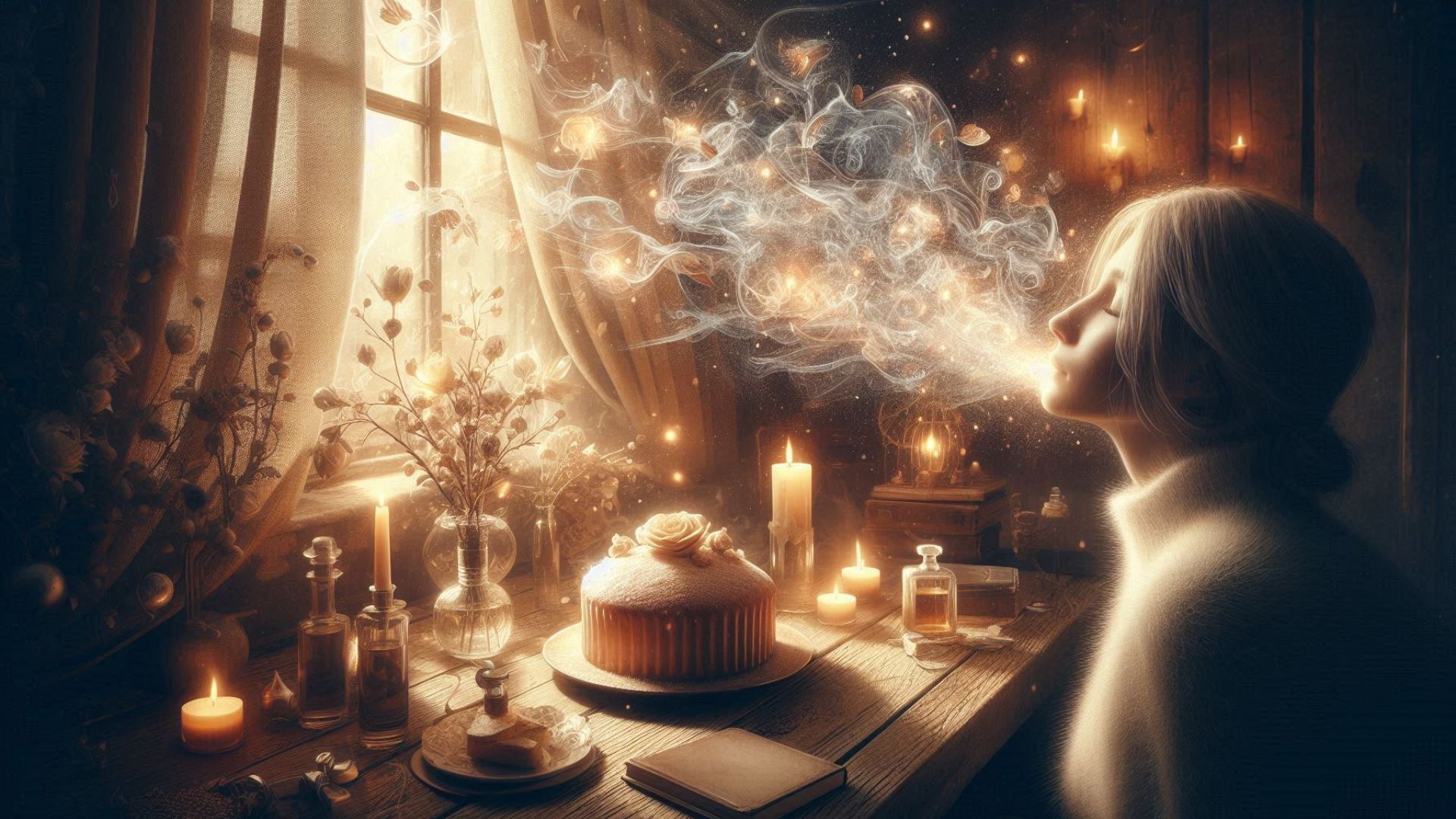
Scent memory has a greater capacity to vividly bring back the past than any of our other senses. The smell of roasted chestnuts from a street vendor can instantly transport you back to your childhood, while the scent of soup in a restaurant might stir up memories of an unpleasant time you were sick. Scientists call this the “scent link,” and they believe it is related to the unique structure of your olfactory system. While other sensory information is first sent to the thalamus before reaching the brain’s control center, scent messages are sent directly to the brain region that governs emotions, creativity, and memory. This is why our scent memory can take us back to the past so vividly or trigger such a strong emotional reaction the moment we catch a specific fragrance.

Scents have a much deeper impact on our lives than we realize. They play a significant role not just in how we smell, but in our subconscious, our emotions, and our memories. Perhaps now, with this awareness, we can begin to explore the beautiful scents around us with a bit more depth.
References and Further Reading
Ashleigh & Burwood. “Natural vs Synthetic Ingredients in Perfume.” Ashleigh & Burwood, 2021. https://ashleigh-burwood.co.uk/blogs/ashleigh-burwood-blog/natural-vs-synthetic-ingredients#:~:text=Synthetic%20ingredients%20are%20created%20in,synthesised%20from%20raw%20natural%20ingredients.
Gönüllü Psikolog. “How Do Scents Affect Human Psychology?” Gönüllü Psikolog Blog, 2020. https://gonullupsikolog.org/blog/kokular-insan-psikolojini-nasil-etkiler.
McGill University. “The Story of Perfume.” McGill University, 2018. https://www.mcgill.ca/oss/article/history/story-perfume.
Psychology Today. “Scent.” Psychology Today, 2020. https://www.psychologytoday.com/intl/basics/scent.
YouTube. “How Perfume is Made.” YouTube, 2021, https://www.youtube.com/watch?v=jVIvy0J1-Qw.
Originally published in Turkish at Doğa Filozofu.